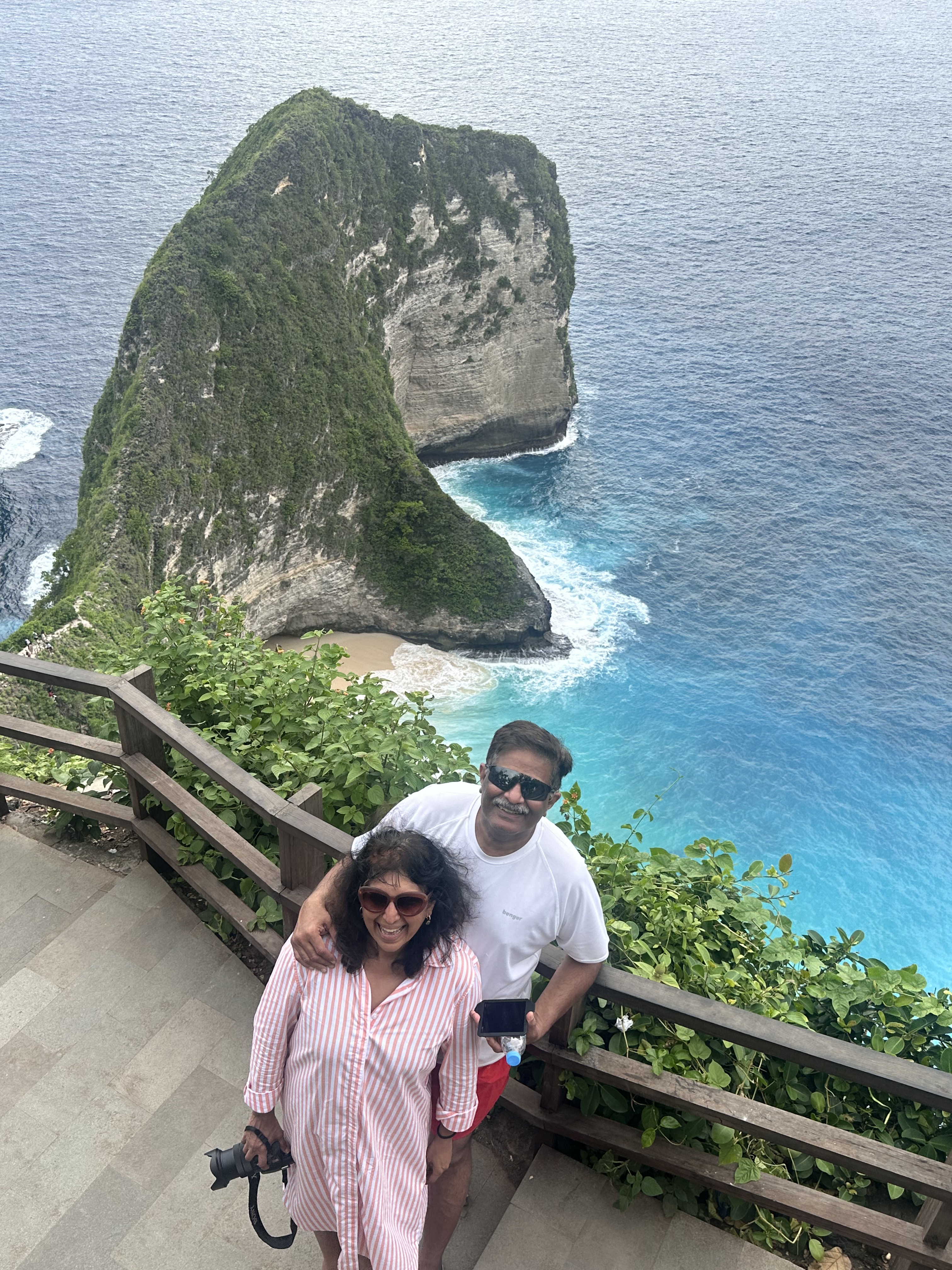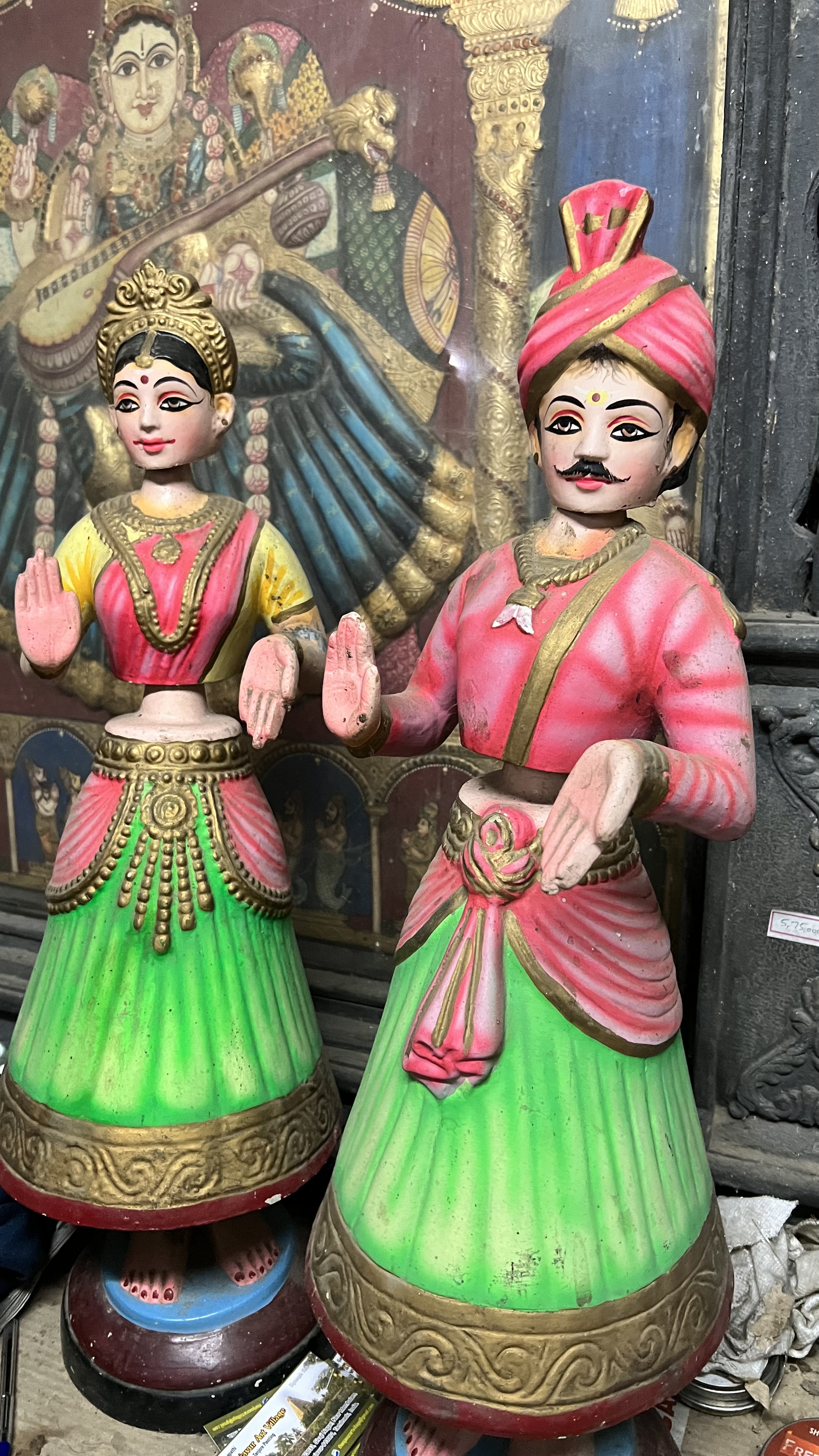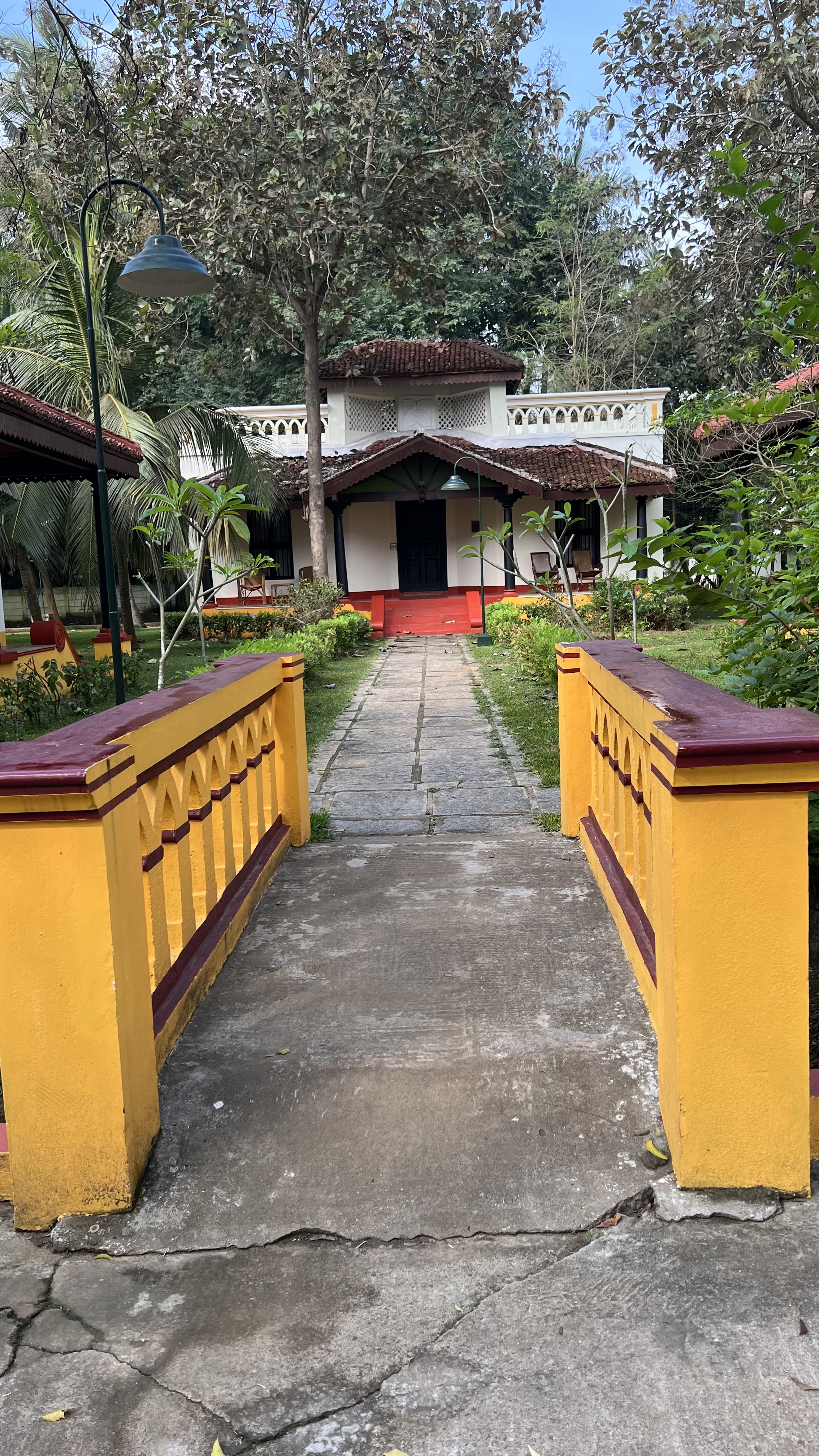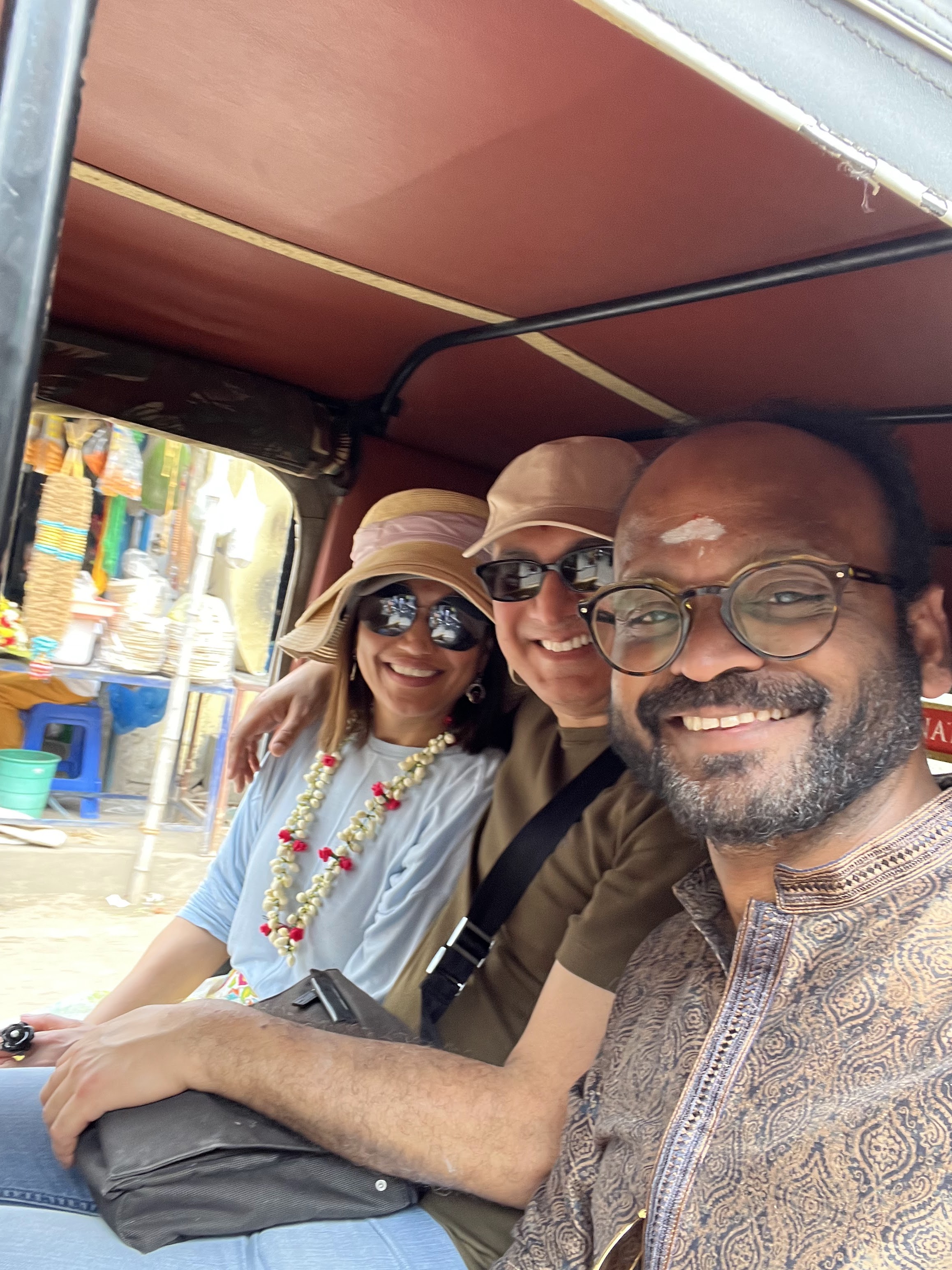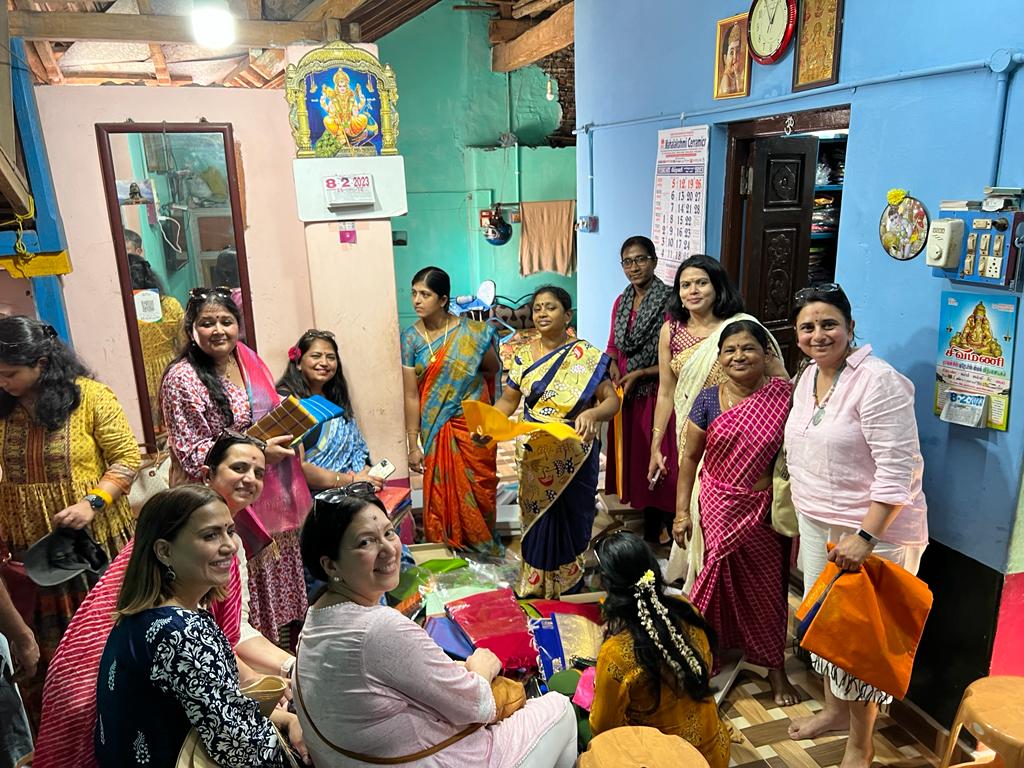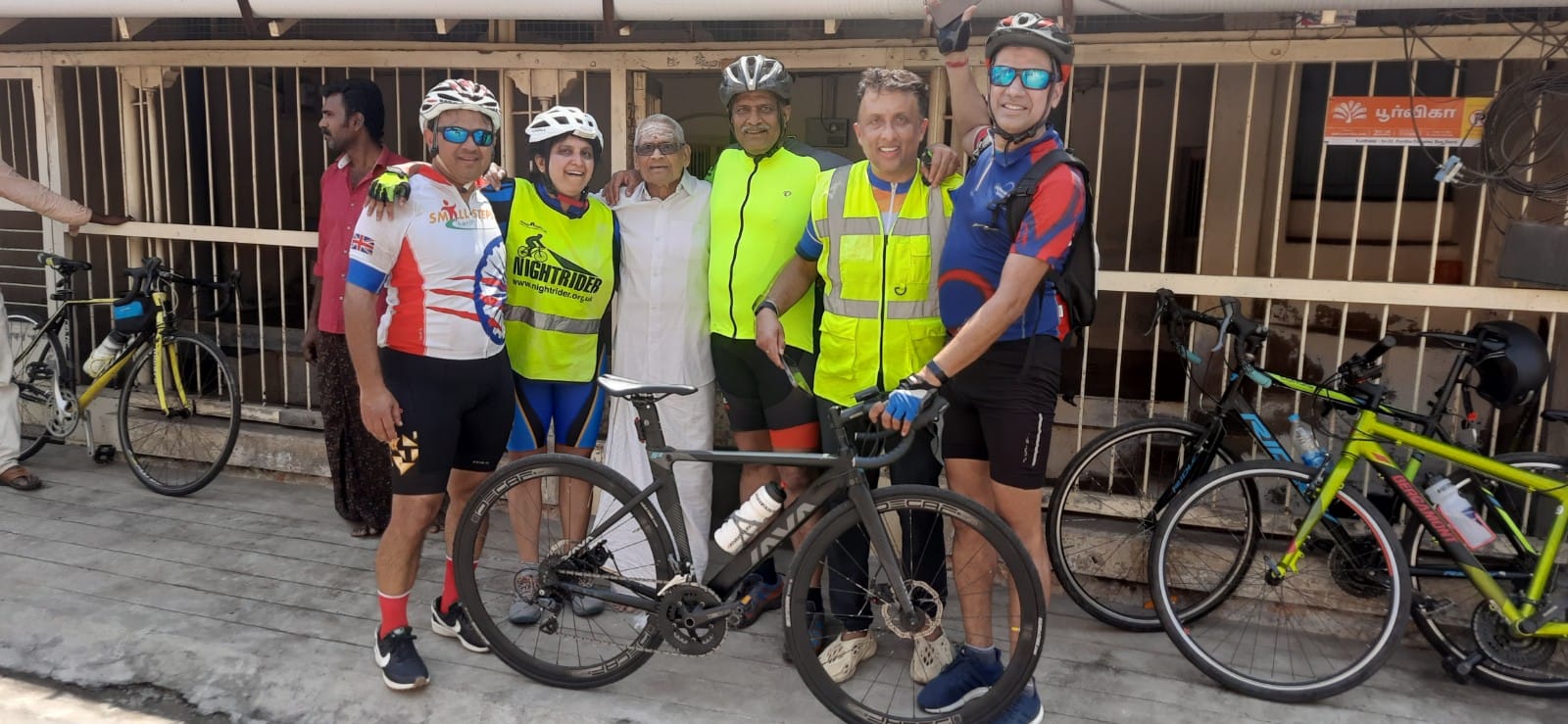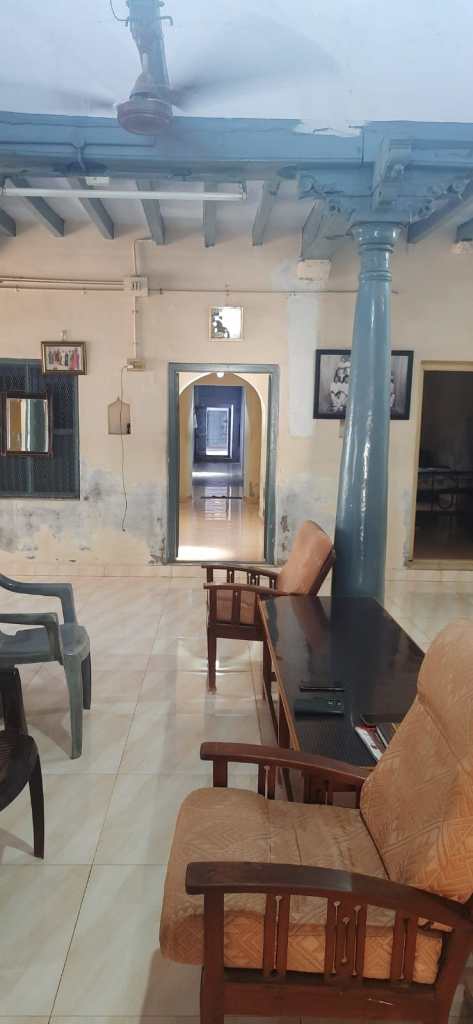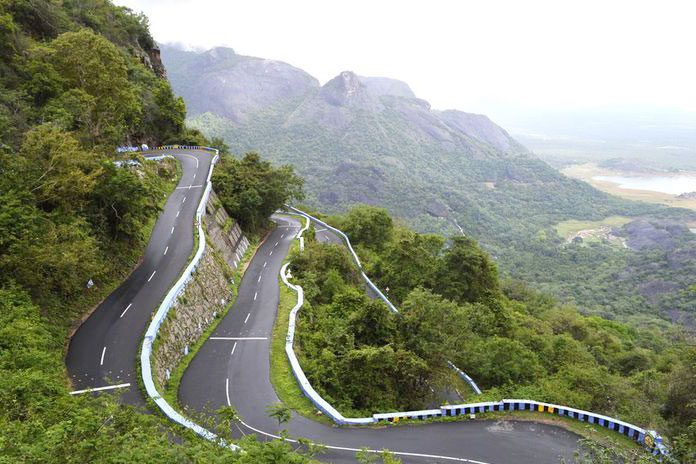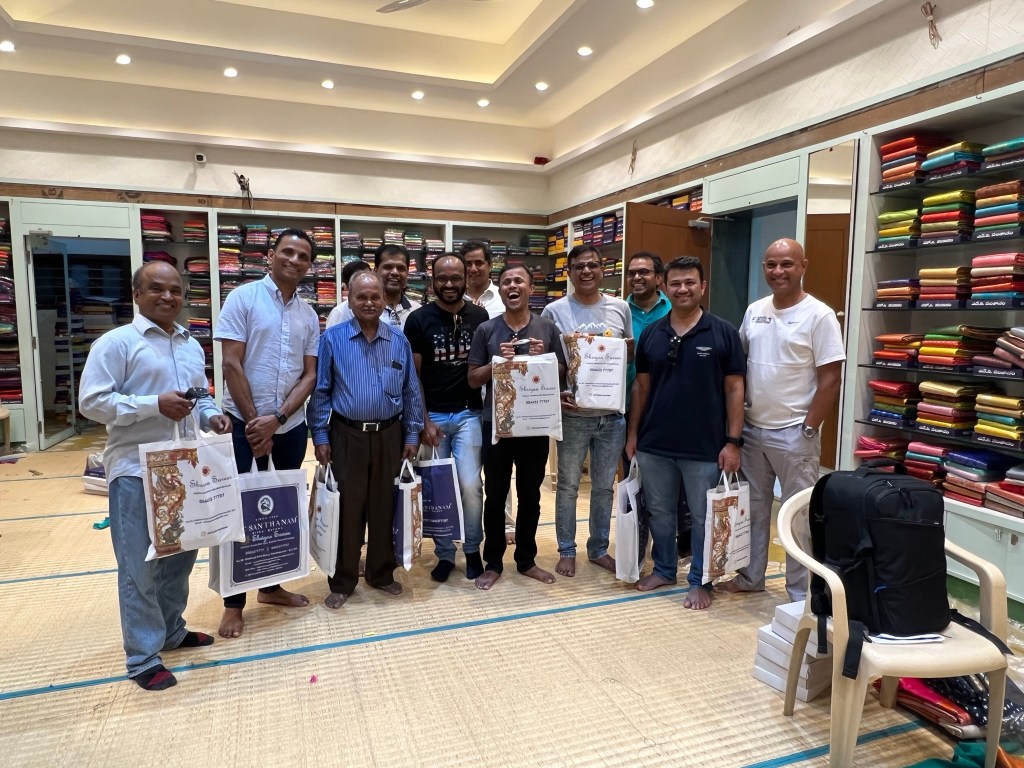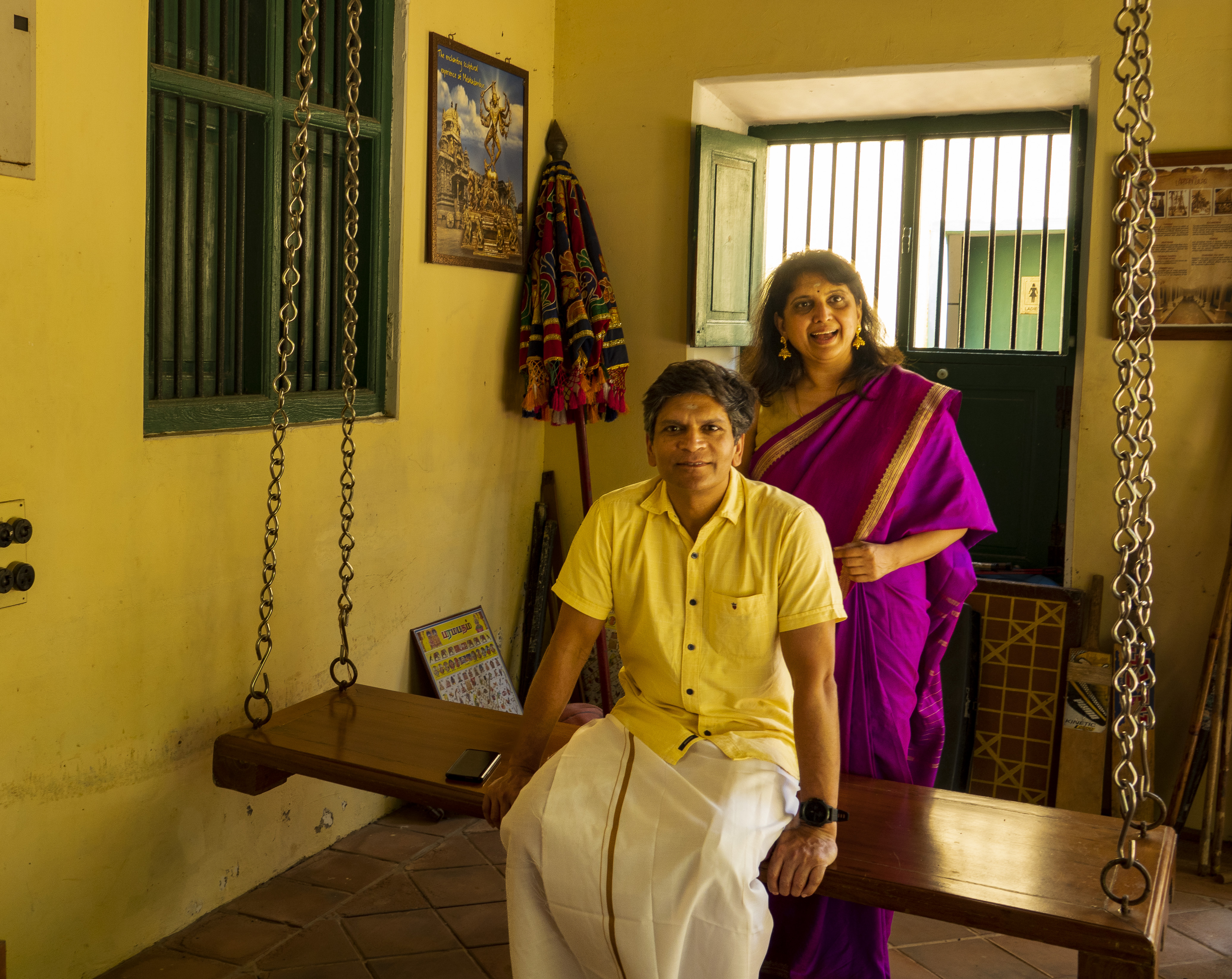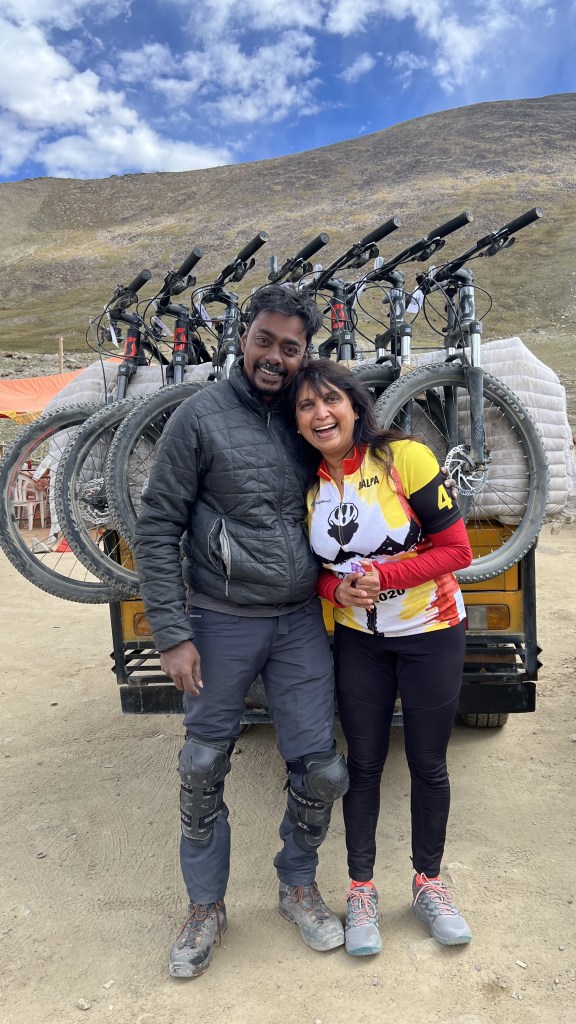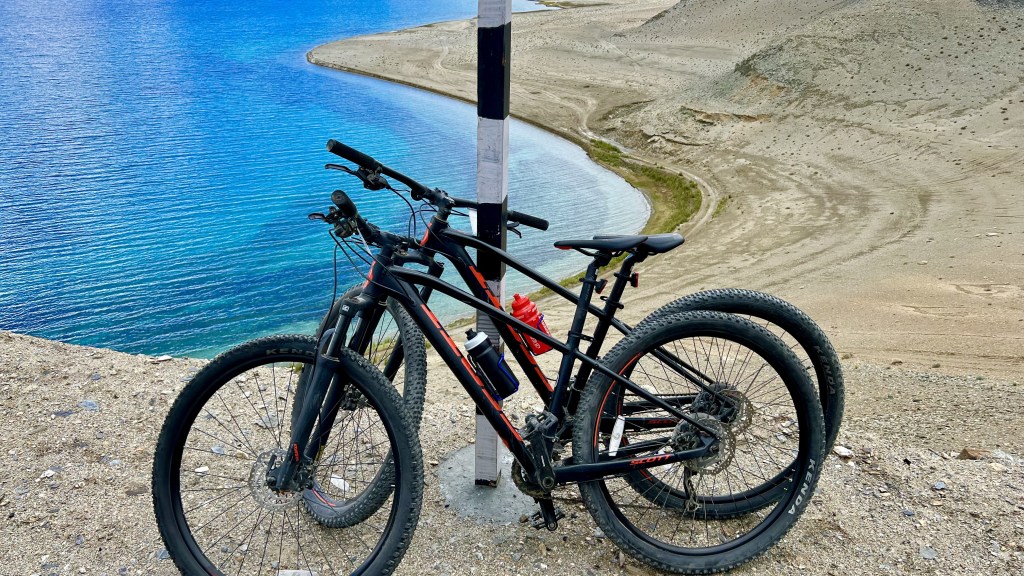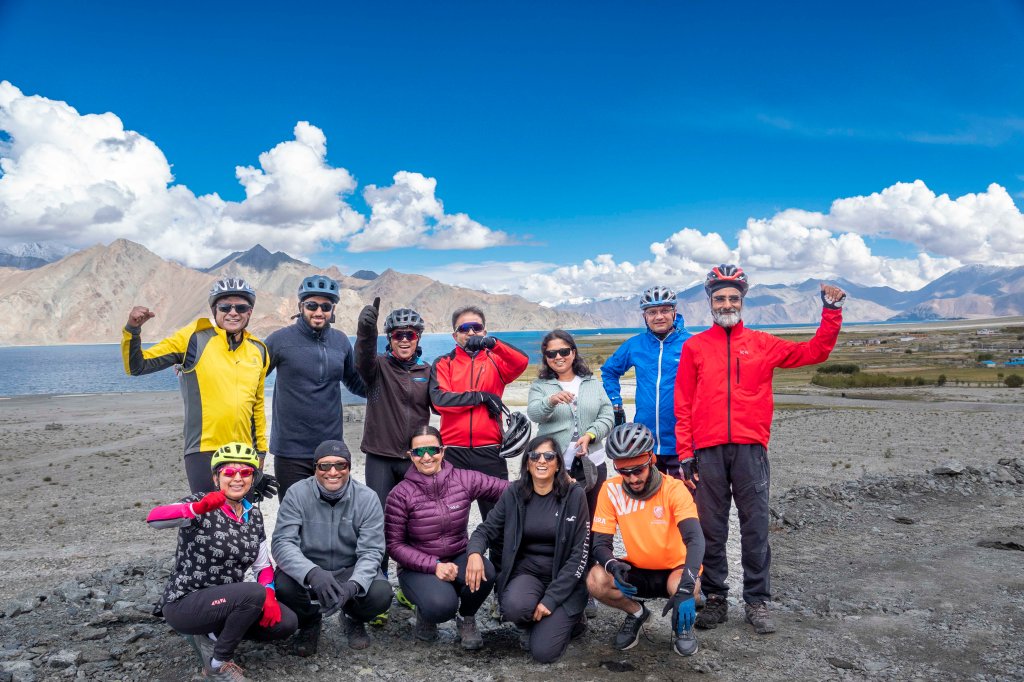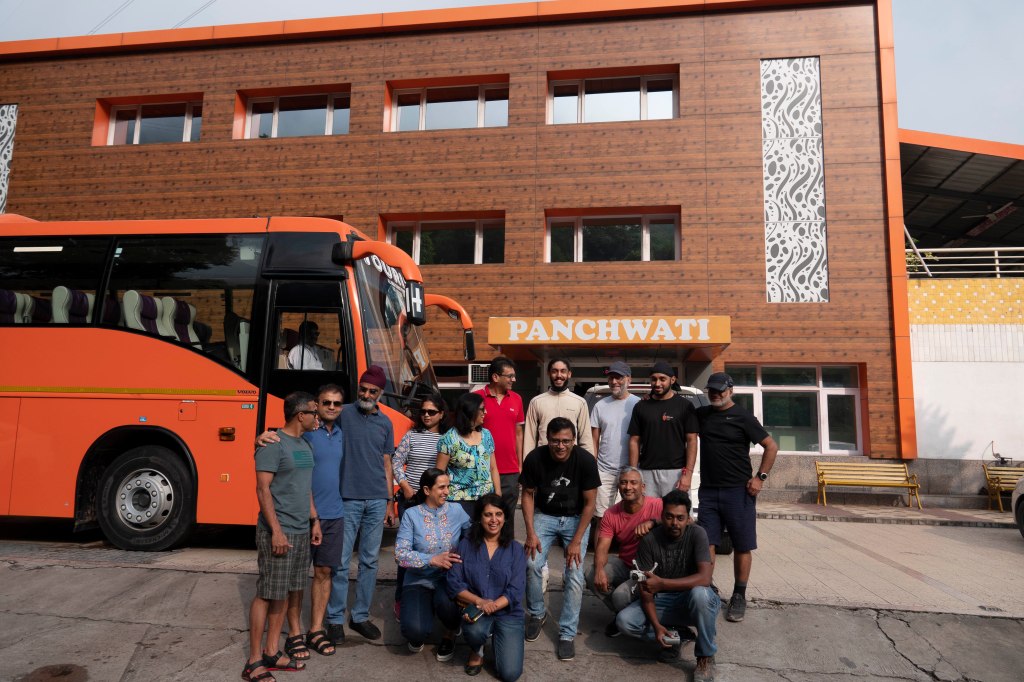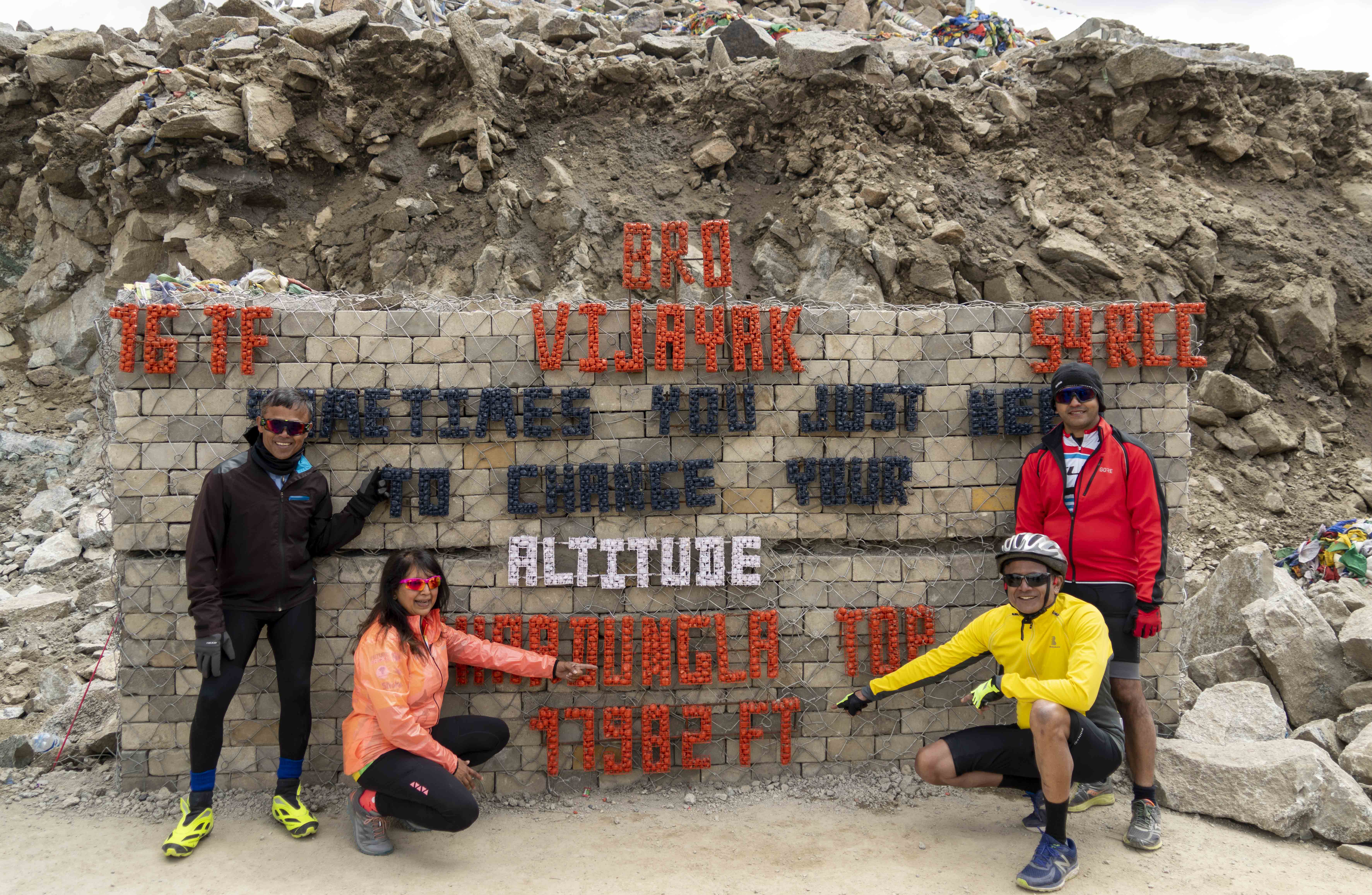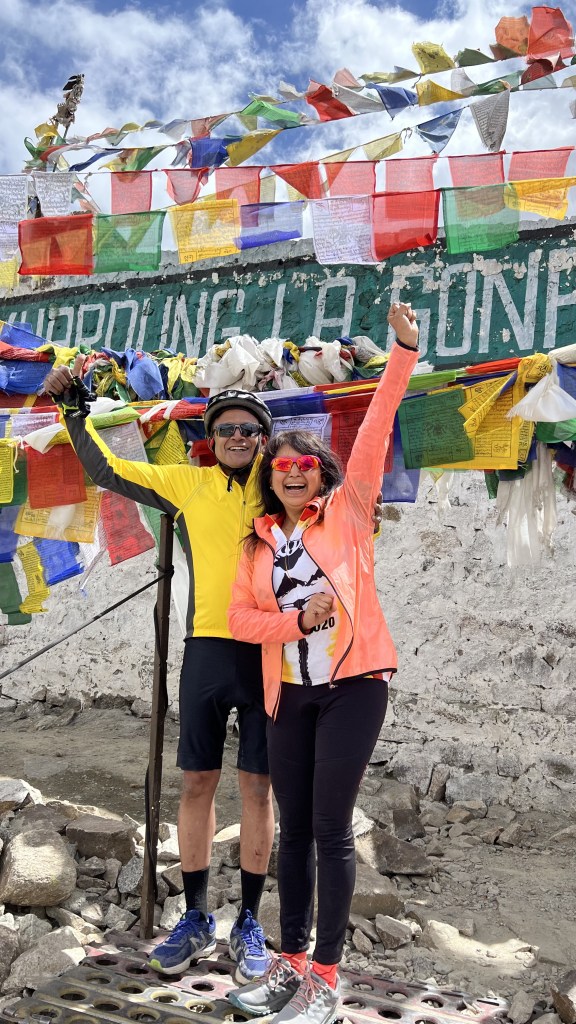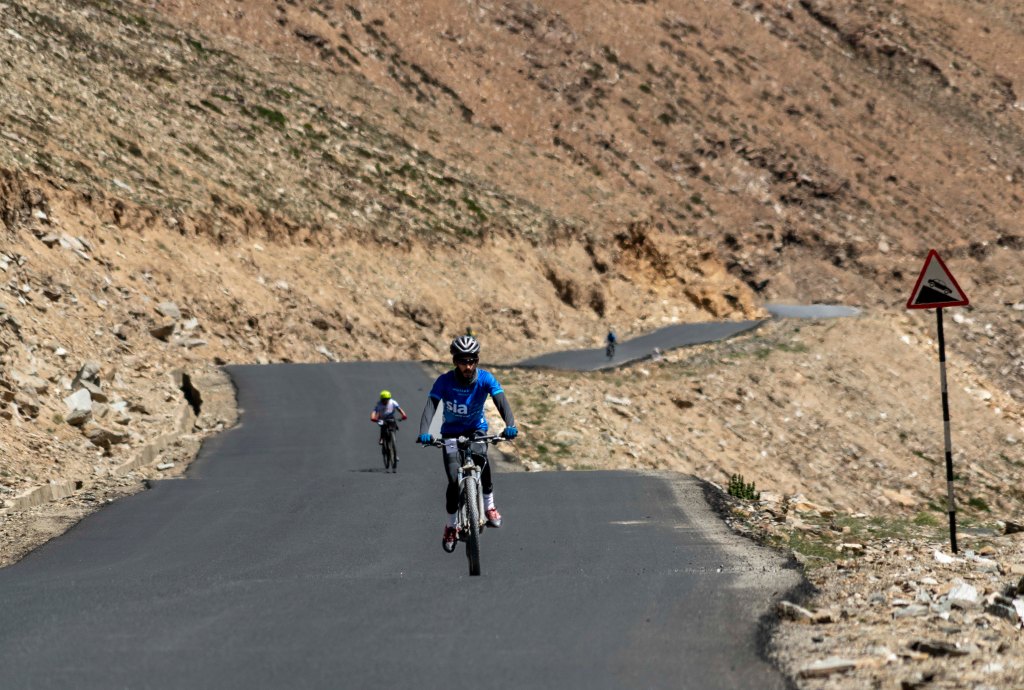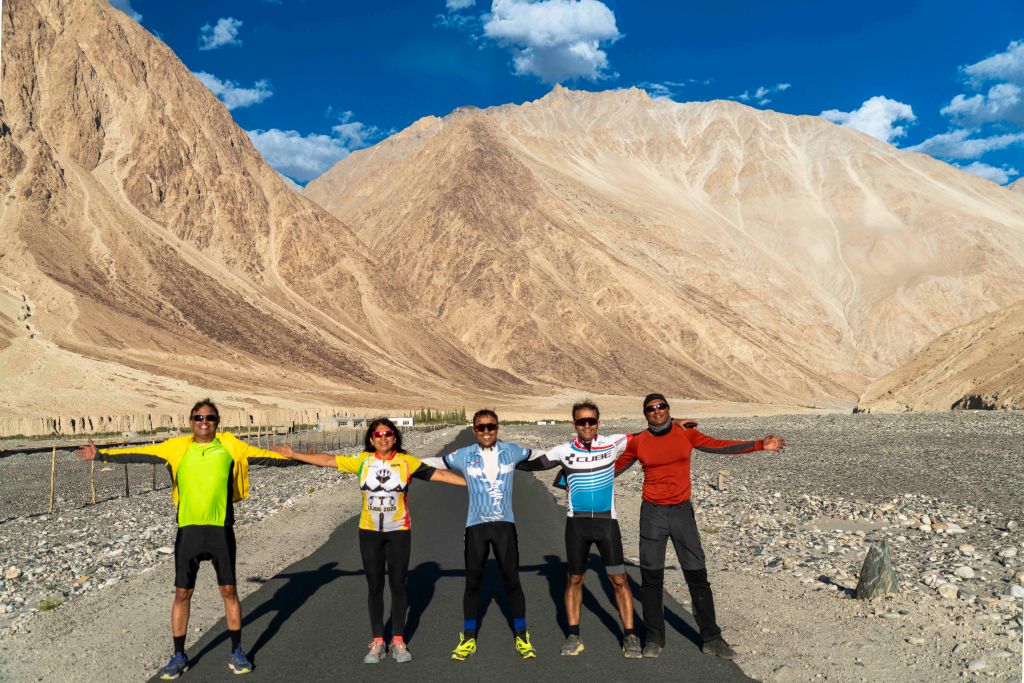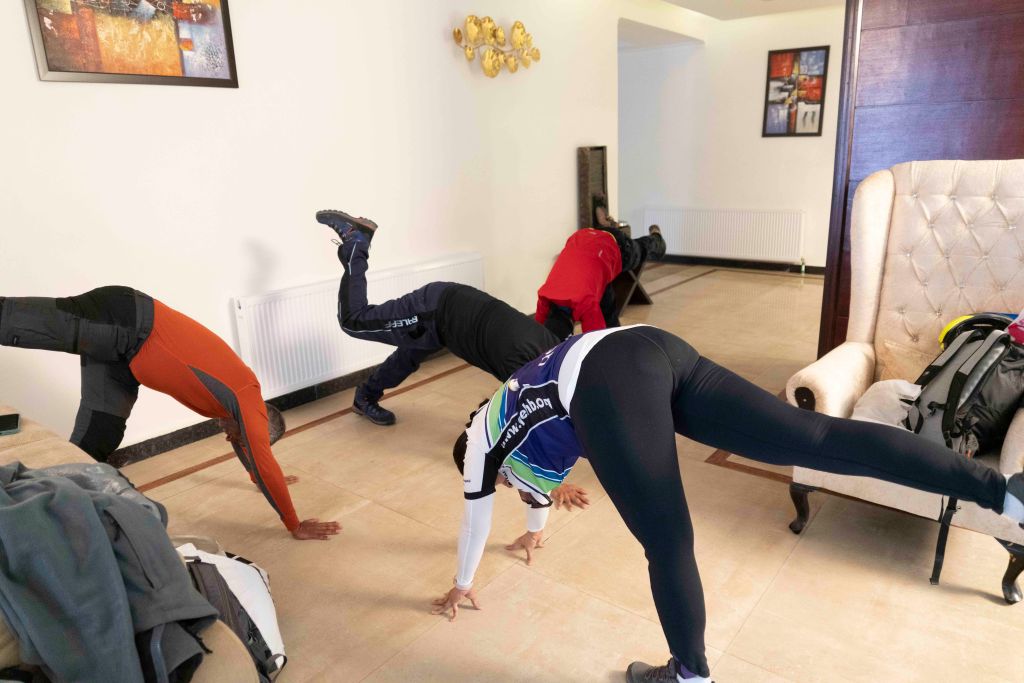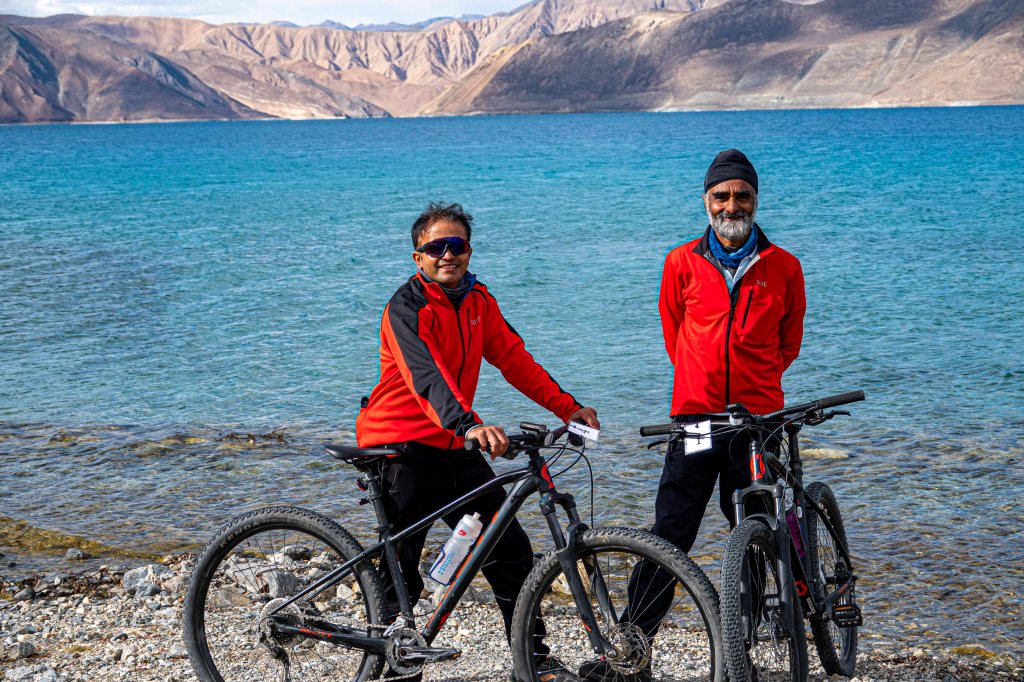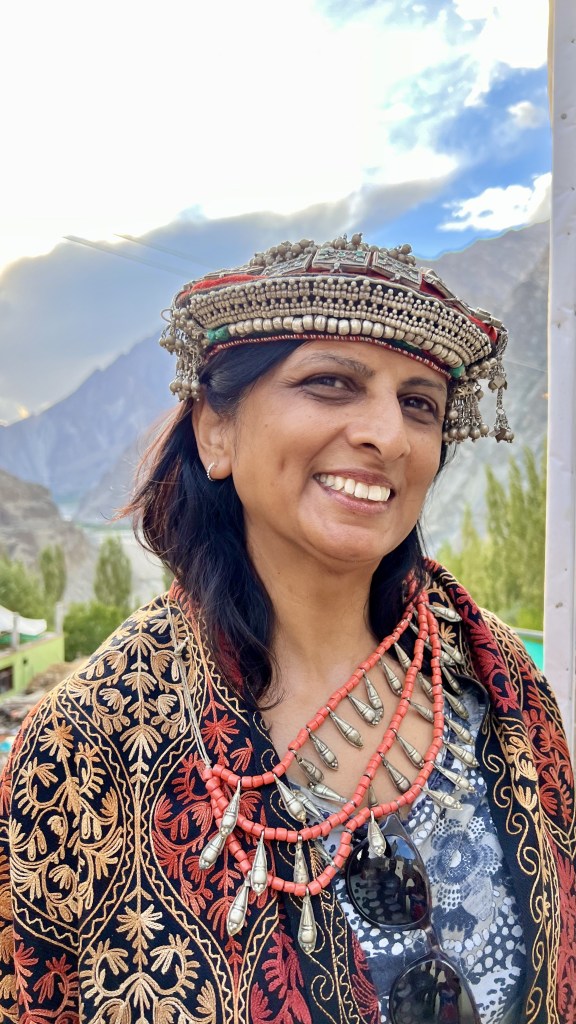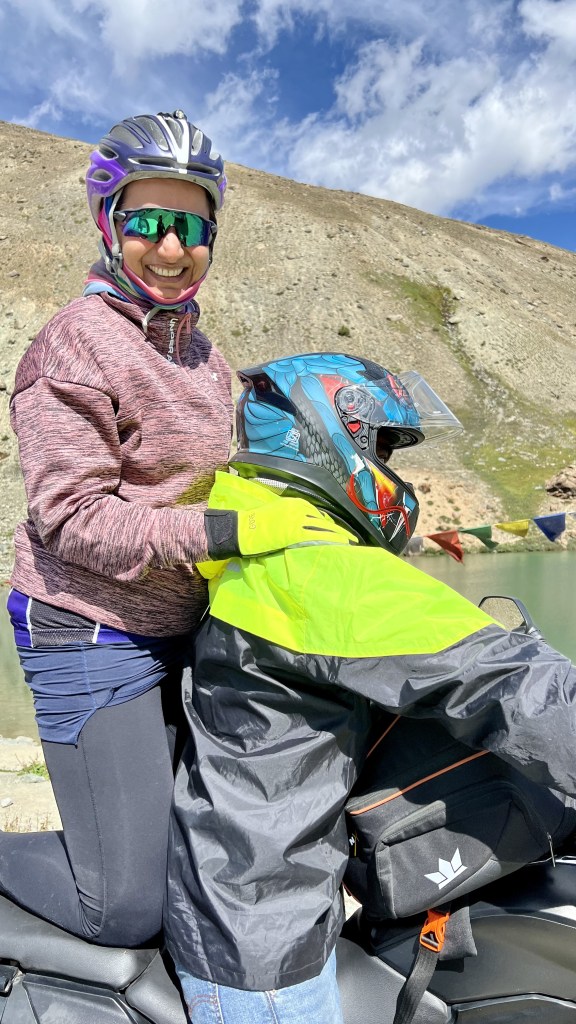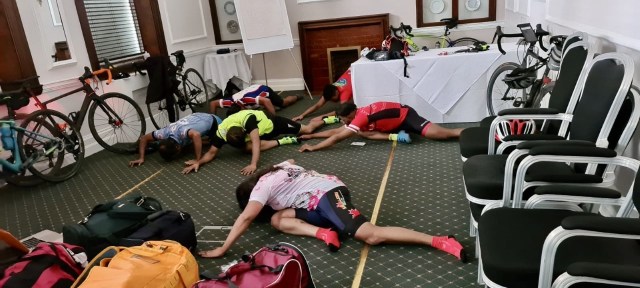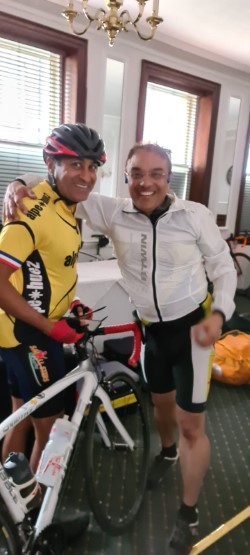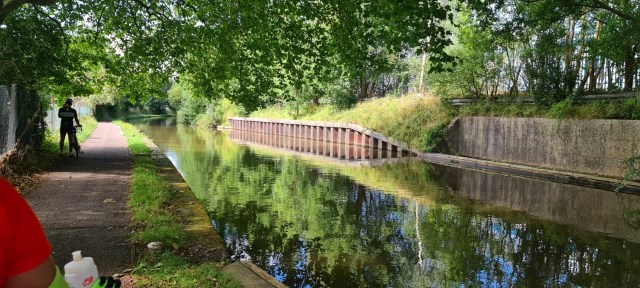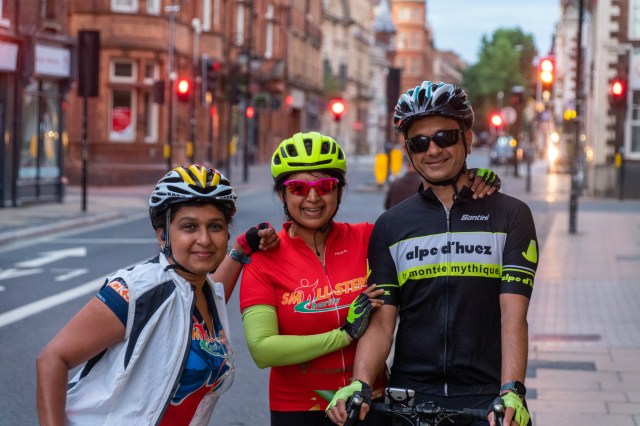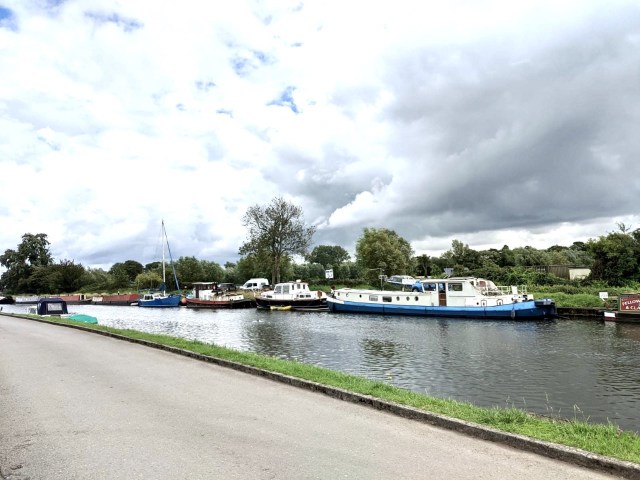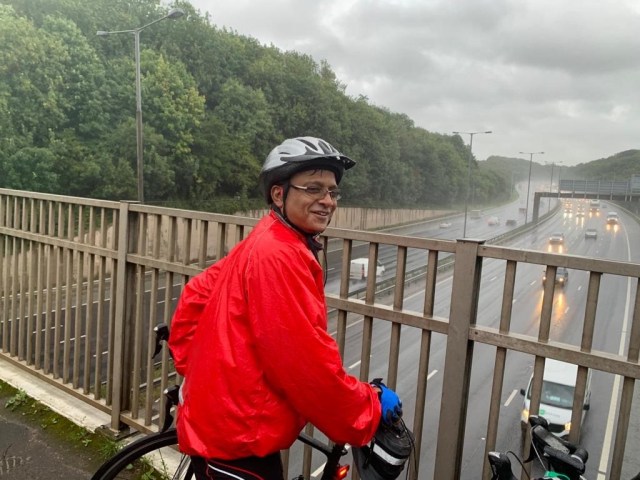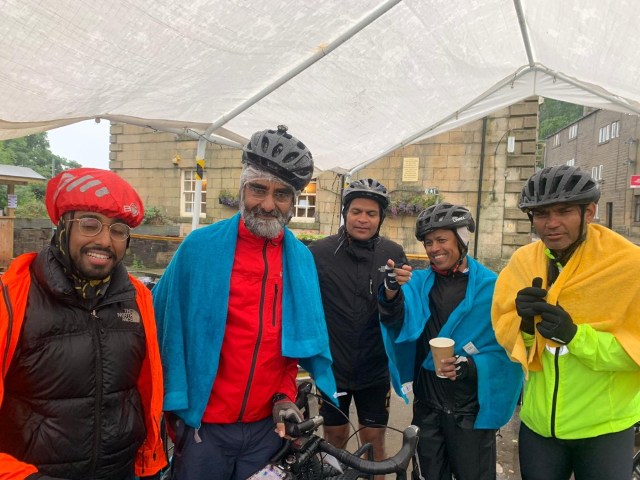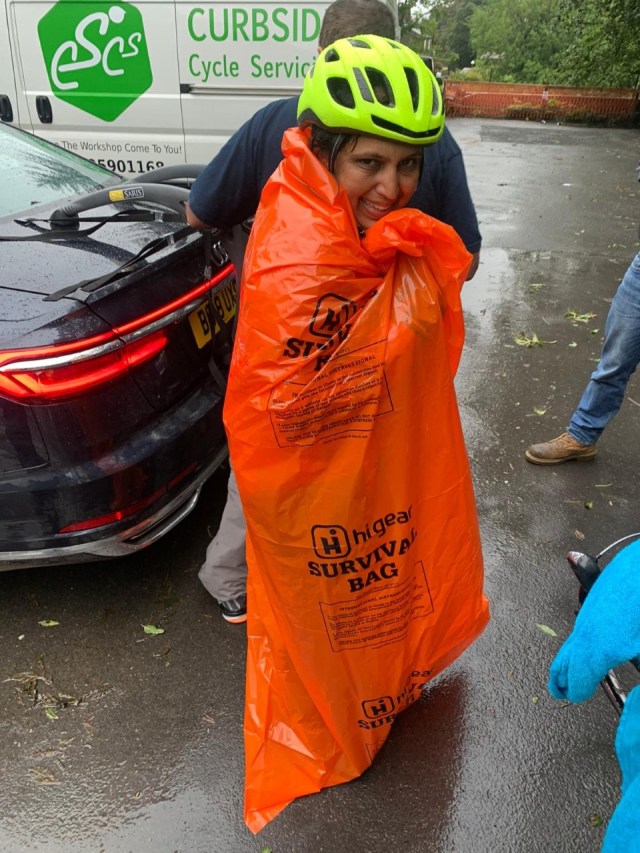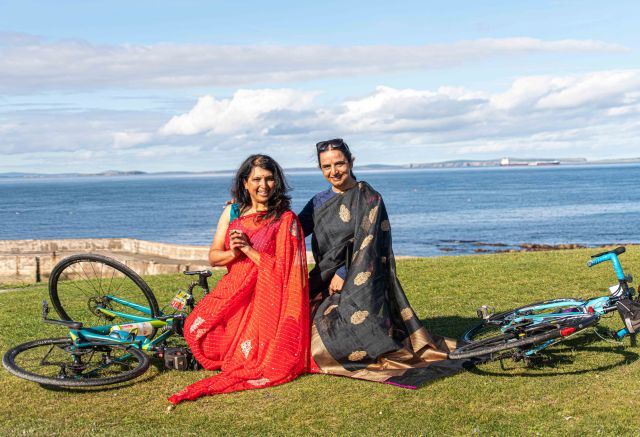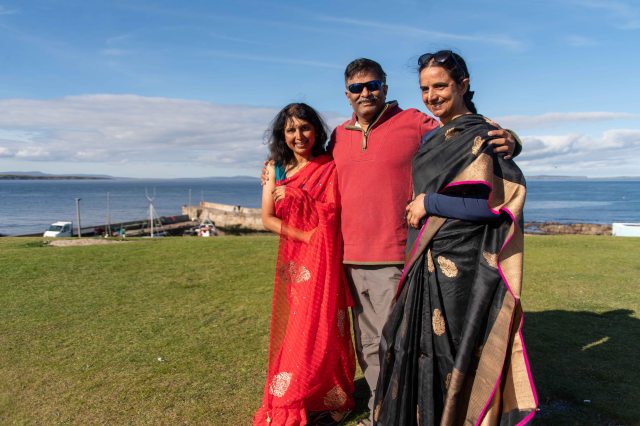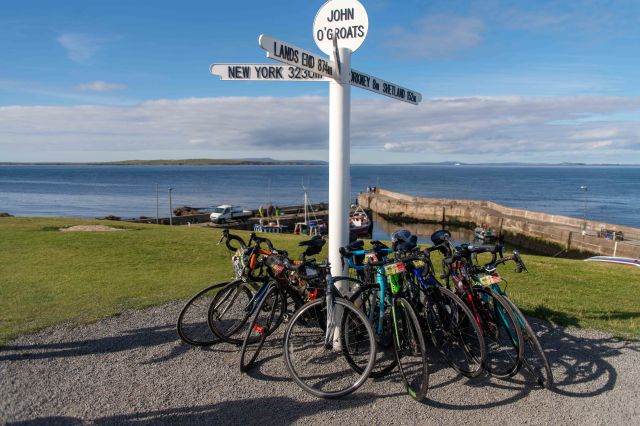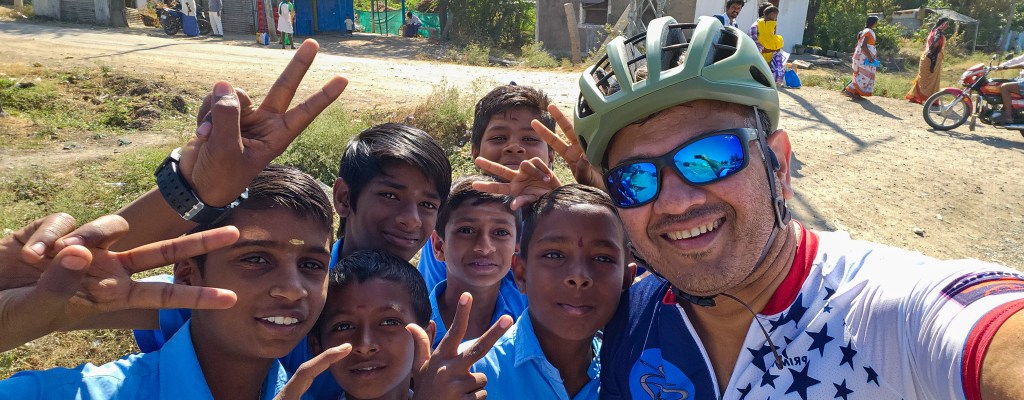
Temple to tides

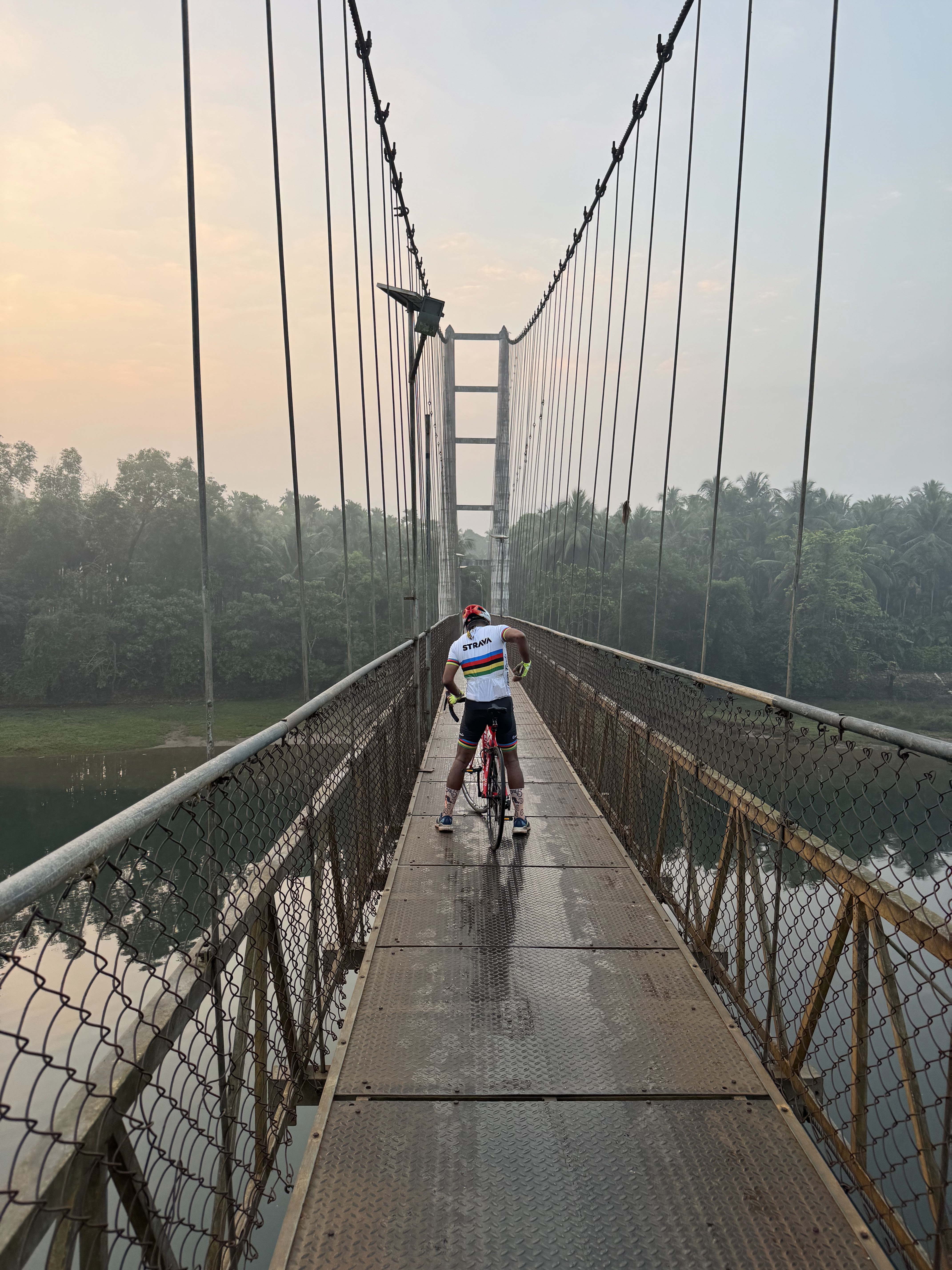
January 2026.
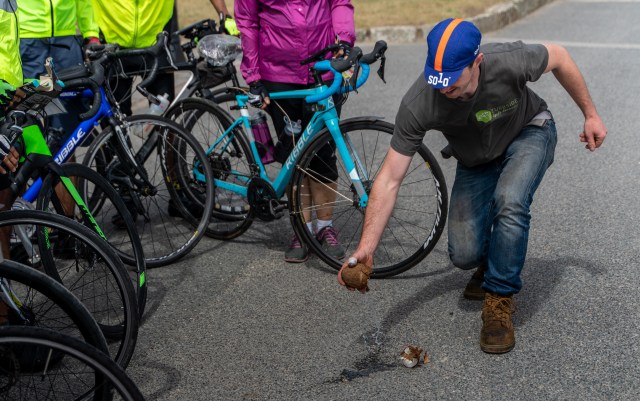
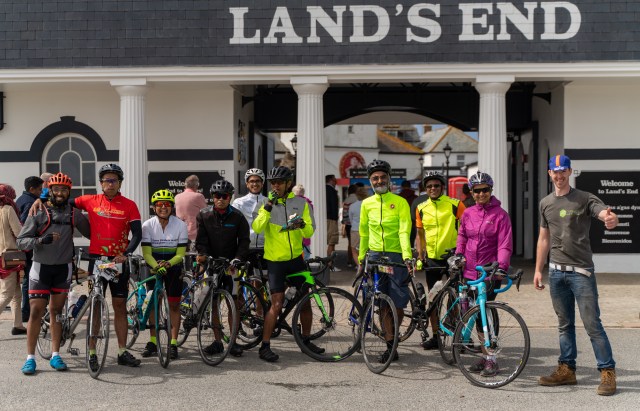
The Konkan calling.

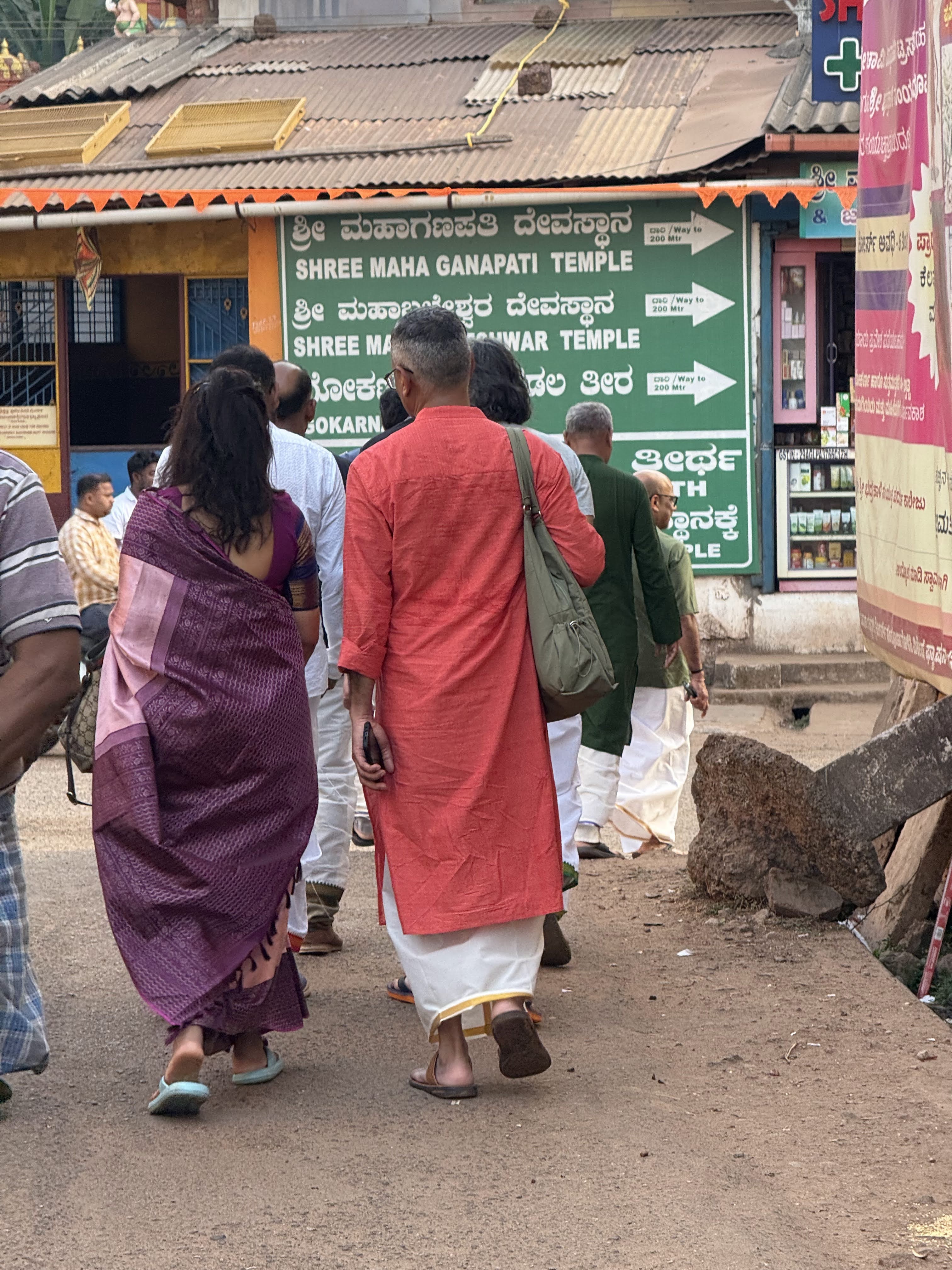
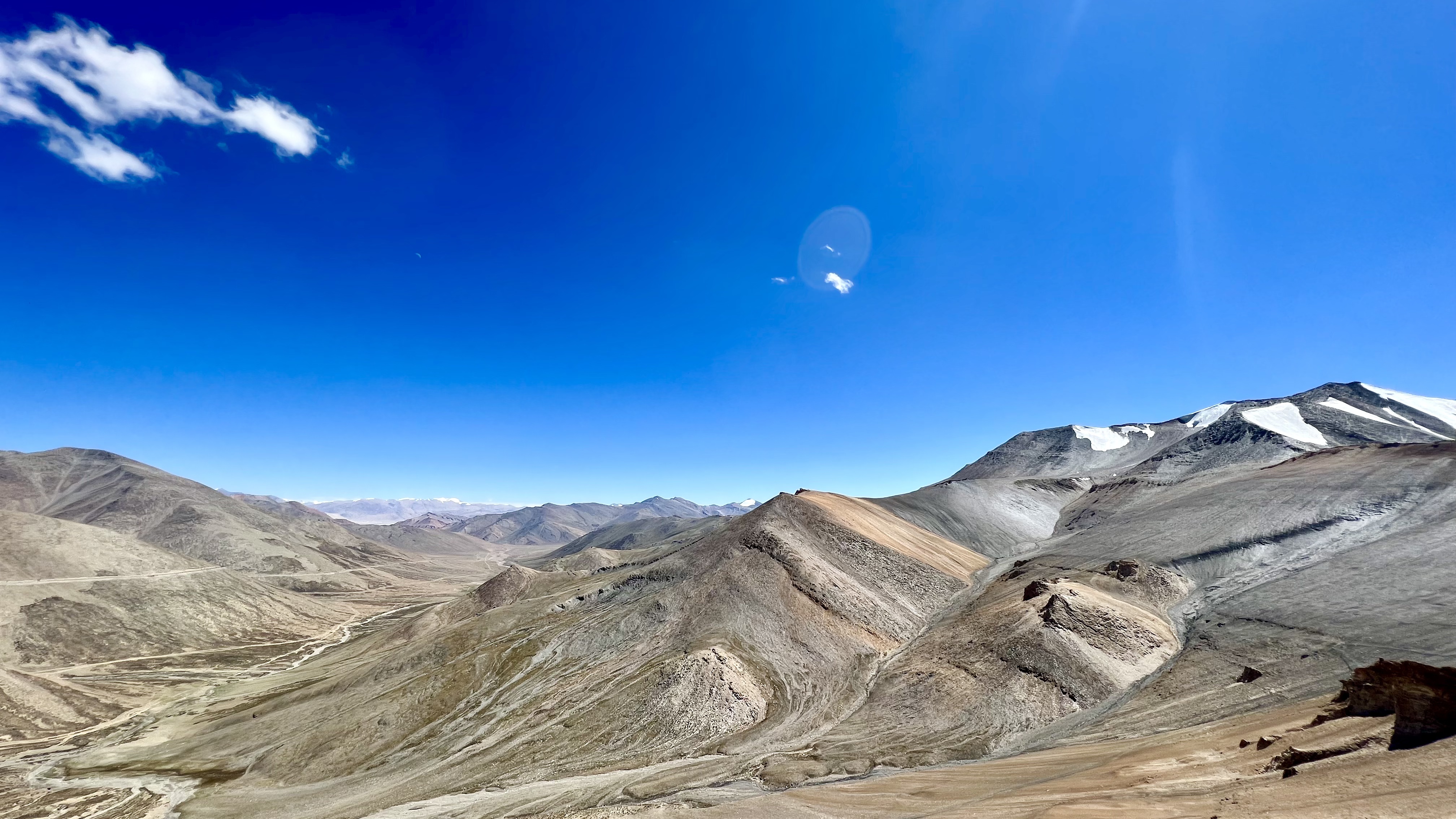
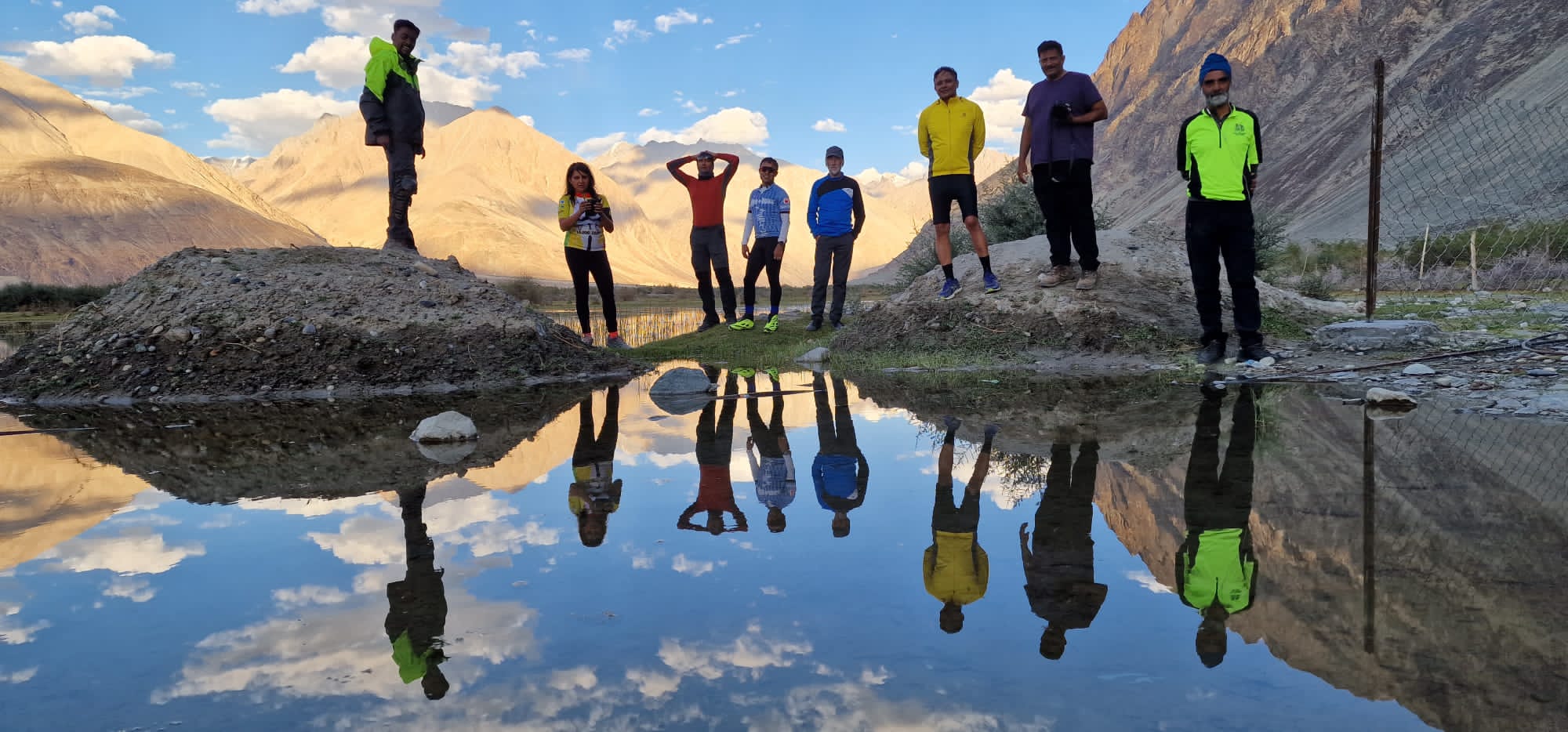
Destination: Hampi–Dandeli–Goa–Gokarna–Jog Falls–Udupi.
Another hybrid cycle ride in India.

That odd combo from our first hybrid ride in 2024—
Kovil, cleats, and kaapi — demanded yet another sequel.

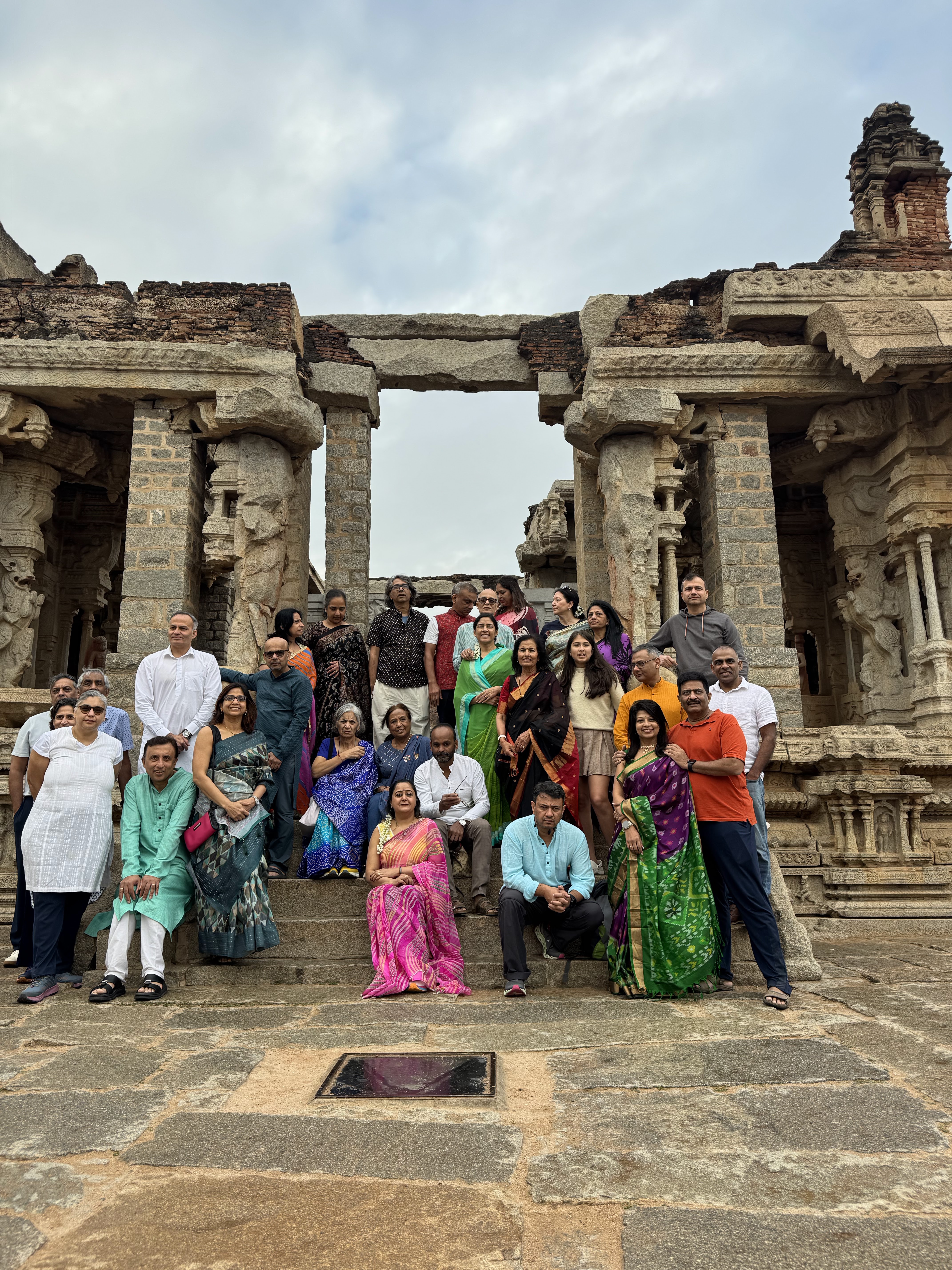
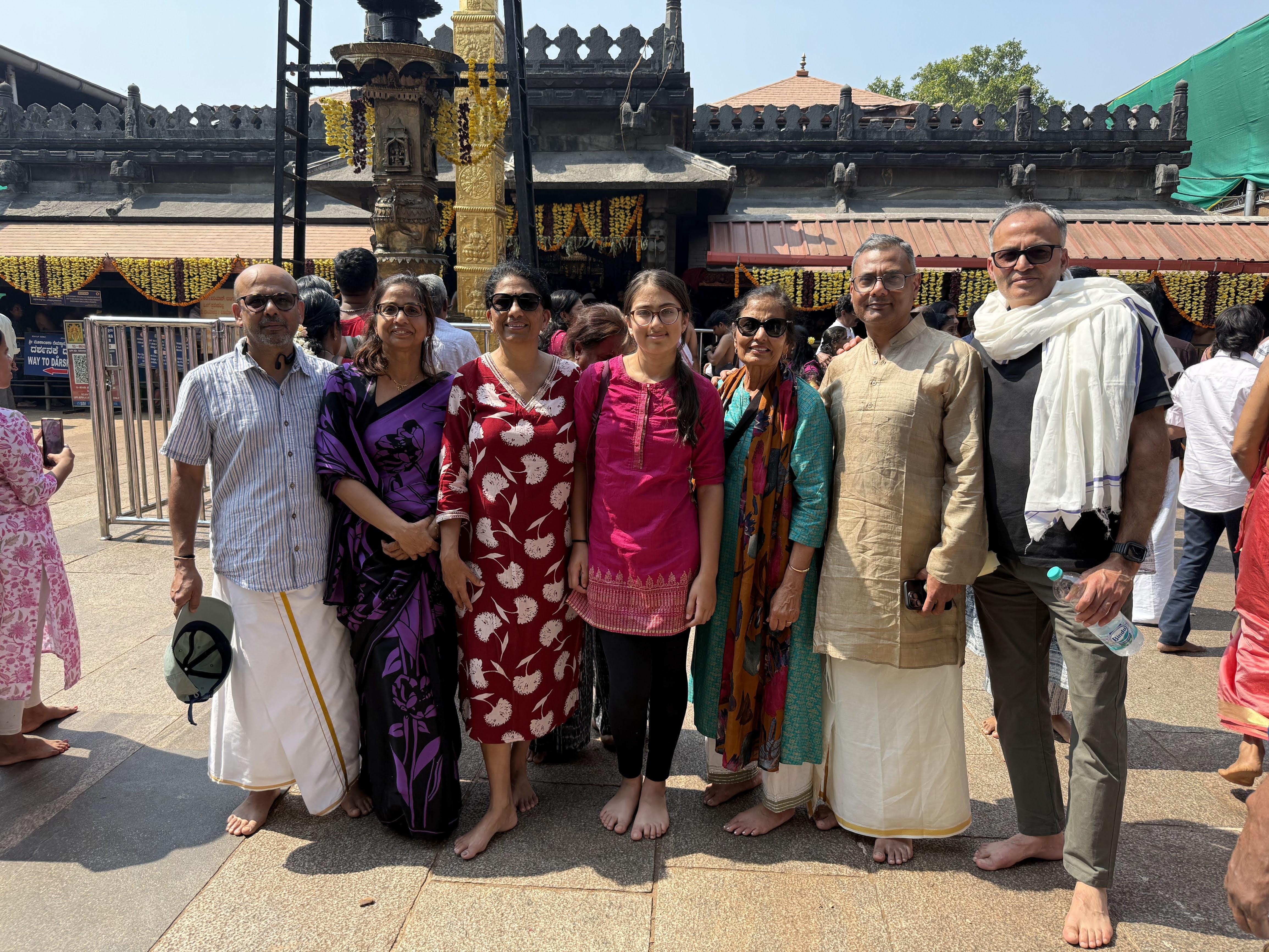
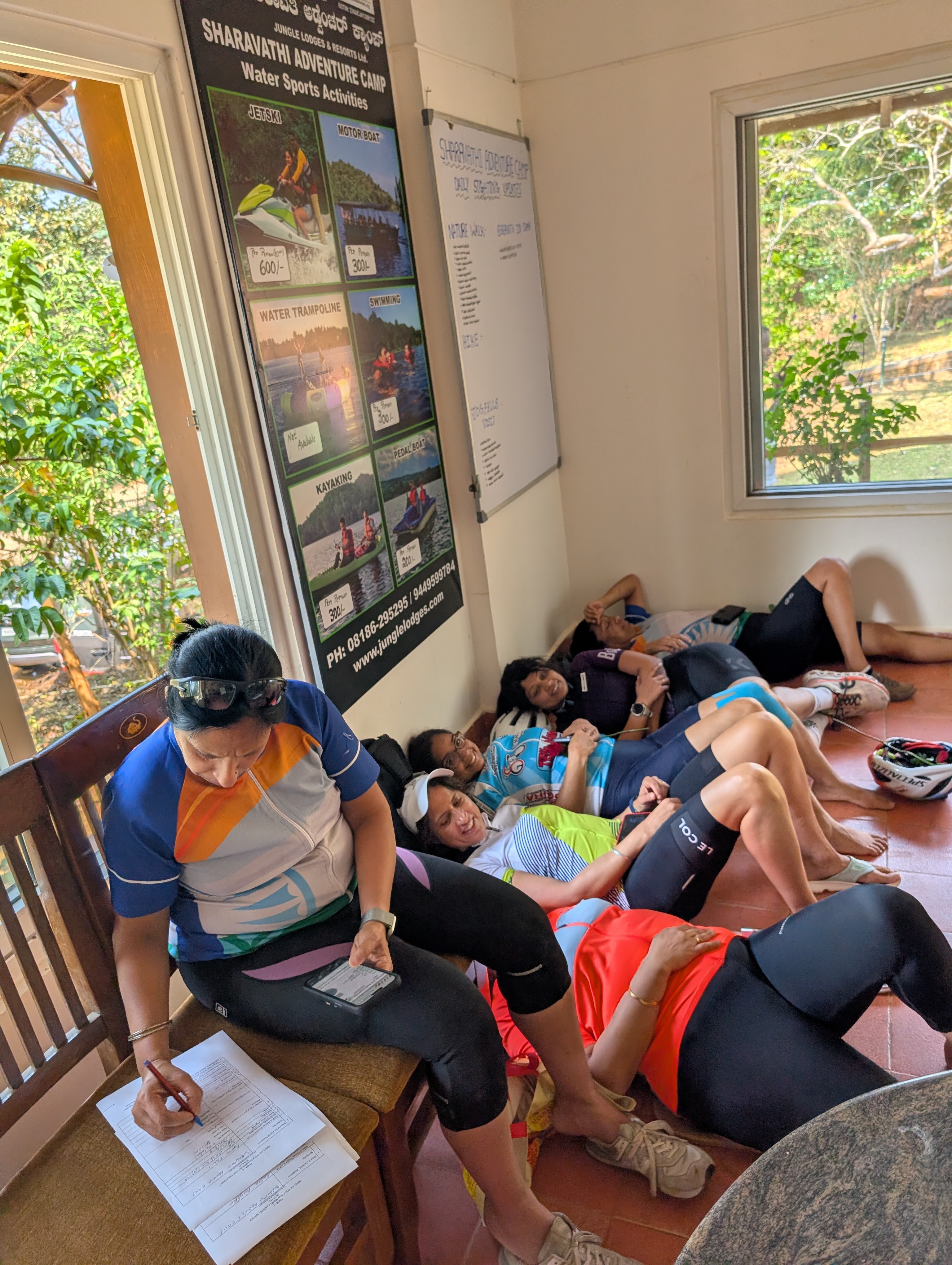
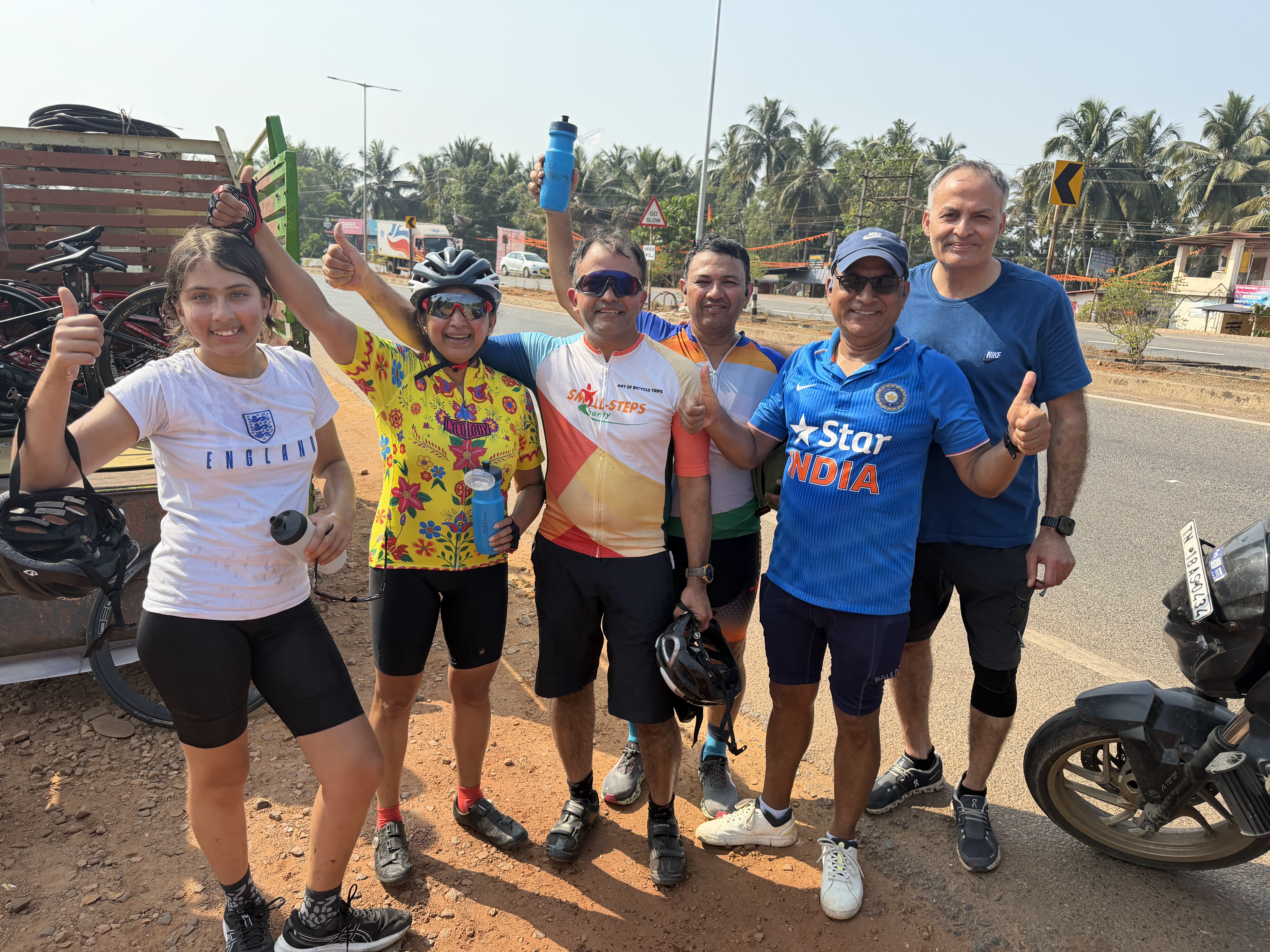
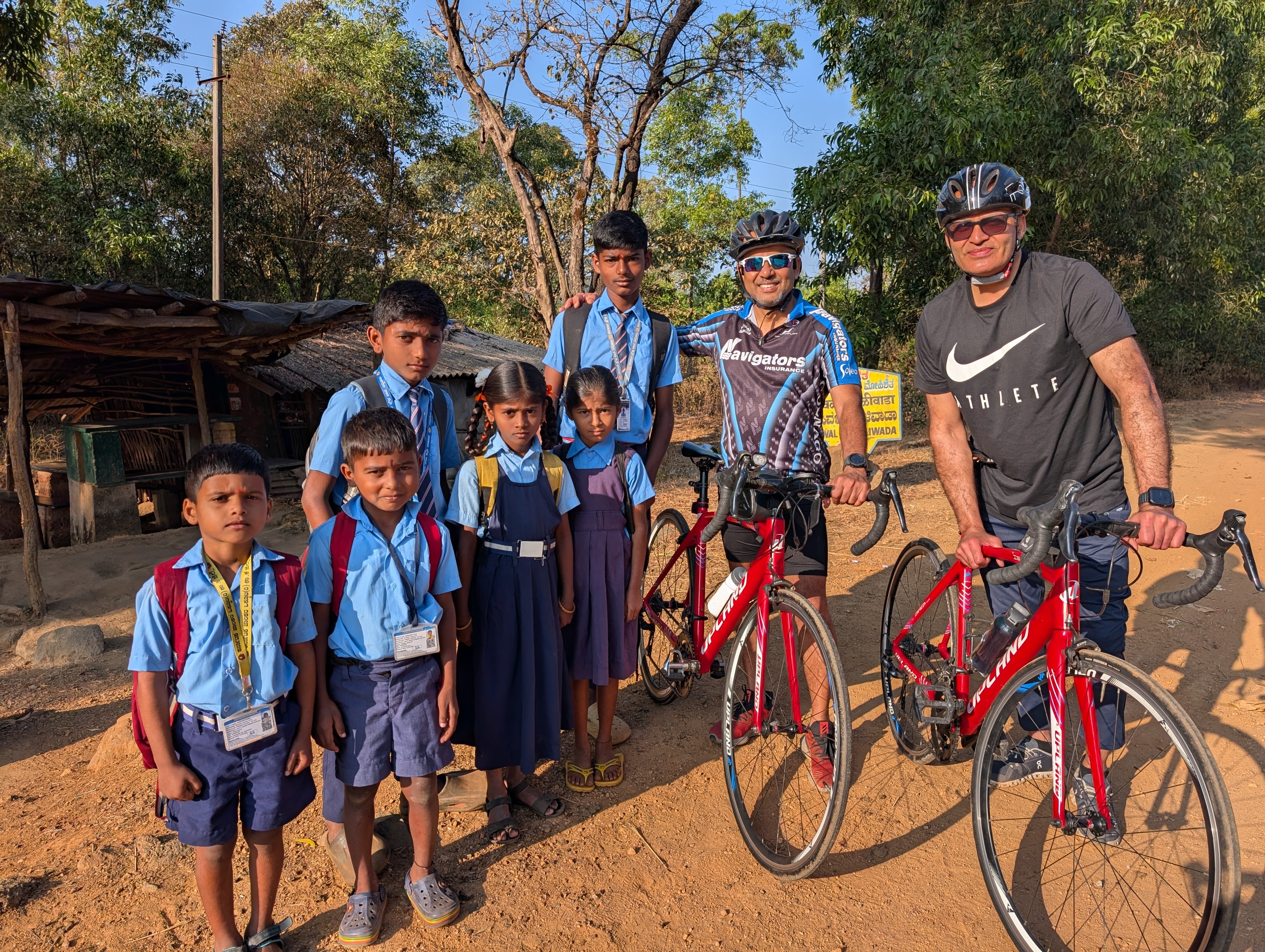
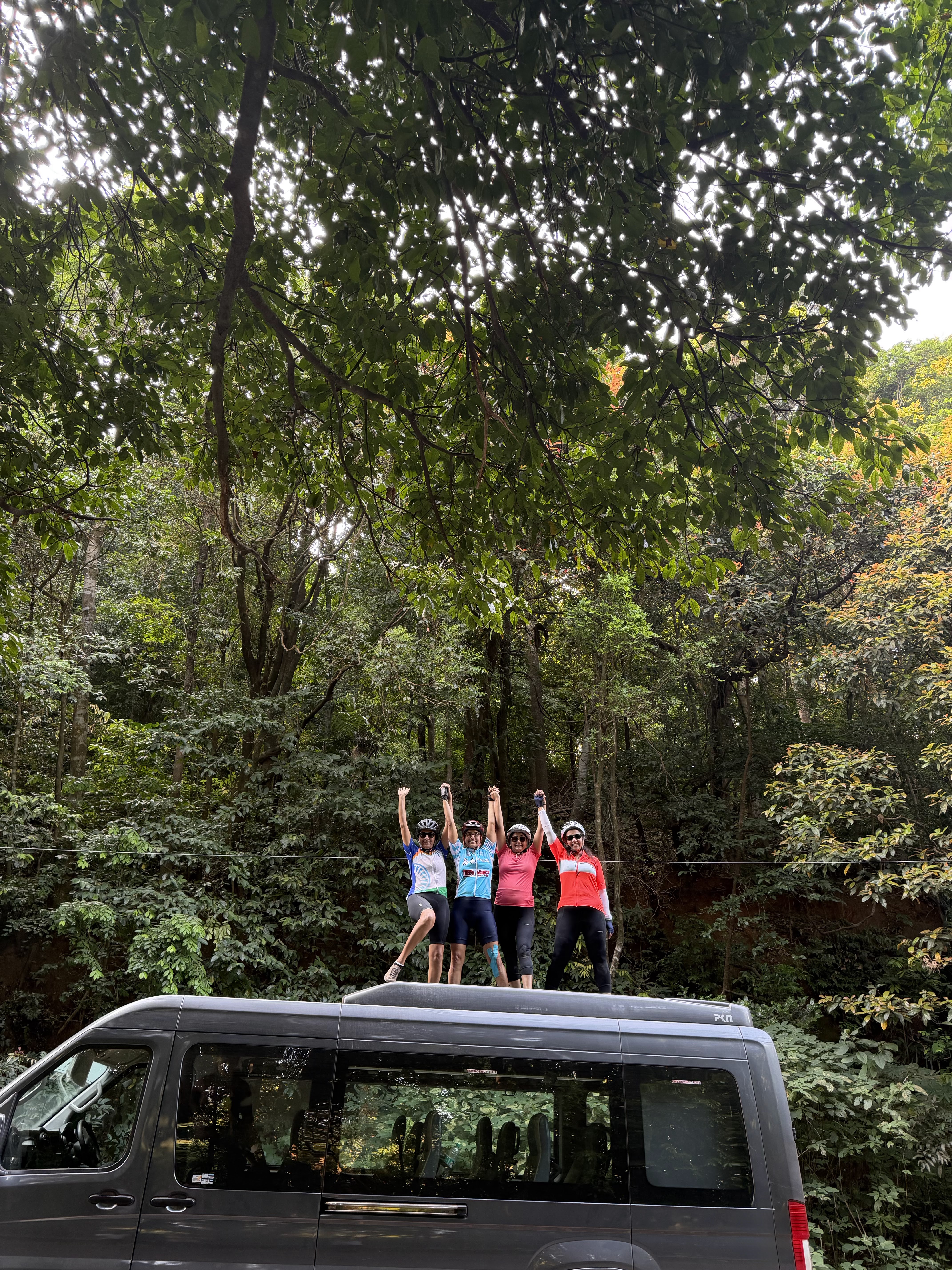
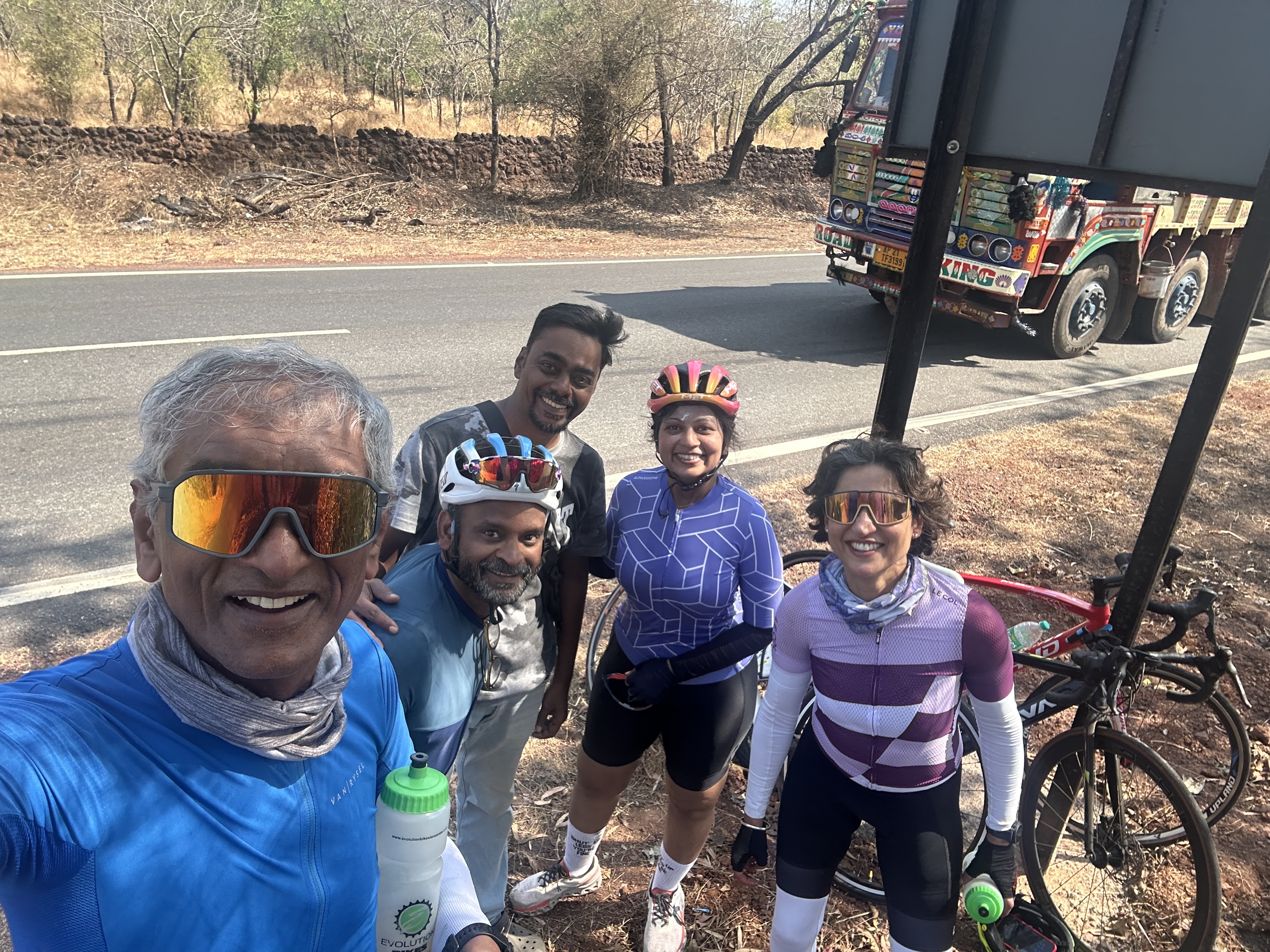
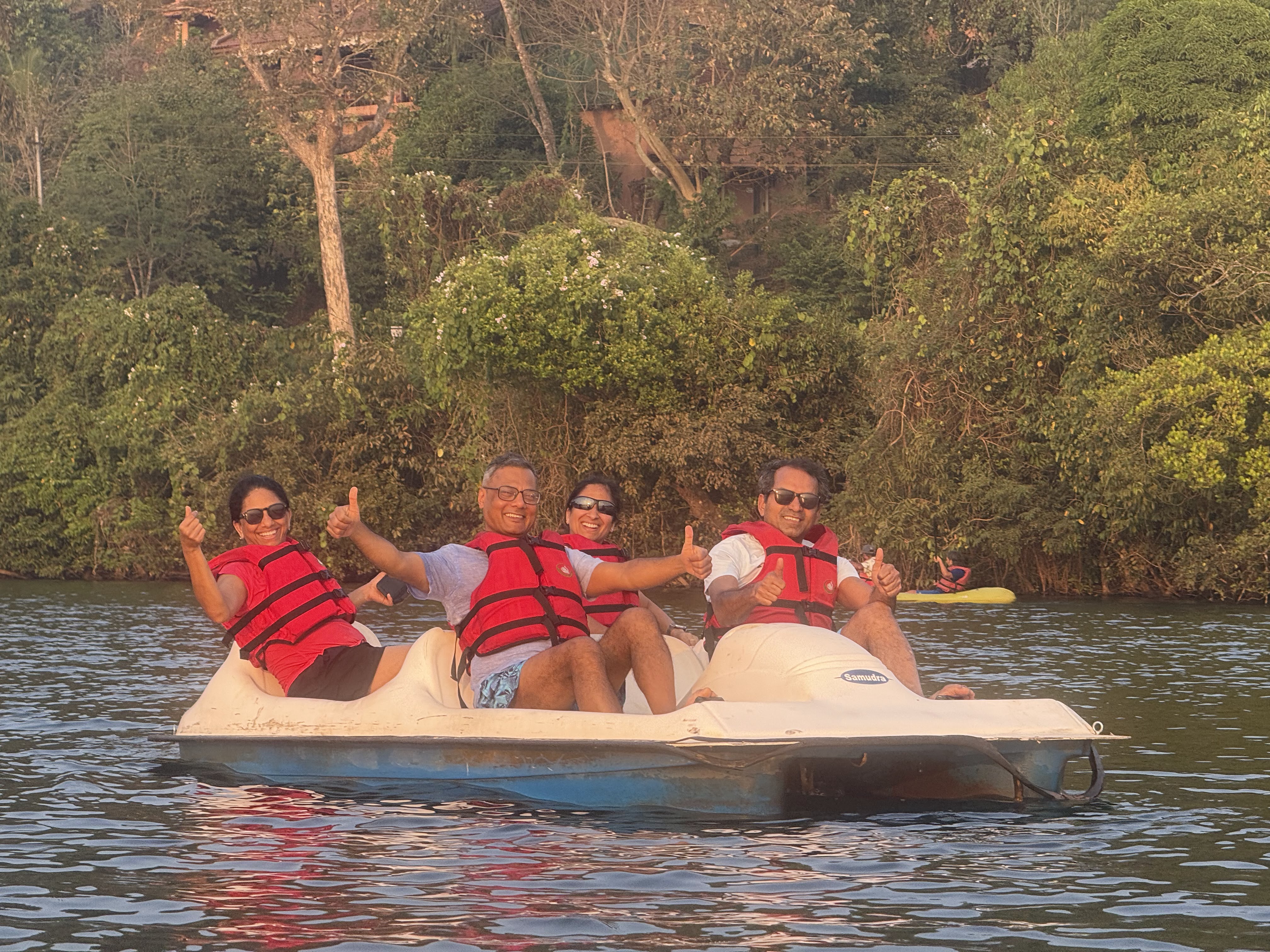
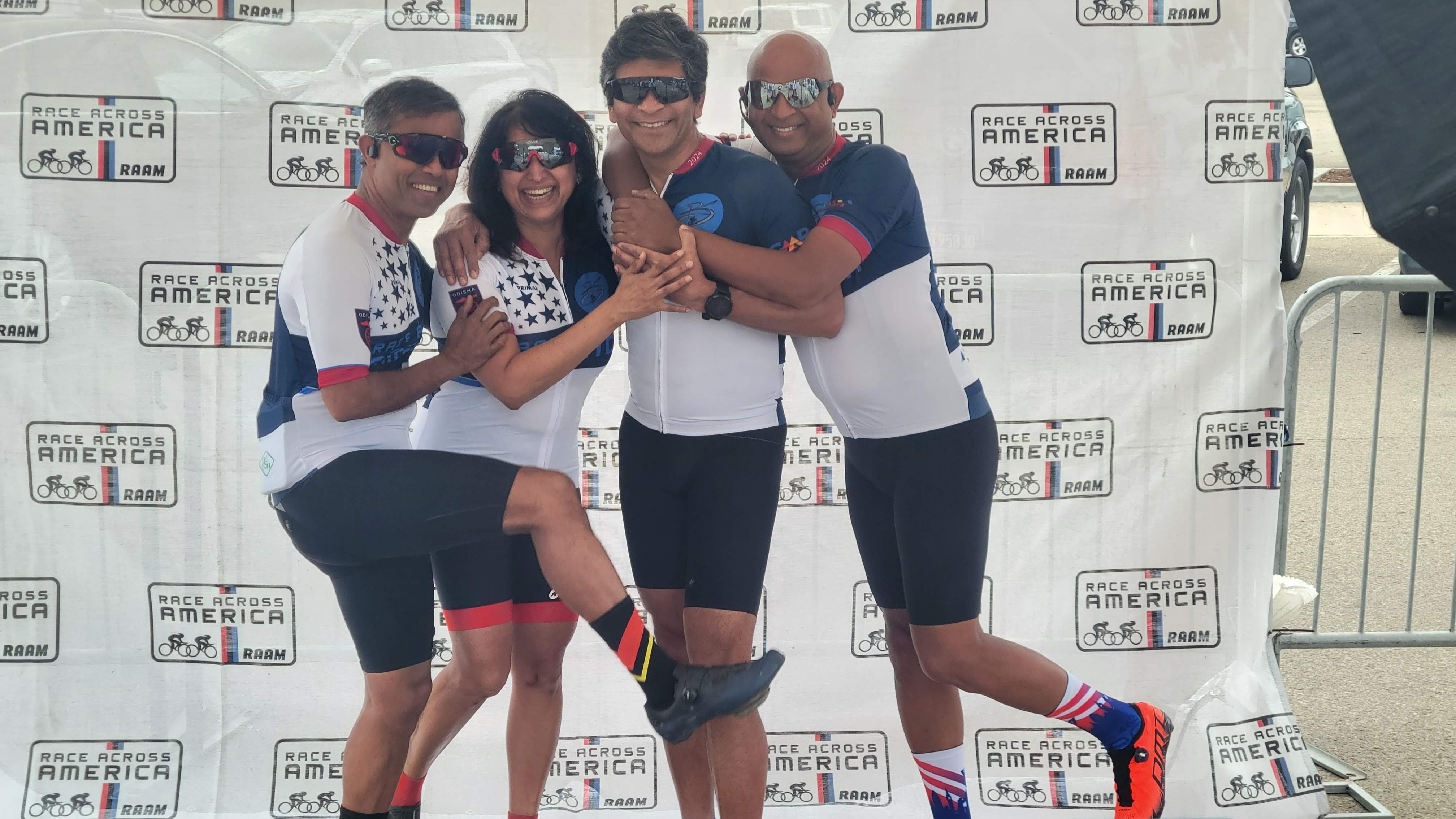
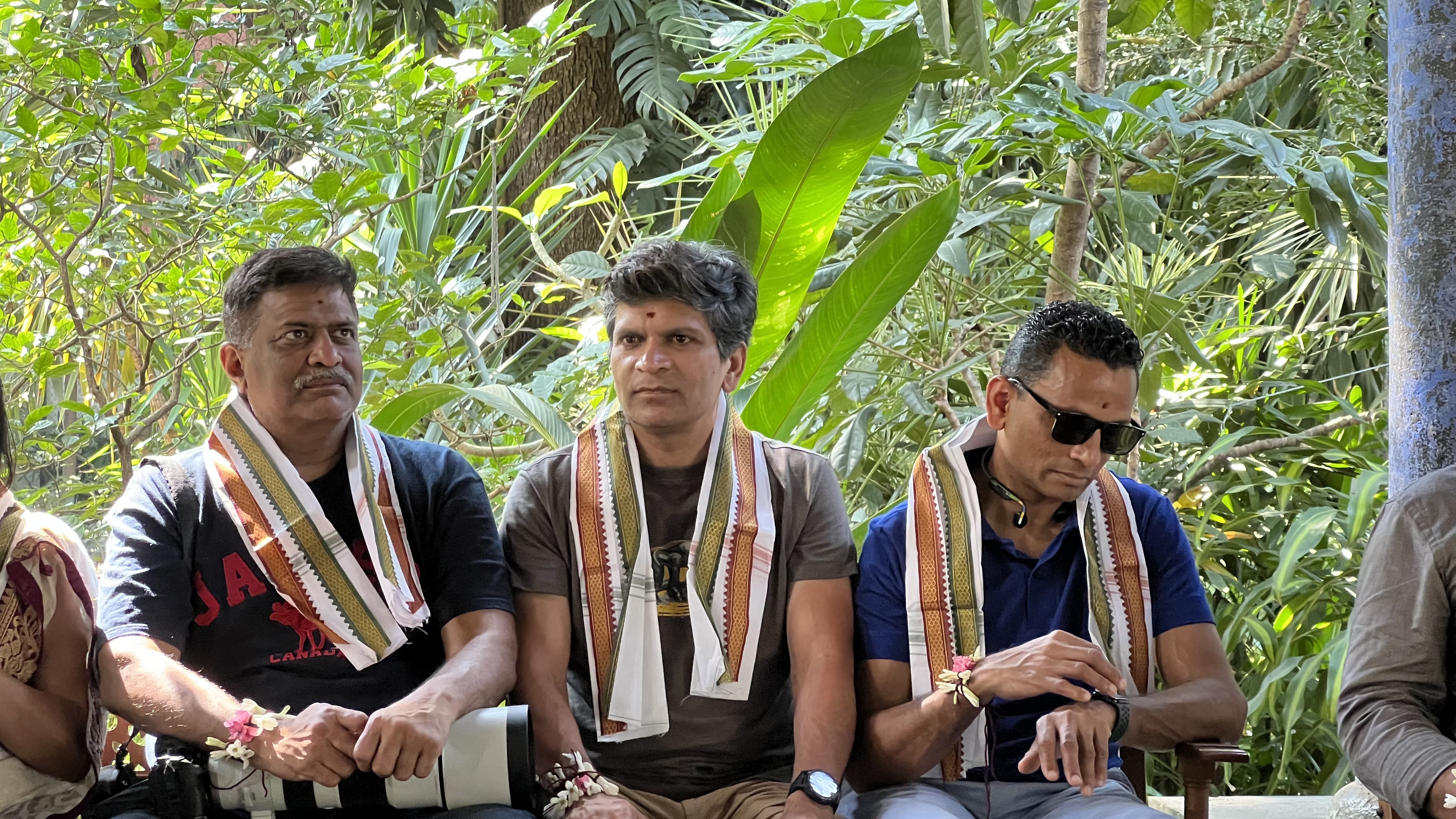
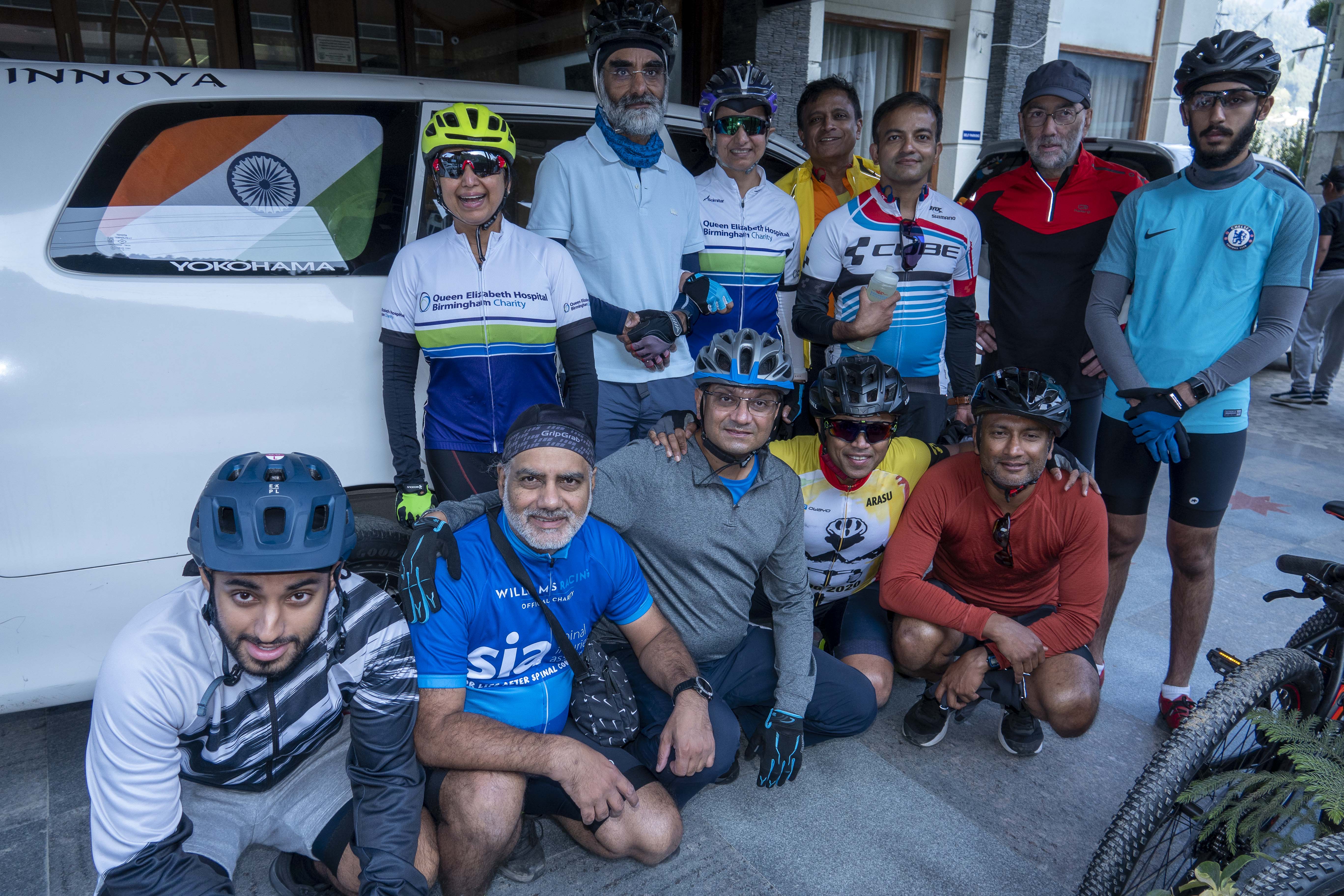
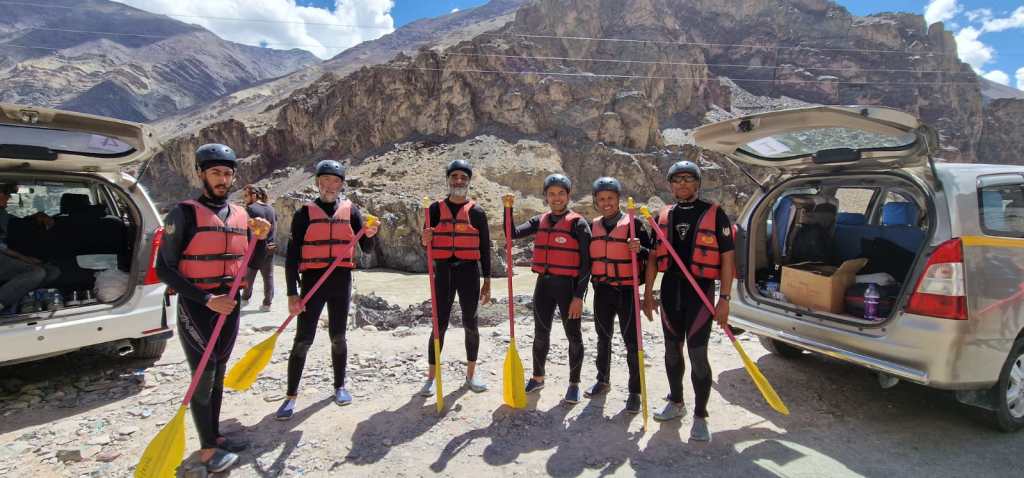
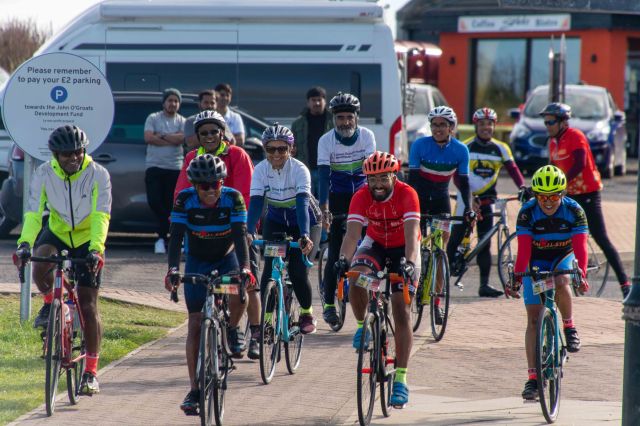
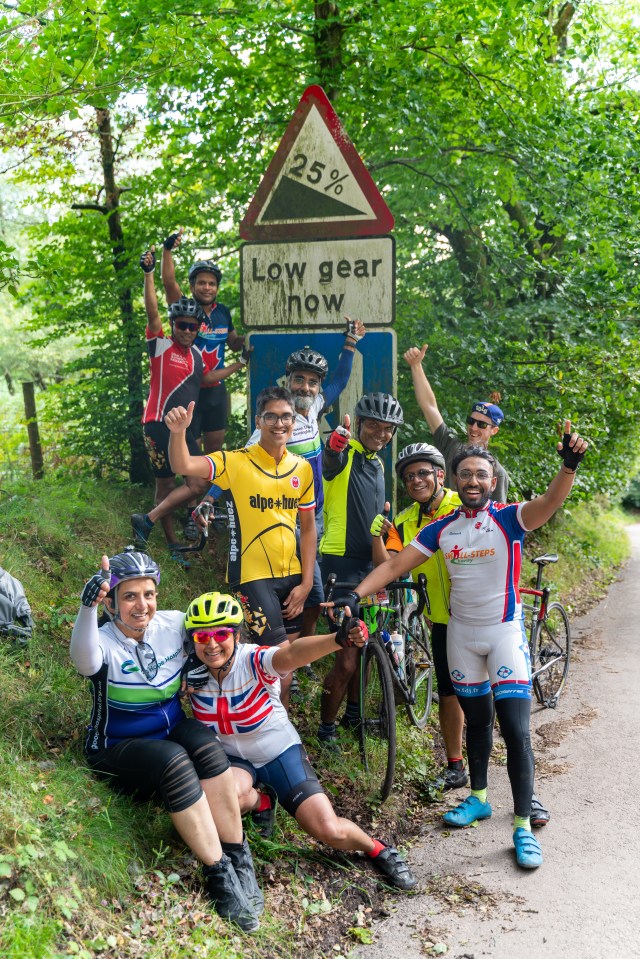
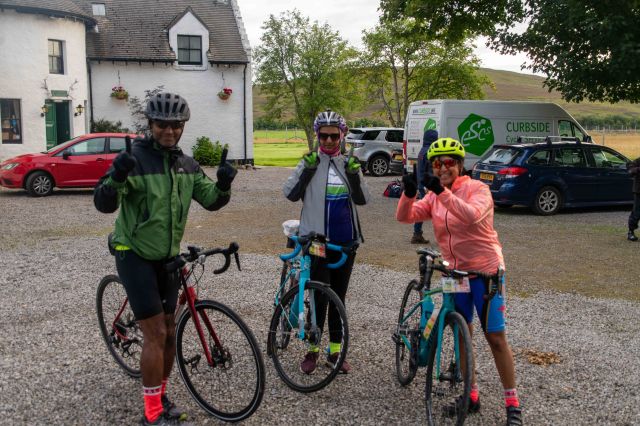
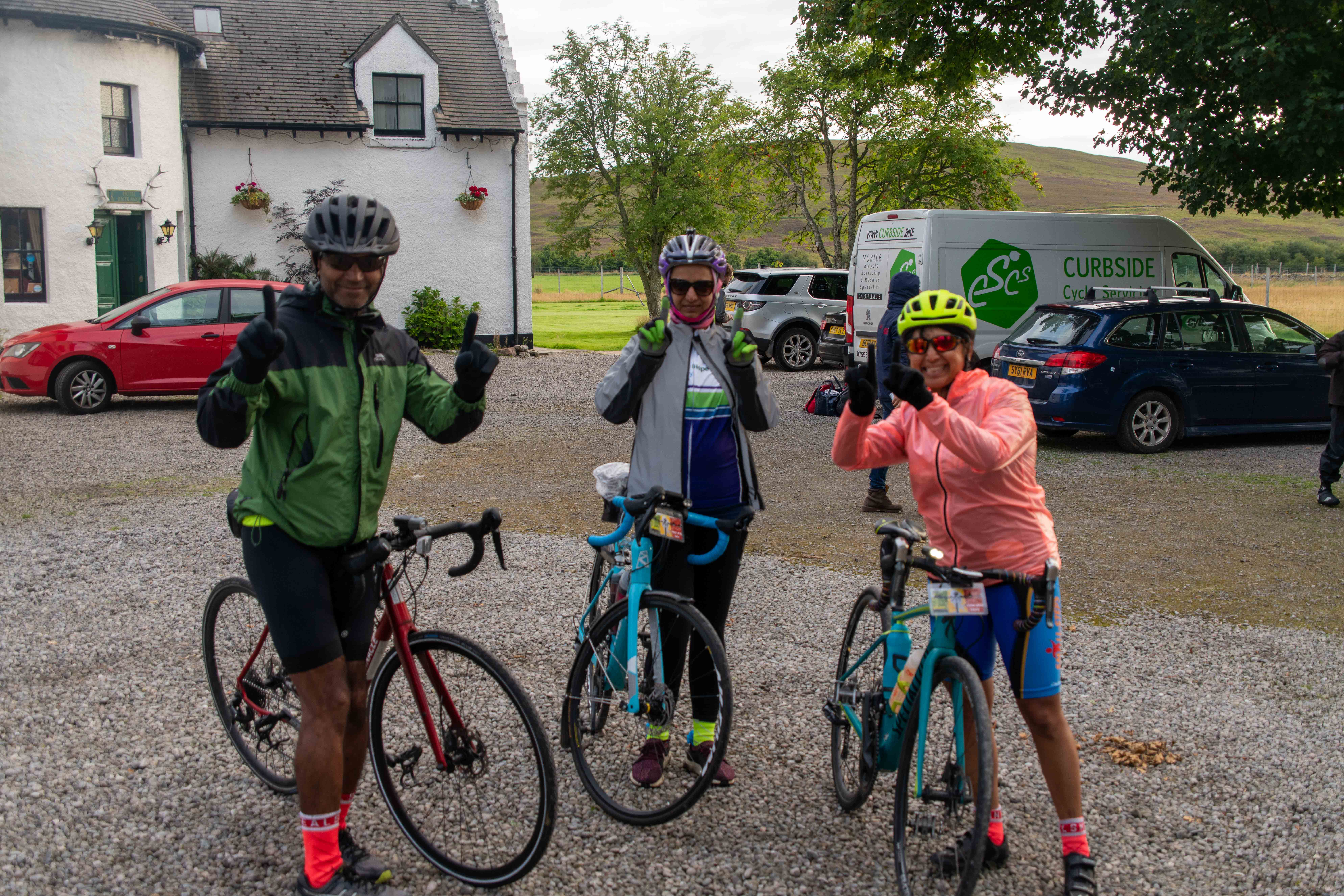
When OCI and helmets share the same packing list,the school-trip excitement among the fifty-pluses signed  up for the ride( from Canada, the USA, the UK, the UAE, and India)reaches spirited  levels.

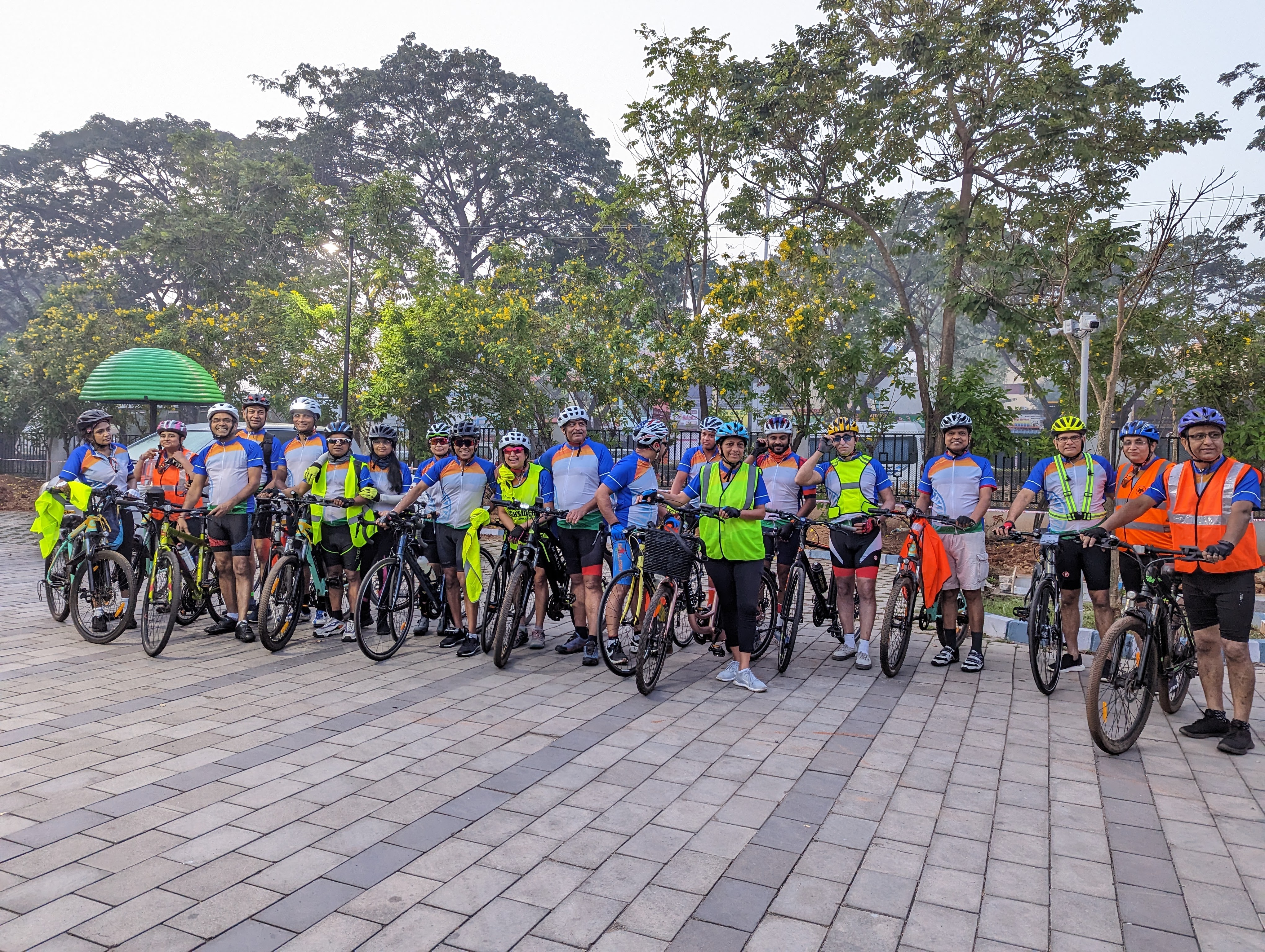
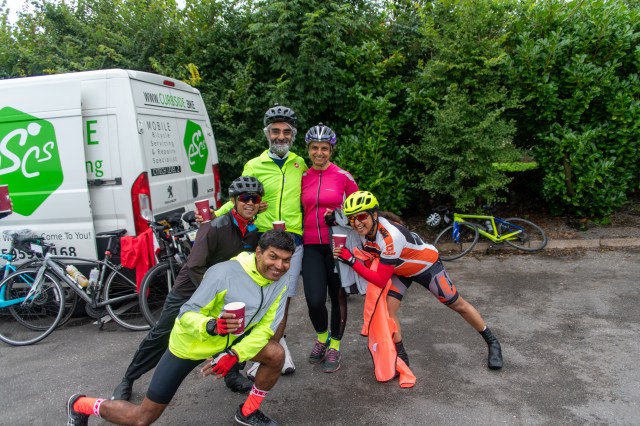
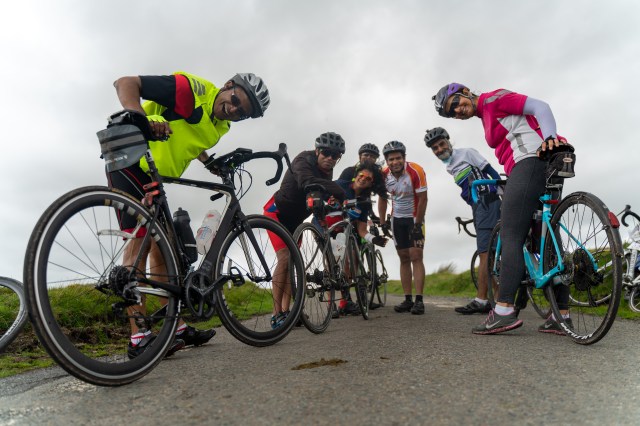
28 riders.
8 non-riders.
Masterminded by Ram and Madhu from Uncharted Travels.
Yet again.

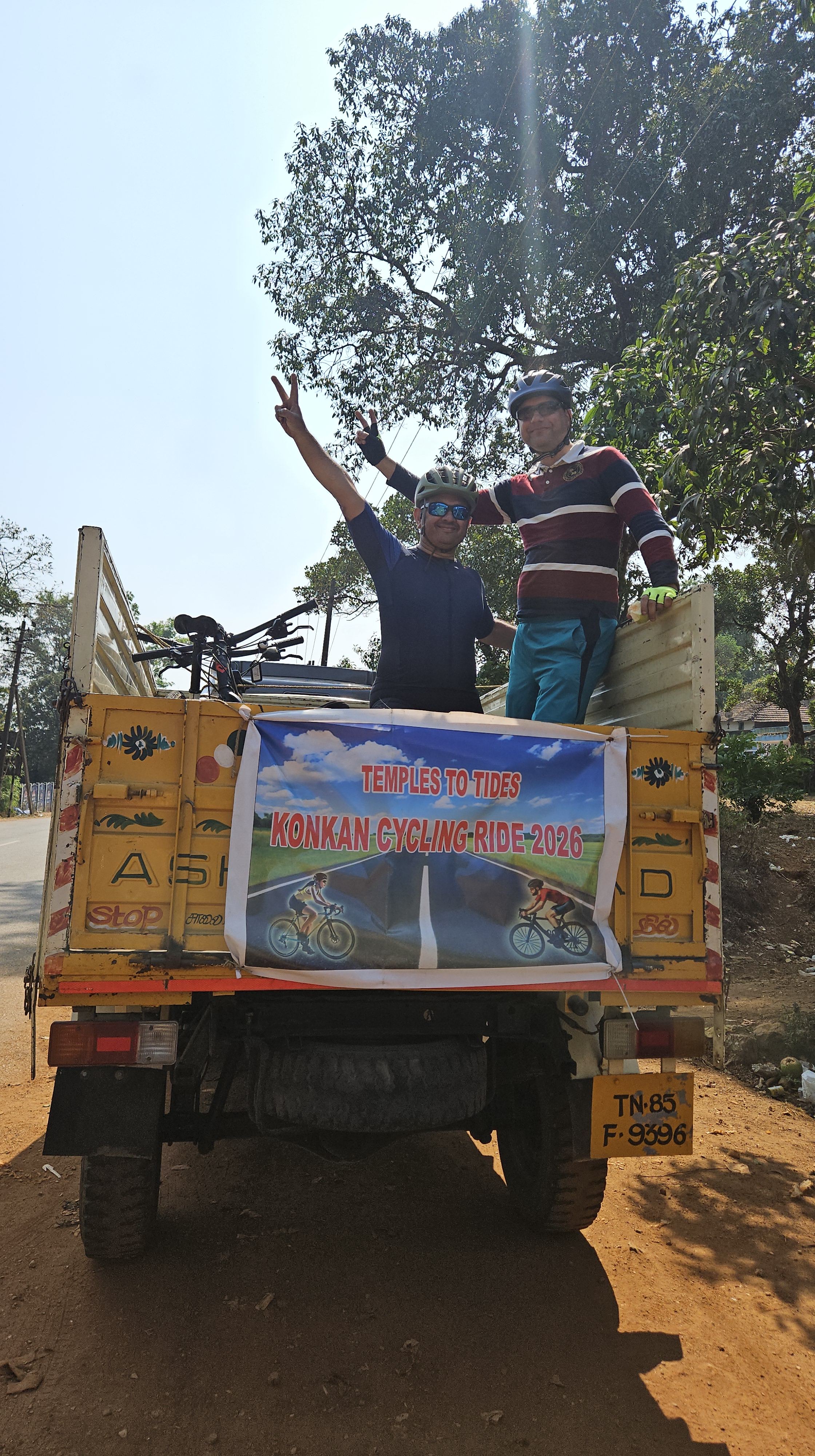
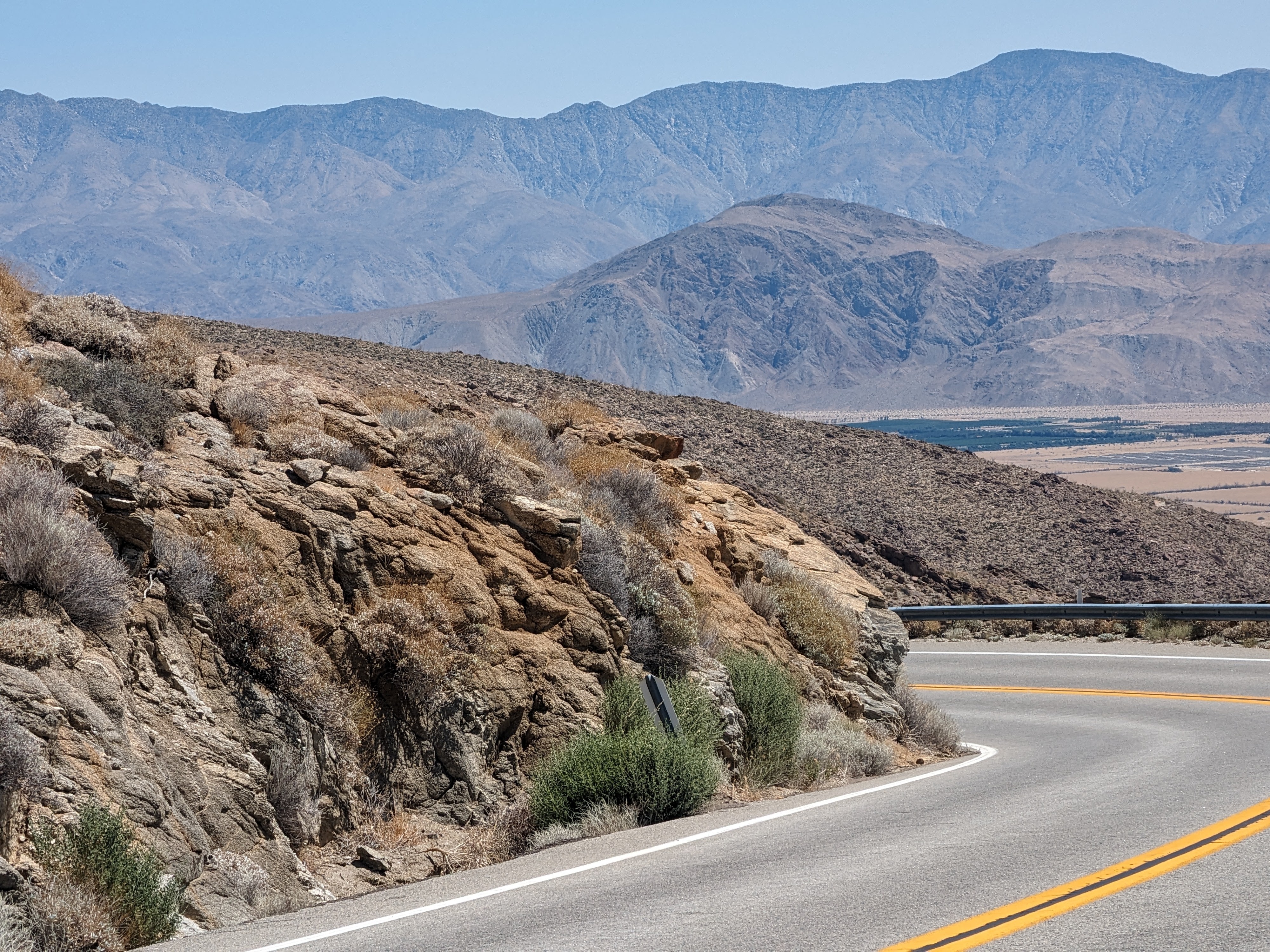
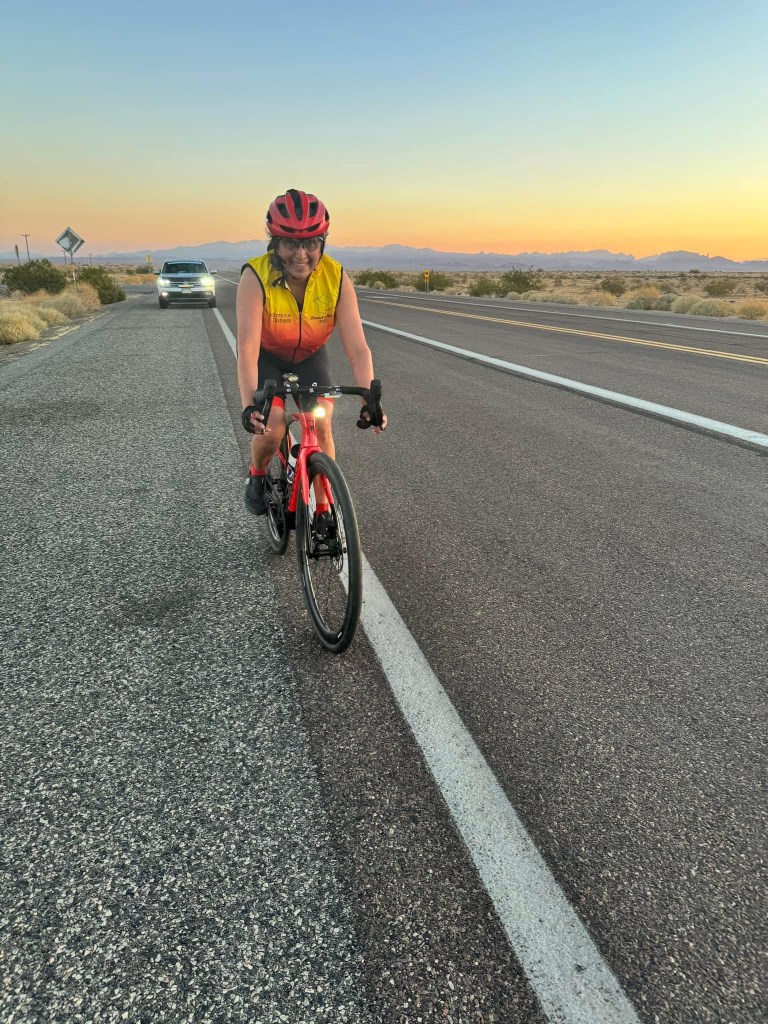
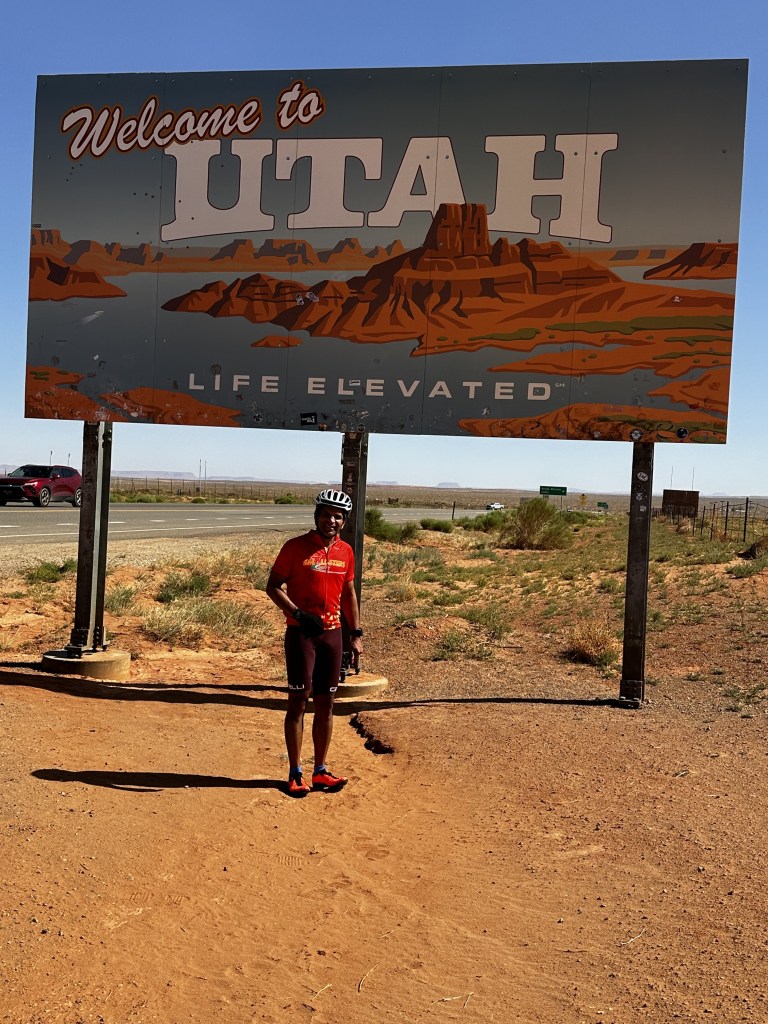
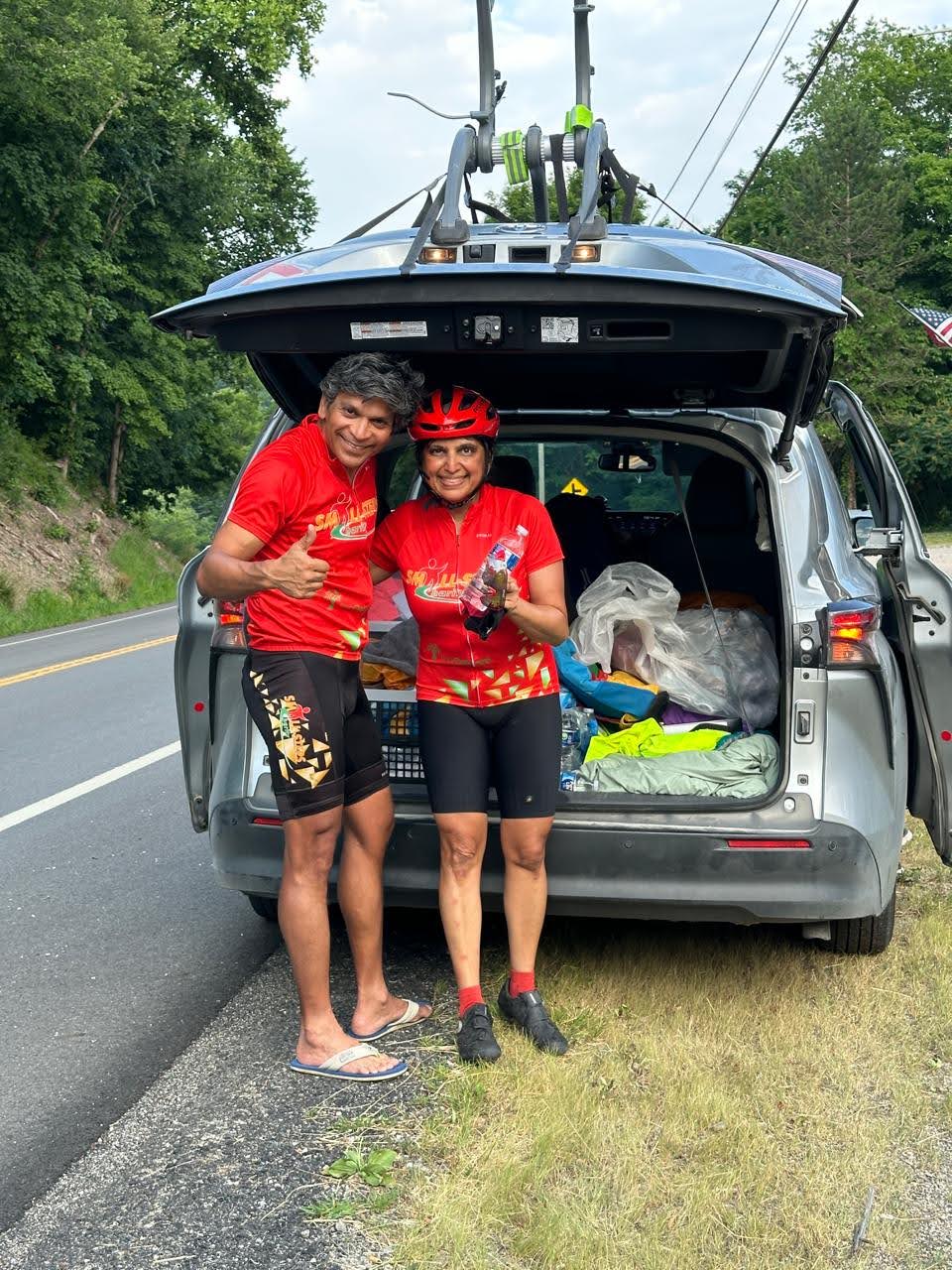
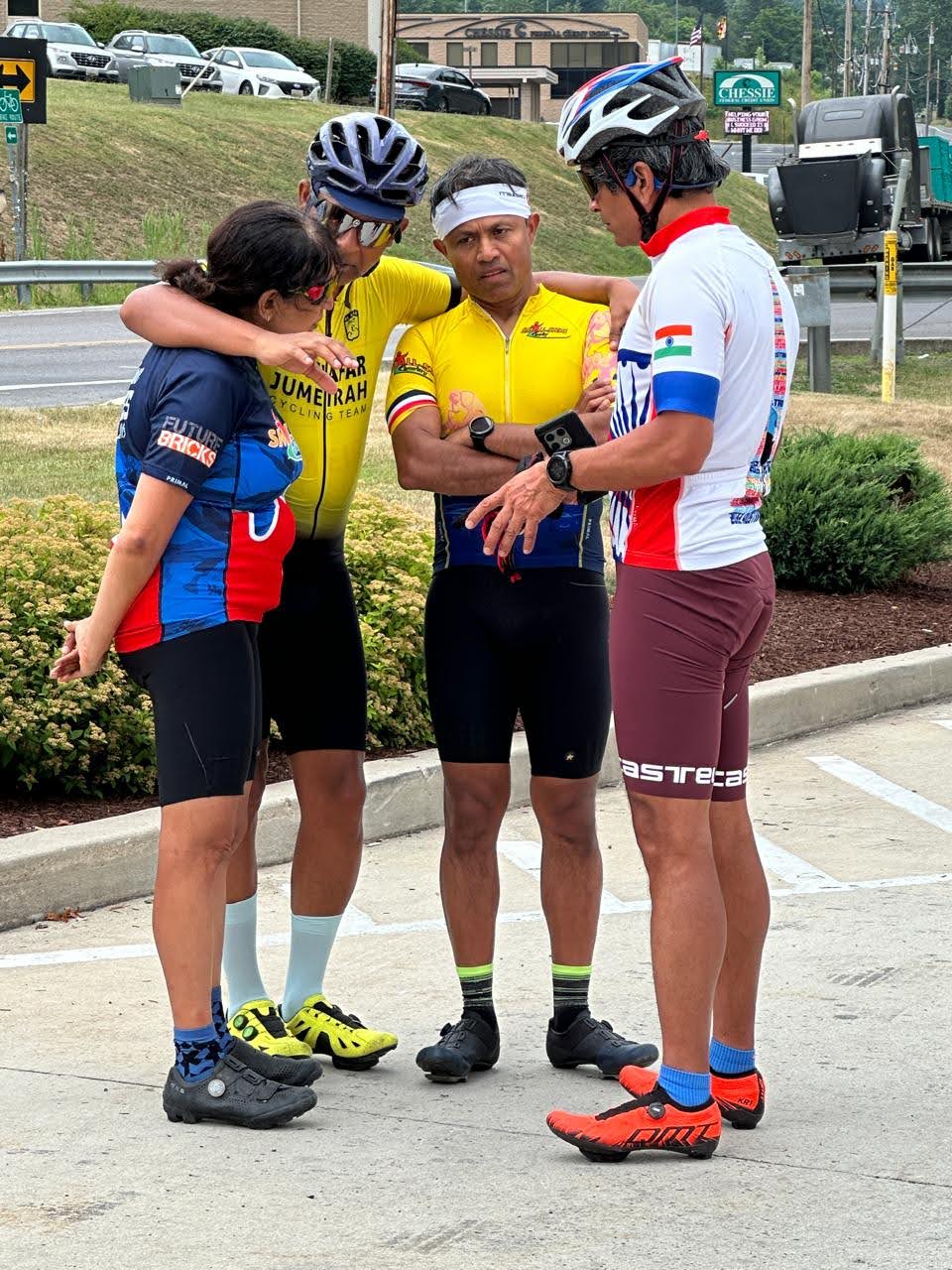
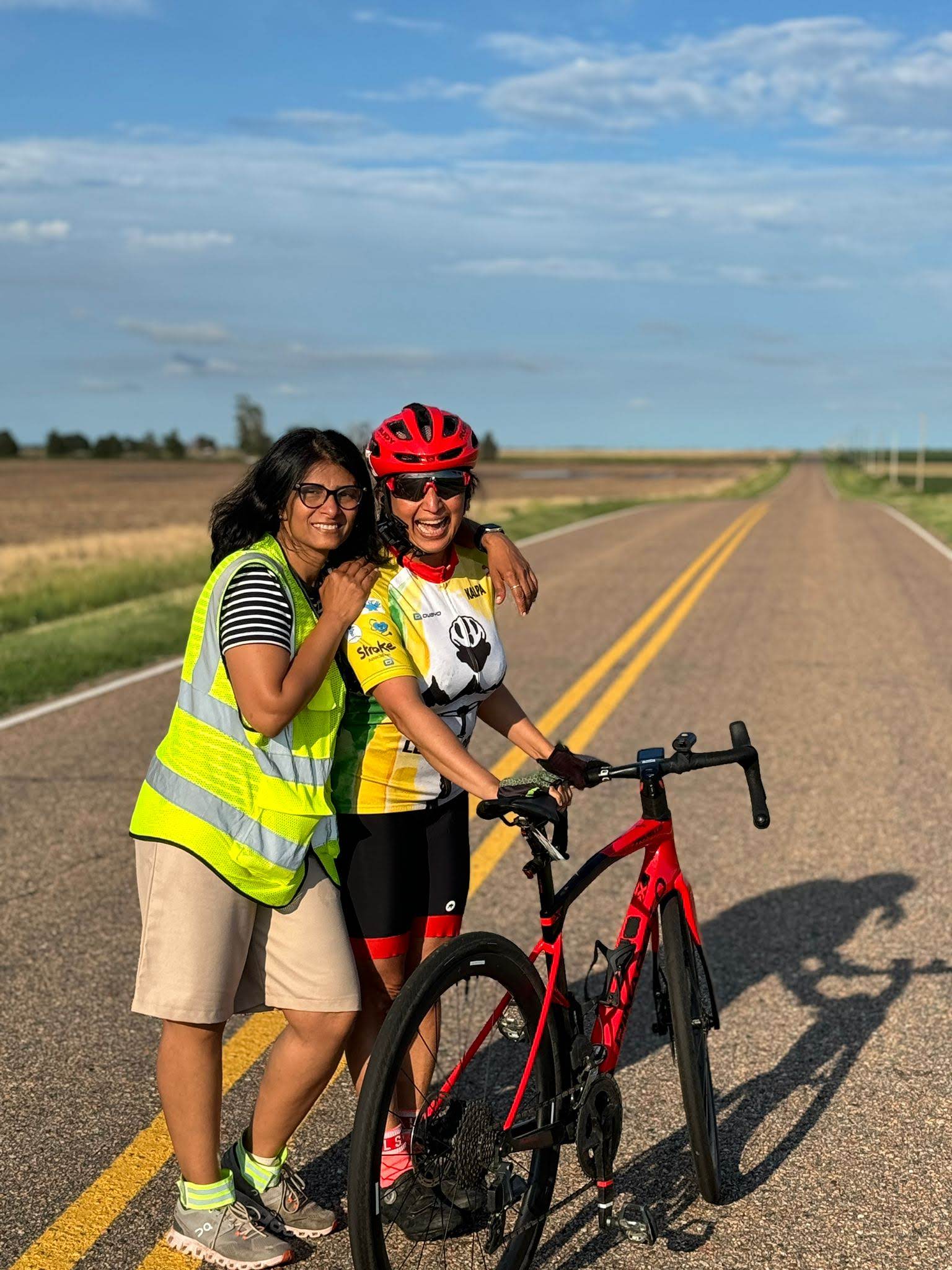
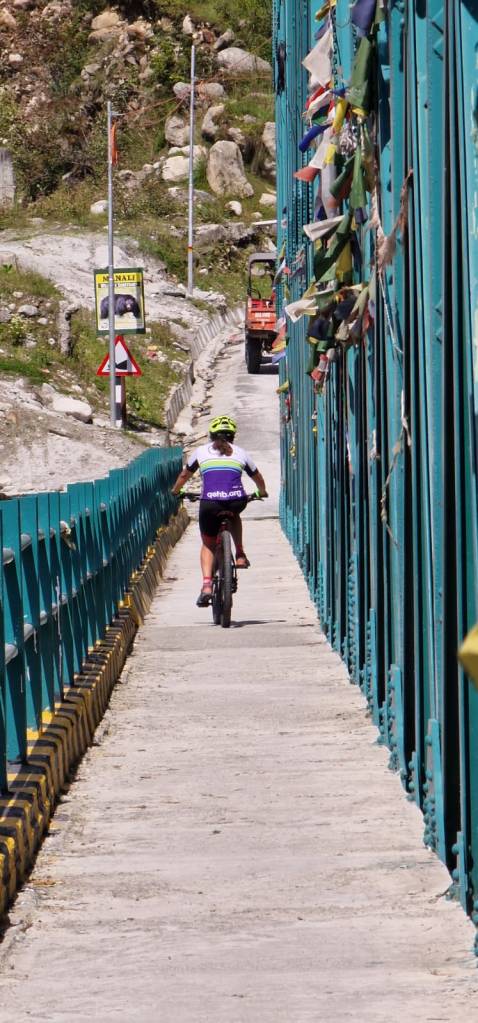
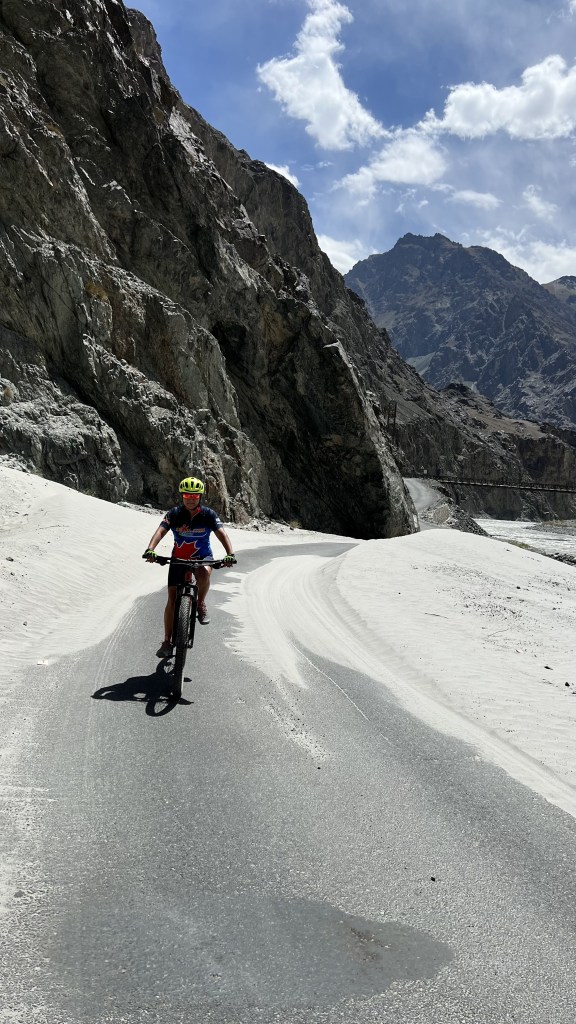
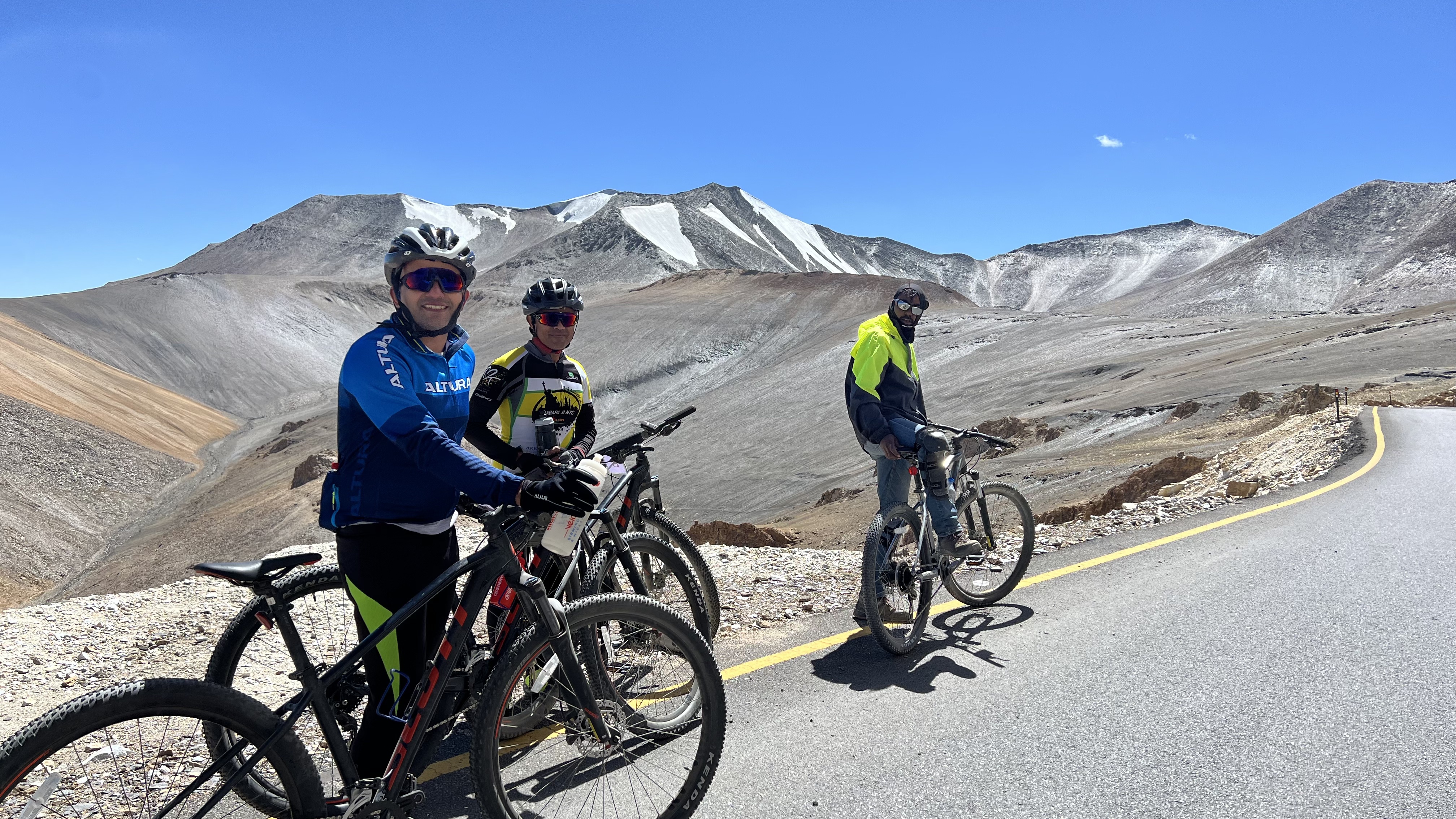
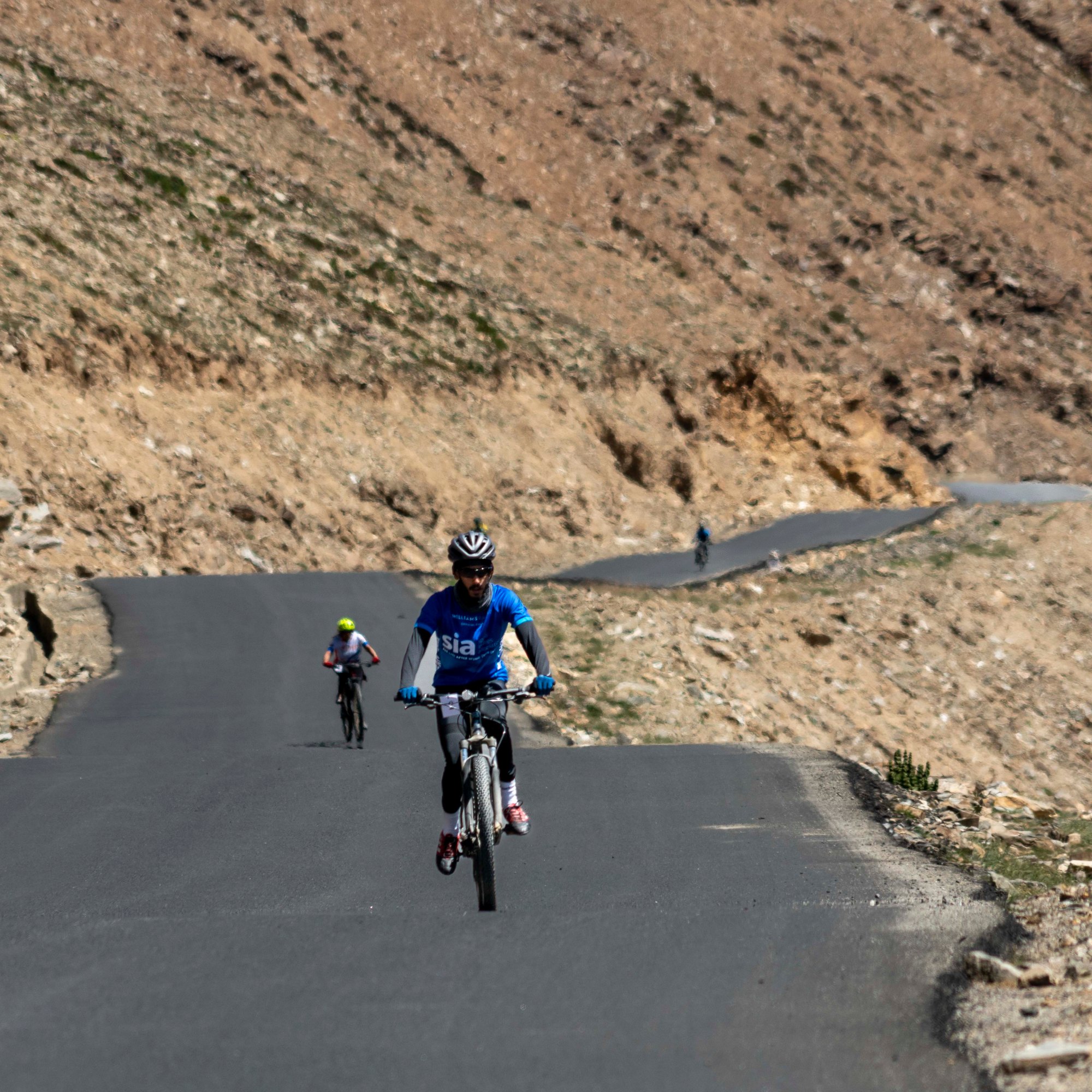
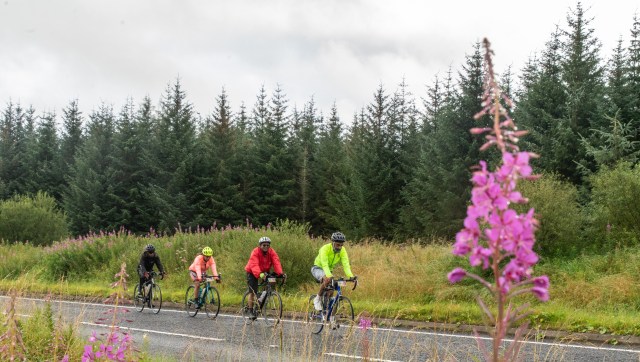
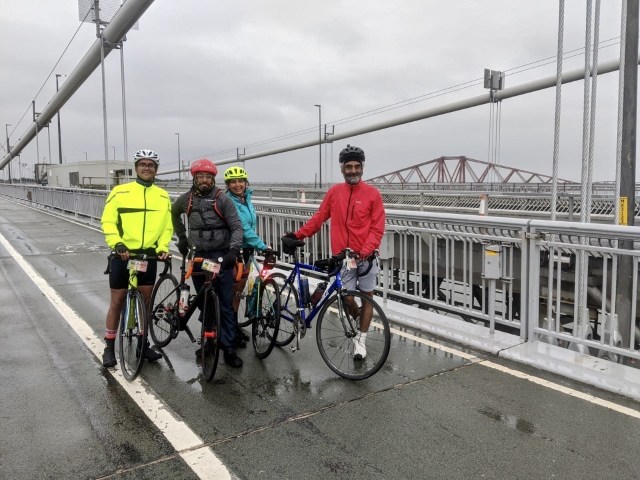
300kms of cycling  over 4 days. 

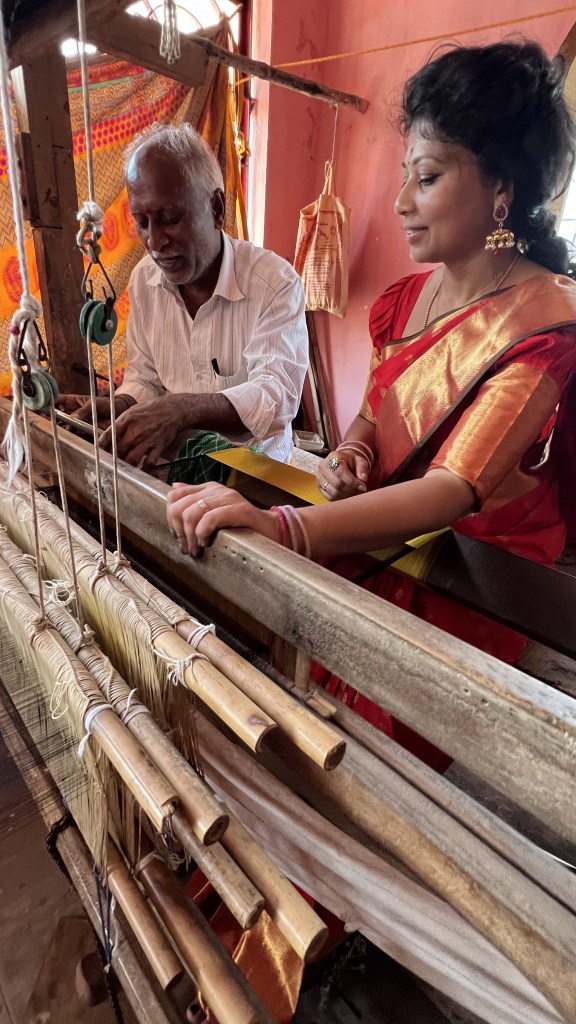
As a group, we’ve grown comfortable with the beautiful imperfections of hybrid riding in India—from chaotic airports to absorbing heavy history, and finding rhythm on Indian roads. It’s time now to meet the stone, the saddle, and the spirit of the Konkan coast

The Stone
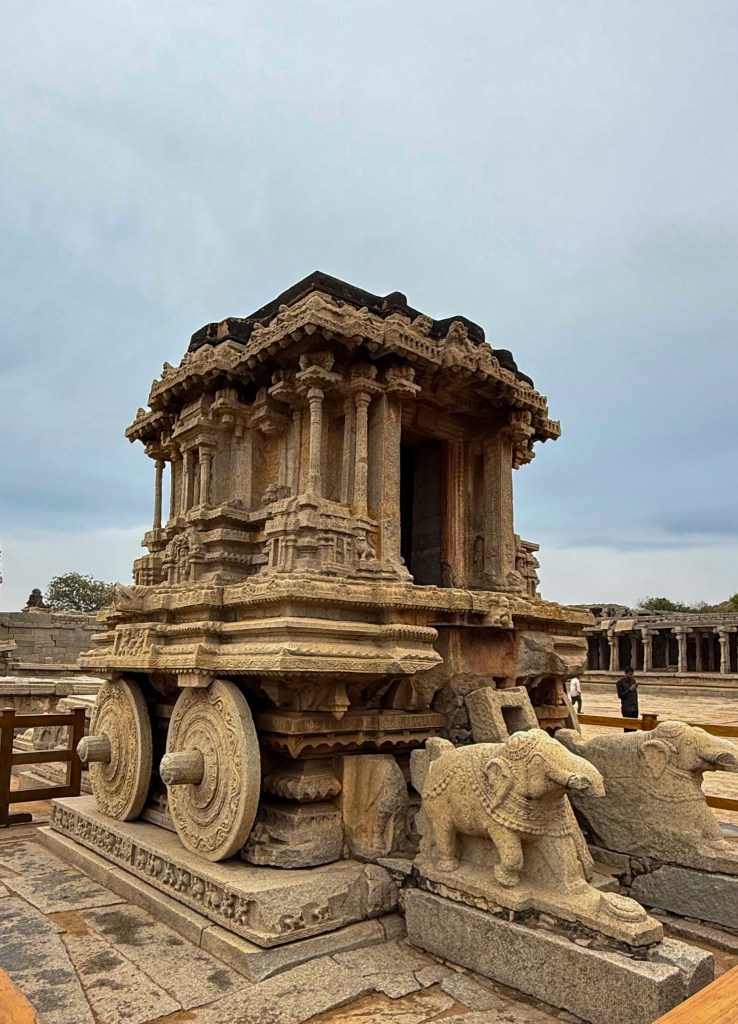
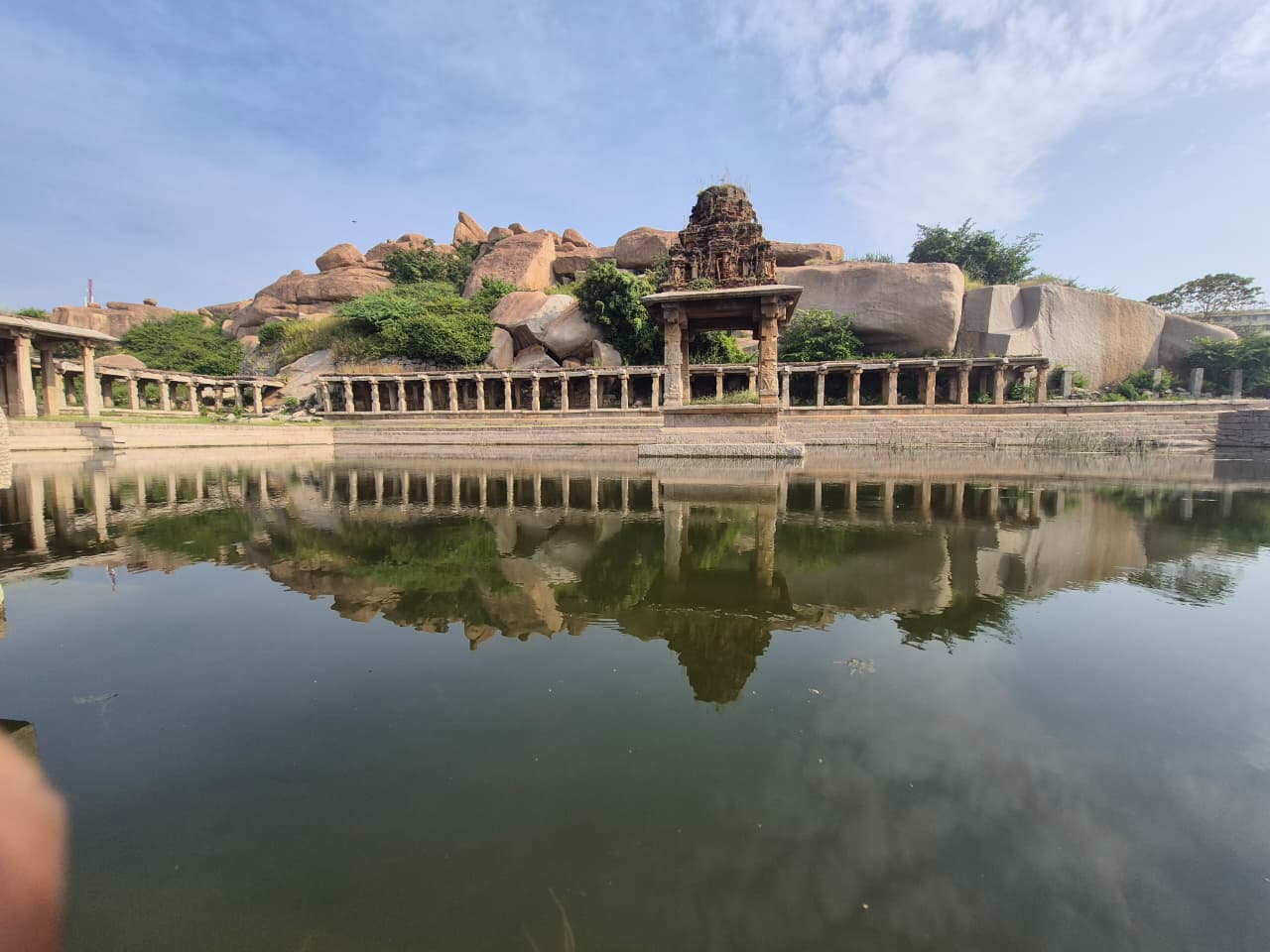
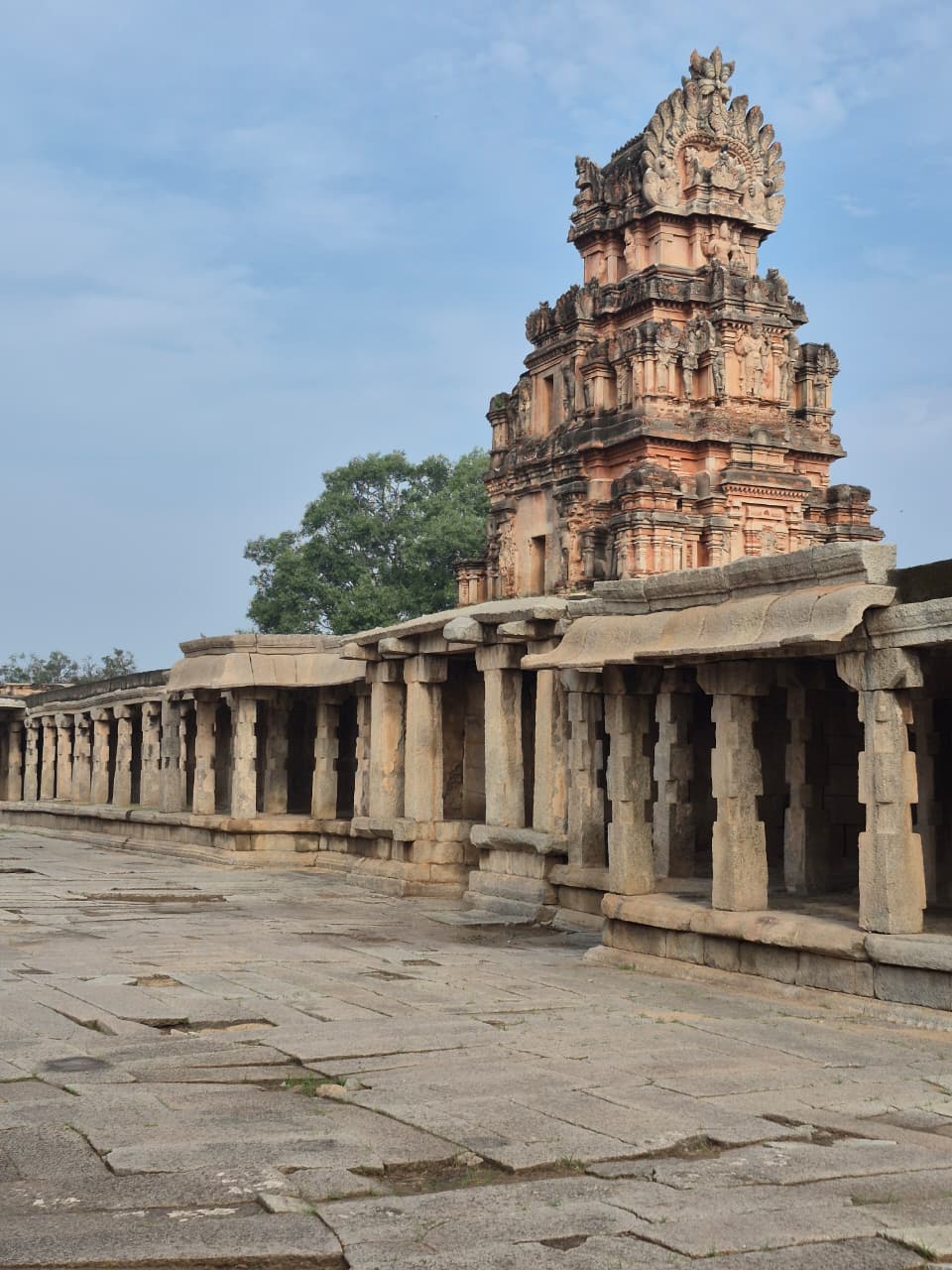
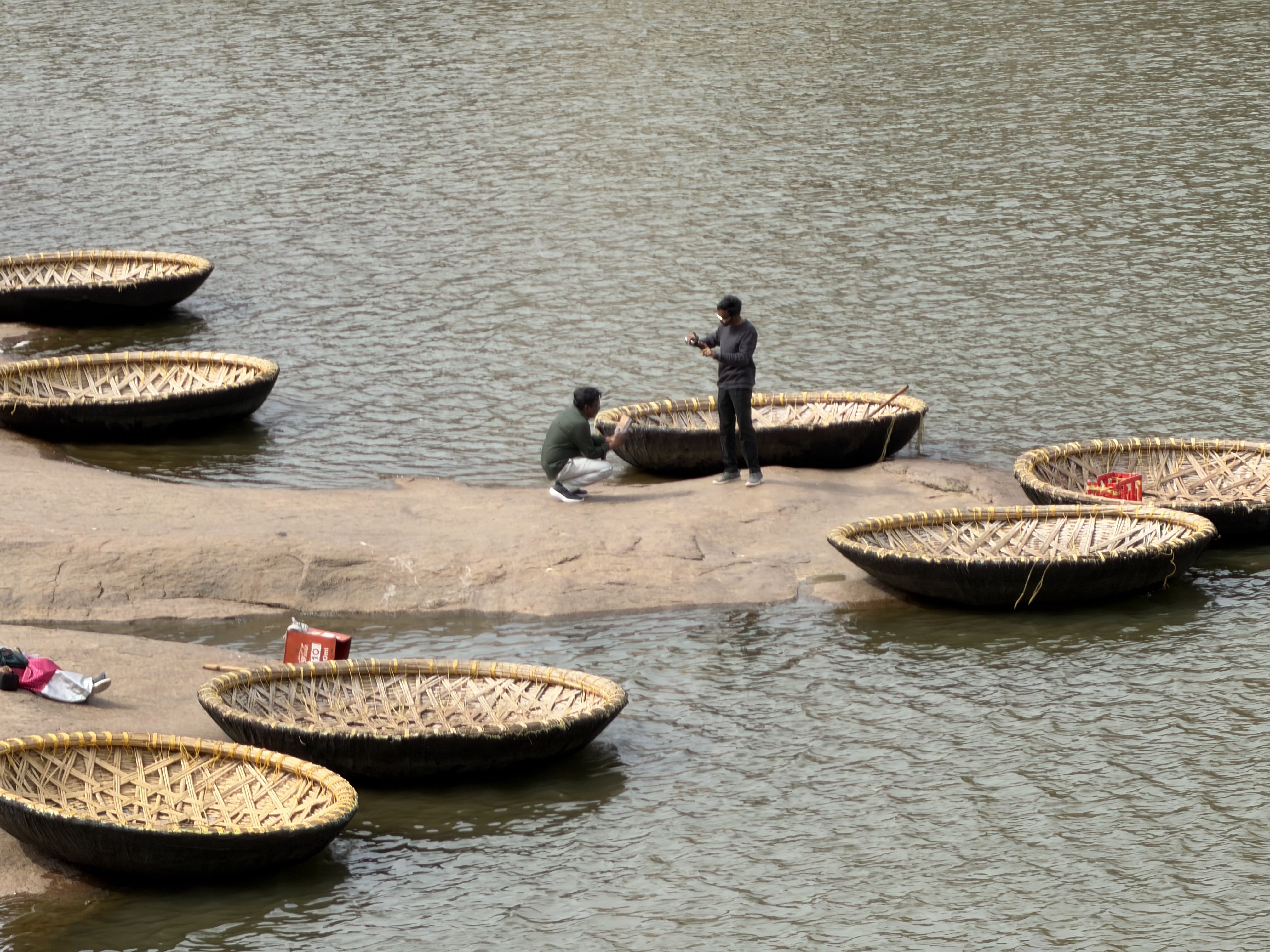
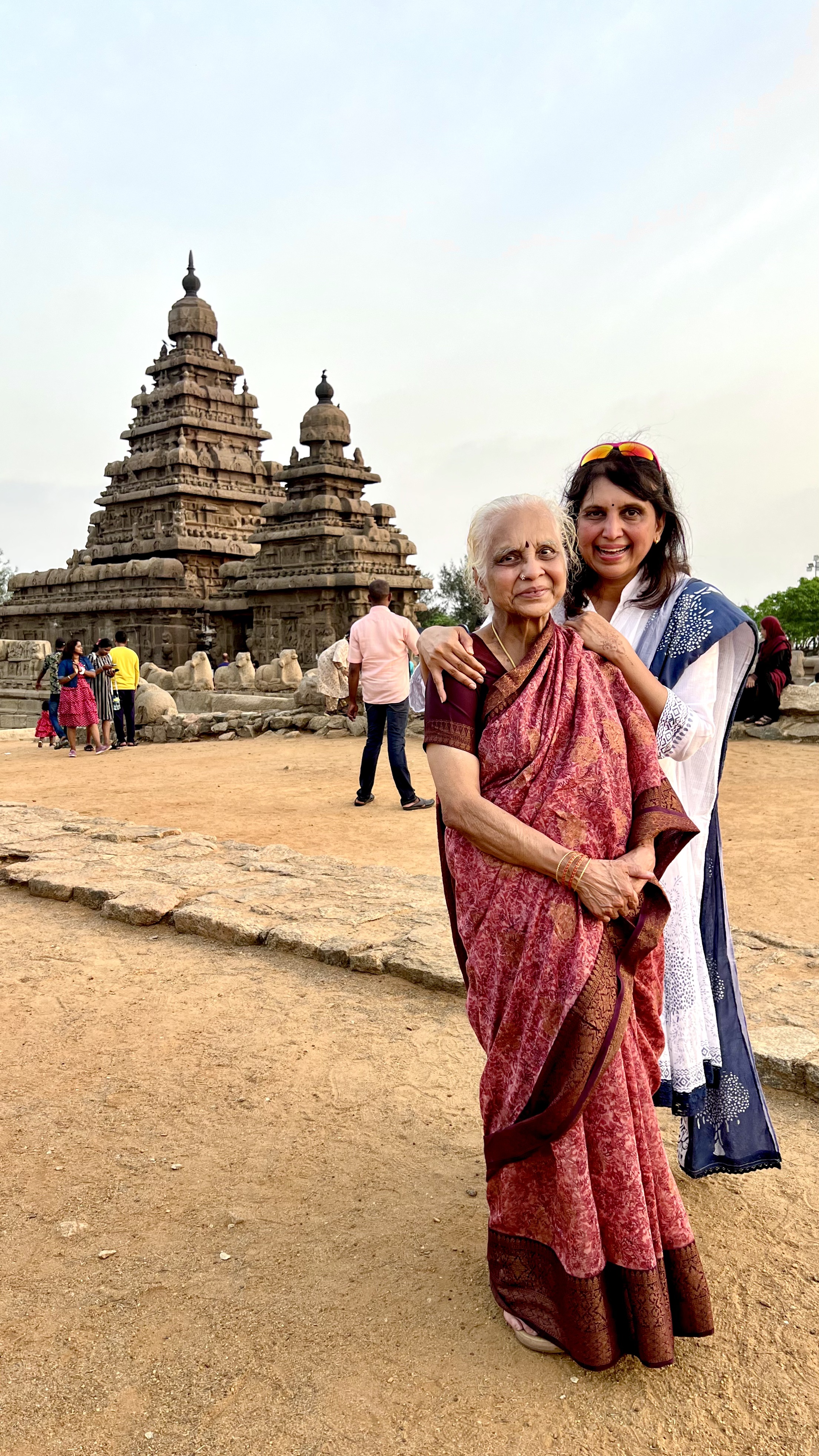
Shades of Hampi.

Founded by Harihara and Bukka (memory of history class from school days making a brief comeback), Hampi peaked under the great king Krishnadevaraya, which was the the golden age of the Vijayanagara Empire. This last capital of the Hindu kingdom flourised with a grandeur that would have seduced Ibn Battuta and Sanjay Leela Bansali alike. But sadly, only got the prominence of a foot note in the list of Hindu kings against Babur in 1565 AD. Infact, Tenali Rama, his Brahmin jester and advisor steals the show via the famous Amar Chitra kathas.

Today, Hampi is a ghost town.  

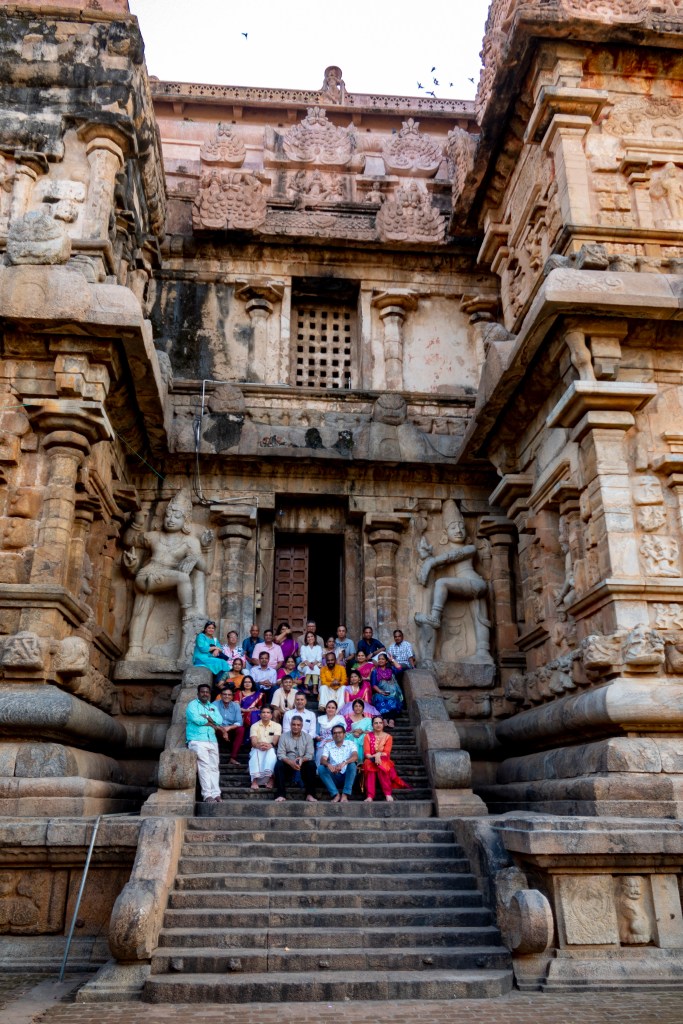
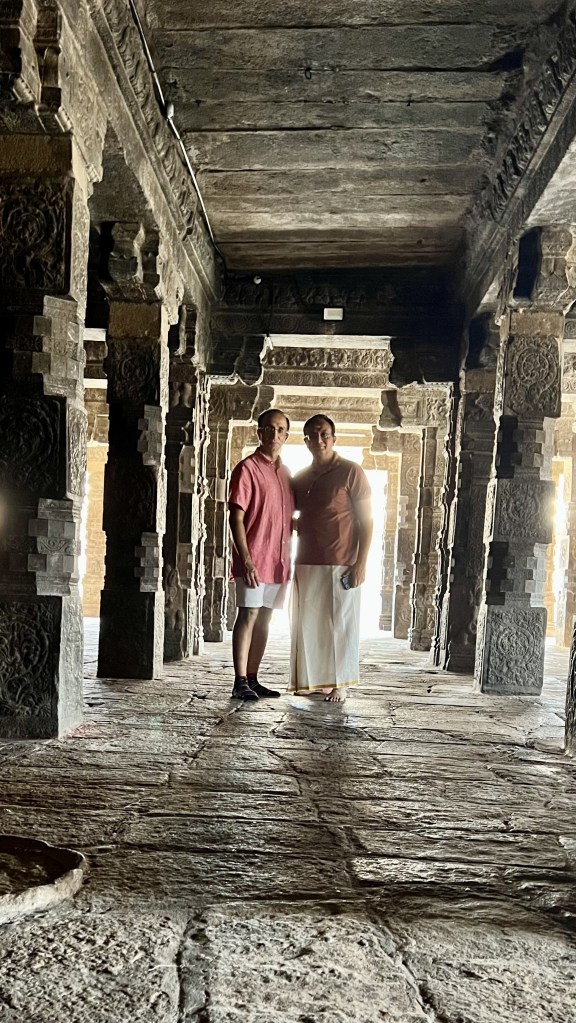
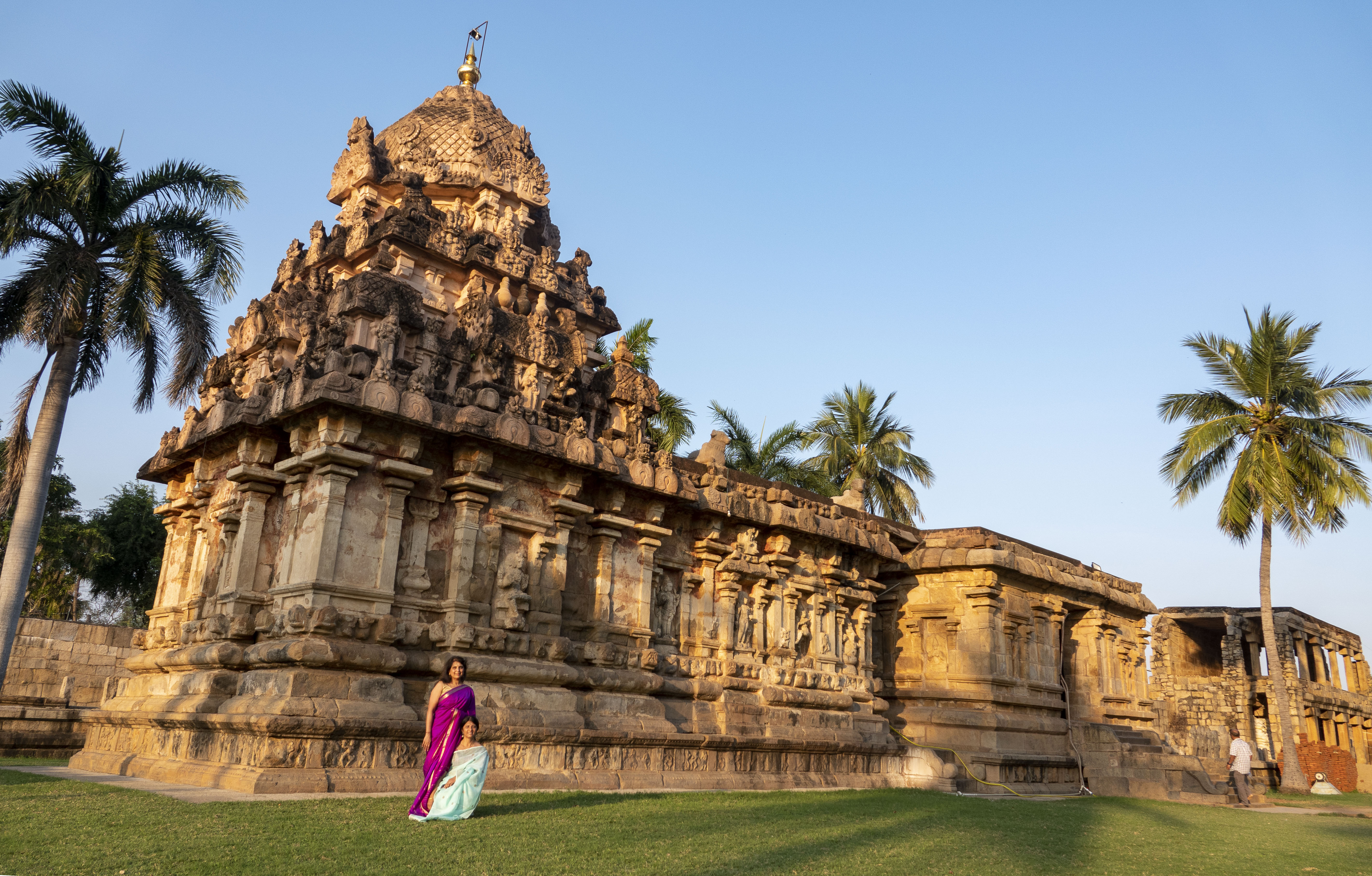
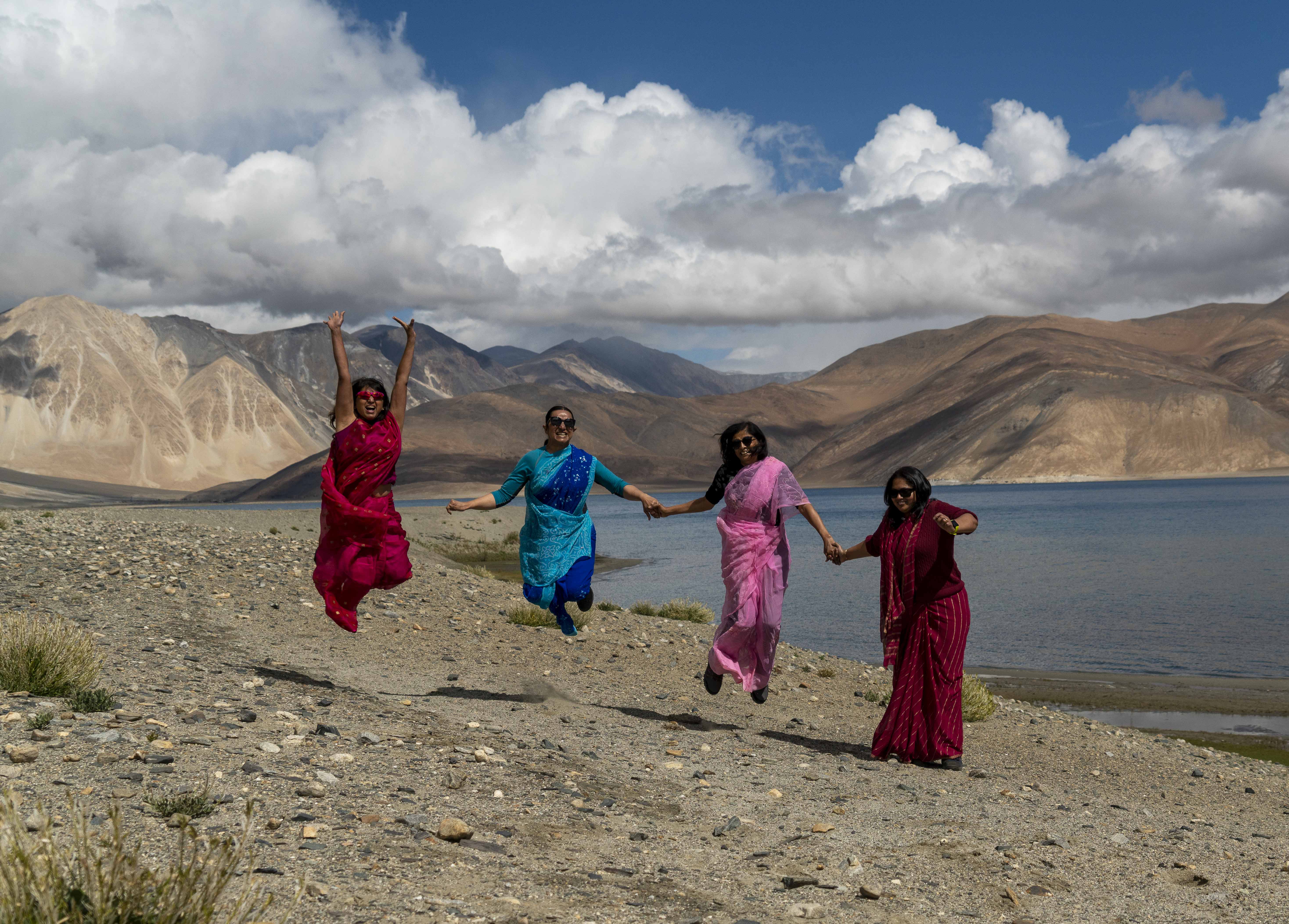
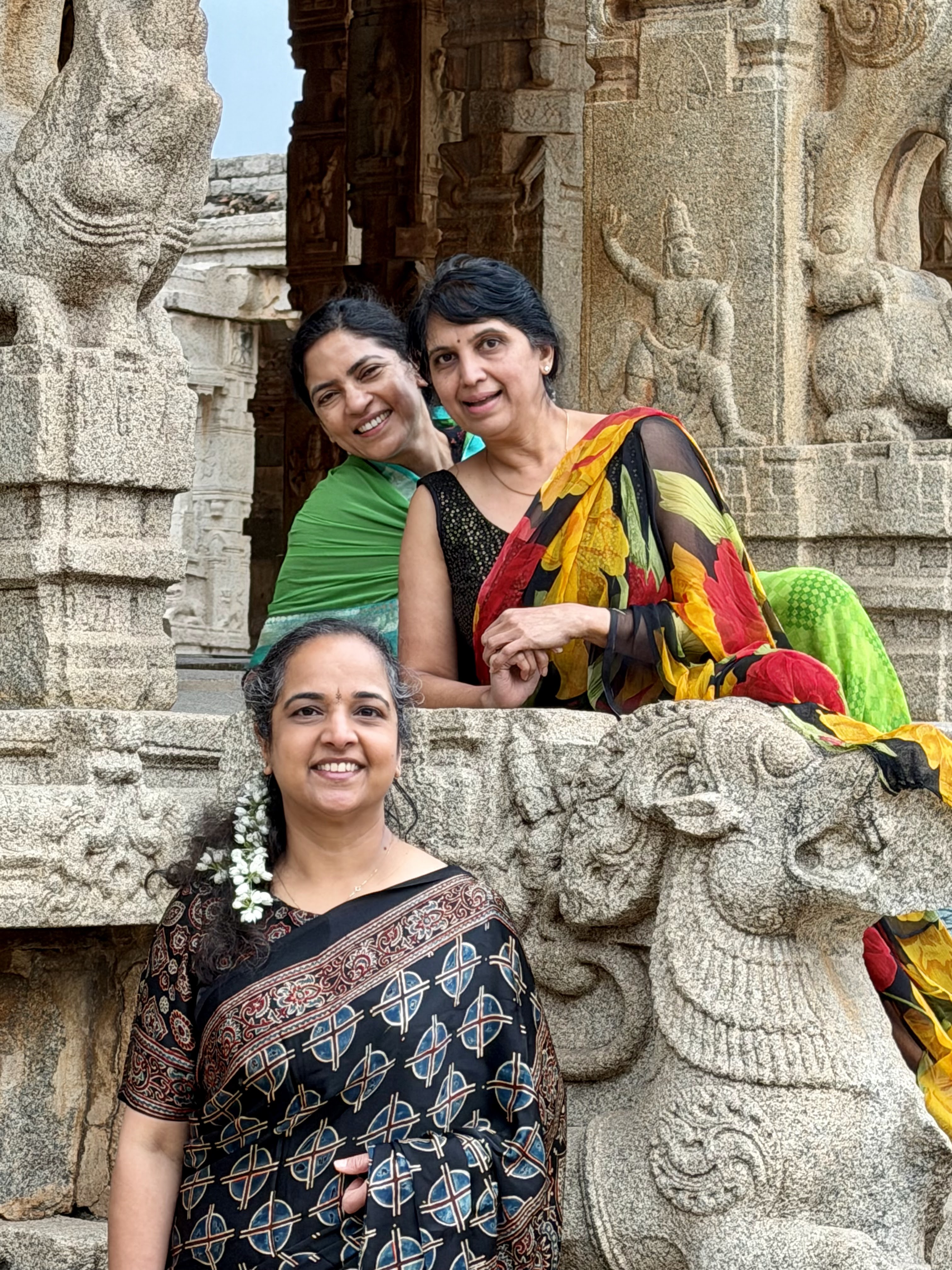
What remains is drama in stone. We waded into Vittala temple, traditional clothes and all. A quiet gravitas settled over us. Inside, the scale took over. Proportions overwhelmed. History stopped whispering and began to speak.

Three  focal architectural features -The Vittala Temple. The Virupaksha Temple and the Lotus Mahal. At the Vittala Temple, we stood before the famous stone chariot. “Not a monolith, although appears to be” Raghavendra, our  guide revealed.  

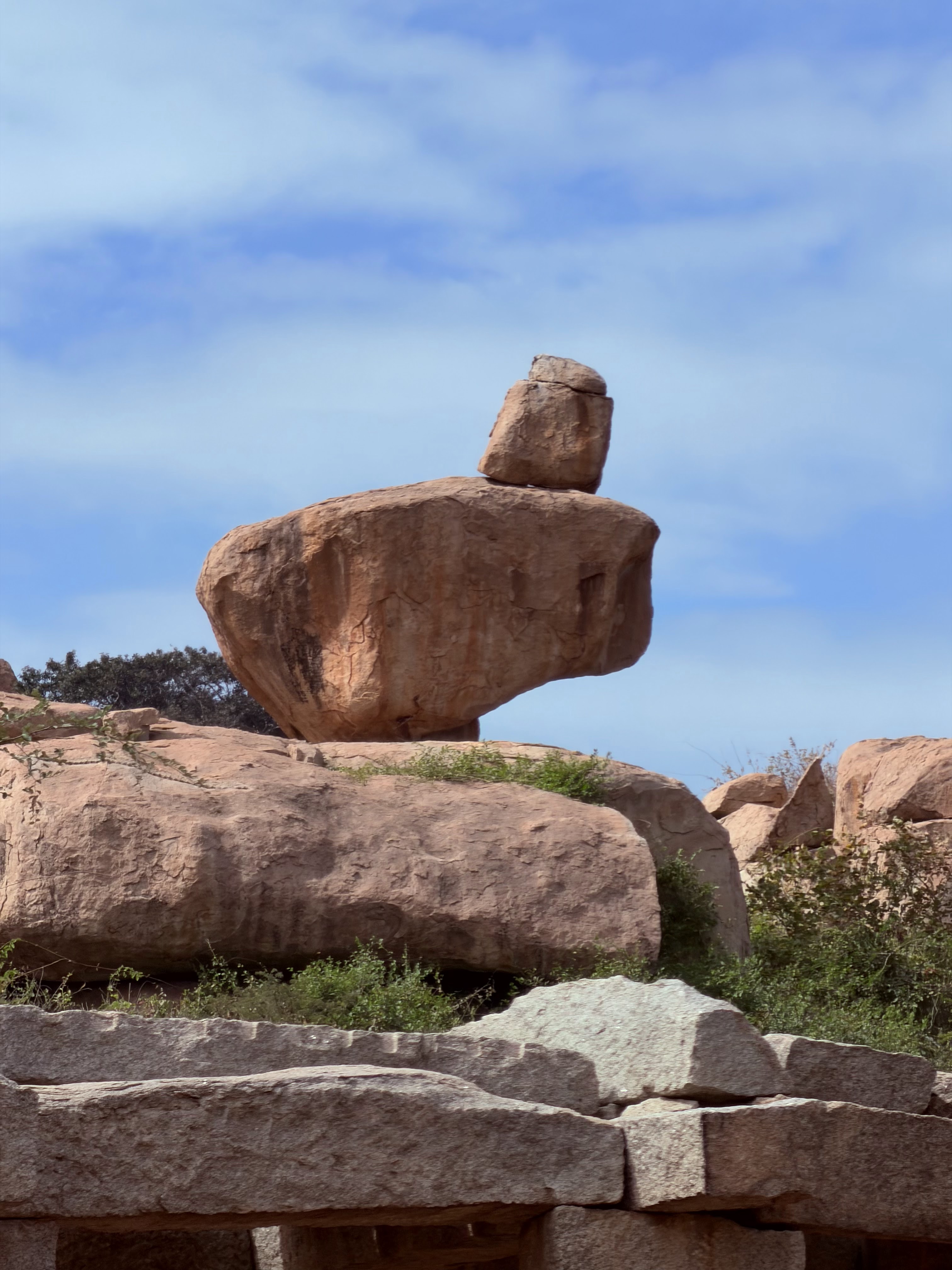
Massive boulders balance like they paused mid-thought.

 Our guide  systematically filled the landscape with stories—the bazaars of flourish, the depiction of life on stone carvings, Vali, Sugriva, Kishkindha of the Ramayana. Myth slid effortlessly into history. Monkeys, mischief, and memory everywhere.

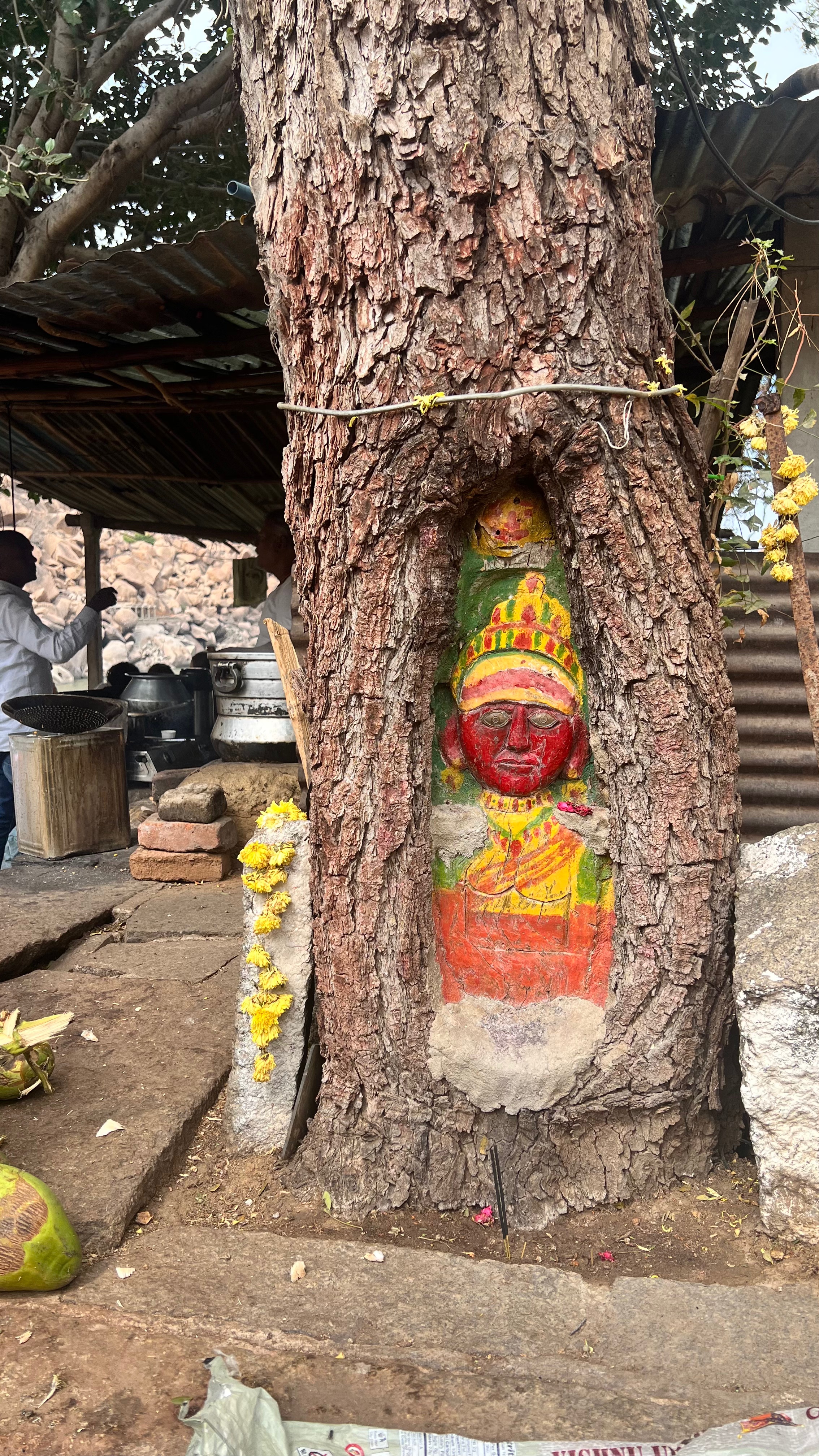
To me, the solitary Frangipani tree in the courtyard of Virupaksha temple spoke the loudest. Gnarly, wrinkled and in a leaning angle it still bears frangrant frangipani in season. A testament to resilience.
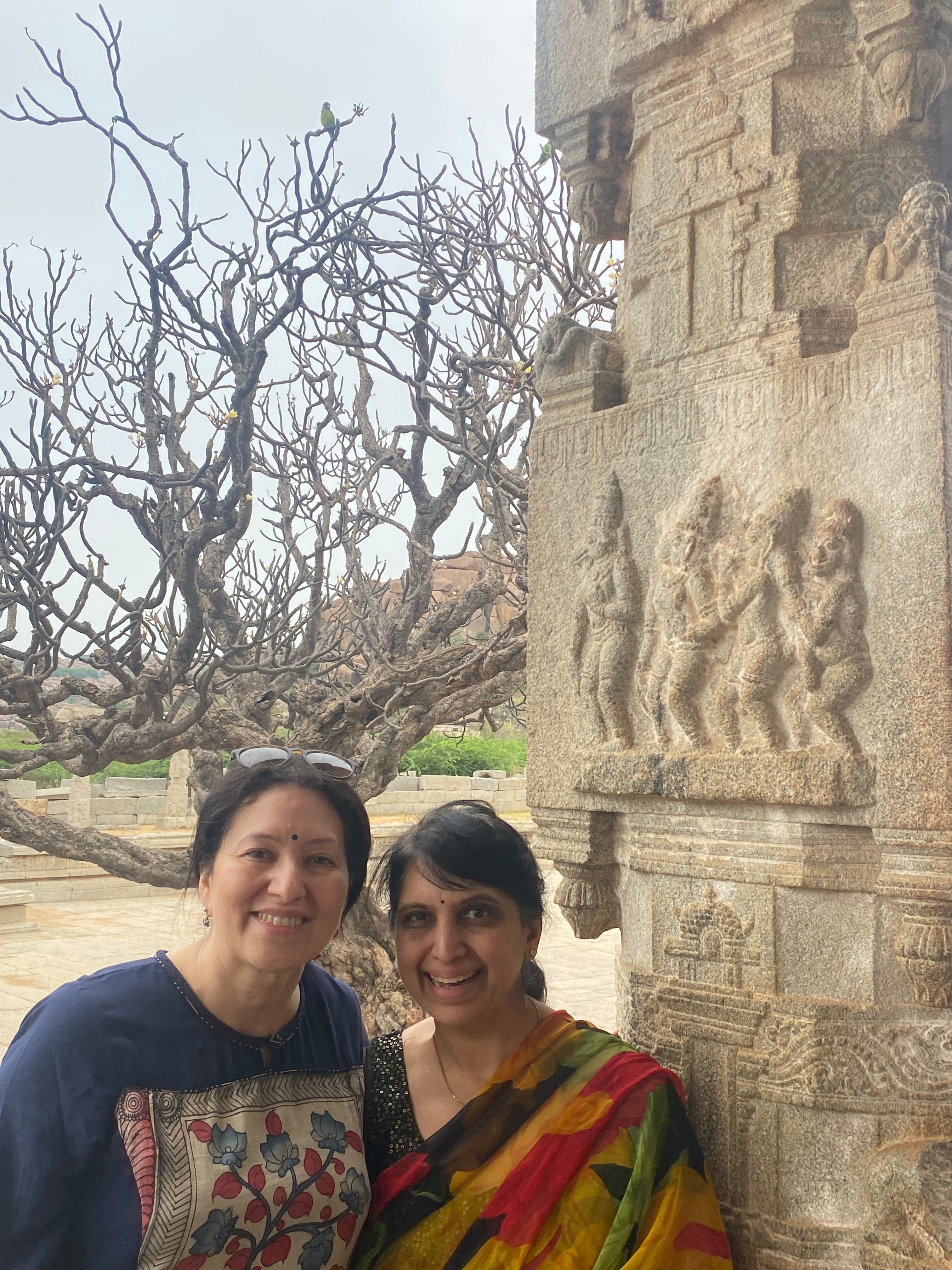
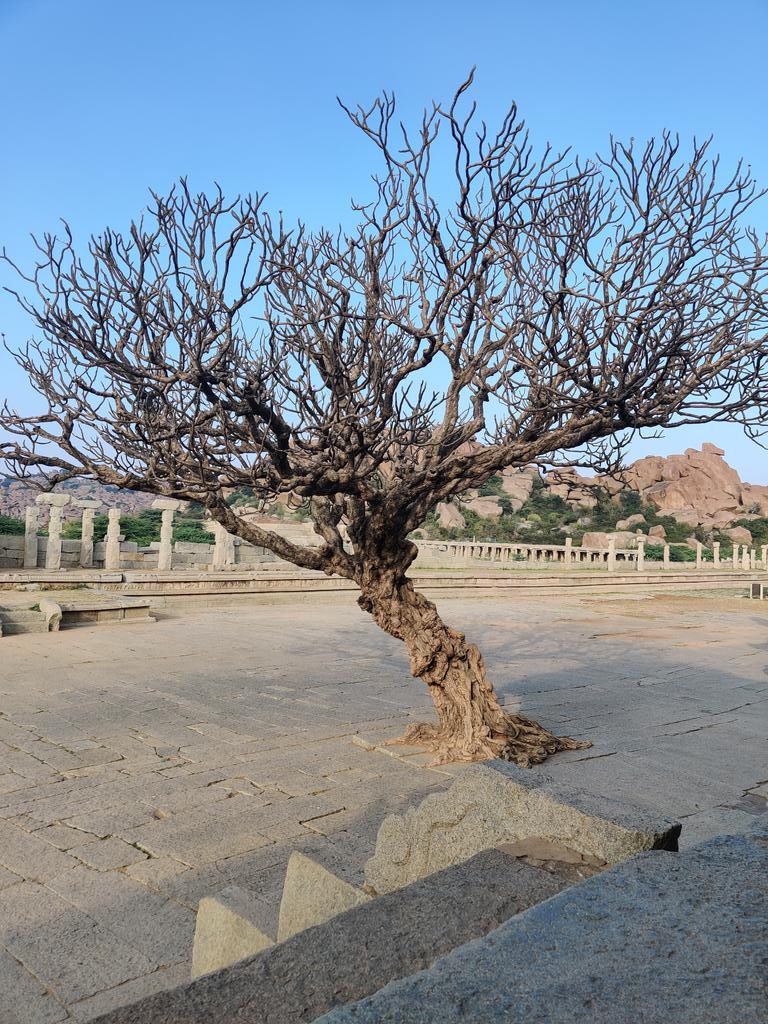
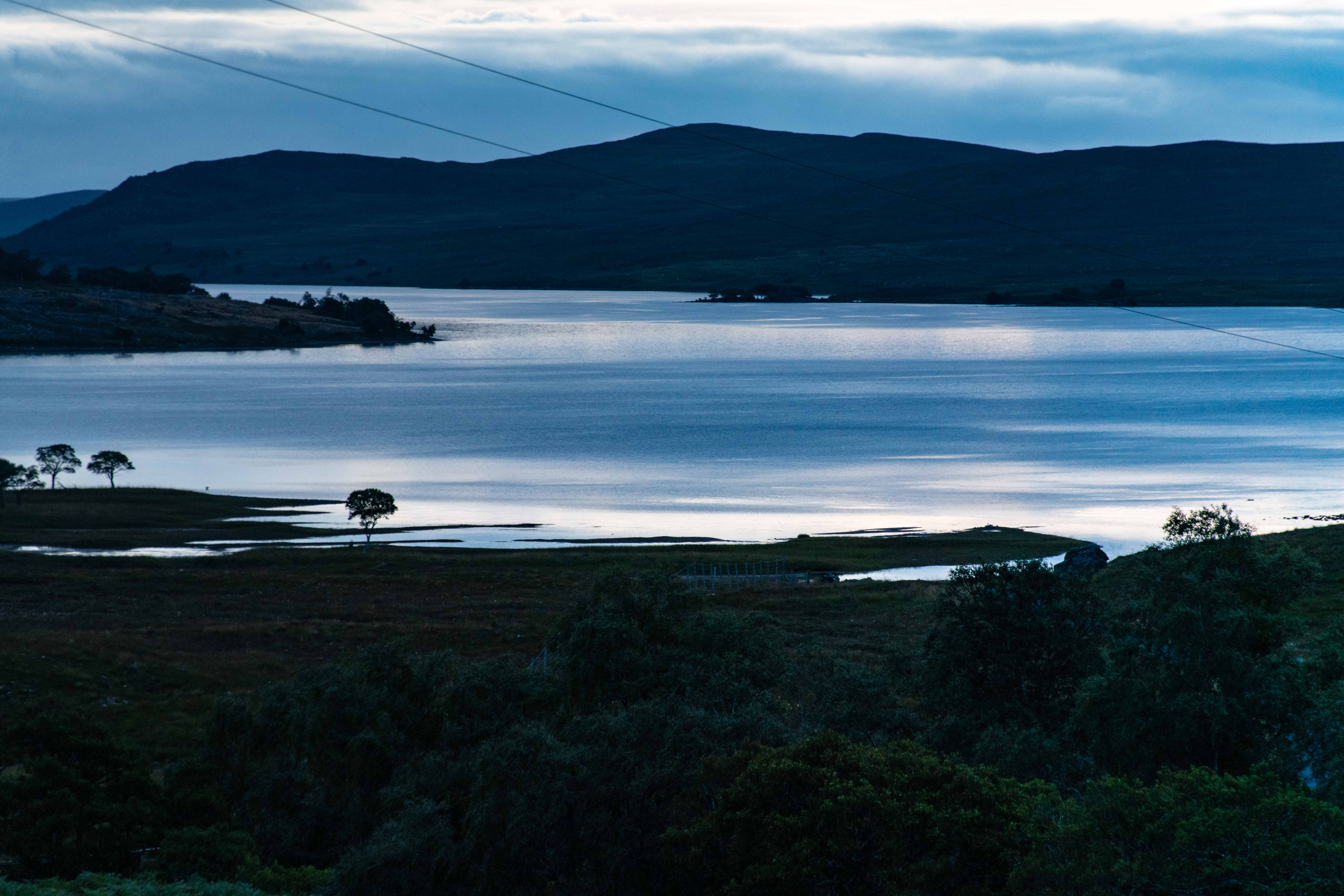
The Tungabhadra flowed quietly alongside. Green, fertile paddy fields softened the scars. A city of victory, resting—never erased.

Ruins upon ruins. Salman Rushdie in his book Victory City  turns myth and scars of Hampi ruins reality into fiction while V S Naipaul, in his travels, sensed the unease of Islamic  imperilaism versus the Hindu resistance that lingers till date in India. More questions than answers. As I listened to the narrative, the tension felt real and unfinished.

The boulders provoked. They questioned their sidelined presence  till UNESCO added the world heritage site status.  They reminded us why India is incredible.

The ghost town is alive with memory.

I pondered all of this as I pressed the pedal from Hampi to Dandeli.
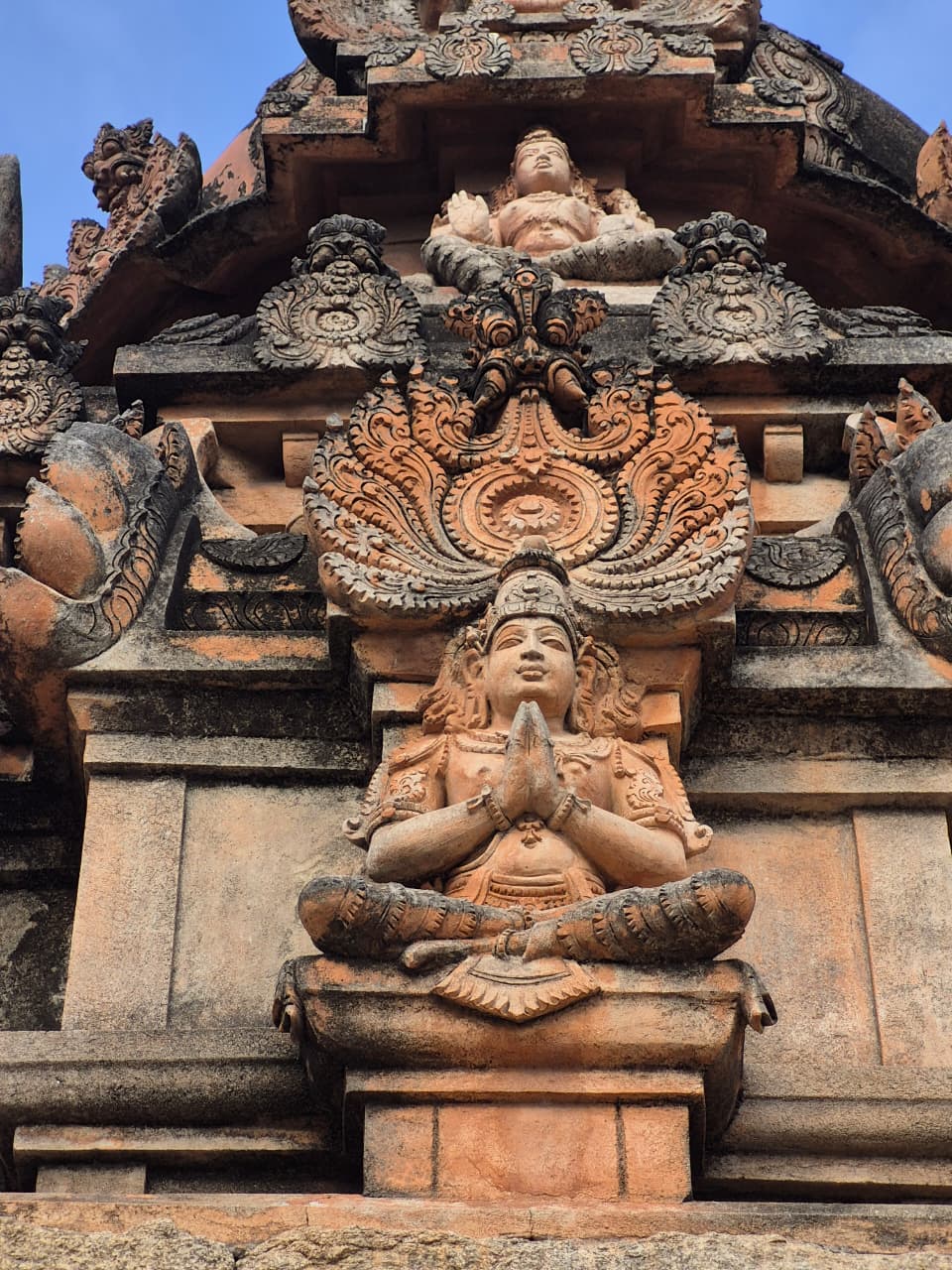
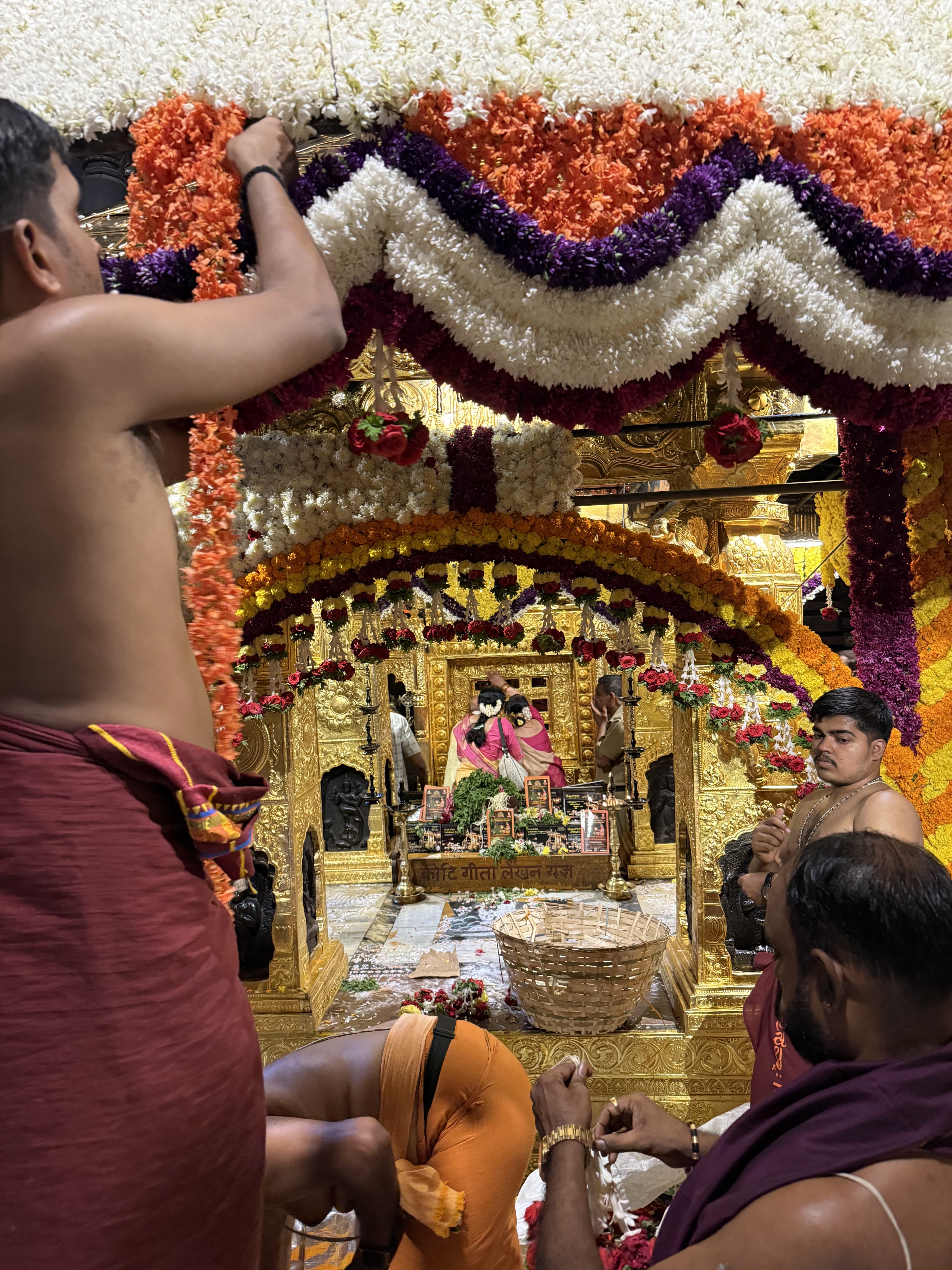
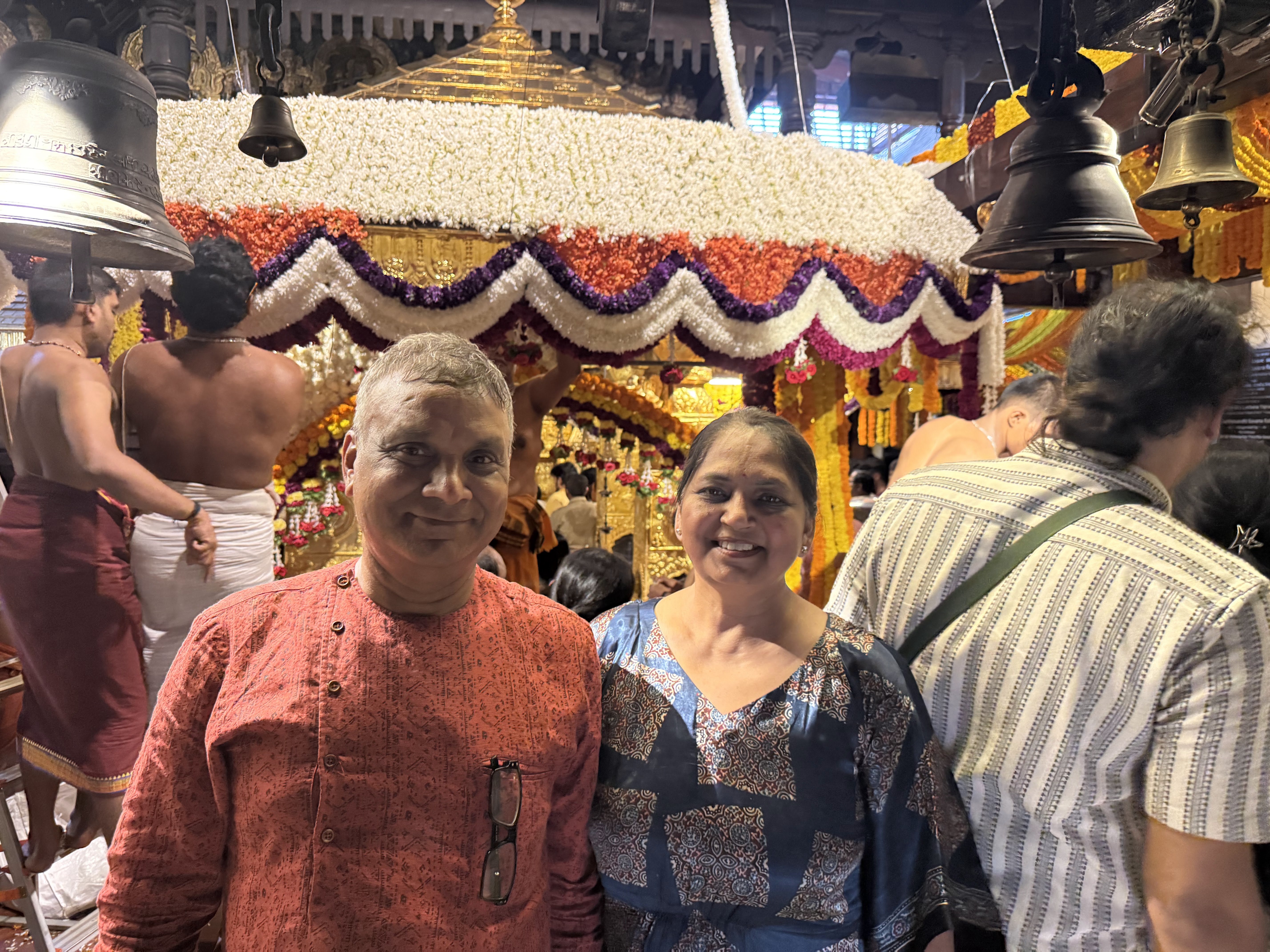
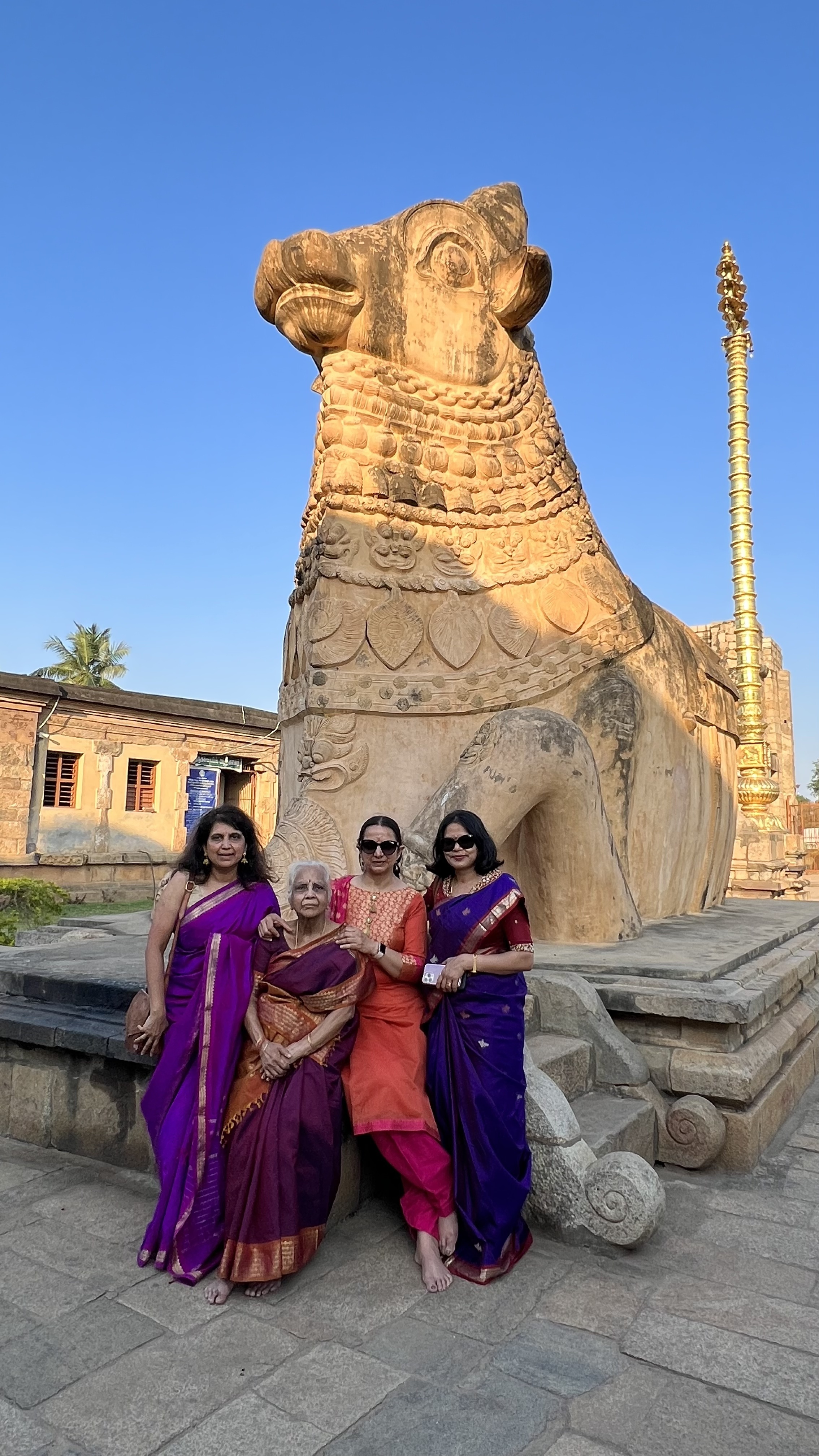
At Kollur’s Mookambika Temple, stone is living faith.
A Shakti Peetha. A powerhouse. Reinstated by Adi Shankara.
Unlike Hampi, not a memory.
This is presence.

The temple wears a South Canara tiled roof -like a graduation cap, modest and grounded, hiding a golden gopuram within. Mookambika rests in the sanctum sanctorum. Quiet. Powerful. Unadorned in her certainty. As a group, we sought our individual  levels of divinity, I mused,  as I looked around to spot a sugarcane juice stall on the road side once outside .
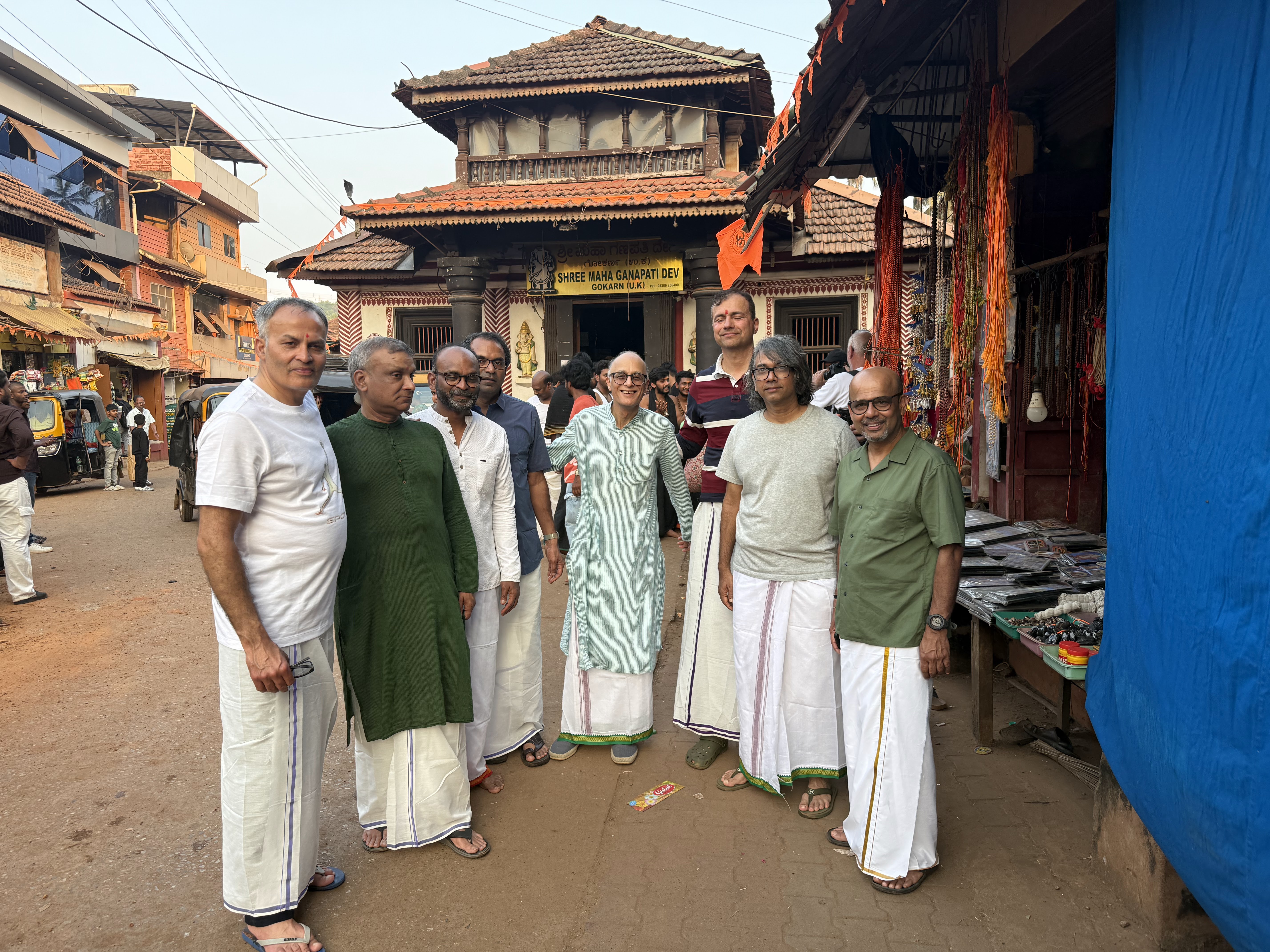
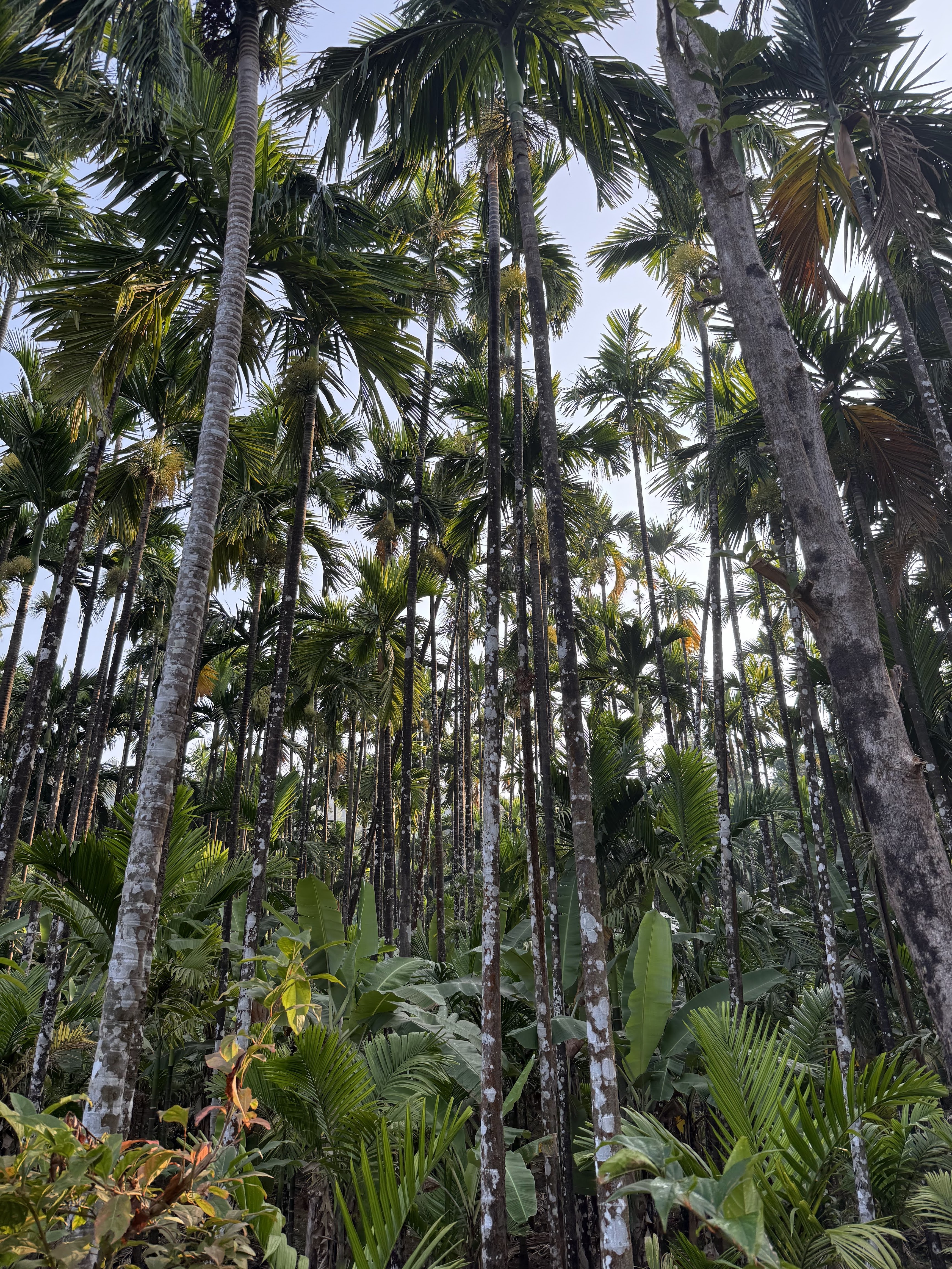
Further south, into Tulunadu, we arrived at Udupi. Here, stone softens.

The face of Balakrishna-the idol of little Krishna sits in the famous Udupi shrine. Not towering. Just  intimate.

The main sanctum stands at the center, bordered by a small window with nine openings—the Navagraha Kitiki. The deity is viewed only through this frame. No direct gaze. Devotion filtered. Humility built into architecture.

The shrine now carries a newly fitted Swarna Gopuram. Gold above. Stillness below.

In Hampi, stone remembered.
In Kollur, stone radiated.
In Udupi, stone invited.
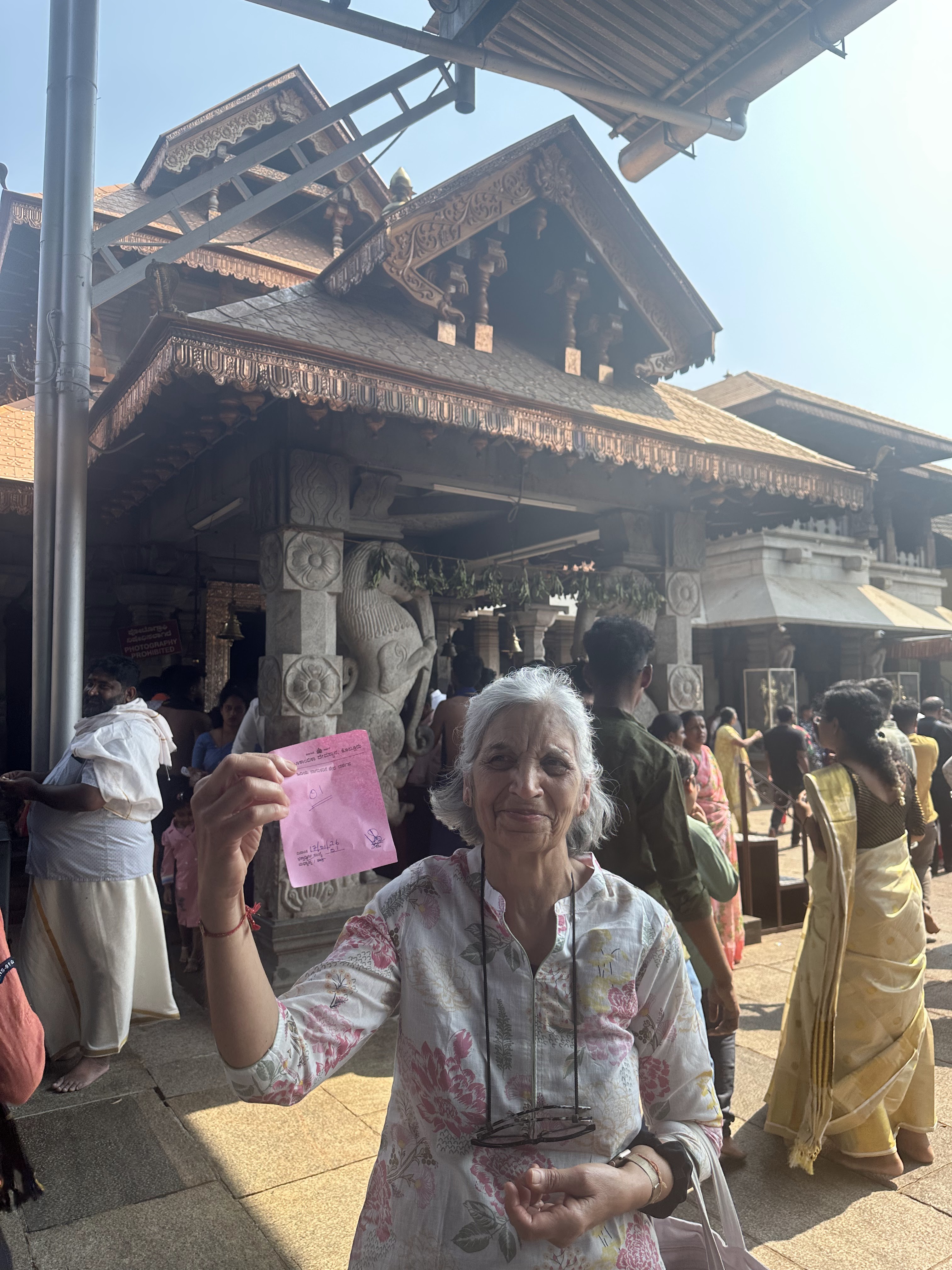
Lets move to the Saddle next-The rhythmn of the ride
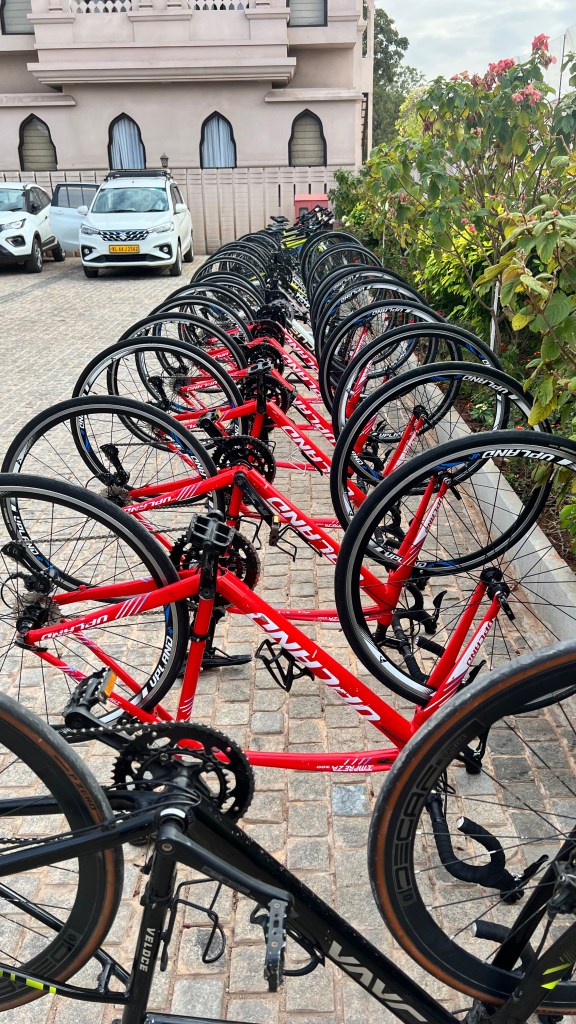

Ride with GPS—Go, Pause, See, I thought,
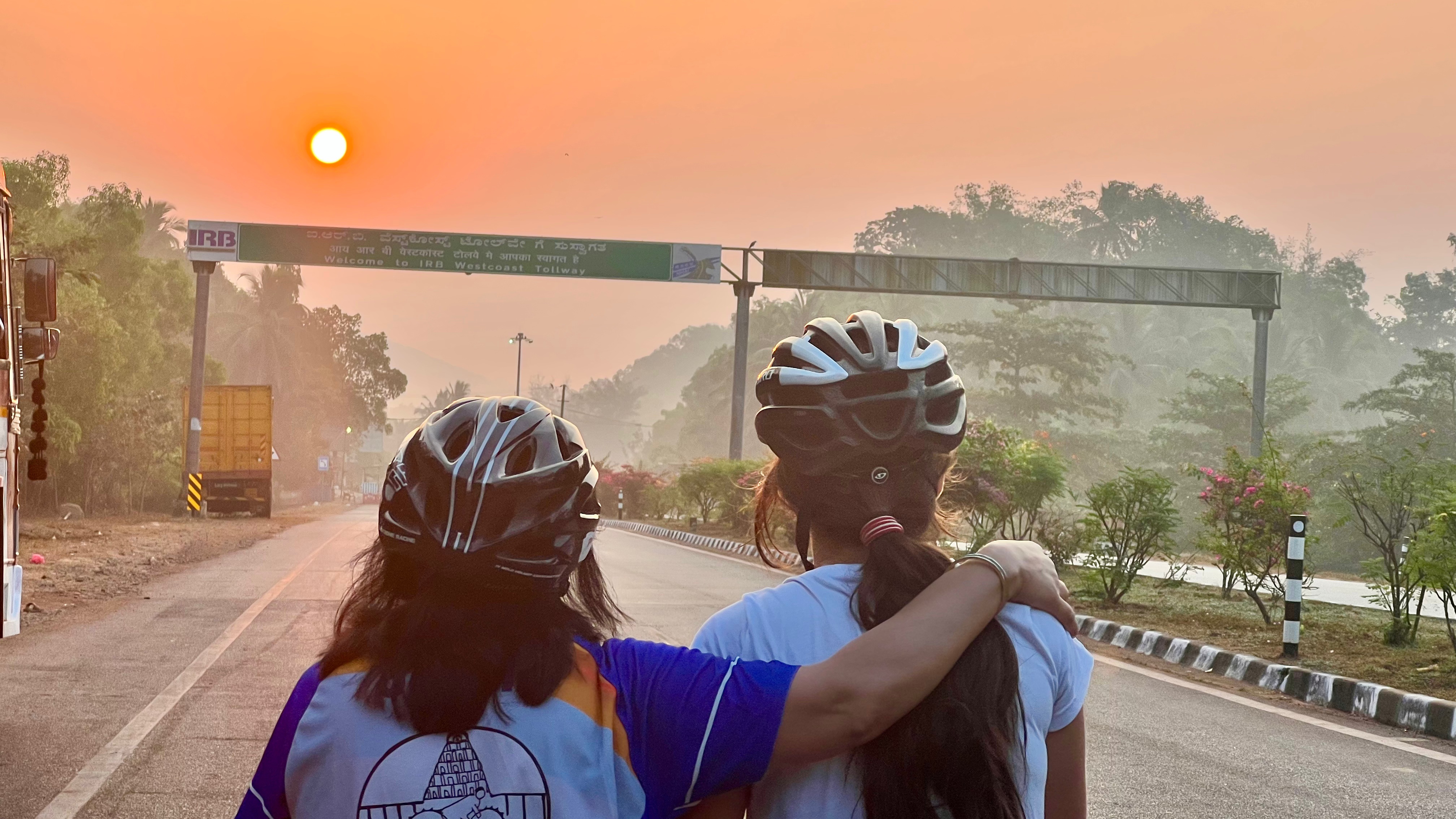
as we were dropped at our start point on Day 1,  after the customary coconut  breaking  at day break onto the NH toward Dandeli.

Quiet roads.
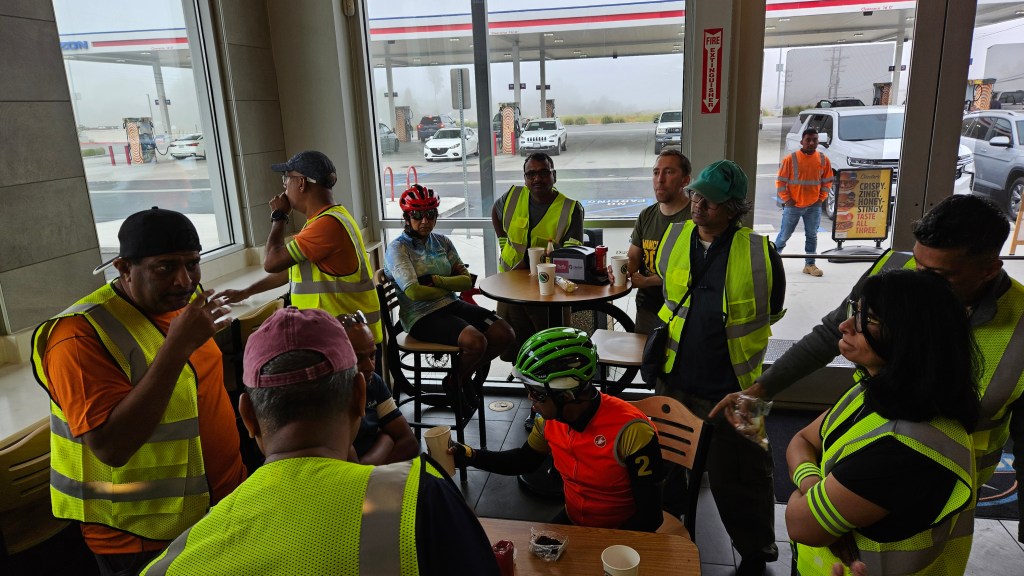
Flat stretches.  Riders  took the easy streches  with both banter and quite. 

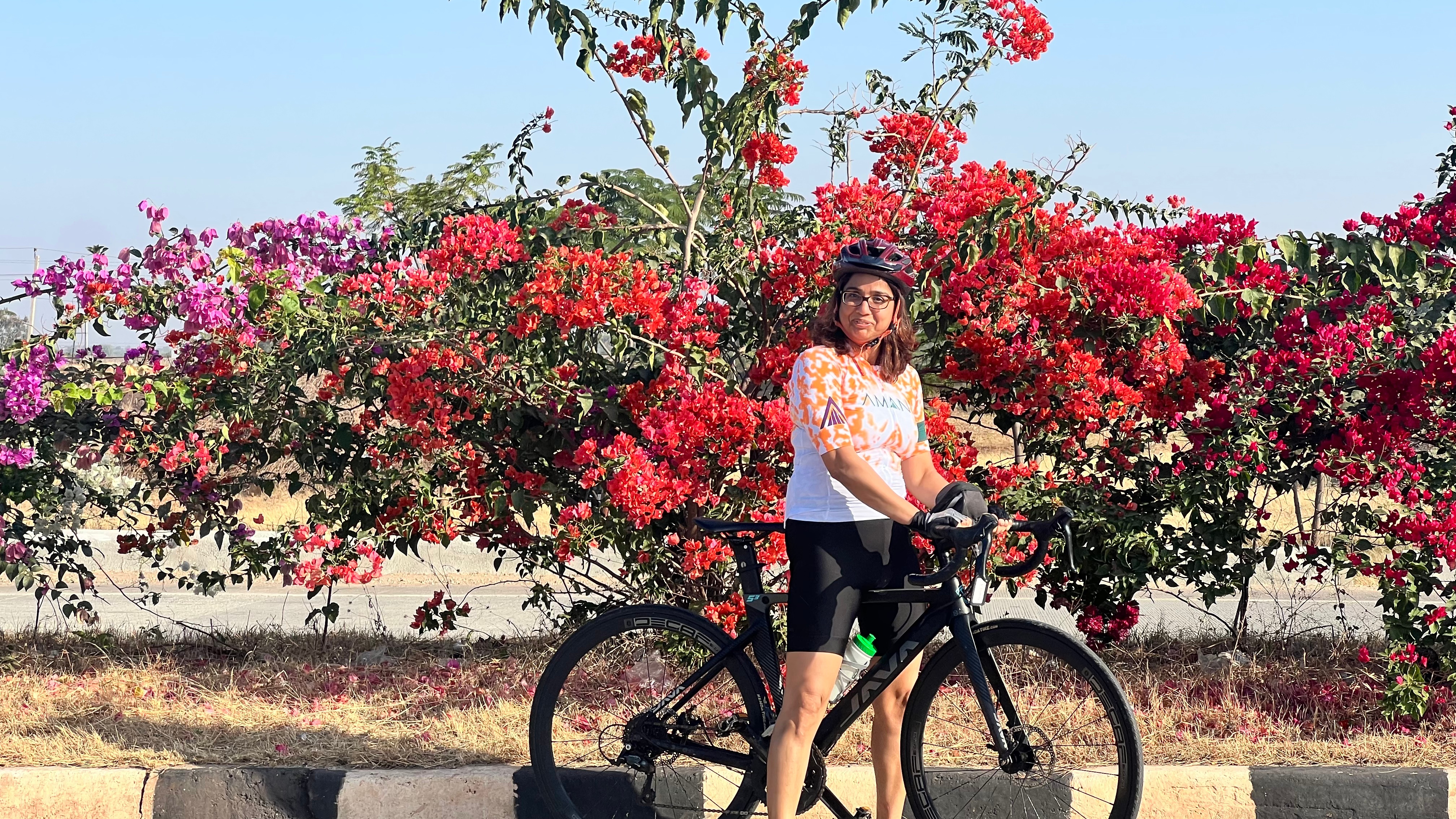
Bougainvillea blooming in the road divider,
showing off for no one in particular.

Indian cycling, in its truest form.
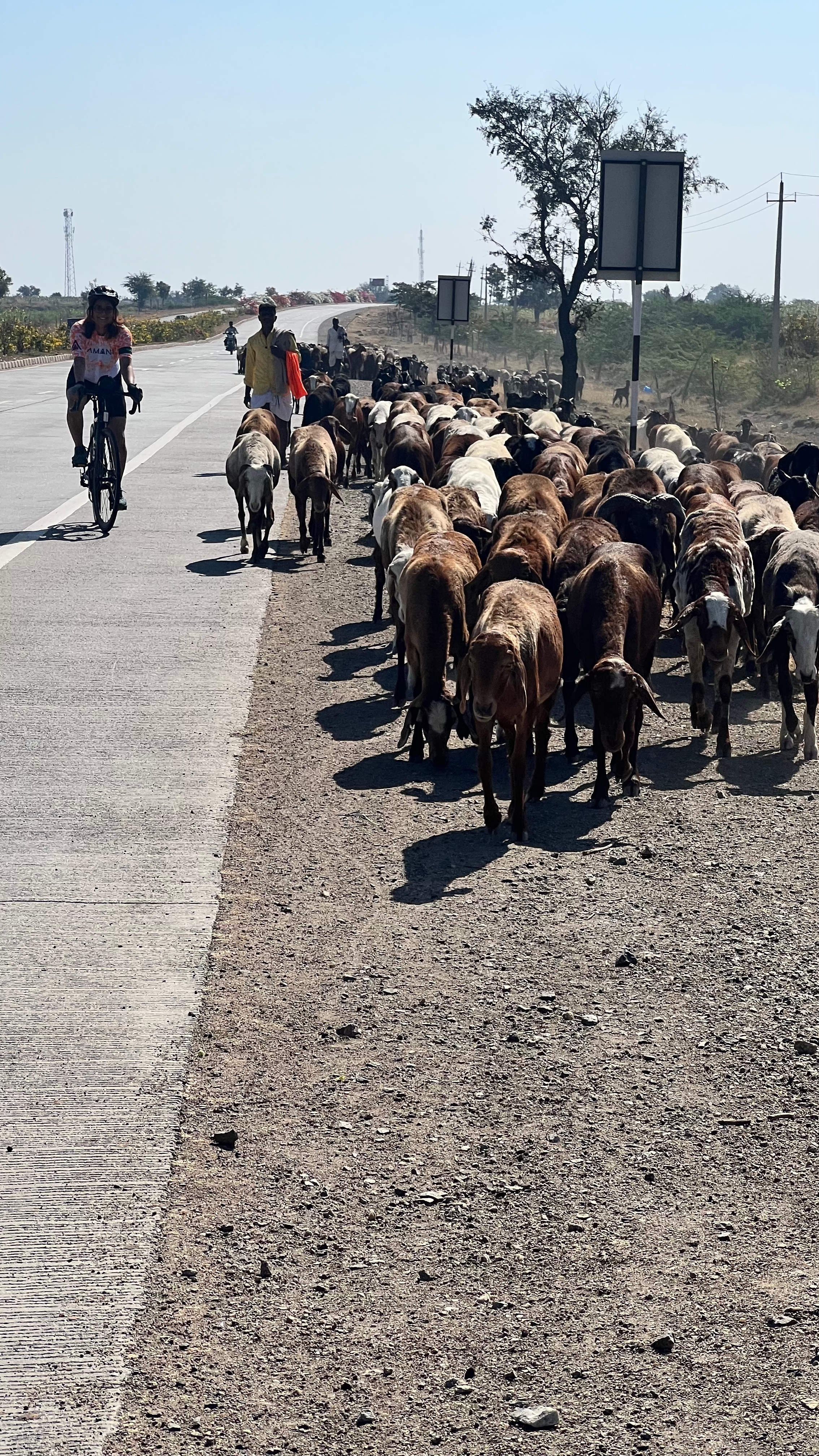
Cattle with ancestral right of way.
Traffic coming at us, not with us.
Reflexes sharpened.
Responses quicker.

At day break next  day, Dandeli’s forests closed in gently.
Dense. Purposeful. We climbed the  hills at our own pace. 
These were not just forests for admiration.  Teak all around. 

Under British rule,Dandeli became a timber engine—a carefully exploited landscape,feeding an empire that valued wood more than wilderness.

An initial climb,
followed by a rewarding long downhill roll.

And suddenly, the Konkan revealed itself.
Greener. Softer. Road signs pointing toward Panaji.

And in moments of fatigue, where slowing down wasn’t a choice—it was wisdom,
I pondered about life.
Knowing that not every journey is about reaching faster.
Some are about arriving whole.

A familiar rhythm that happens on every ride for me.
And now onto the Spirits..

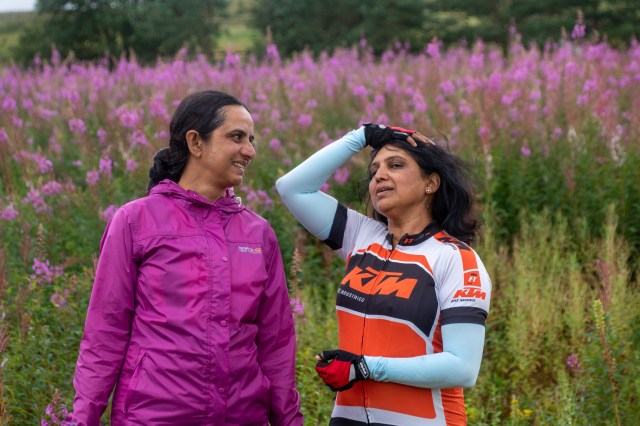
What stayed with me most were the people. The spirits of the cyclists.

I have said this in previous blogs too.

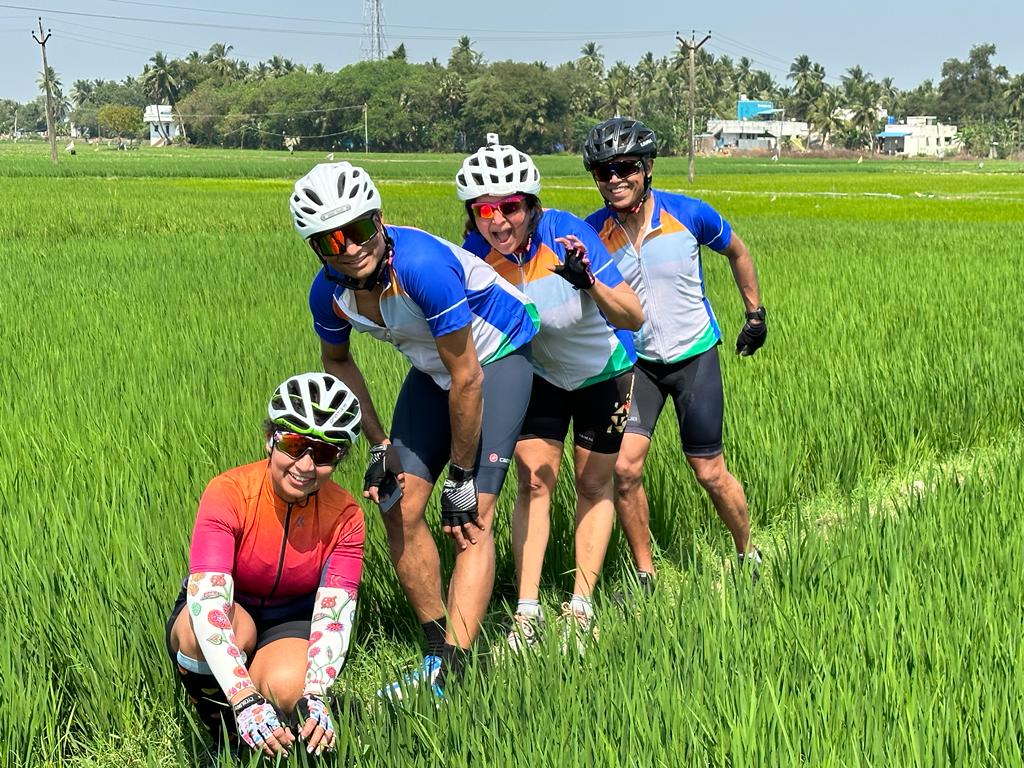
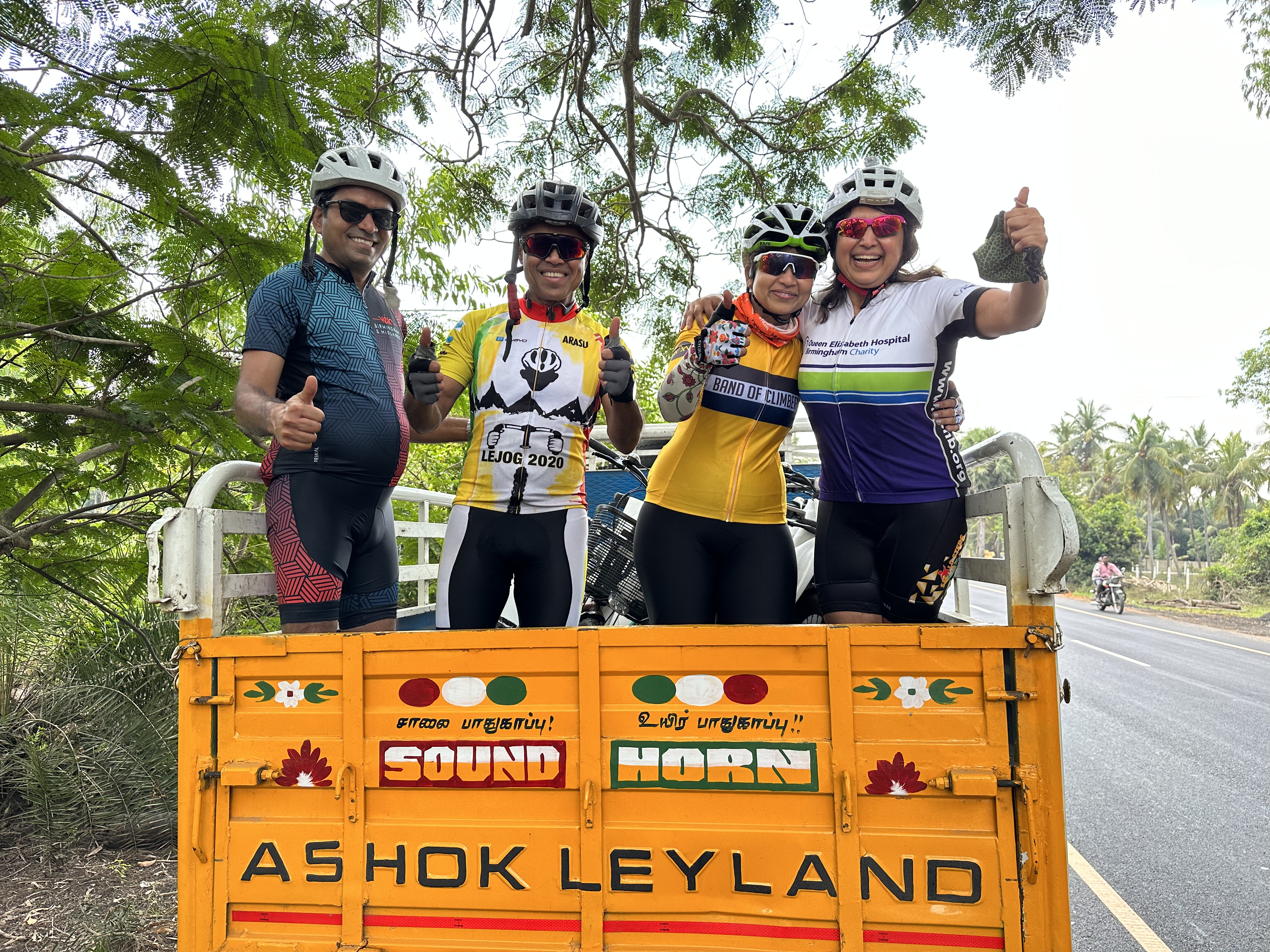
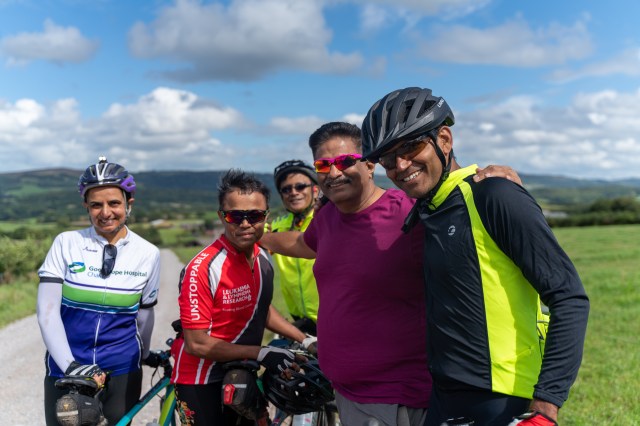
The cyclists were as always in these  hybrid rides, a mixed bag. Schoolteachers. Surgeons. Techies. Finance minds. A yoga guru. A twelve-year-old student. Different lives. Different countries. One road.

On the saddle, none of that mattered.

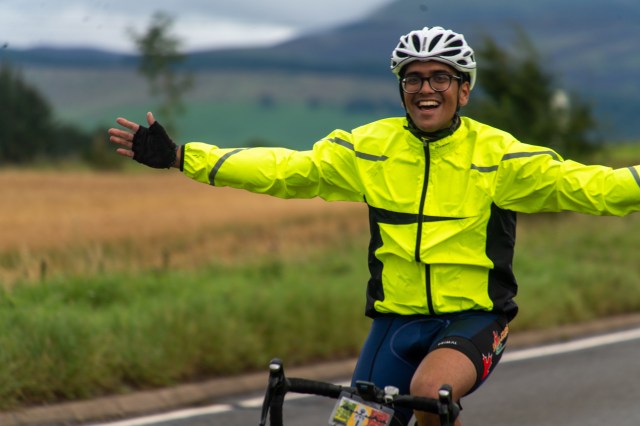
We waited without asking. Slowed without speaking. Pushed each other when needed. Celebrated small victories invisible to the world—but everything to us.

But the Konkan ride hosted deeper, older spirits too.

The regal spirit of Krishnadevaraya still lingers in the stones of the Vijayanagara Empire—a reminder of when this land shaped empires, not just journeys.

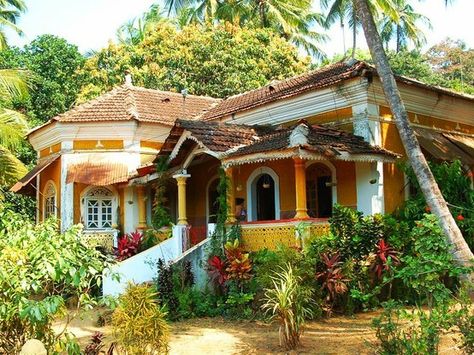
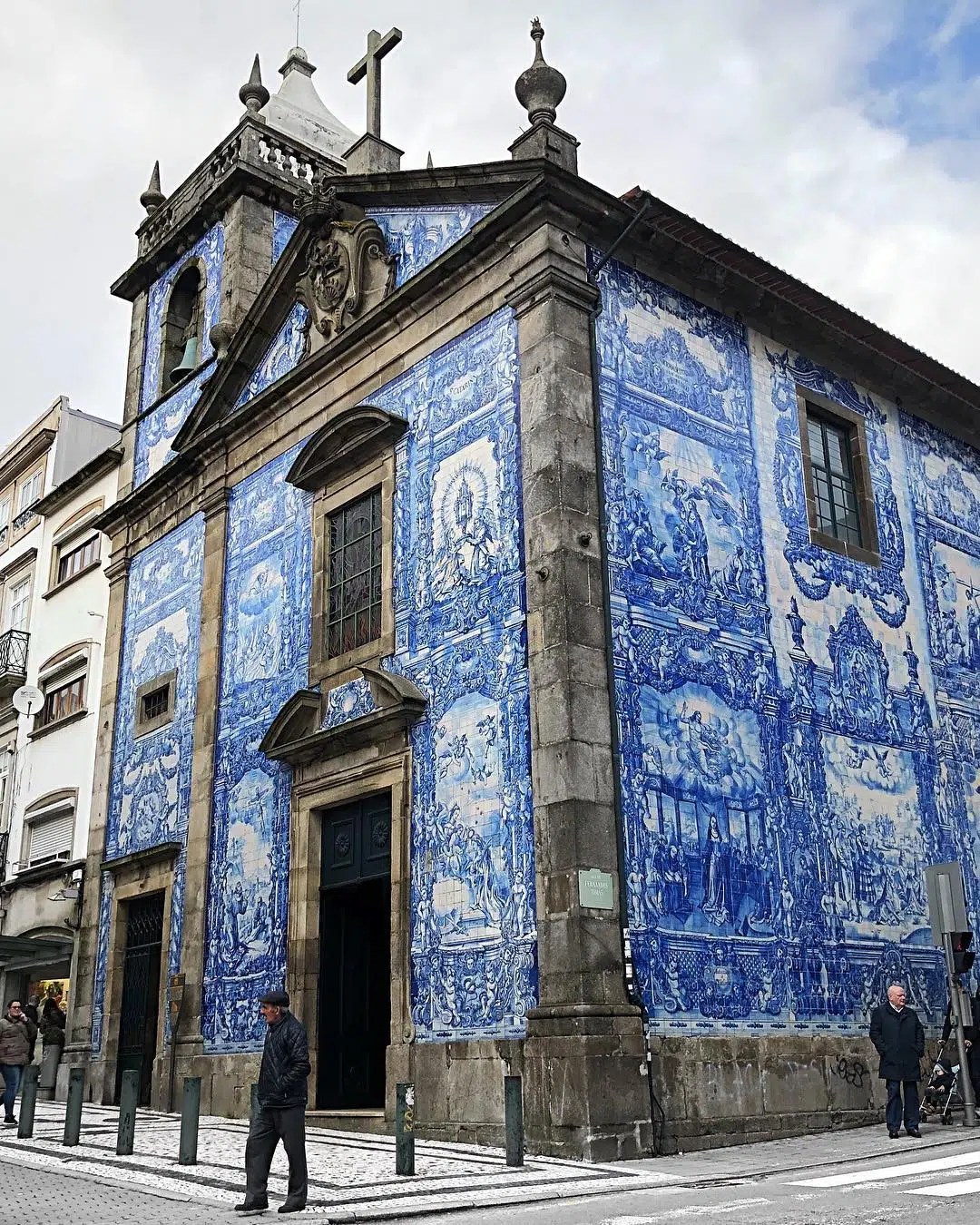
Cycling west into Goa, the colonial spirit takes over. Portuguese facades fading under salt and sun. Tiled mansions, some still wearing their azulejo tiles, partly wrapped in tangled banyan roots and dust. Balconies holding memories. Time moving, yet strangely still.
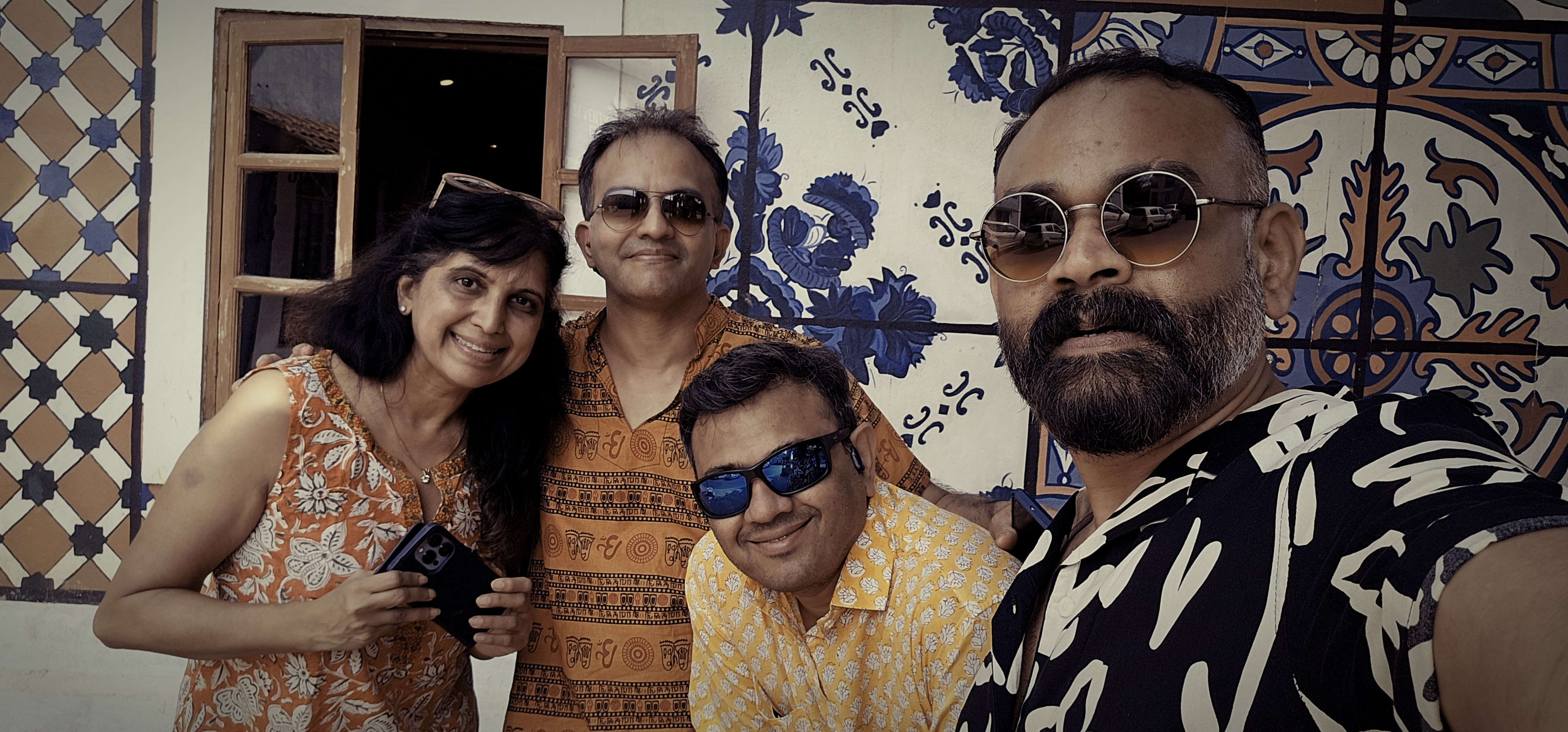
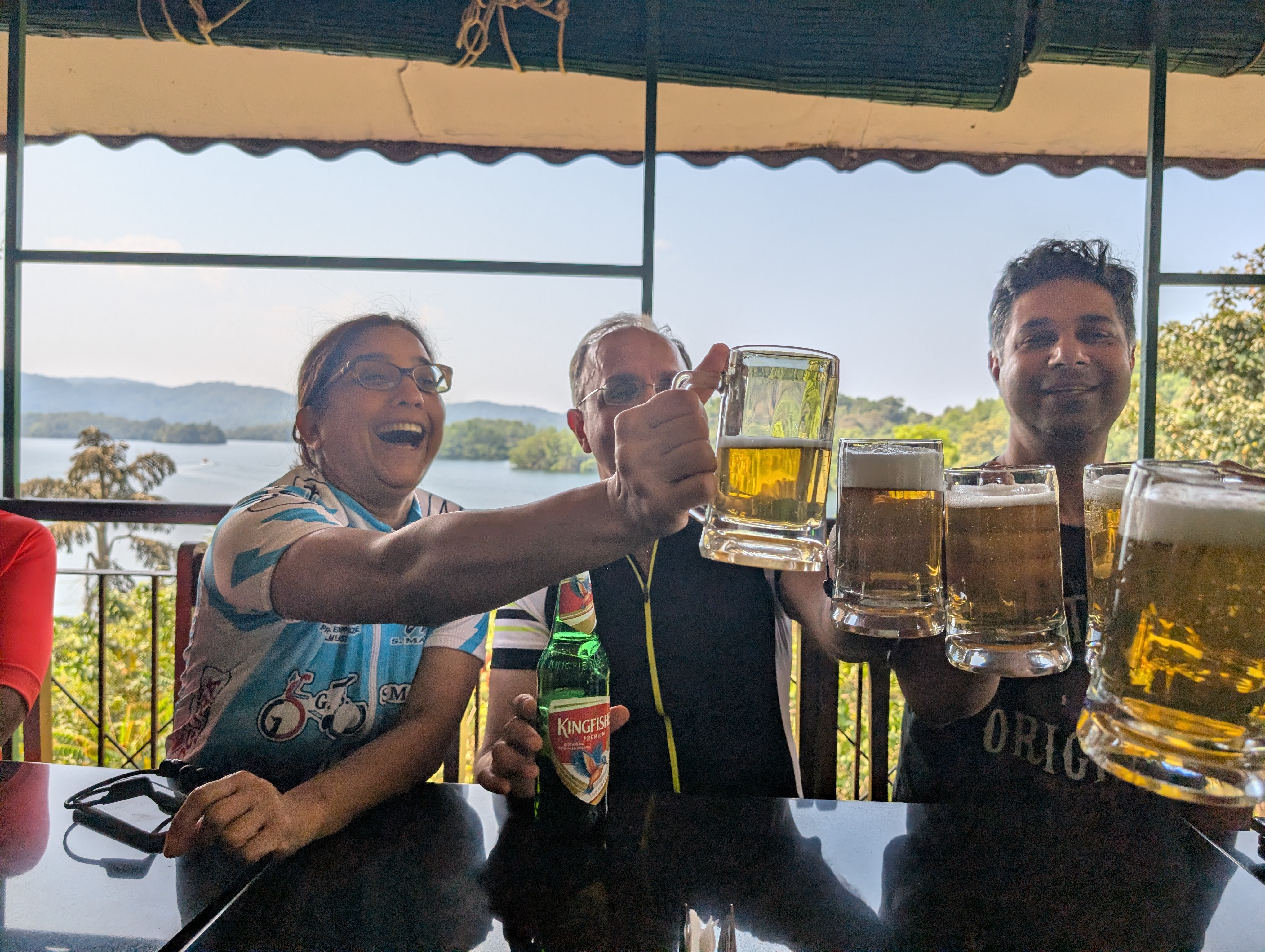
Goa rewards those who go beyond its shoreline. Past palm-fringed beaches and its bohemian reputation. Inland villages and old quarters whisper of trade, faith, and migration. Church bells drift across paddy fields. Spices linger in the air. A quieter, deeper Goan spirit reveals itself. Mario miranda, Fontainhais with a bit of Dil chahta hai beach memories produces an unique Goa spirit. The unmistakable spirit of strong cashew feni by the golden sunset—warming, loosening, tipping us gently to a euphoric spirit.

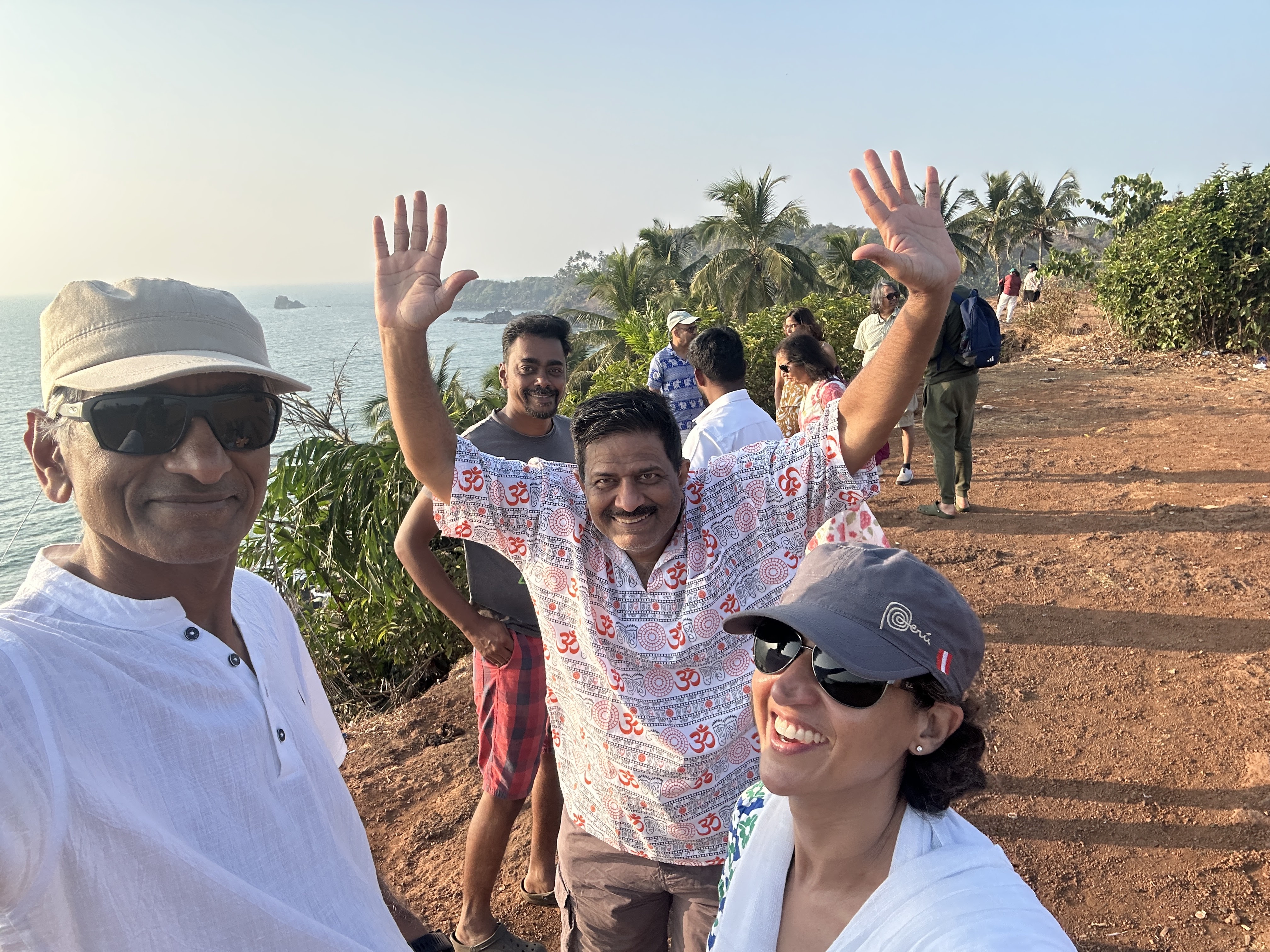
The spirit turns temple-like as we head south along the Karwar coast into Kundapura. Gentle and godly in Gokarna. Fierce in Devi Mookambika at Kollur. Celestial in Udupi.

Riding South along the Konkan coast from Goa, along the Mandovi River and into the backwaters toward the Sharavati River, the spirit shifts again. Through the forests of Dandeli and along hidden roads, nature’s spirit does what it always does—it strips away the unnecessary.
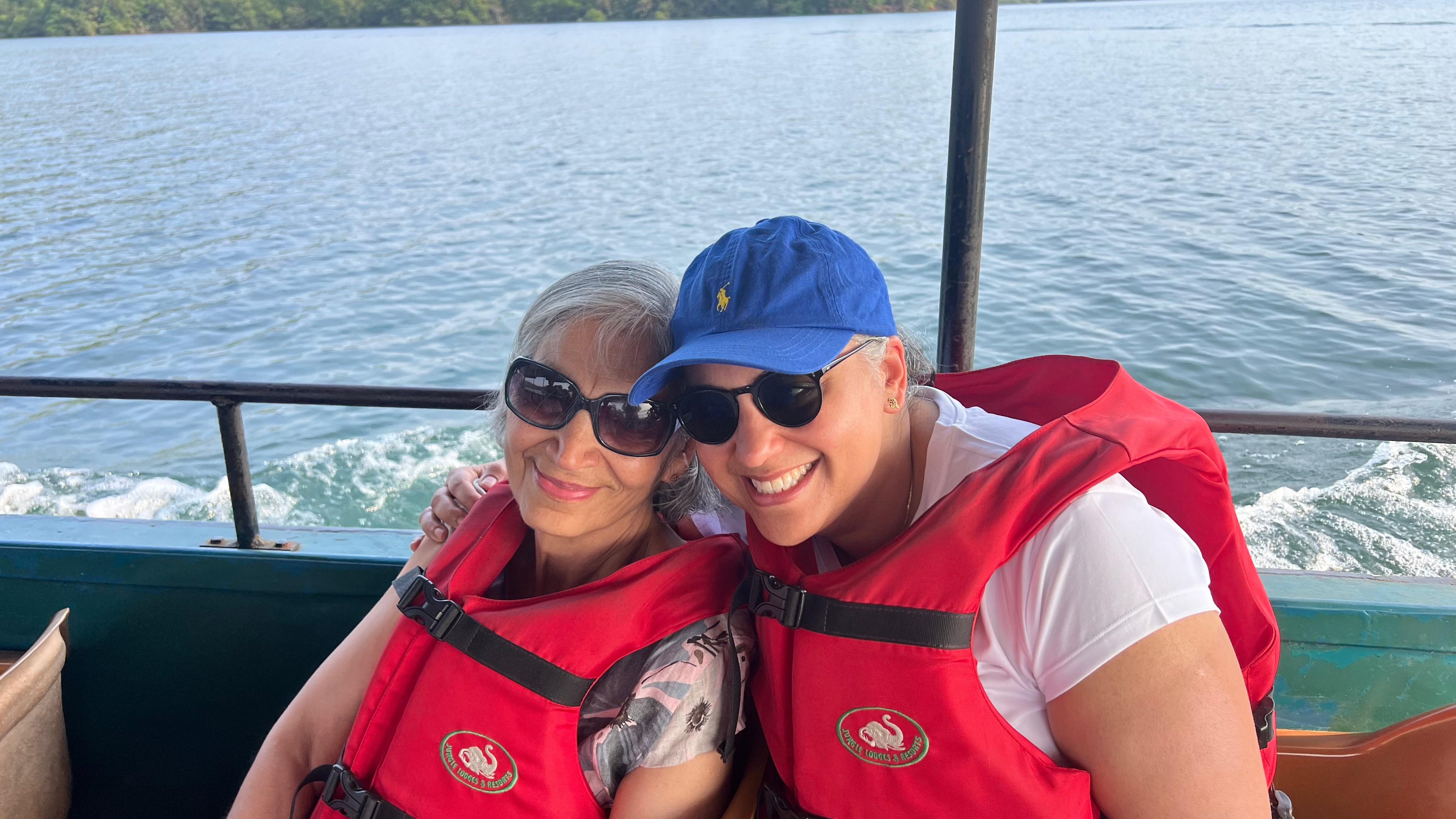
We rode where maps grew quieter.

Here, the spirit was emerald and breathing—monsoon-fed, river-washed, heavy with the scent of wet earth and wild growth. A spirit of lush abundance. A spirit of surrender

And somewhere between stone, saddle, sea, and self—the spirit was no longer around us, but within us.
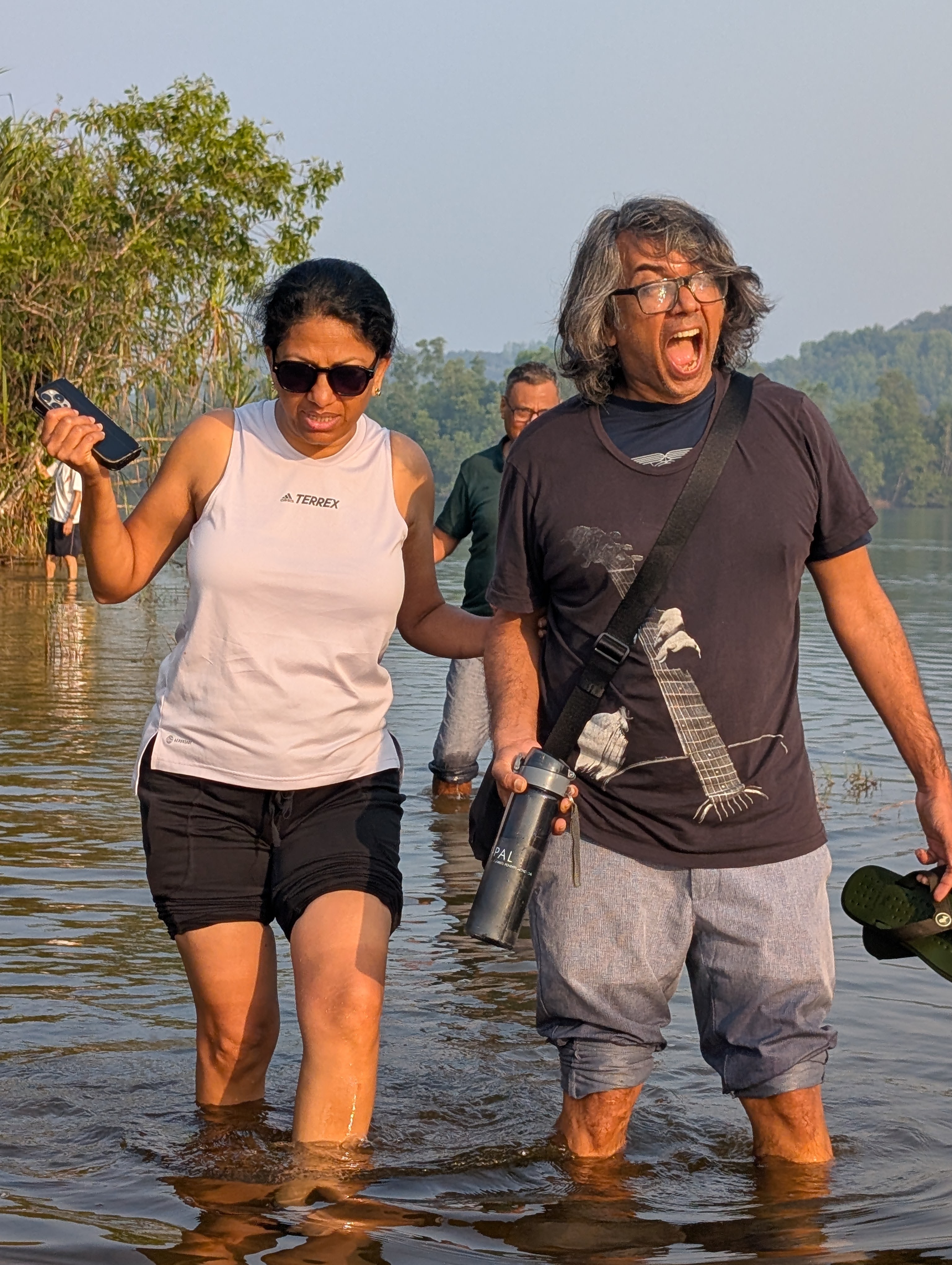
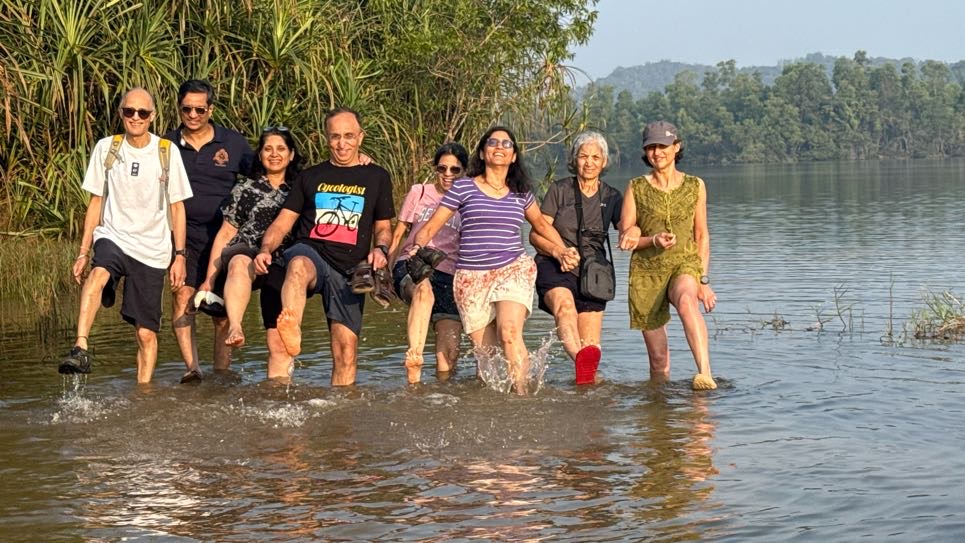
From Spirit to Sapadu

Soul food preceded the ride!
It arrived unapologetically in Dharwad—thanks to Indu’s family, who understood us foodies.

Sunil took us straight to Babu Singh Thakur Pedha in Line Bazaar.
Six generations. Same Dharwadi cows. Same patience. Same smell of caramelising milk that refuses to be rushed.

And then, the rivalry.
Mishra Pedha.
They became equals. And provoked comparison. We bought both.
Loyalty can wait. Curiosity cannot.
And frankly, the palate refused to choose. I simply loved them both.

If Dharwad peda was honesty and slow-cooked truth, its darker cousin— Kunda of Belagaum—was deeper. Moodier. Impossible to resist!

Naturally, sweetness made way for fire.
Byadgi menasinakai.
Deep red. Smoky. Dangerous without raising its voice.
Heat with dignity.
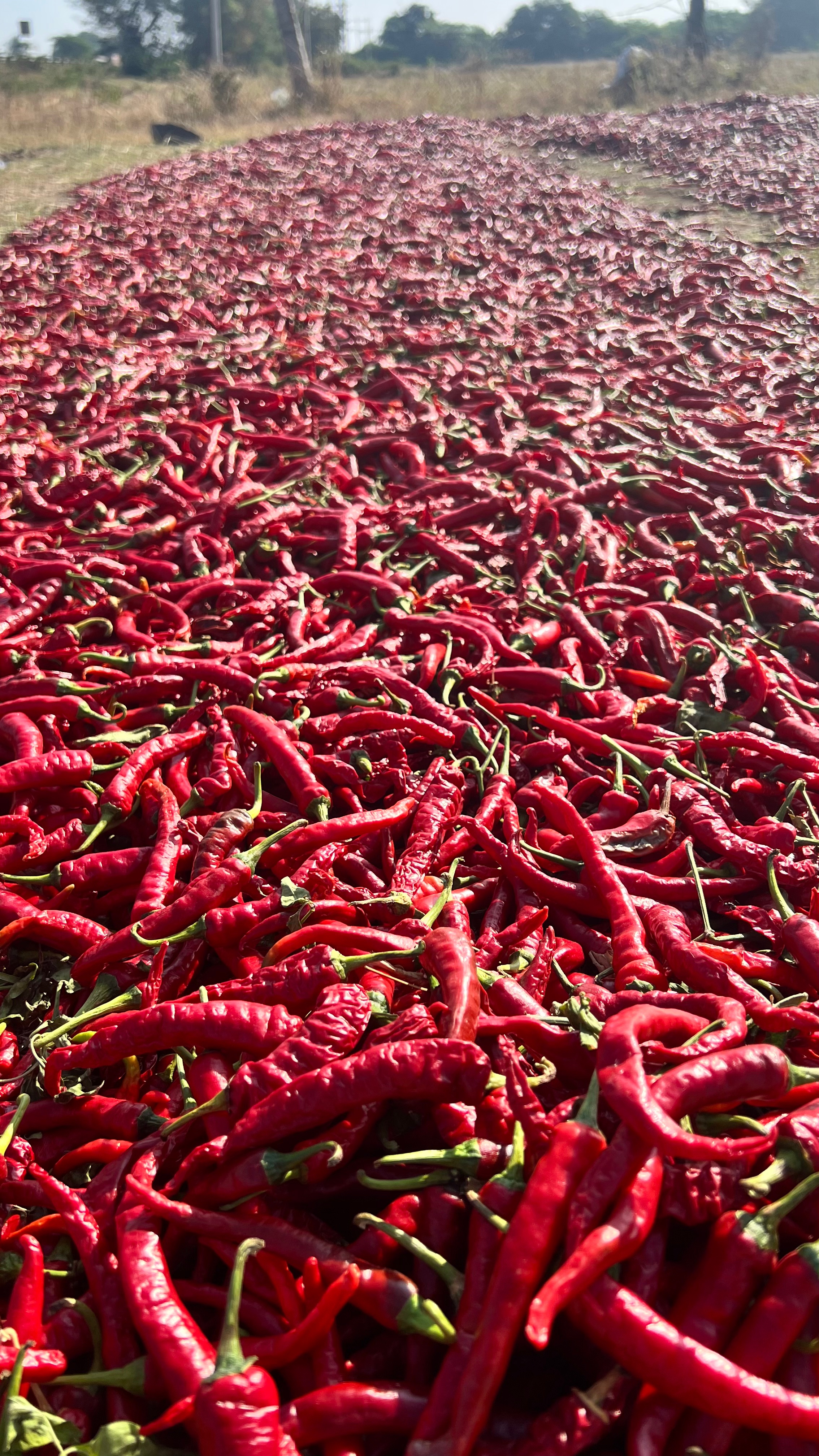
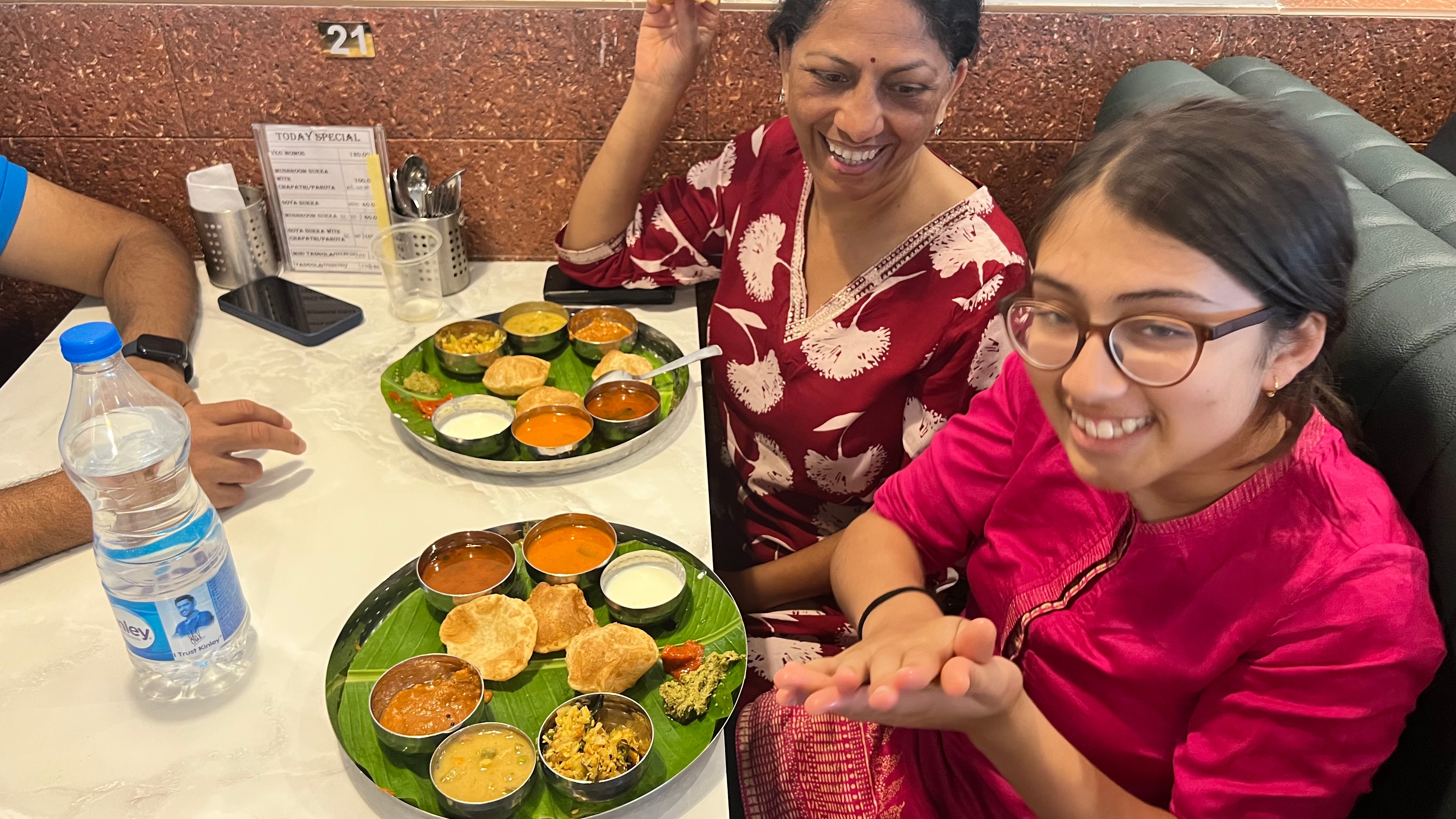
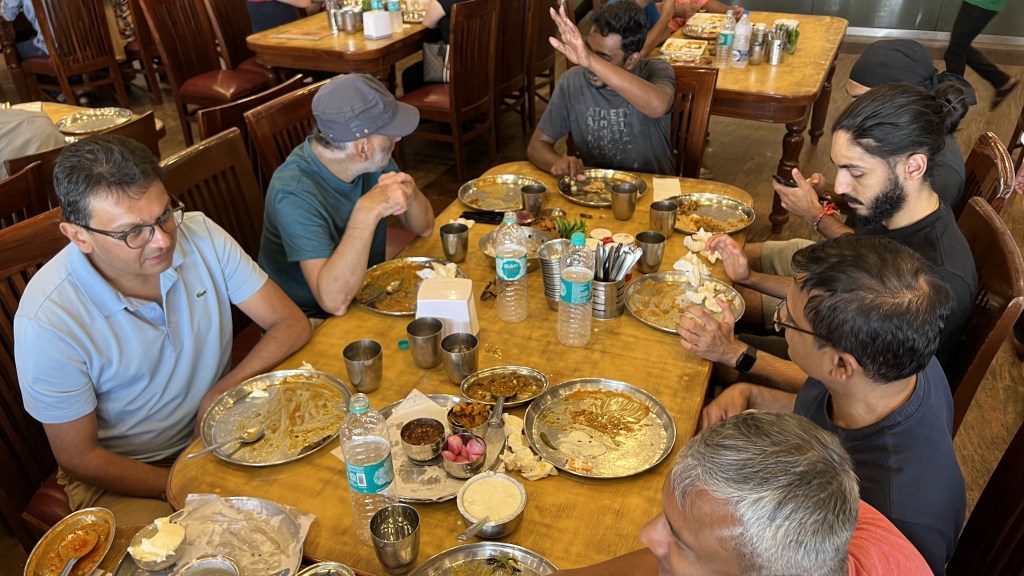
Lunch travelled with us in giant steel tiffin carriers. Still warm. Still breathing.
Jolada rotti. Ragi balls. Shenga chutney.
Food that didn’t accompany the ride.
It led it.

Further west, Goa changed the script.

We walked into small, nameless shops.
Wooden shelves. Ceiling fans. Time paused mid-spin.
Spices wrapped in newspaper. Jumbo cashews, skin intact. Honest. Unprocessed.
Every one of us left with an XL packet. Restraint had quietly exited.

The Goan thali was geography on a plate.
Fish. Coconut. Kokum. Sea and soil, in permanent agreement.

Dessert was bebinca. Layered patience.
It briefly lost the spotlight to the Instagram diva—tres leches.
Photogenic. Attention-seeking.
Bebinca didn’t compete. It had history on its side.
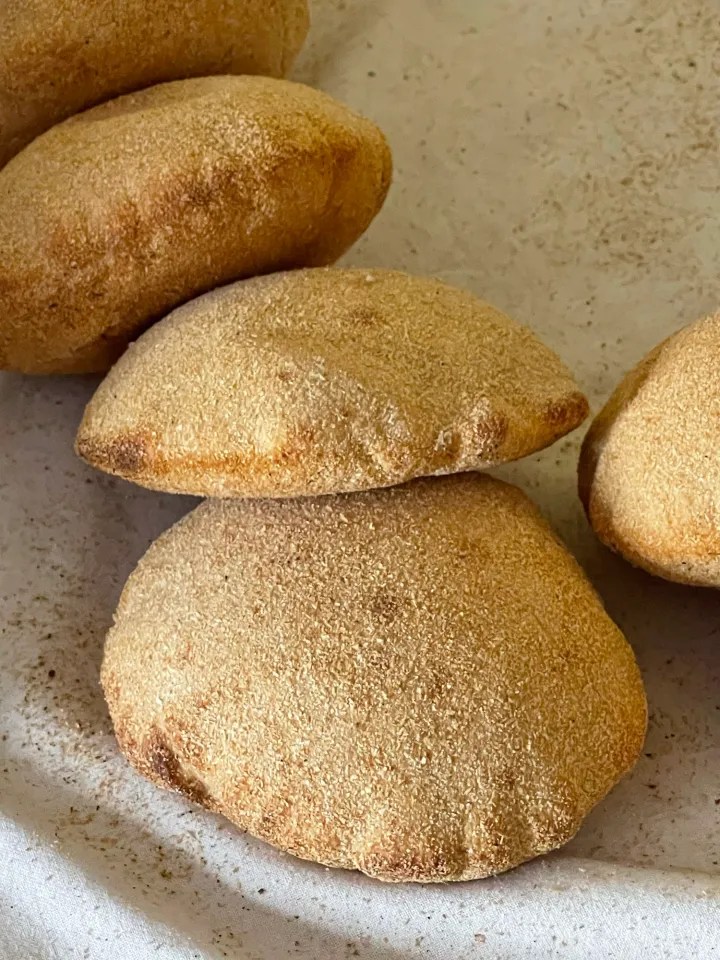
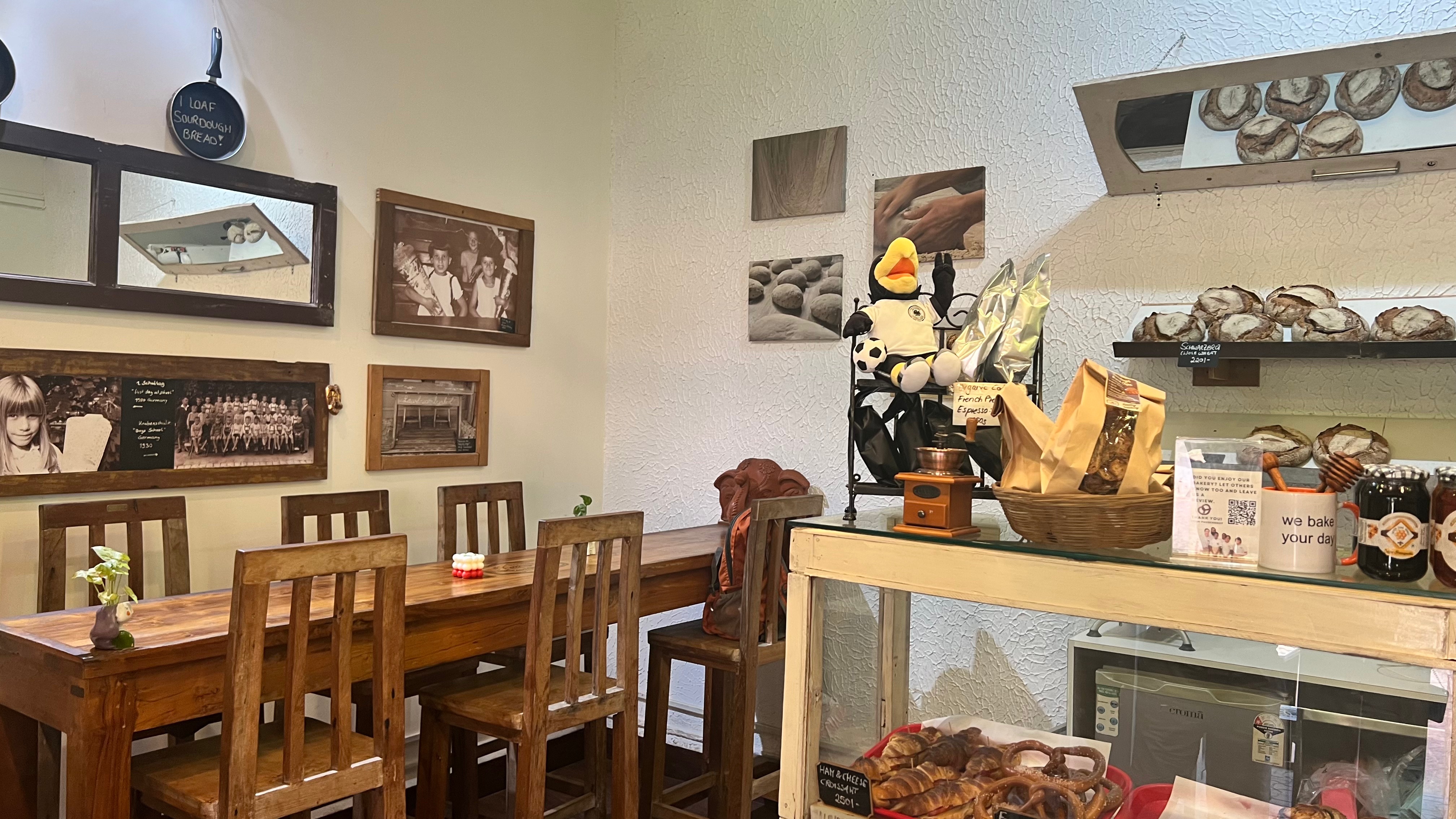
At the Sharavati River ecolodge, head cook Nagesh rewrote our mornings.
Mangalore buns. Goli baje. Golden. Fermented joy.

Further south, lunch in Kundapura prepared us for what was coming.

Because Udupi does not serve food.
It serves satiety. Balance.

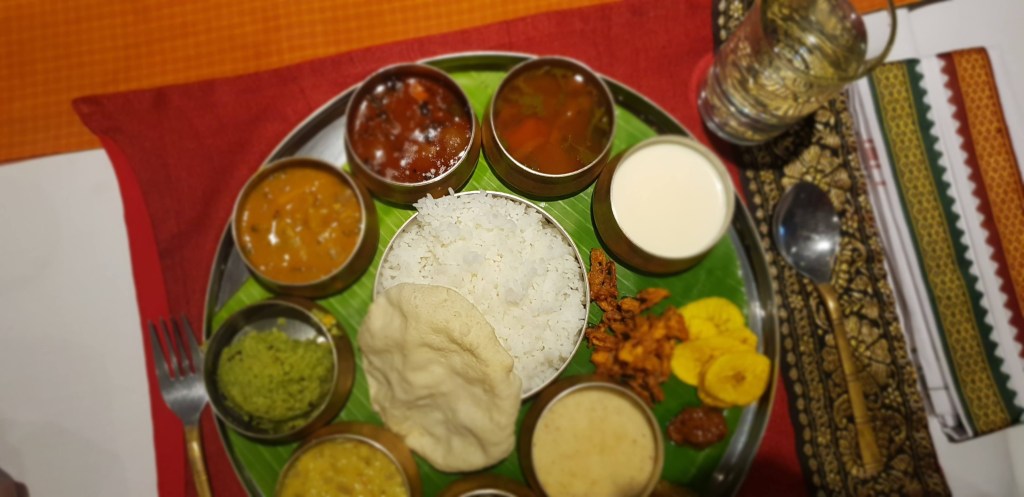
Udupi Brahmin cuisine is composed rather than cooked.
No onion. No garlic. No excess.
Just coconut. Curry leaves. Asafoetida. Fenugreek.
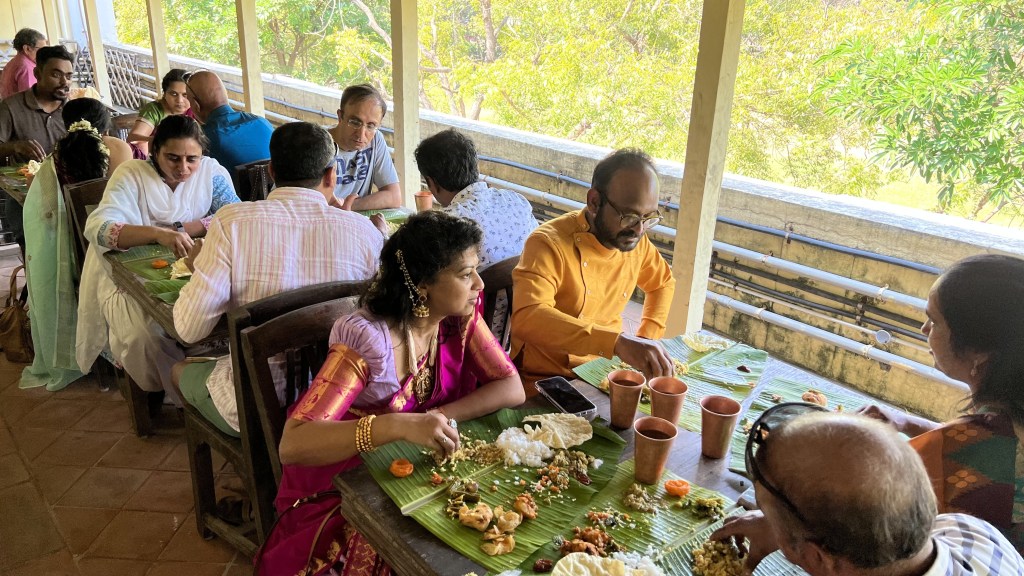
Rice. Sambar. Rasam. Kosambari. Buttermilk.

The simplicity touches the foodie soul.
Confidence without decoration.

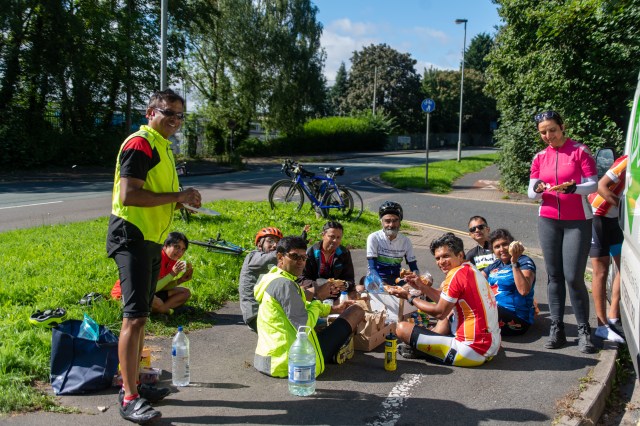
Our pit stops were not car boots with bread and hummus.
They were better.
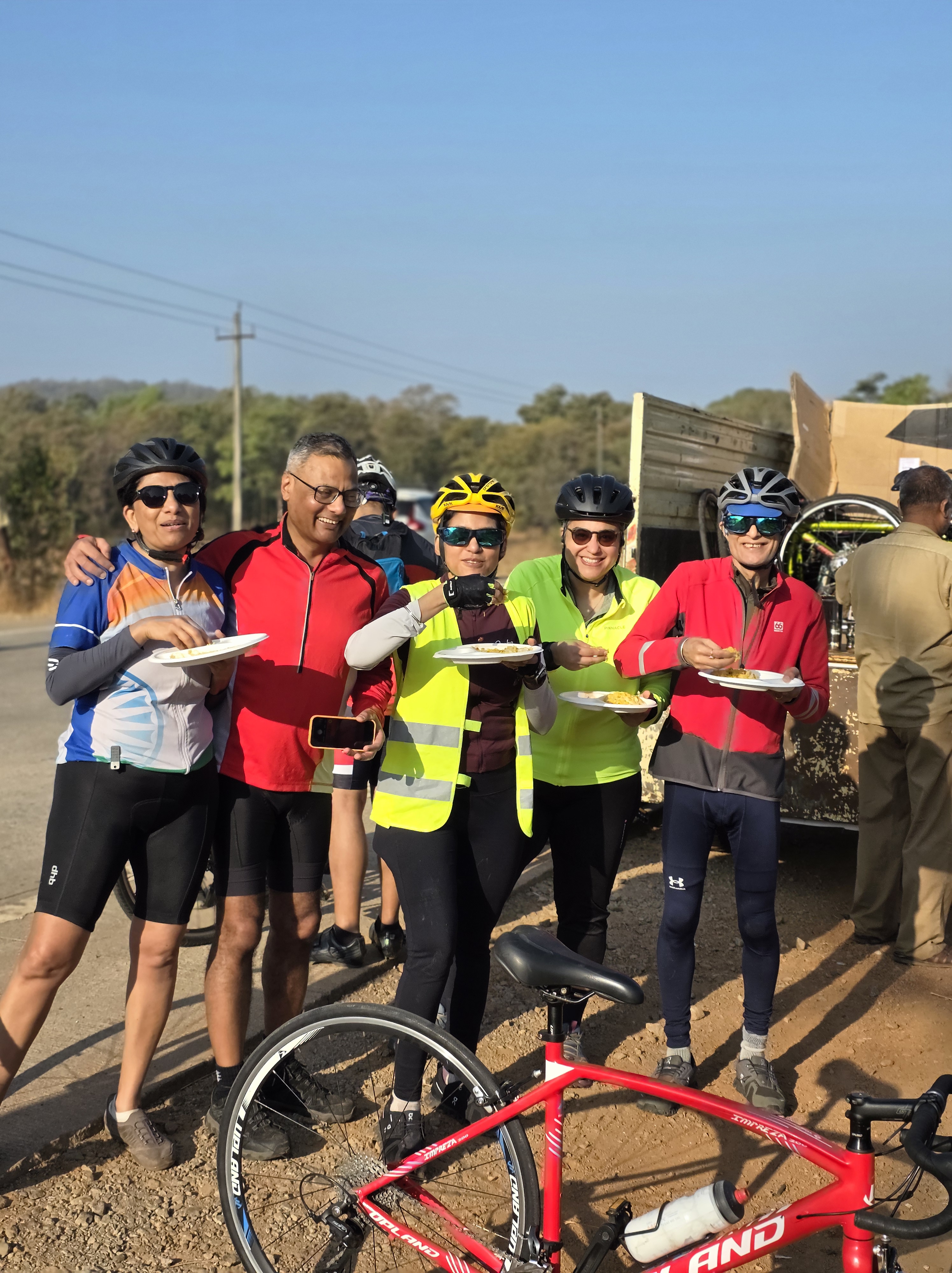
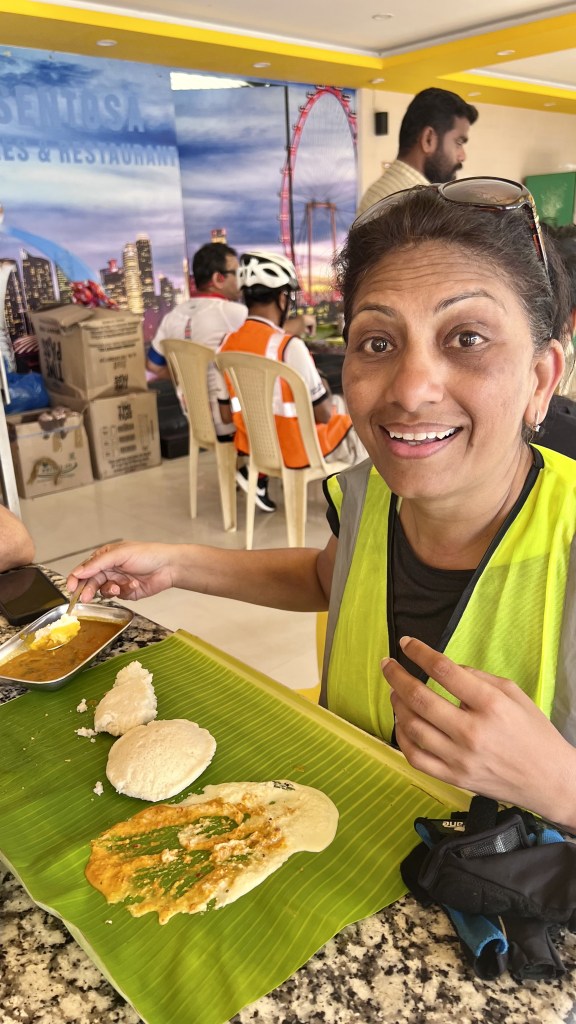
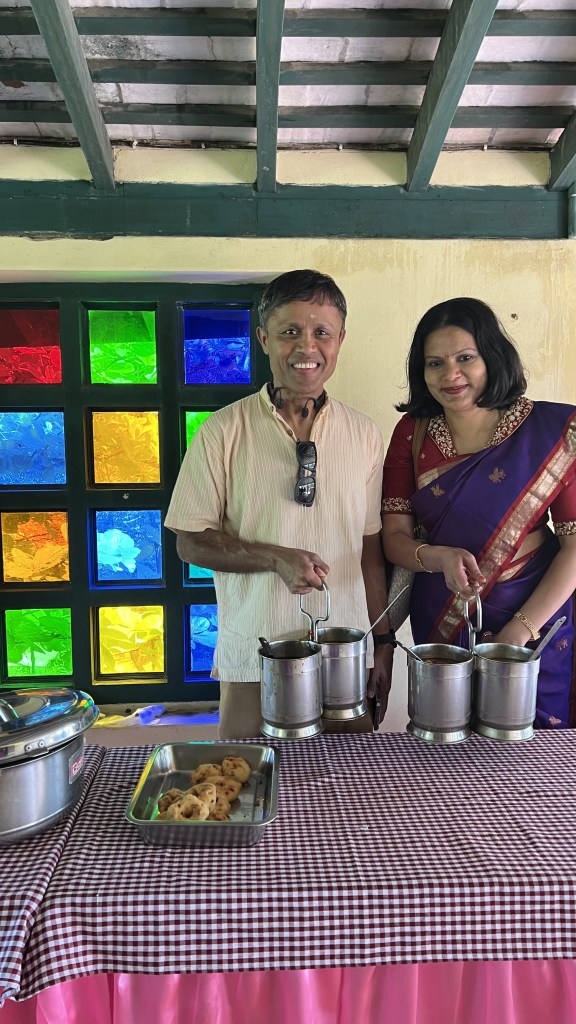
Hot pongal, sambar, and vada at sunrise.
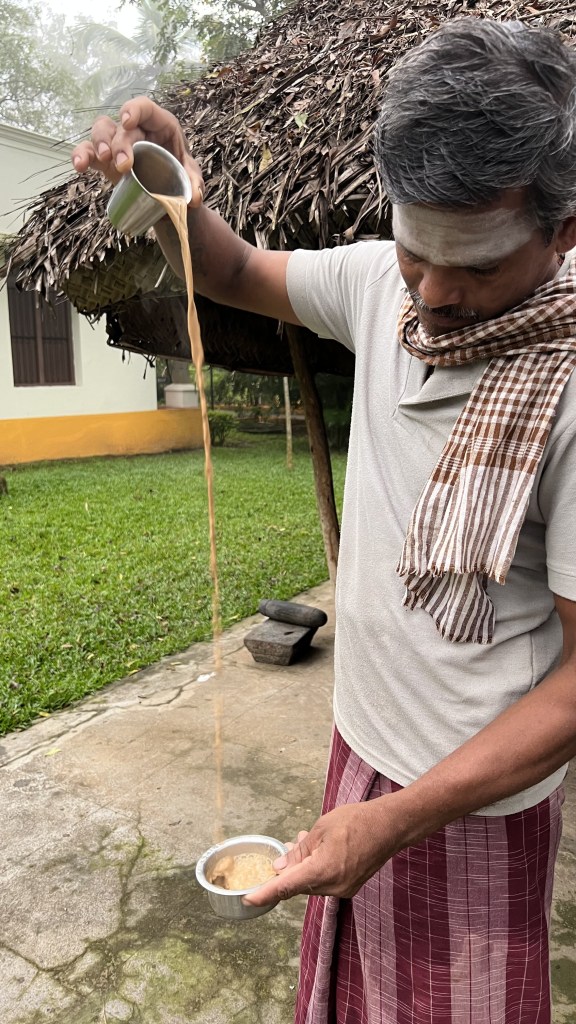
Neer dose in a roadside shack. Fresh chutney. Cooked Maggi. Peanut chikki.
Jeera buttermilk. Spiced soda. Boti puri.
And thati nungu—nature’s own coolant.
We carried one last souvenir home.
Parijata rasam powder.
Humble packet. Immense promise.

Because long after the legs forget the climbs,
the tongue remembers.
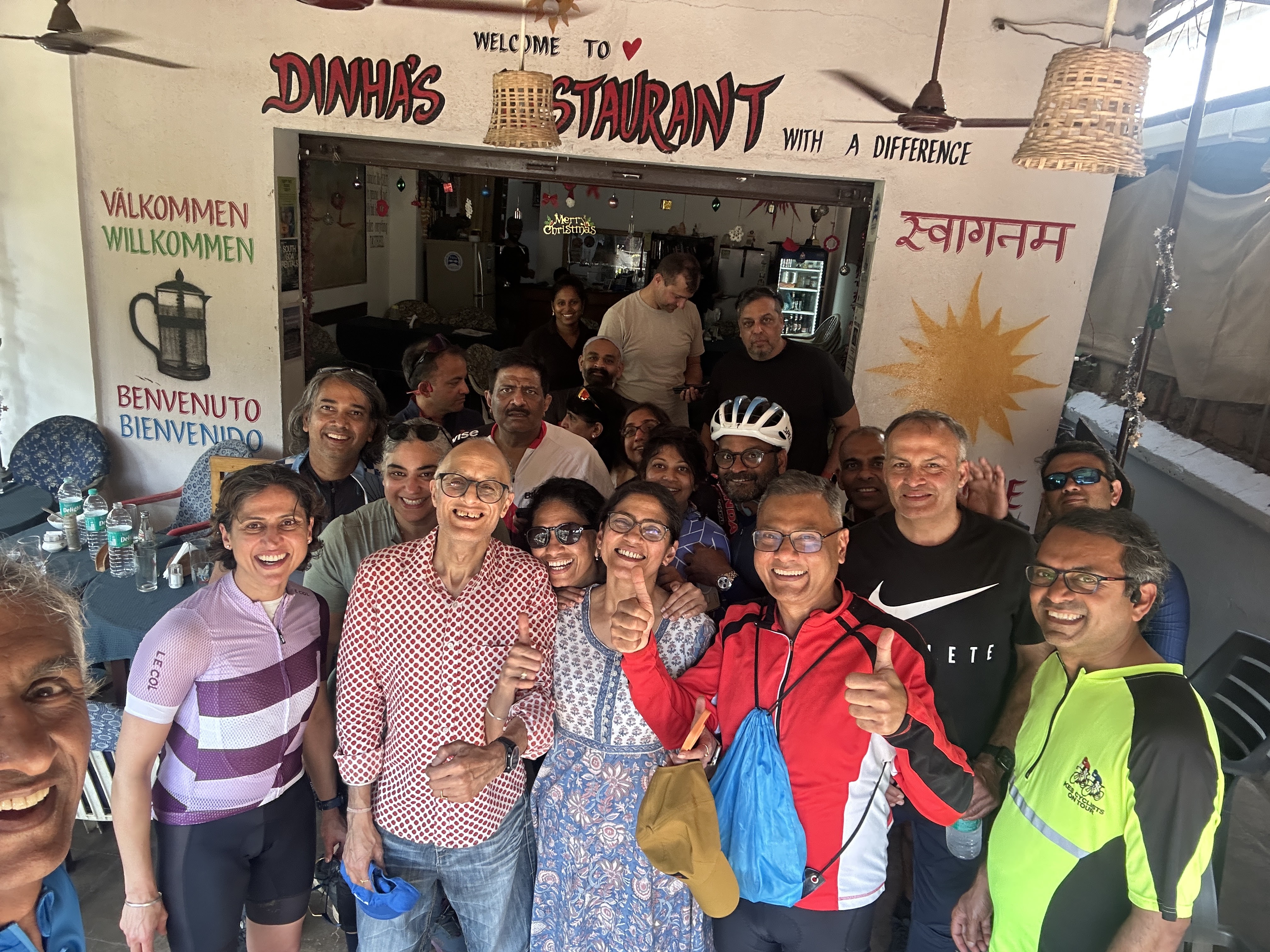
Finally, the debate—Solo or Social ride.

This ride was social.
That was its outward gift.
Chatter beside you. Wheels in and out of rhythm. Conversations without agenda.

Science has a word for what followed. Neuroplasticity.
Social interaction elevates Brain-Derived Neurotrophic Factor (BDNF)—the quiet fertilizer of the happy brain. Neurons rewire. And thus, the mood lifts.

Now, let’s flip the coin.

The ride was also solitary.
Long stretches with no conversation. No phone.
Just pedal.

In that reflective space, the brain rewired differently.
Thoughts settled. Problems softened.

This ride, from Temples to Tides offered both.

And here I am, yet again—rewired and ready for the next journey.
Blame it on Brazil

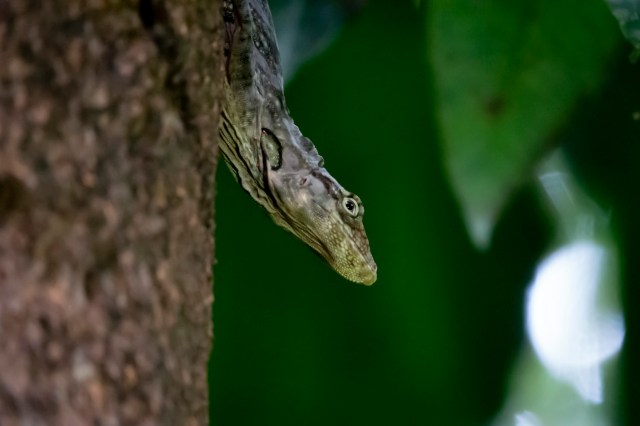
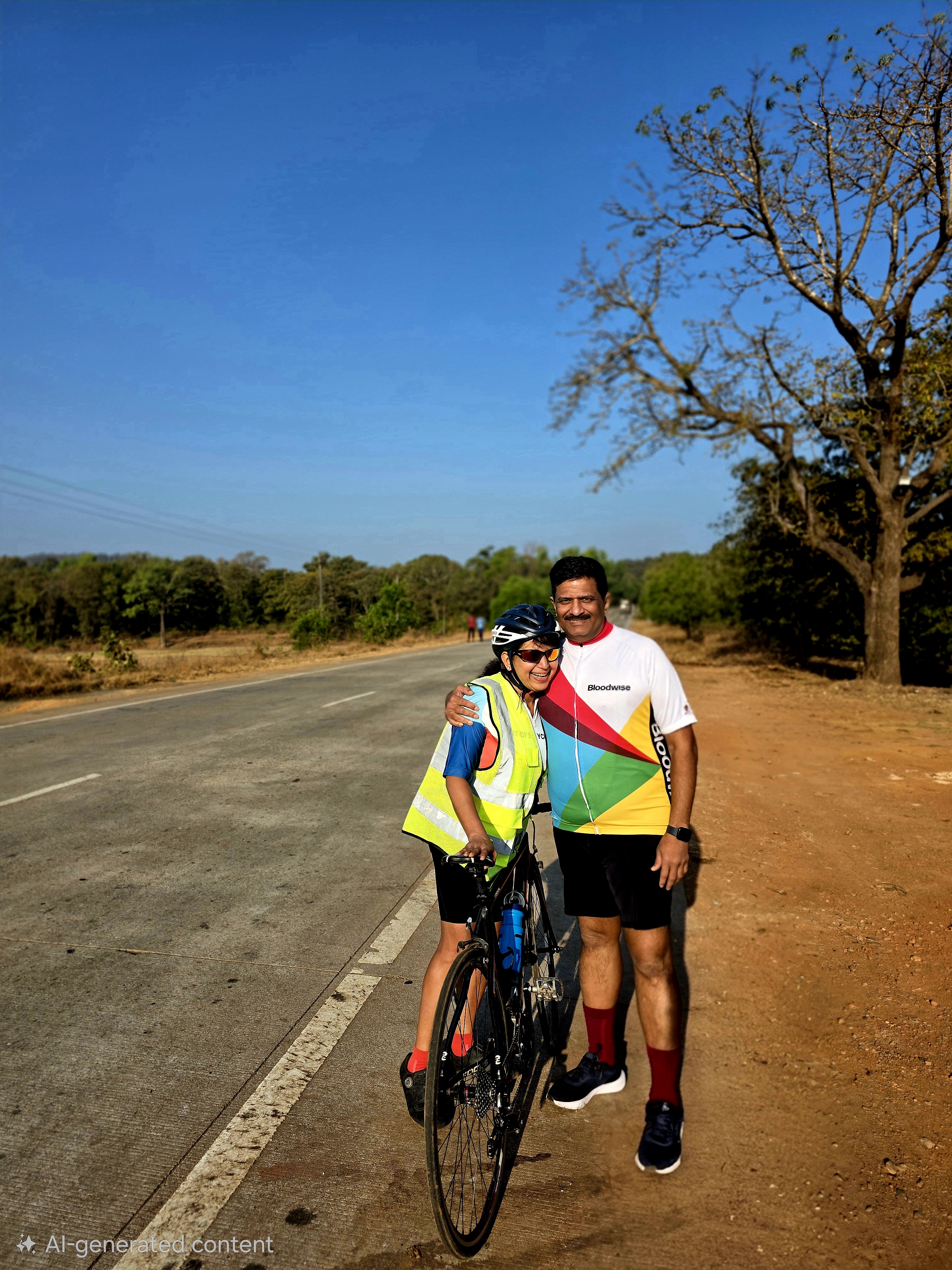
When a disappointed traveller cites none, this is the only jaguar pic to upload!!

Easter 2025.
The now-solid habit of travel took us to the South American giant — Brazil. Two weeks. .

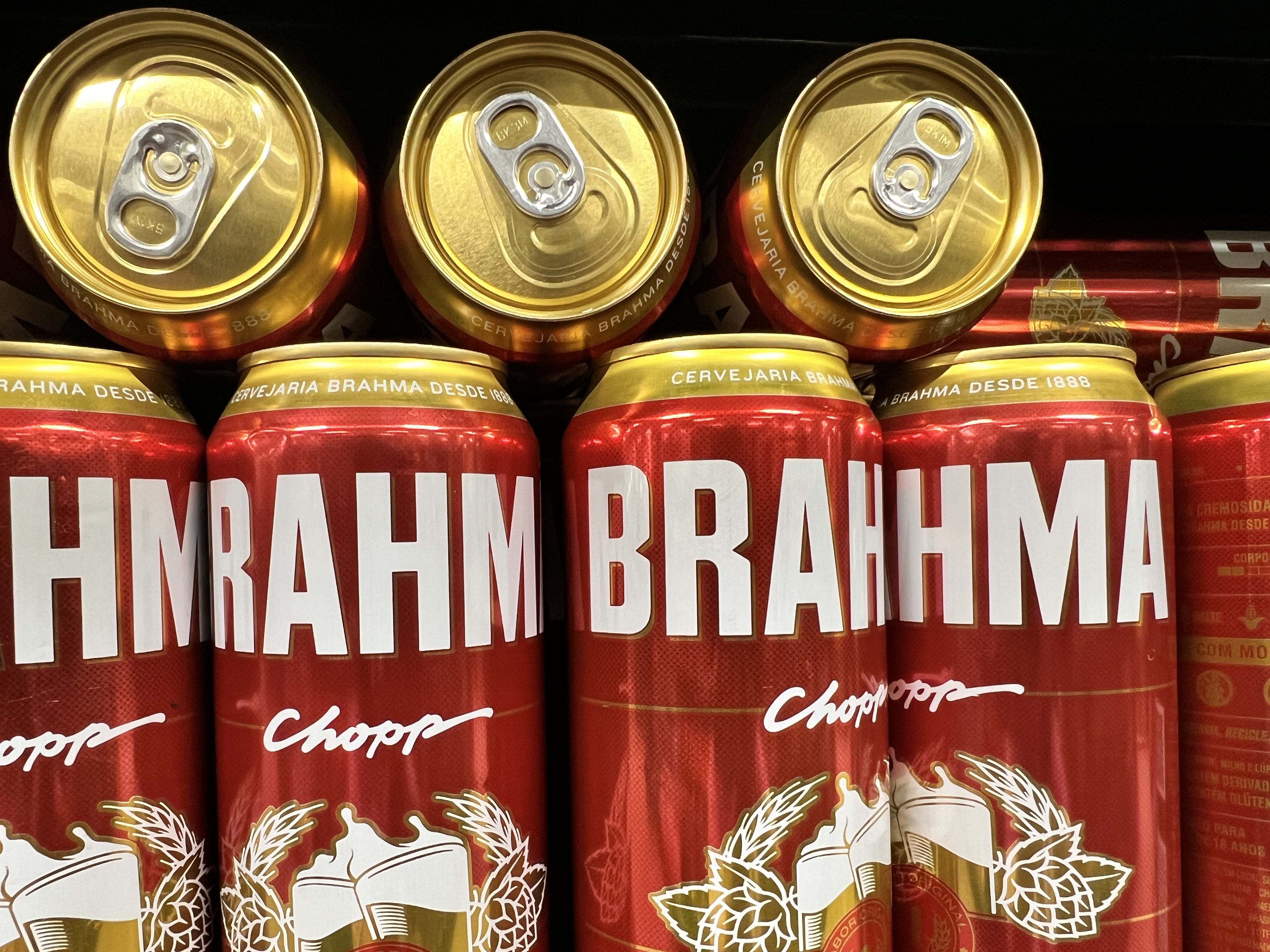
Bold amazons, Brazen Rio, beautiful beaches, bikinis, and butts, bohemian Bahia, boozy Brahma. That was signature Brazil at first glance, as we skimmed through itineraries. Dive a little deeper, breath taking best kept secrets of Brazil blows one away.

Some travels give you stories. Others give you sensations.

I’m back now. My memory cards are full.
My words are floundering. And here is why..

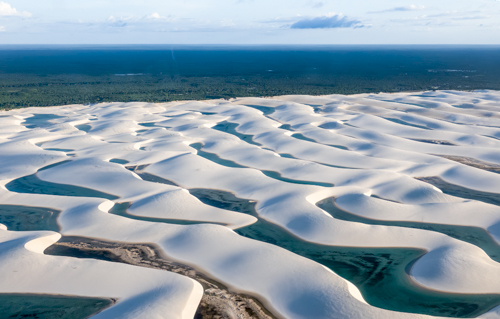
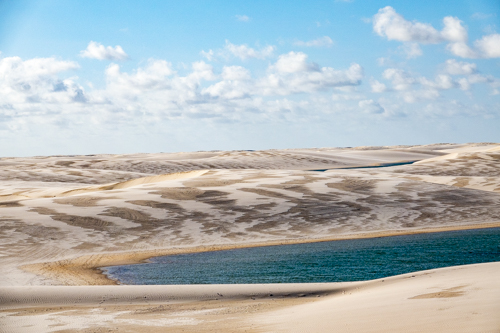
Surreal sensationLencois National parque

I’m blaming it all on Brazil. Let me try to ignite a sensory spark — of the Real, the Unreal, the Surreal, and maybe even the Ethereal — with my blog Brazil.

SURREAL

What Deadvlei in the Namibian desert did to me a decade ago, Lençóis Maranhenses has now utterly surpassed.

This place — a national park — left me with a new, incurable diagnosis: PTLD — Post-Trip Longing Disorder.

After nearly 24 hours of long-haul flights and barely a couple hrs in Rio airport, we landed in São Luís — the official gateway to Lençóis Maranhenses, and by then, unofficially, to my jaded mood.

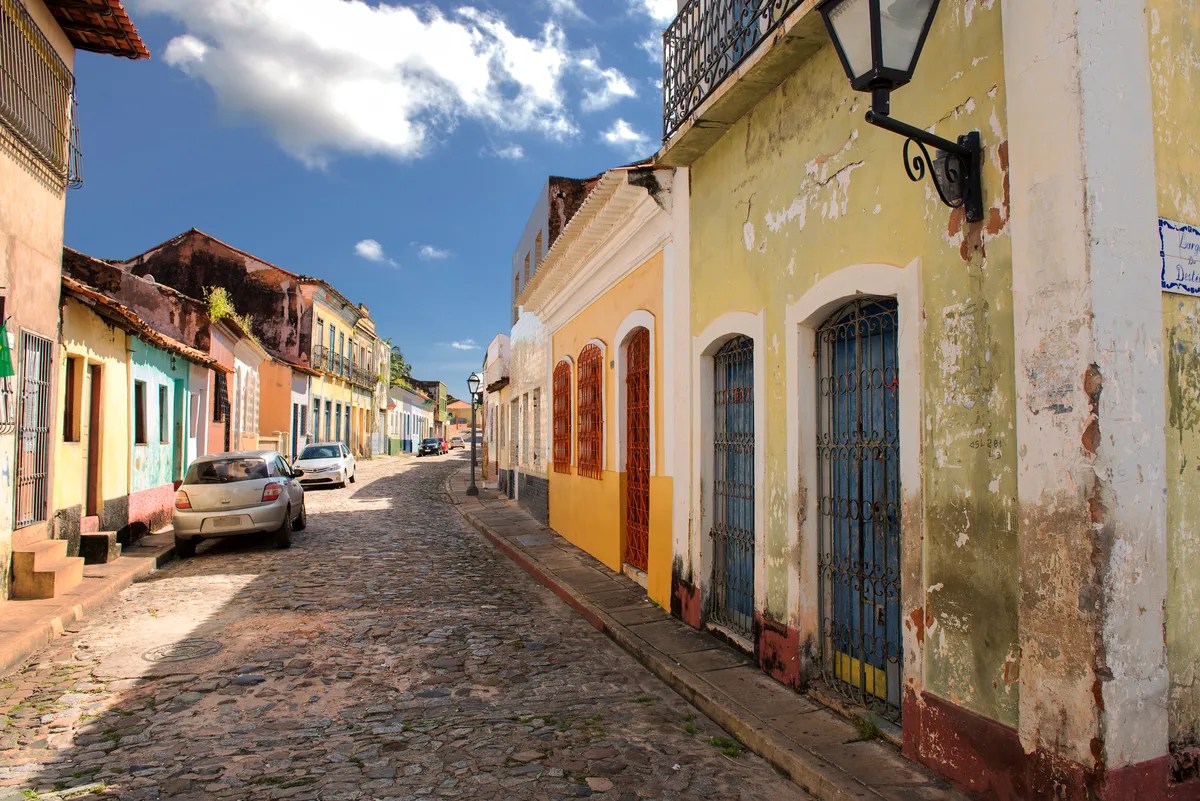
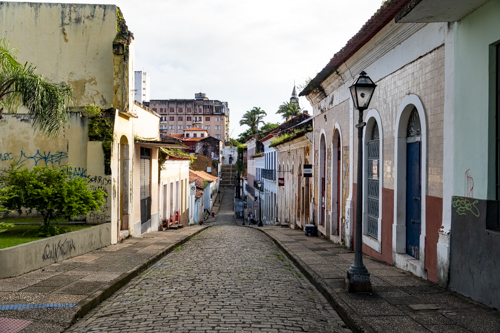
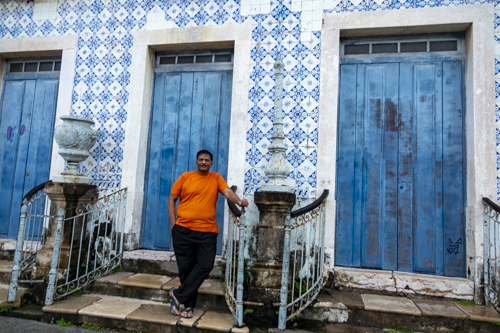
The historic town centre was deserted. Like it had quietly decided to sit this century out. Collonial houses with shuttered windows. Peeling but appealing tiles. A few reggae bars playing to empty chairs. It felt like a film set that had wrapped too early — beautiful, but strangely still.

Maybe it was the jet lag. And the hunger. I was sure that the only grumpy vegetarian in this corner of Brazil was me. I dropped into the creaky four-poster bed in pousada Portas de Amazonia and any rustic charm escaped me on the first night.

But, those worn azulejo tiles — the old colonial bones of Portugal with antique street lamps — they had a way of catching the eye. Even through my irritation.And the Brazilian Reggae reminds one of the African slave port it once was.

By morning, the mood had shifted. The next journey on land began. The town faded behind us. And just like that, we rolled into a landscape that belonged to no instagram images I’d ever seen. The first proper road between São Luís and Barreirinhas — once a sleepy fishing town, now reinventing itself as the launchpad to the Lençóis — opened just two years ago. Even today, the drive takes four hours. But there are signs of change were everywhere. Dirt roads being paved. New guesthouses sprouting. Our driver grinned and announced, almost ceremonially: “We have a pizzeria here now”, as we paused in a wayside stop.

Barreirinhas has still has that on-the-cusp feeling: part remote village, part eager gateway..

Then came the final stretch — a four-wheel-drive plunge into the wild. No roads, just tracks of fine sand, swampy streams, and the occasional splash-through puddle that felt deeper than expected. We bounced and snaked through groves of cashew trees, our Land Rover rattling like a coin in a tin.

At last, we reached the base of a dune — 30 metres high and rising like a soft mountain above the green canopy. Just a rope dangling from the top like a challenge.

We climbed, hands gripping, feet sinking, the sun blazing from a sky with not a single cloud to soften it.

And then — one final step over the ridge.

The first sight of the Lençóis.
Sprawling. Blinding. Beautiful beyond logic.

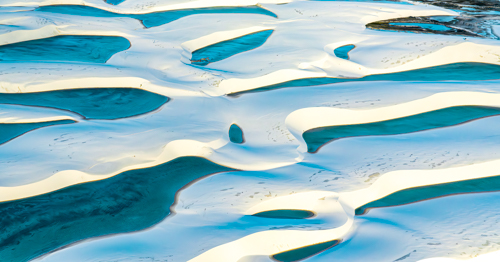
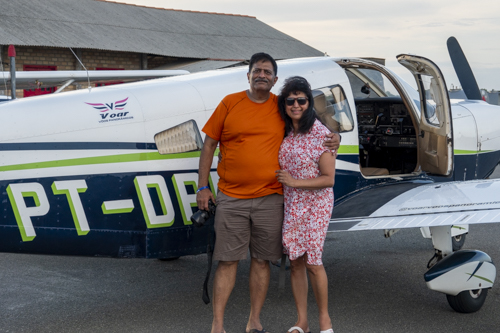
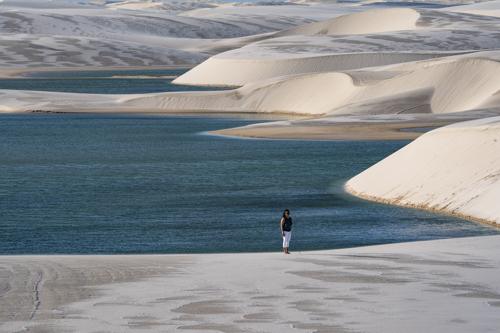
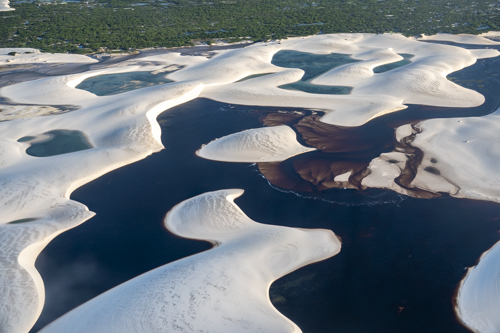
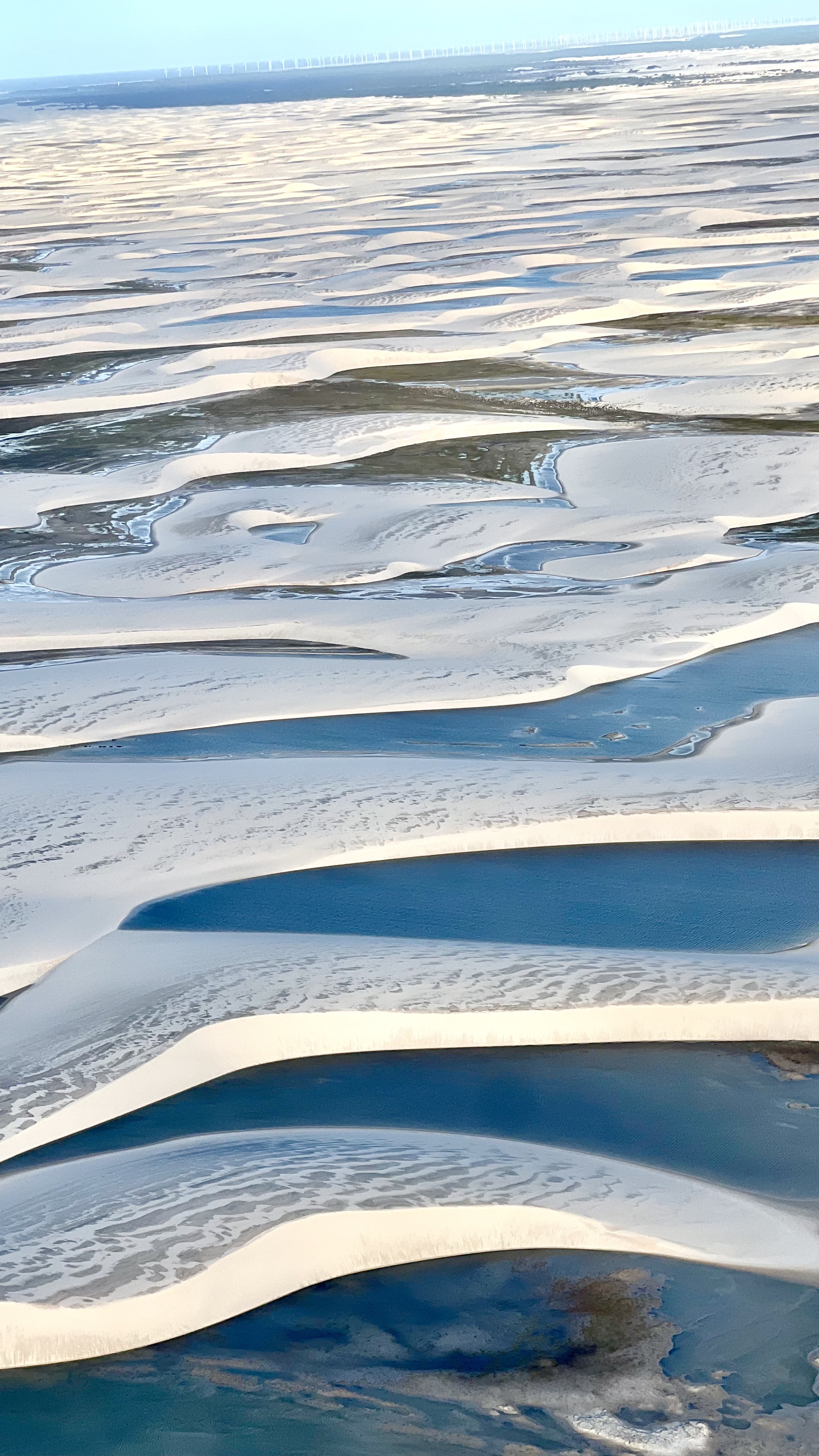
Lençóis Maranhenses is perhaps the purest form of nature. A national park spread over 1,500 square kilometers, bordered by the North Atlantic on one side, and lying about 1,662 miles north of Rio. It is, without a doubt, the most dramatic landscape I have ever seen. For the uninitiated like me, (I could barely say the town names), flying low over Lençóis Maranhenses in a tiny four-seater — all the way to the North Atlantic — felt like floating through a AI generated image dream.
The whites? Blinding.
The curves? Seductive.
The coloured pools? Straight out of a surrealist’s palette.

And no — I hadn’t touched caipirinha or cannabis.

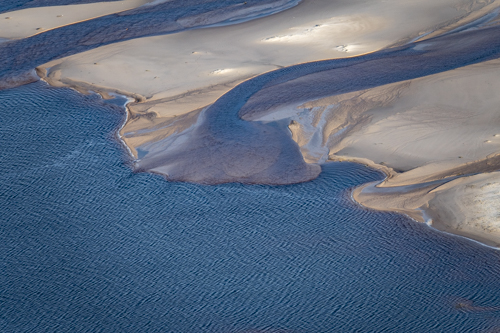
White sand dunes, shaped like waves, collided with emerald and sapphire lagoons. The scale, the geometry, the impossibly perfect stacking ofcurves… they didn’t seem natural.

It all began millions of years ago, with the mighty Parnaíba and Preguiças rivers carrying sediment from deep inside the continent. Erosion. Wind. Time. All conspiring to sculpt colossal dunes — fluid and alive. Then came the rains, forming crystal-clear lagoons in the folds of the sand.

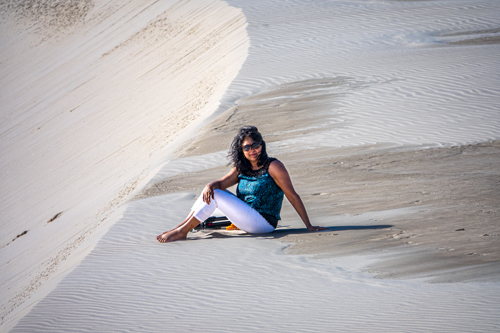
Every one of my footsteps on the pristine sand was instantly erased by the wind. No trails. No paths. Only shifting silence and hypnotic symmetry.

Lençóis literally translates to bedsheets. And that’s exactly what it looked like — perfectly folded, parcel-washed by the wind, stretching endlessly like the frilled hem of a flamenco dancer’s skirt. From our small flight over the dunes, I saw rhythm and grace frozen in time.

I immersed myself.
Hmm… you cannot get closer to surreal magic than this, I thought. And then, I did-when I swam in the lagoon.

Nothing prepared me for this scale.
Nothing prepared me for how it would stay with me forever.

To keep the Lençóis pristine, soon, only 100 people will be allowed through each entrance near Barreirinhas per half day. Strict? Yes. Necessary? Absolutely. The landscape needs more protection, less promotion.

I’ll raise a glass of suspiciously pink Jesus Guaraná to that (more about this later)

Rota das Emoções — Route of Emotions — continued.
Sounds like the title of a Bollywood saga or a K-drama soap, right?

We were now deep into a 400-mile journey across the northeastern states of Maranhão, Piauí, and Ceará — inching toward Fortaleza. But this was no ordinary road trip.
We cruised on wet sands, skimmed across shallow rivers, and roller-coastered over towering dunes. Unfiltered adrenaline.

A few ferry crossings.
A handful of shaky wooden bridges.
A whole lot of bump.

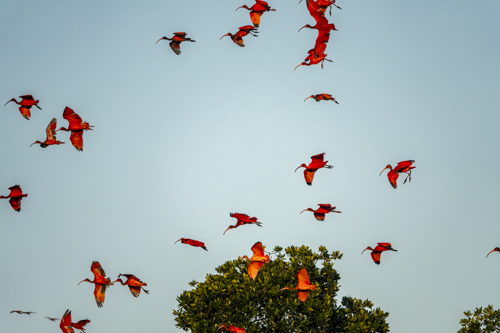
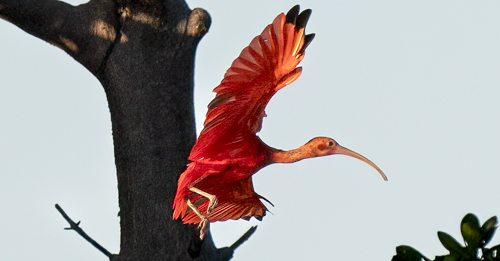
A must share is  Revoada dos Guarás — the flight of the scarlet ibises enroute. The large Parnaíba Delta which is a tangled web of mangroves and tideways — holds this slice of magic.

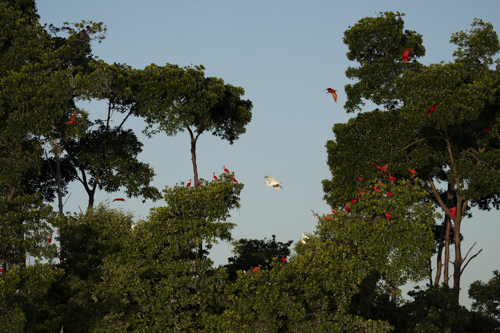
As the sun began to melt into the horizon, the sky started to blush. Flocks of red birds began returning home — streaks of scarlet slicing through the gold-tinged blue. Hundreds of them. From all directions.
Each group converged on a tiny island of trees. Their nightly roost. Their ritual. Their home.

Fifteen minutes of pure precision.
Nature’s own Diwali fireworks.
Ram in the meanwhile? Lost behind his lens, as he follwed them batch by batch.
We wrapped up the route day in Jericoacoara — or Jeri, as everyone calls it. A once sleepy fishing village, now beachy, barefoot bohemia. It had all of four sandy streets unpaved streets.

Surf shops. Bikini boutiques. Sand underfoot.
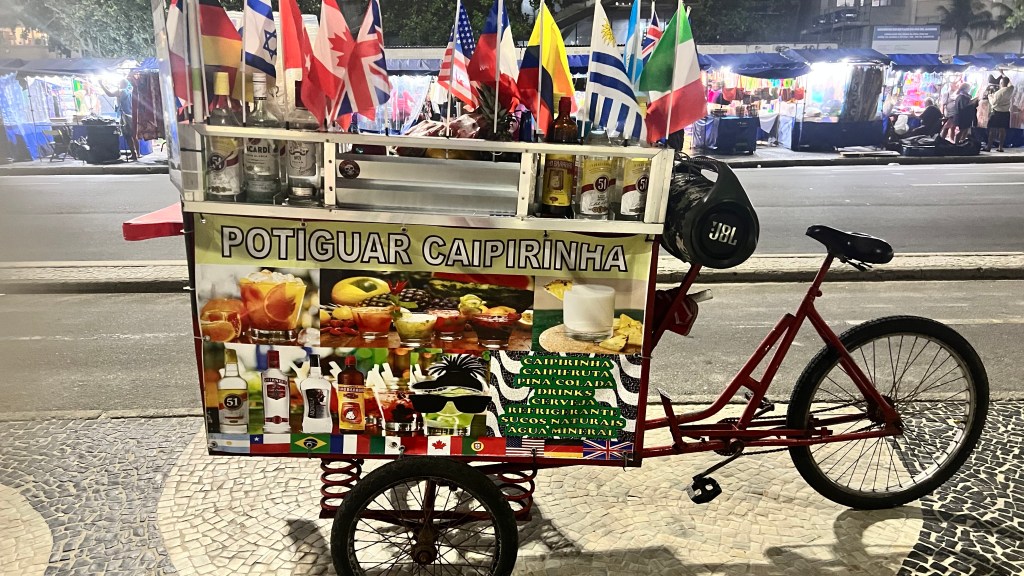
Endless tender coconuts. Fruity caipirinhas served with a side of sea breeze.
Stress isn’t just welcome here .

Quite frankley, I am not sure why this was named route of emotions!

REAL

If the Surreal stunned me, the Real steadied me.

We left the dunes behind — and flew across the country most of the day — to reach something more textured. More grounded. More… real.

The Pantanal.

The Amazon may get the headlines. But Pantanal swamps gives the “sensation” in the blog. For a wildlife photographer like Ram — getting THAT iconic shot of the elusive jaguar is THE pivot of this trip.

Sadly, we spotted NONE.

No stripes. No stealth. No star of the show. Hence the opening picture!!

Turns out, a wildlife holiday in the Pantanal is truly unforgettable… just for NOT spotting even one jaguary . Haha.

That, to us is very real. And really disappointing.

From Campo Grande, the journey wasn’t over. Not even close. A long night drive followed — four hours through dark emptiness. Then, finally, the car stopped.

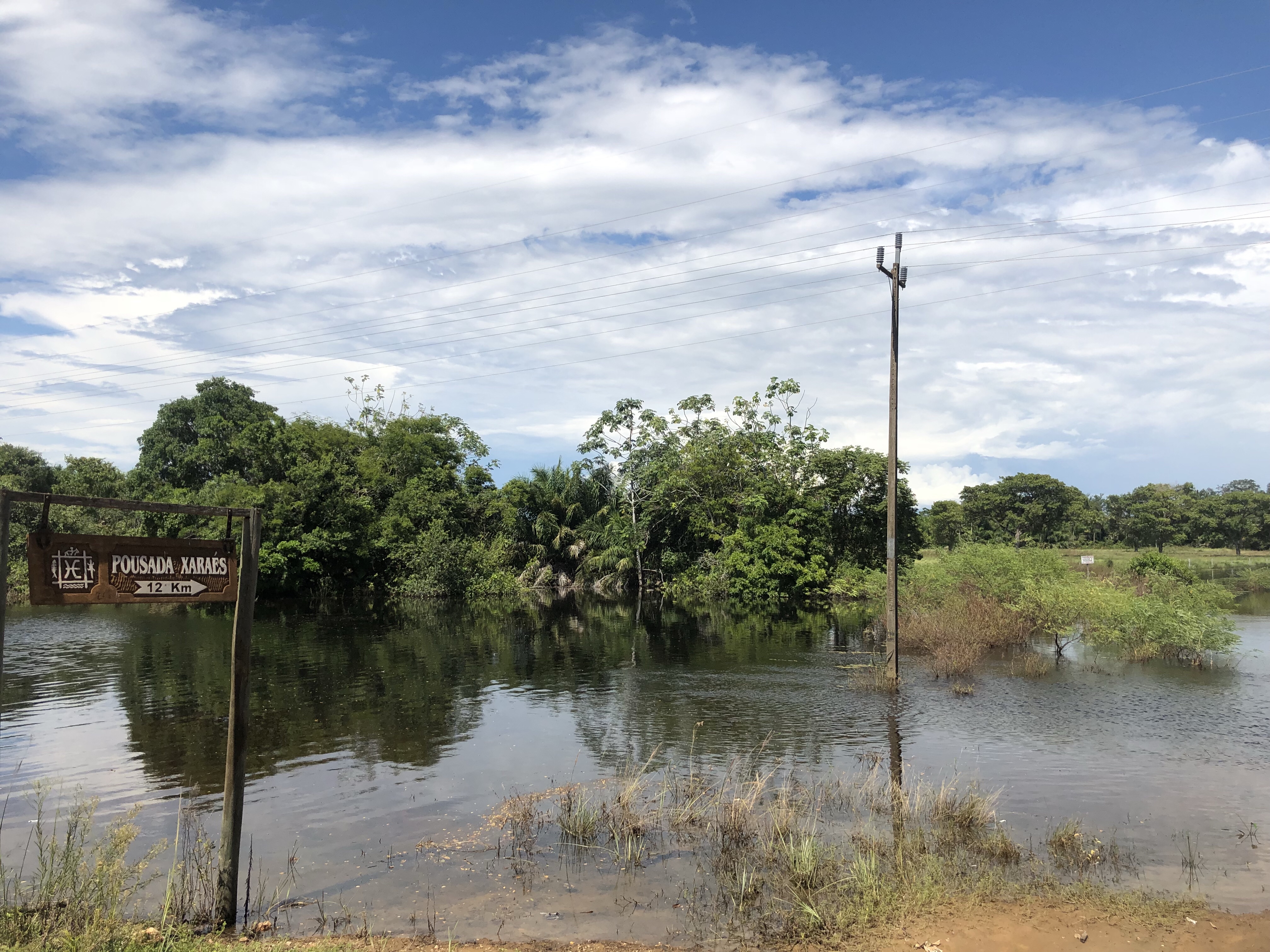
Outside, rain came down in sheets. We were ushered into a beaten- pickup truck manned by Alex ,at the Miranda River crossing. This was the final stretch to Pousada Xaraés — our base lodge at the Pantanal.

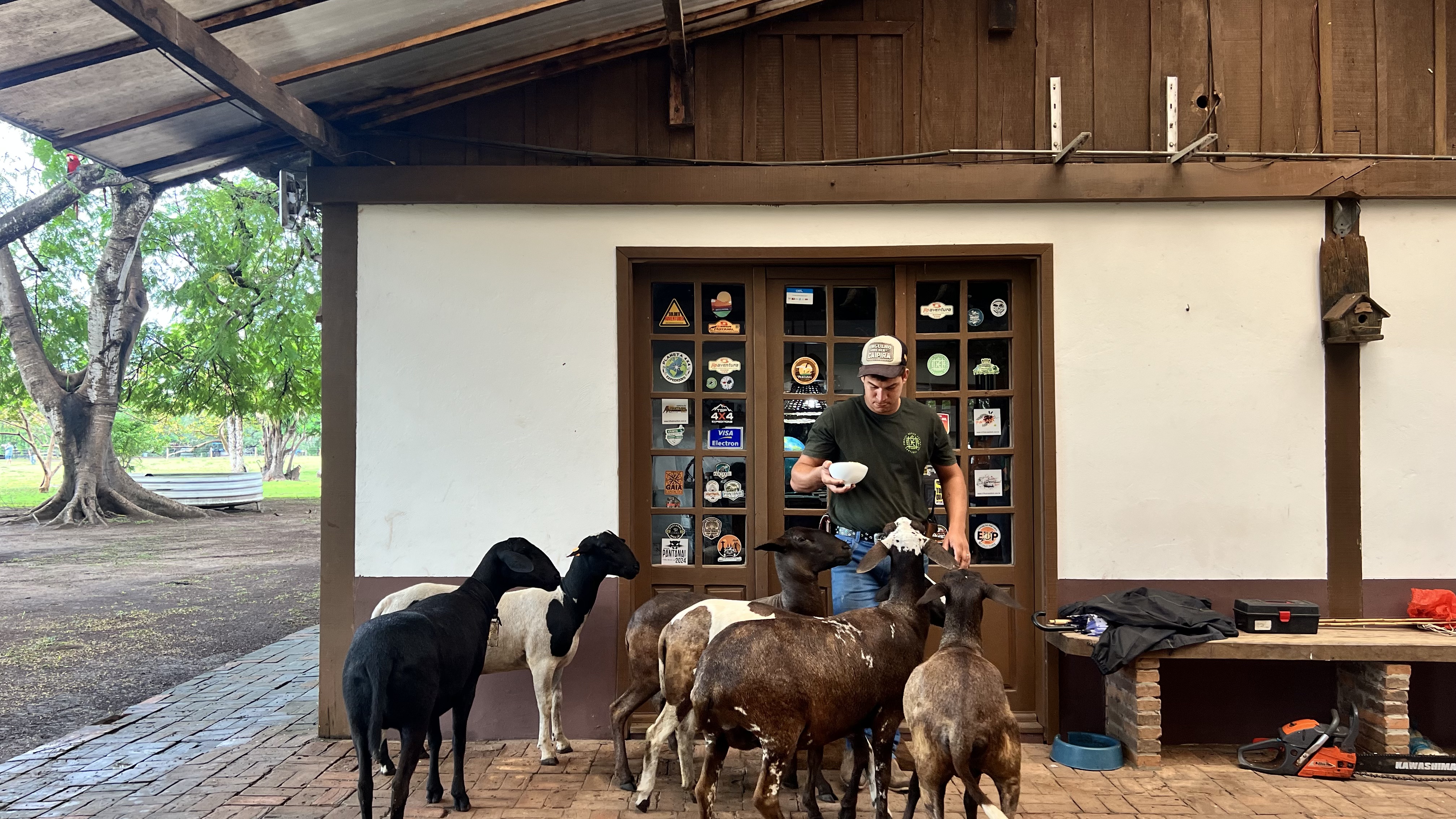
Alex was our pantaneiro — a classic Brazilian cowboy. Weather-etched face, old jeans, a worn leather belt, machete at the hip, and a dusty neckerchief knotted .

It was pitch black. I was uncomfortably nervous. Our bags were tossed into the back and covered with a tarpaulin. There was a faint hint of Brahma beer inside the car.

The real adventure began.

There were no roads. Only instinct.

Alex drove through swamped, muddy trails like he was part jaguar himself — reading tracks, dodging logs, and coaxing the groaning Hilux forward through deep water and deeper darkness.

The windshield wiper gave up halfway. We didn’t.

Twenty kilometres. Two hours. One machete which Alex used to chop anything that came our way..

Finally, we made it to Pousada Xaraés.

The Real had begun.


Nature calls in strange ways.

Sometimes it’s a whisper of adventure. Sometimes, a glimpse beyond the real.
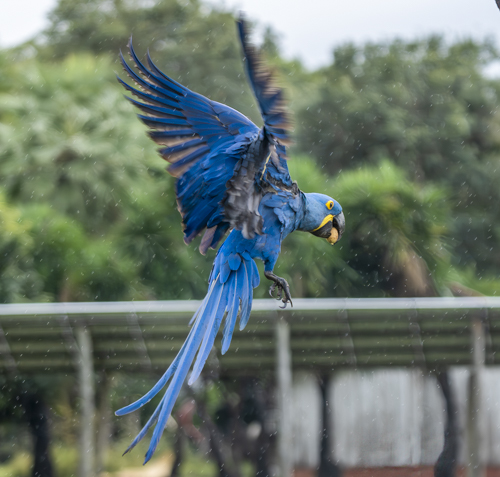
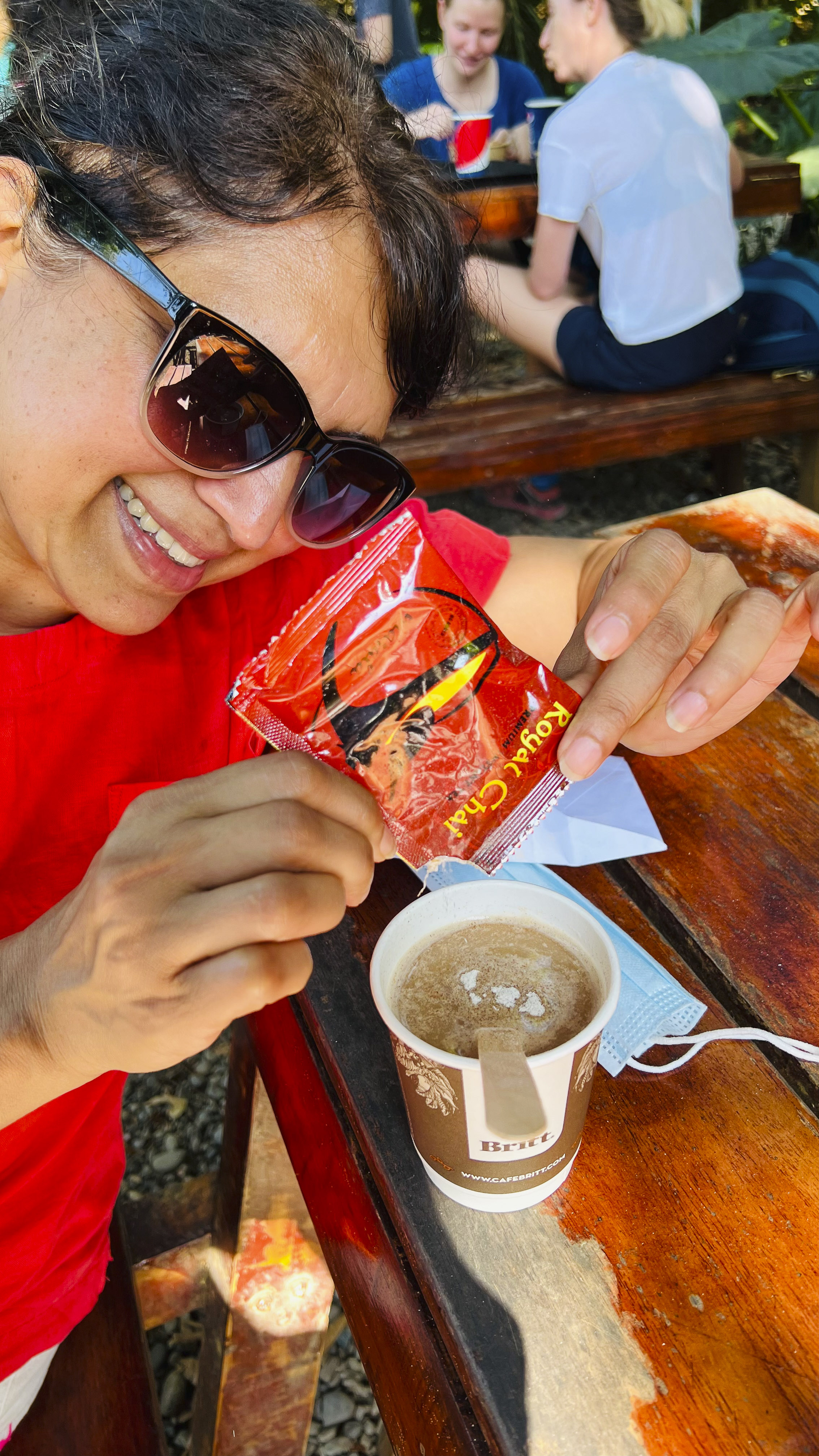
And sometimes, it’s a full-blown cacophony of macaws just outside your cottage door — when you are heading to the dinning hall outside with a Royal chai bag in your hand.

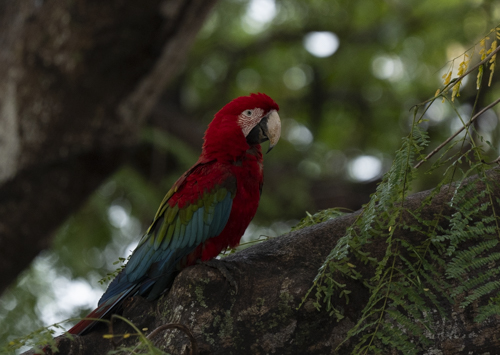
It was a riot of colour: hyacinth macaws, scarlet macaws, all flapping and squawking, at our doorstep. A herd of cattle grazed in a nearby corner like background extras. It was clear — today was going to be dawn-to-dusk birding!

I woke up properly.

The skies above us was thick with colourful birds.
The marshes below were brimming with creatures I couldn’t pronounce, let alone identify.
(My brain was still recovering from Barreirinhas, Lençóis, Maranhão — and now this!). Mammals, vague and mid sized at ground level.
This was a completely different world.
Biodiversity on steroids.

Pousada Xaraés demanded you connect. Differently. Deeply.

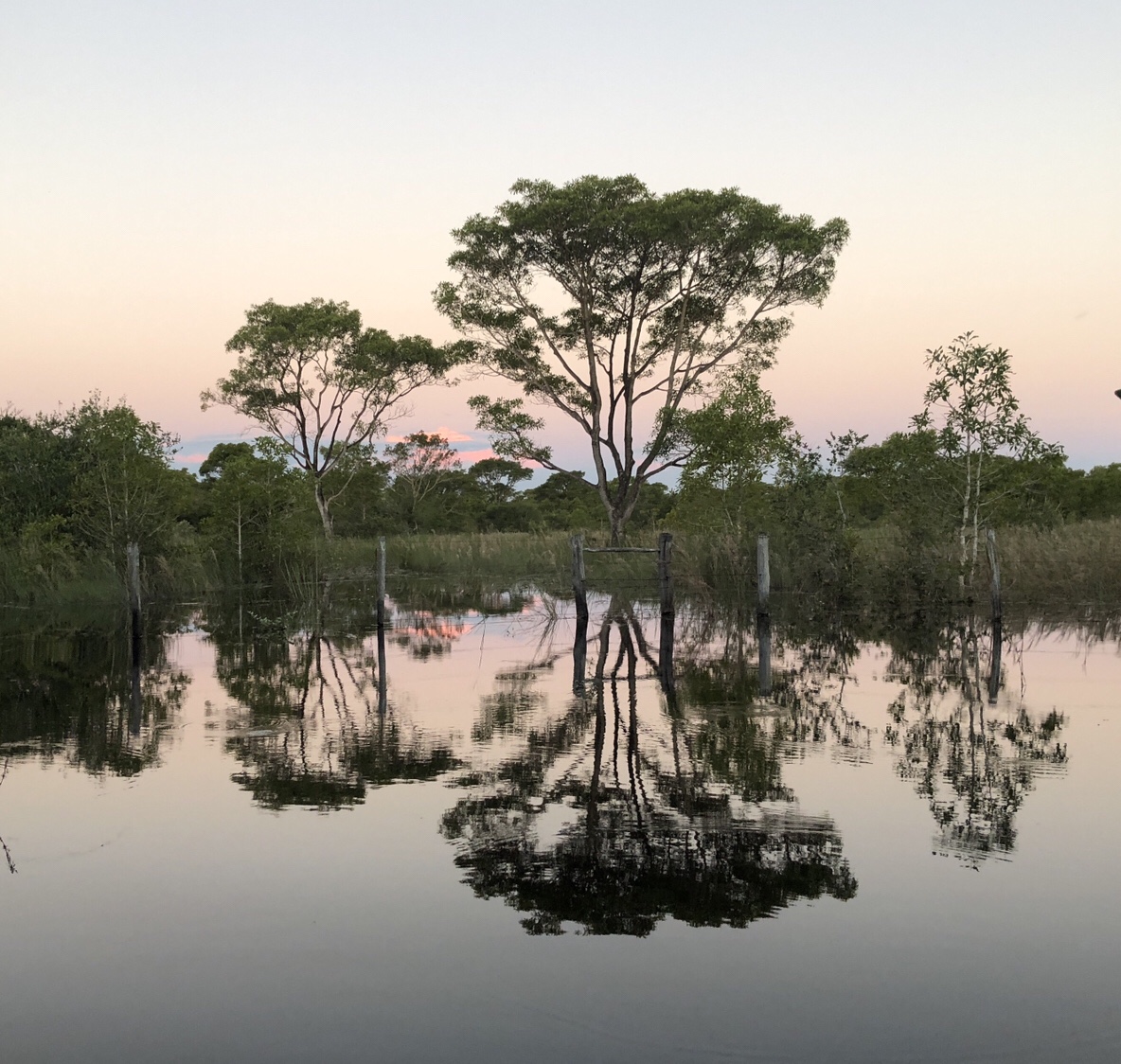
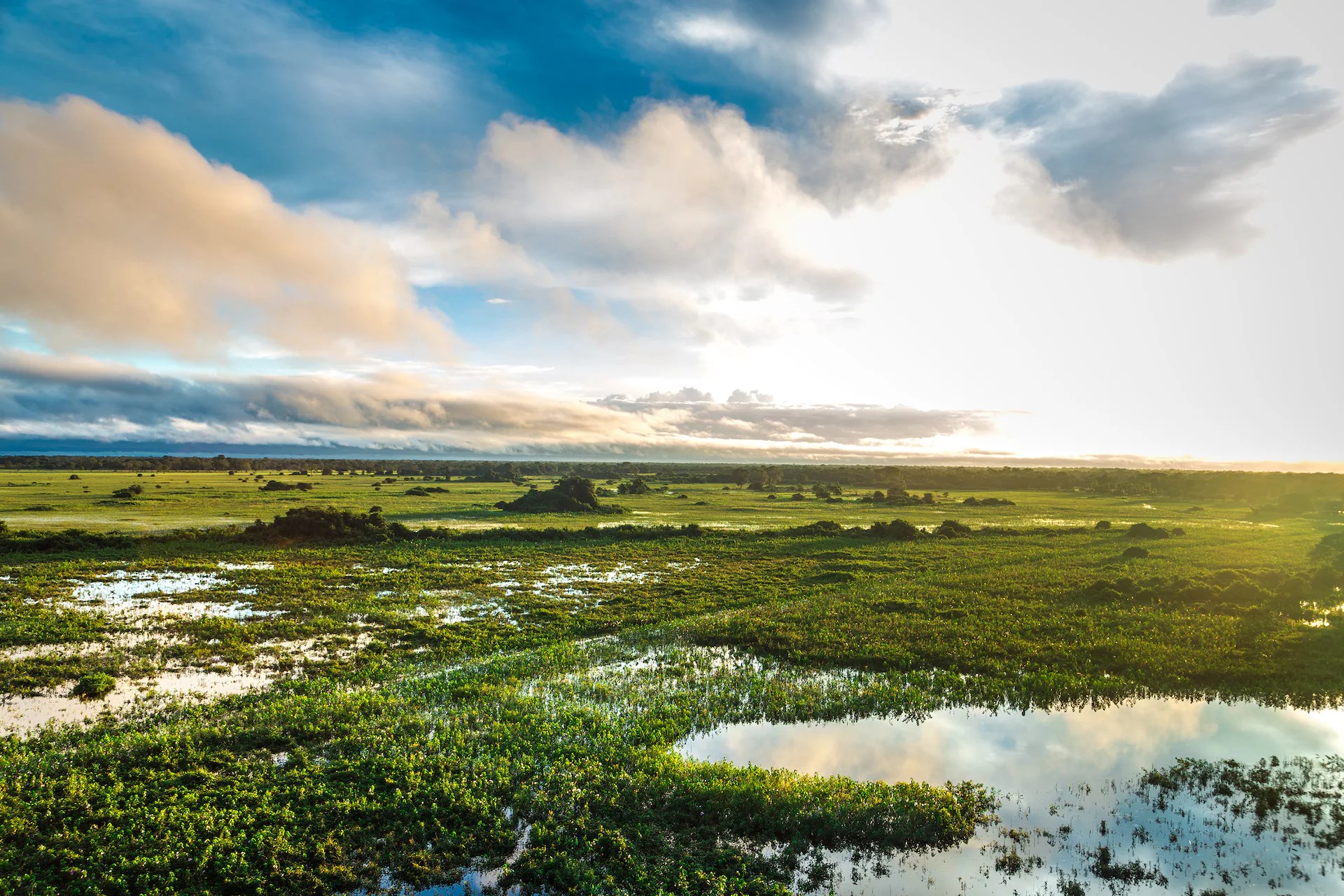
The cattle ranch life looked rugged — everything depended on water, and the rainy season had mostly stood them up. The land waited. So did the animals.

We spotted caimans lounging like prehistoric lifeguards.
Capybaras loafed about — oversized rodents with the body of a dog, a triangular head, and the overall appeal of a shaggy beanbag.
Giant otters glided through the swamps with serious attitude.

At one point, our safari jeep — manned by Alex, our cowboy-guide-philosopher — got well and truly stuck in the mud.
By midday, we abandoned ship and finished the safari on foot, ankle-deep in swamp.

The rickety vehicle stuck in swamp

Welcome to the beating, breathing heart of South America.

The lodge was remote. No neighbours. No other tourists.
Just us — and a battalion of mosquitoes.

We spent our days wading through wetlands, floating down the Miranda River, soaking up the real Pantanal. The bumpiness of the roads began to feel routine.
But the jaguar disappointment? That grew with every passing hour.

Sharing a few photos here — because, once again, words fail me.
Blame it on Brazil!!

But that was the real Pantanal.
Raw. Unpredictable. Uncurated.

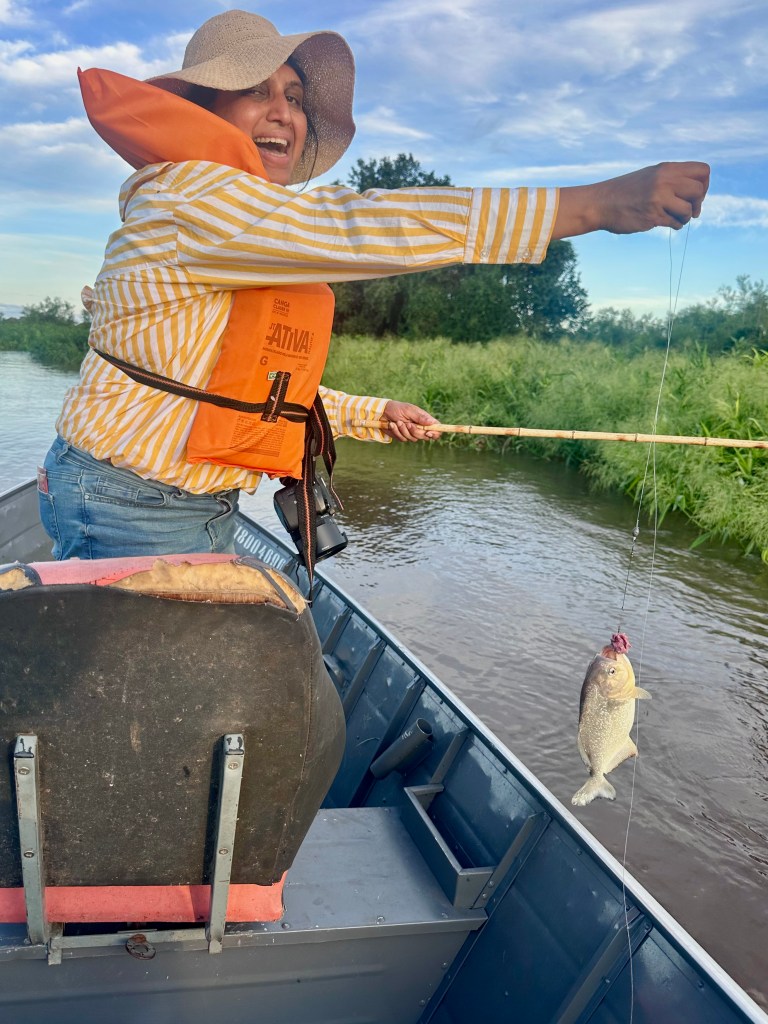
Yes.. I did it, the piranha

The climate has shifted. The rains have slowed. The economy’s broken.
And there’s very little urgency — from private landowners or the government — to fix any of it.

Now there’s talk of building ports and waterways along the Paraguay and Uruguay rivers — turning this water kingdom into a commercial corridor.

The Pantanal, this soggy, living Noah’s Ark, may not be around much longer.

And that’s really real. Reality check!


UNREAL

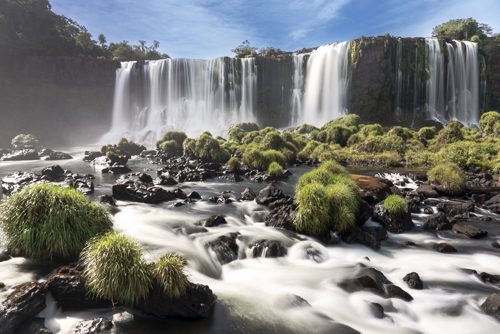
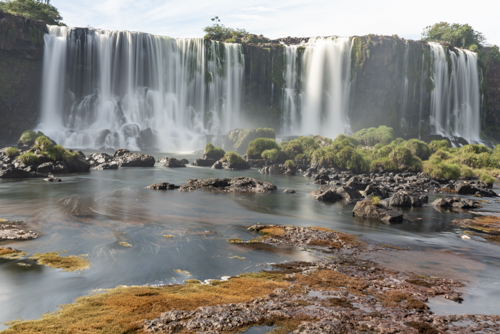
Iguaçu doesn’t whisper. It roars.

From the Brazilian side, it’s a giant amphitheatre of crashing water that stretches wider than your imagination. Mist rises like smoke. Rainbows appear and disappear like cues in a stage show on both Argentinian and Brazilian sides. The bigger the falls got, the smaller I felt.

Eleanor Roosevelt reportedly muttered, “Poor Niagara.”
Now I know why.

We based ourselves in Foz do Iguaçu — a curious border town where Brazil, Argentina, and Paraguay rub shoulders. Nothing feels entirely local. I didn’t even realise we were just a few miles from Uruguay. But it’s all forgiven, because the real spectacle lies just beyond.

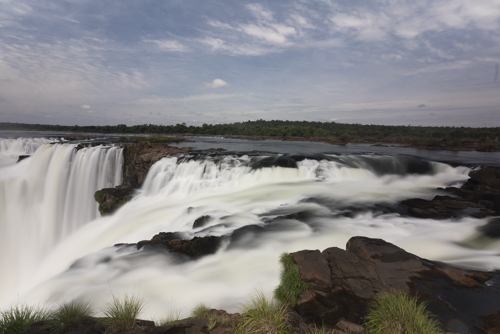
We spent few hours tracing the Brazilian walkways. Spray on our faces, wind in our ears. Commercial with crowds. Tripod ready. Shutter dialed low. The water fell like silk in front and behind the camera lens. Ram was engrossed over his exposure settings while waterfalls crashed around us and crowds jostled for space…”most frames are going to be hard to delete”, I thought to myself.

Slow shutter speed
Exaggerated foam

Iguaçu hits hard and fast — not just as water .
A place that somehow deafens you into silence.

And as I stood there, I thought of Victoria falls. Iguazu is 30,000ft wider. May be Angel falls in Venezuela one day in our travels as taller. The sweeping perspective and sense of scale — it felt exactly like the title of this chapter. Unreal.
And no, I hadn’t had a caipirinha. Yet.

REAL

Rio. The Real metropolis. Real is the currency too!

We landed at GIG airport and took a cab into the city, guided by a chatty Carioca driver who delivered a highlight reel of Rio in crisp English and with typical flair.
What Brummie is to Birmingham, Carioca is to Brazil — or more precisely, to Rio.

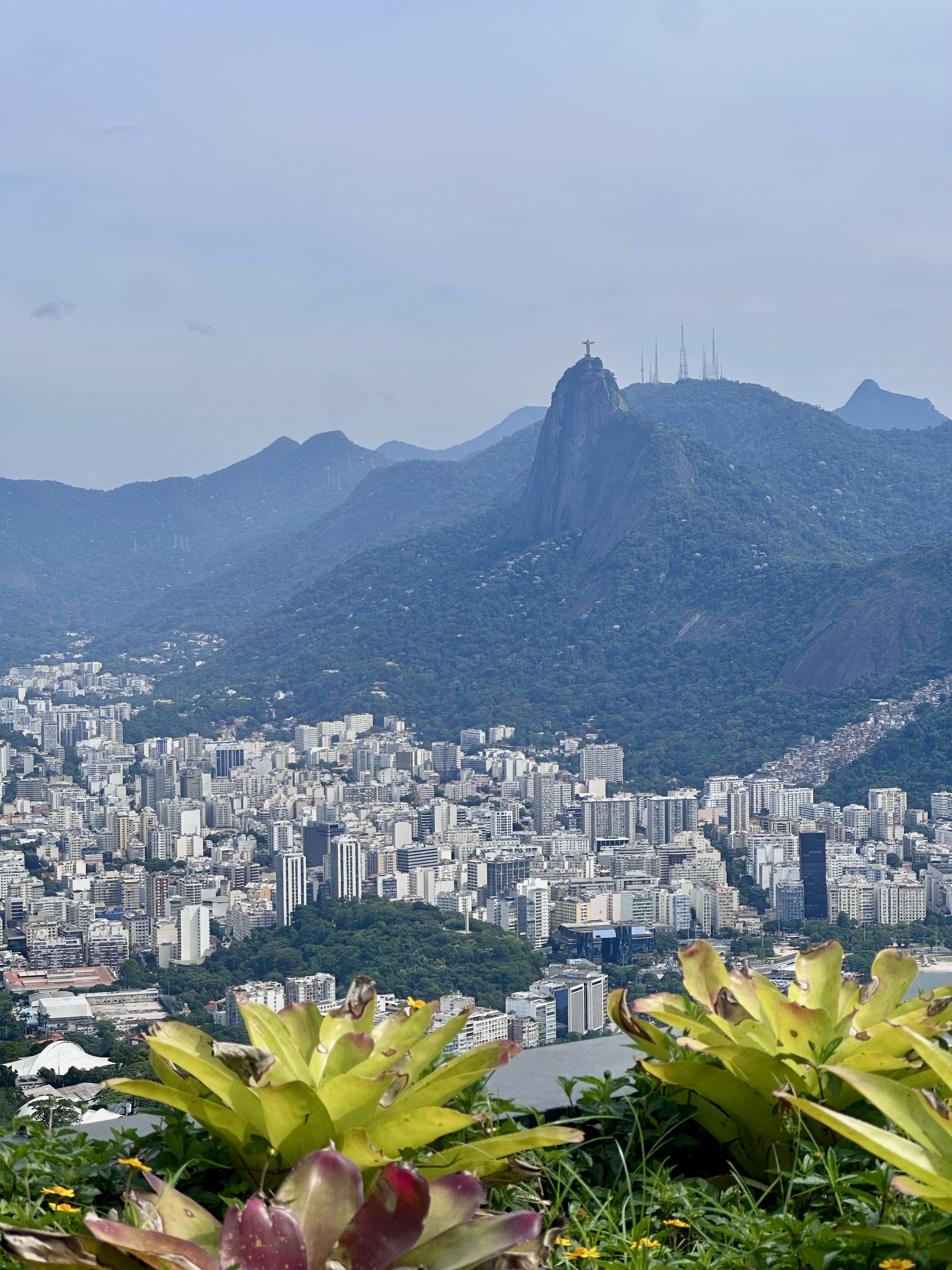
The city had a combination of mountains and sea front. Rich and poor. Old and new.

Futebol was ubiqutous.
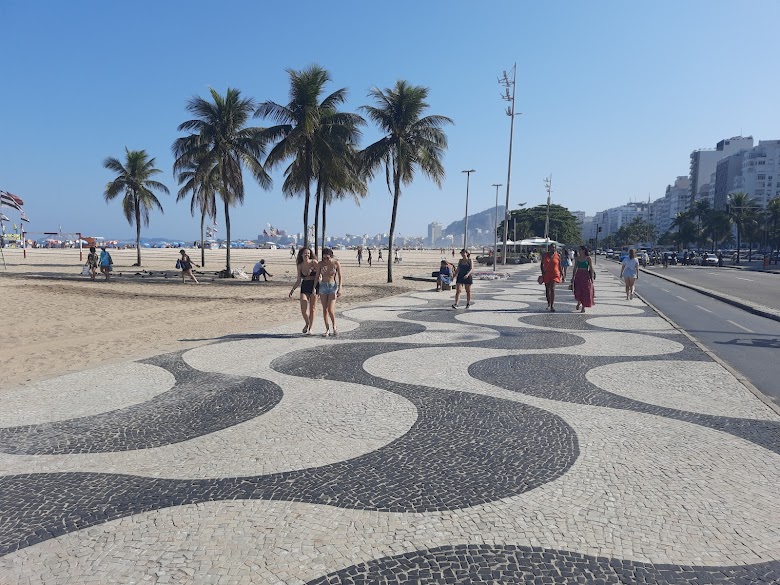
Futevôlei ( football meets volleyball) all along the copocabana beach.
The Carnival spirit lingered faintly. And on the long curve of Avenida Atlântica, it’s hard to tell who lives in million-dollar apartments and who comes down from the favelas — the bodies on the beach are all sun-kissed and glorious, with no postcode required. This was the long beach of Copocabana with a typical tiled pattern of pedestrain walk path.

Wavy pattern of Copocabana beach

Everyone fits. Everything flows.

We did most of the touristy sights over a couple of days.
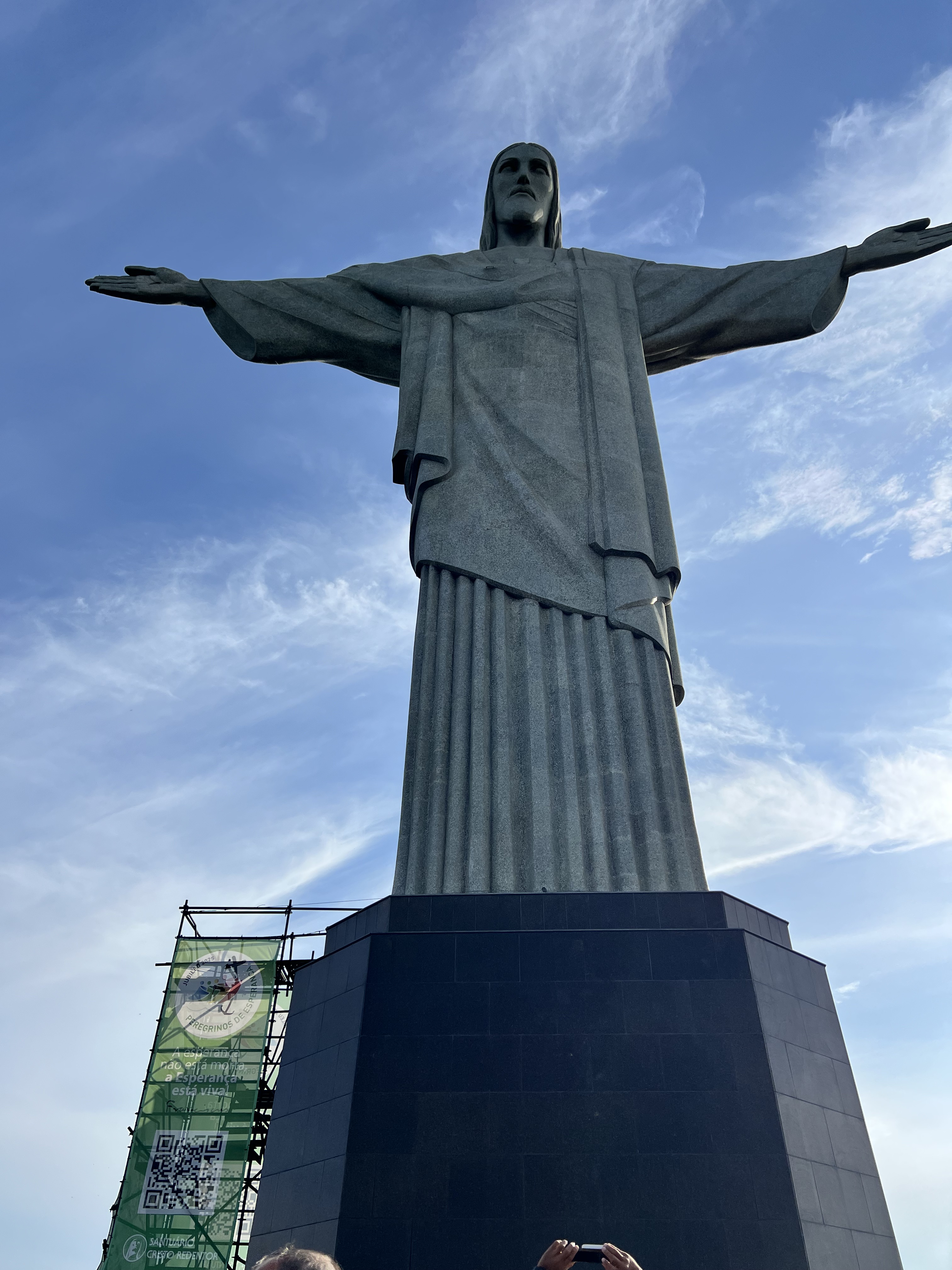
Christ the Redeemer from Corcovado — towering, up close. I watched, slightly jealous, as two cyclists climbed the punishing gradient up the mountain.
Sugarloaf’s cable car delivered every promised panorama — and got thoroughly photographed.
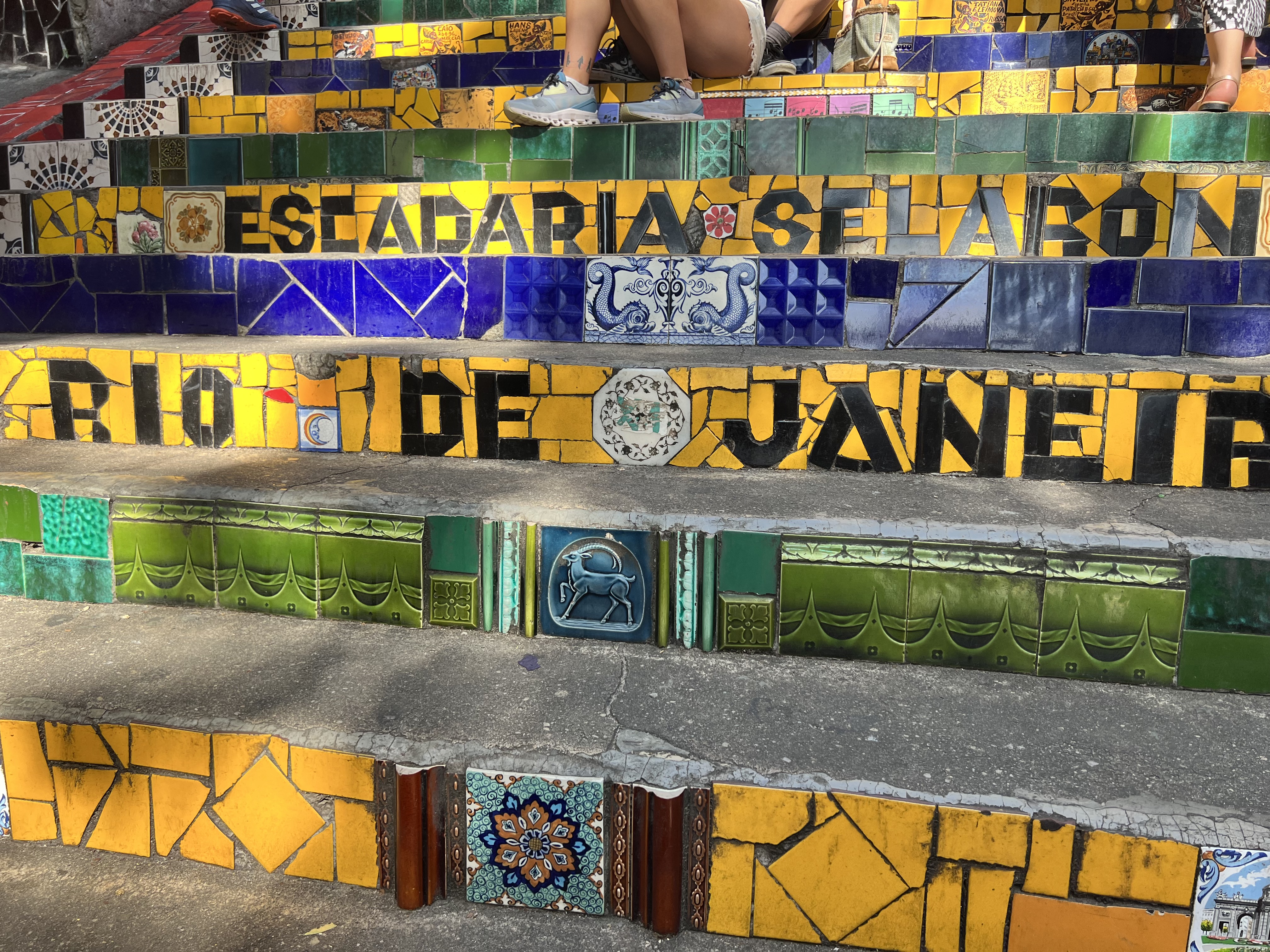
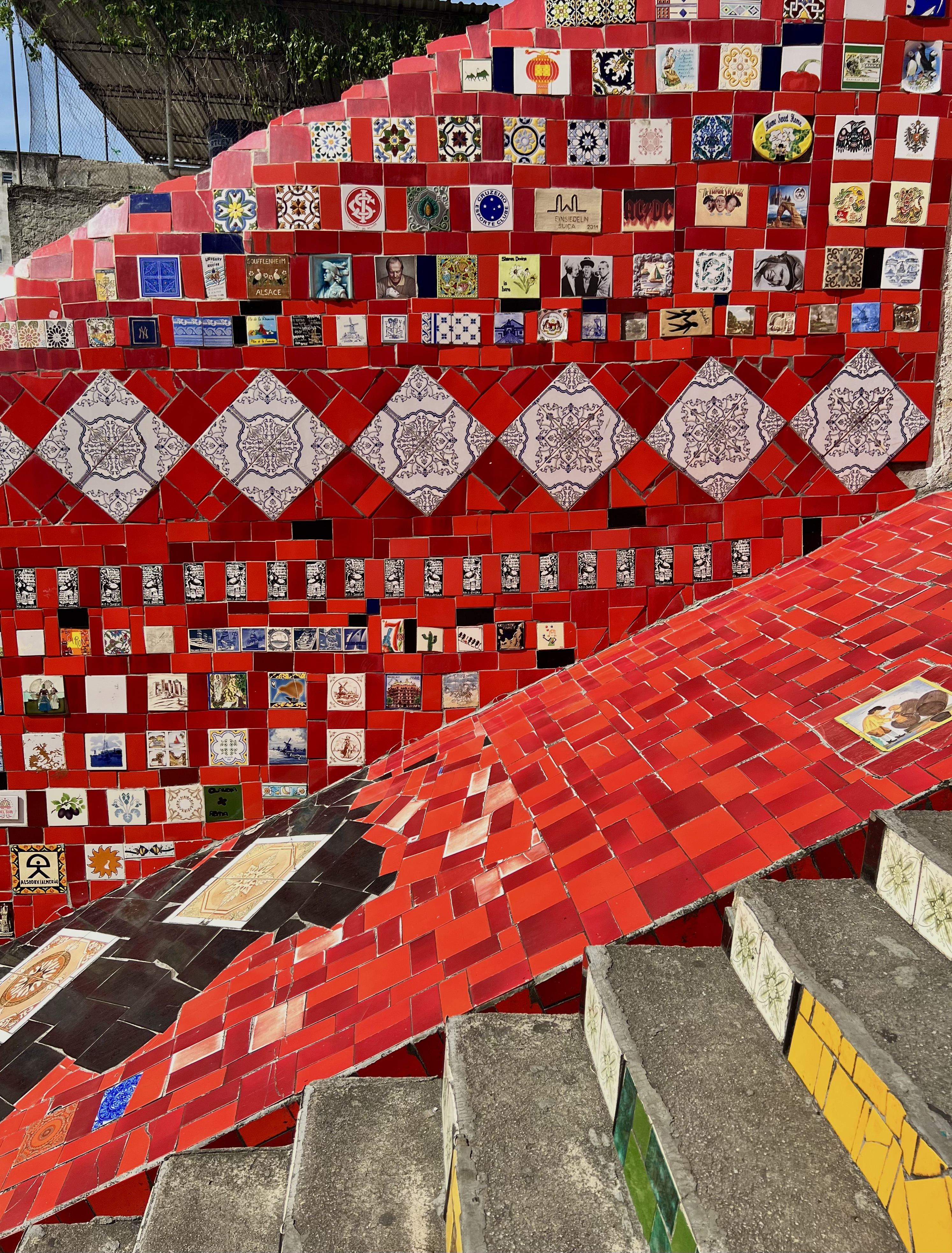
The Escadaria Selarón in bohemian Santa Teresa, with its red mosaic tiles by Chilean artist Jorge Selarón, was my favourite touristy moment. We walked up all the way to Lapa
We skipped the favela tours. Slum tourism didn’t sit right with Ram.
I, meanwhile, mentally framed it as a colourful sketch.

As in most of my blogs, let me touch on Brazil’s iconic eats:
Feijoada, pão de queijo, brigadeiro, açaí bowls, tapioca pancakes, farofa…
Vegetarian odds? Let’s just say: hit or miss on taste and flavours. But have realised the meat and sea food is a treat for most foodies.
Most breakfasts were forgettable — but guavas and papayas came to the rescue, every single time.

There are many reasons to visit Brazil.
Guaraná Jesus — a bubblegum-pink fizzy drink — is not one of them.
“Tooth-rottingly sweet,” I muttered.
“You start young, you get used to it,” our driver replied, cracking open another can with a grin.

Finally, Didn’t make it to a Maracanã match — just saw the legendary stadium.
Didn’t try churrasco — just went to a churrascaria.
Didn’t samba under the stars — only felt its rhythm in the air.
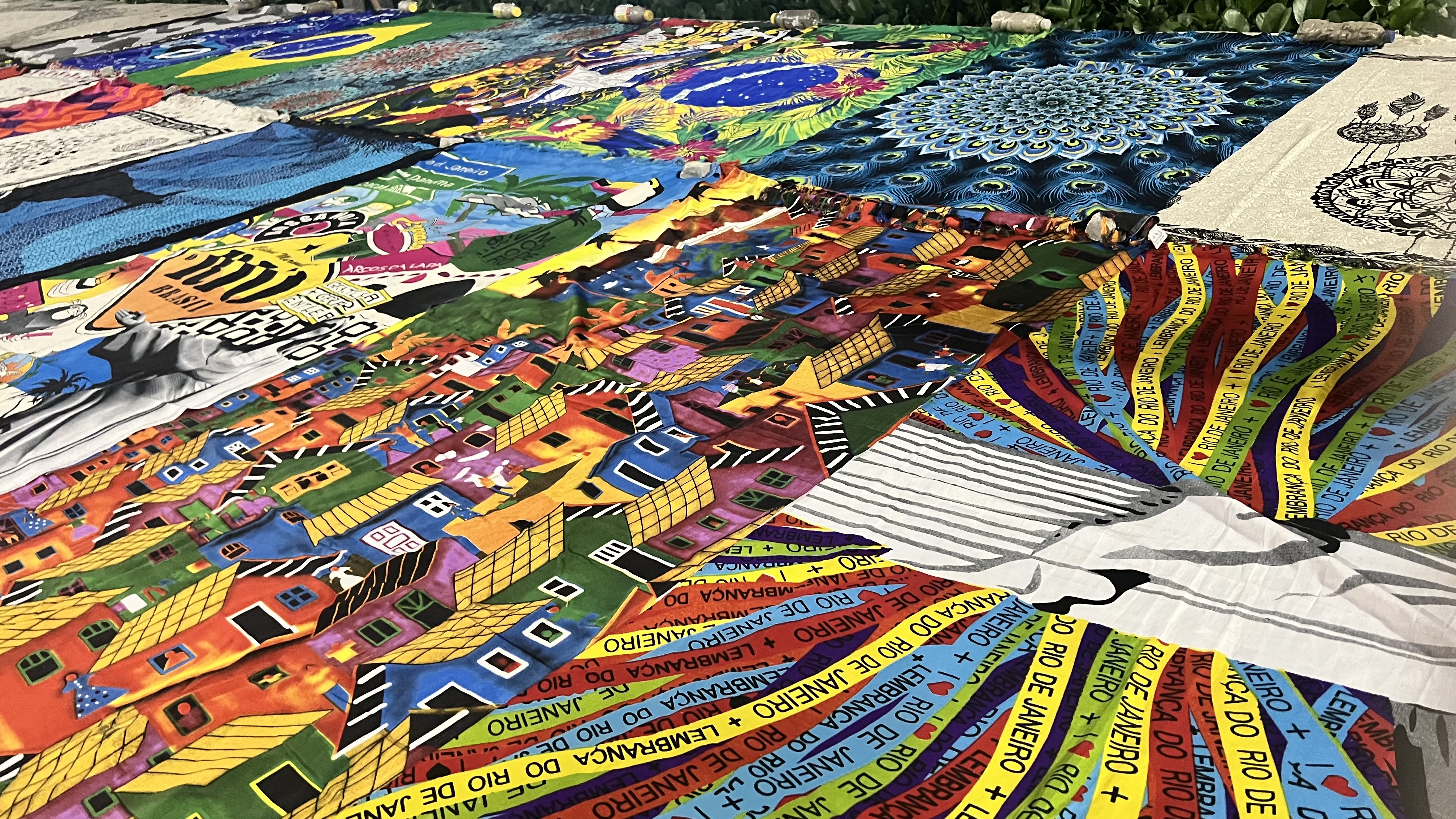
Didn’t laze on the beach with a canga — just admired the dozens who did.
Didn’t sip slow coffee in Lapa — just dont drink coffee.

And yet—

Brazil left me speechless.

Culpa do Brasil.
(Yes — Kalpa does Brazil!)
Blame it on Brazil.

Will be back for the caipirinha

Barefoot in Bali

Temple, nature, DSLR

After the last ultra cycling journey in summer 2024 , there was a semi-intentional pause to travel. Personally, I just needed to refocus and pivot to the centre of life. And for Ram, on the other hand, it was an itch to work on his own focal point but in his camera lens. So, six months later, in December 2024, the two of us narrowed our focus to the equator straddled islands of Indonesia. We then zoomed into Bali and took a wide angle shot into Beyond Bali.

Bali is for almost all. The other islands of Java, Sumatra, Sumba, Lombok, and Raja Ampat are for the lesser few.

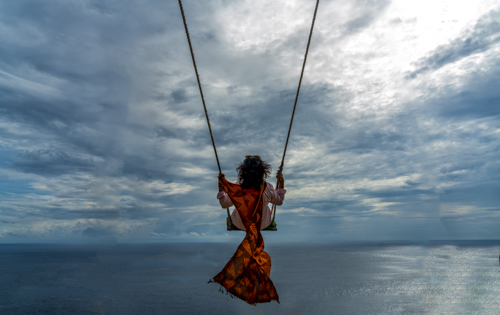
Bali… There are the birkenstock and sarong-clad semi-yogic hippie-type travelers—with a tattoo or two—wandering on foot, actually on scooters, immersing themselves in Balinese highlights of Ubud and Seminyak. And then, there are the Instagram Bali holidaymakers “swinging” (literally) into action and posing at heaven’s doorway mirages at the Candi Bentars of Lempuyang. They sport an unmistakable frangipani clasp and bring out plunge-line monokinis amidst the sunrise vibes. Oh, not to forget a handmade cocktail to pose with! Finally, there are the more curious travelers, who go beyond Bali to fiery Java, Sumatra, untouched Sumba, and the rugged landscapes of Lombok that offer a chance to soak up the serenity of timelessness on these small islands.

Just add the muscle-melting Balinese massages, along with the rich local food, culture, and meeting up with warm-hearted people. I actually think I belong to this category.

Om Swastiastu

Wayan Sentana (our Balinese guide) greeted us at Denpasar airport with an “Om Swastiastu,” and I instantly smiled in unspoken comfort. He was tall, wore a batik sarong, a white shirt, and a headgear (Udeng) with a crossbody bag. Within a few minutes, he introduced us to the names in Bali. Just four to be precise! Balinese names are like a built-in family prank. The firstborn is Wayan, Putu, or Gede. The second? Made or Kadek. Third in line? Nyoman or Komang. And the fourth? Ketut. But here’s the kicker—if there’s a fifth kid, the cycle resets, and suddenly you’ve got another Wayan, aka Wayan Balik, which literally means ‘Wayan again’! Imagine the chaos at roll call… or the sheer nightmare of password security. We headed east to the islands next.

Beyond Bali

Soulful Sumba

Here is the truth.

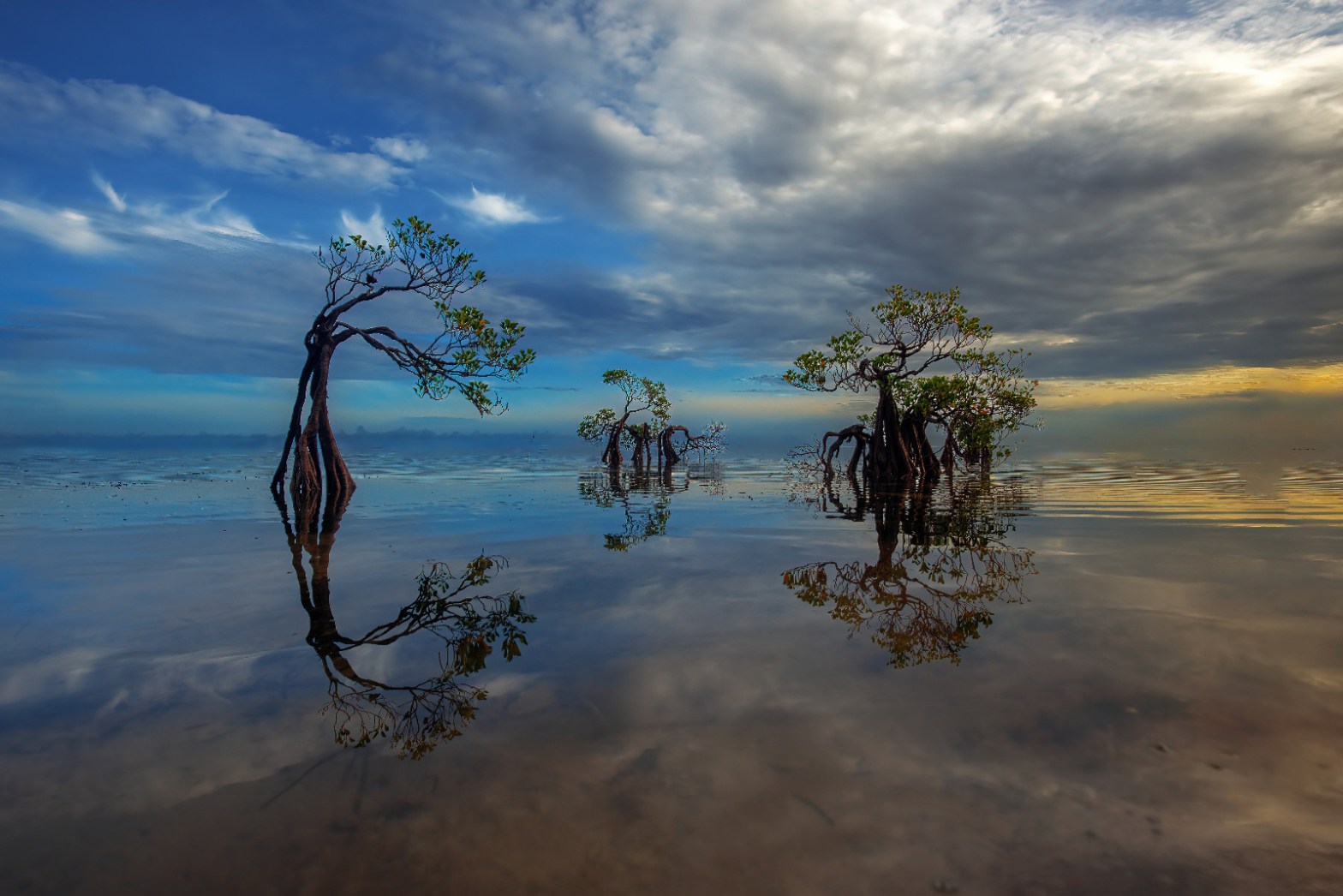
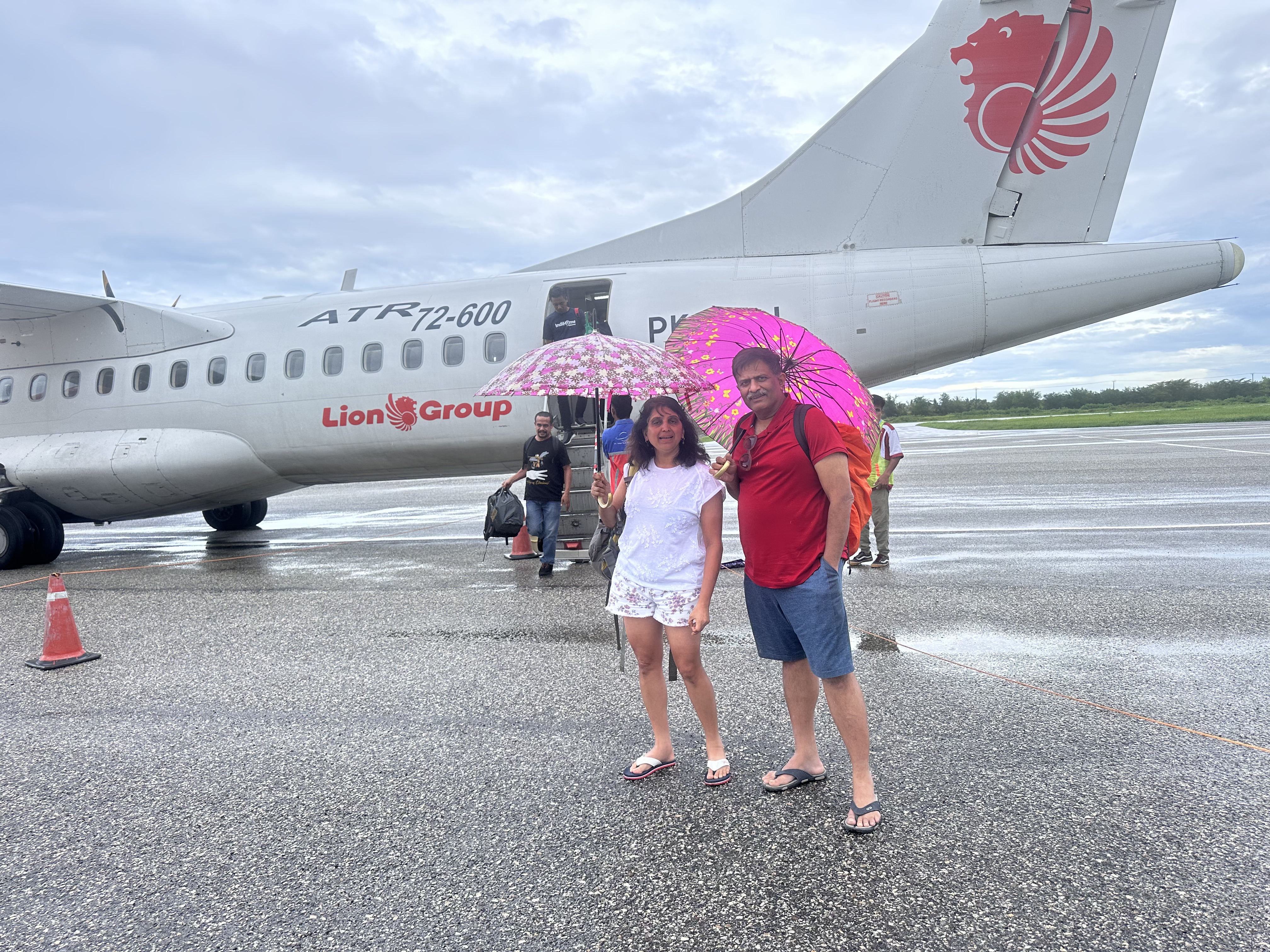
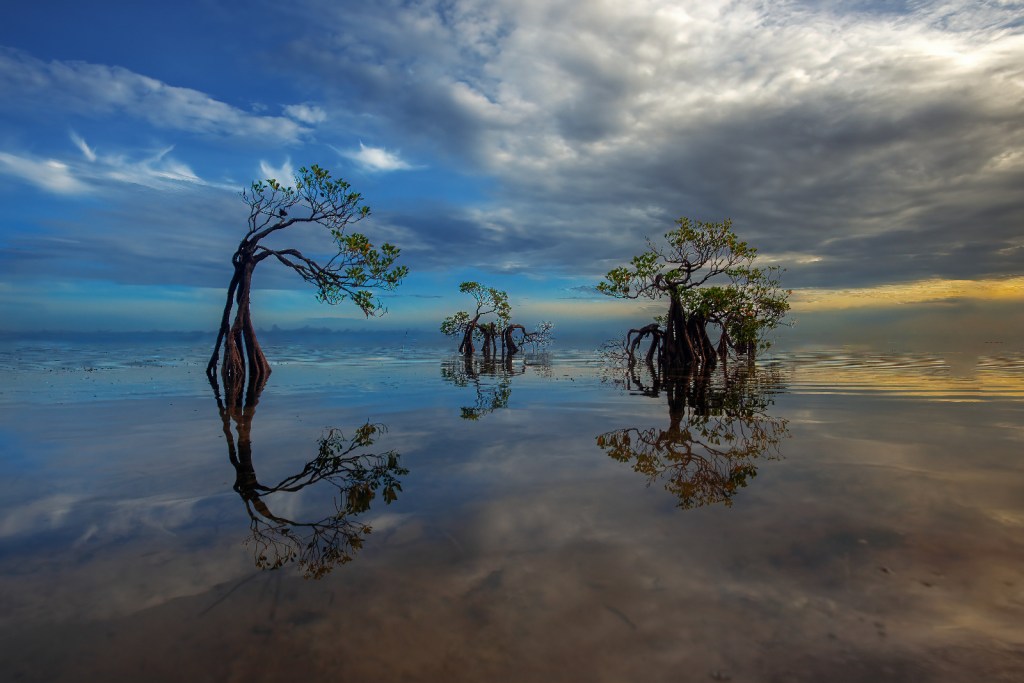
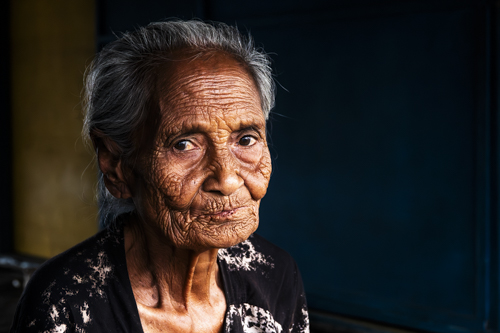
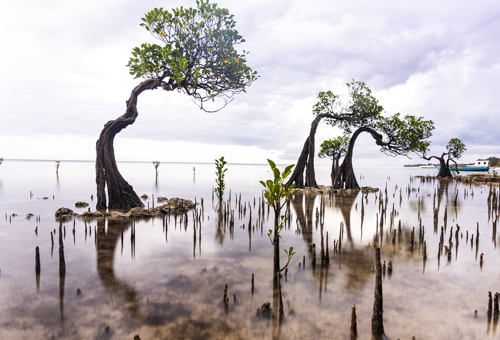
We went here looking for some “stunning dancing trees” to get our best pictures. Yes, you read that right. And we found so much more. Sumba is a strip of land between Flores/Timor and Australia. As we touched down in remote Tambolaka airport, a warm rain began to fall. The ground staff stood waiting for us with colorful umbrellas, a simple yet heartfelt welcome. Clearly, modernism had not suffocated Waingapu’s spirit in Sumba. I watched an old woman with weathered skin and red, calcium-stained teeth grin, dappled in the mid-afternoon light.

Time had paused. The houses were distinctive—conical huts around megalith tombs. The ground level was for humans, and the top for granary stores. Those who know Sumba would have heard of Nihi Sumba—the world-renowned legendary resort of ultimate luxury with sandalwood ponies that swim in the sea! It offers unsurpassed wellness with massage oils mixed with ginger, galangal, coriander, and turmeric (sounds like a biryani masala).

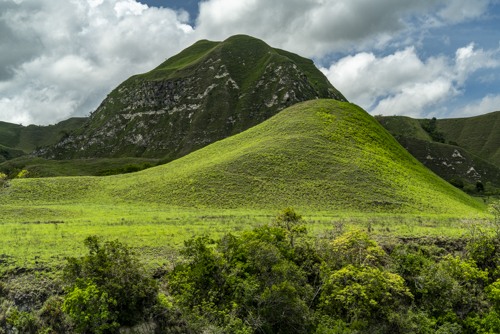
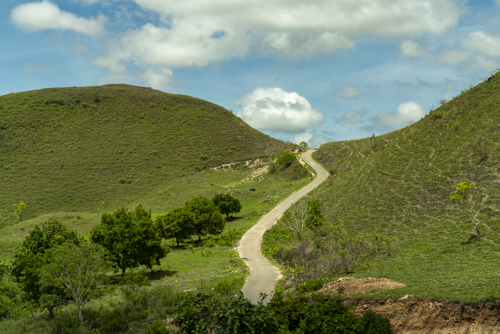
East Sumba boasts pockets of arid savannah grasslands which reminded me of Teletubbies land. Rolling hills and wild horses. So far, did not spot any tourists.

Time for some unusual pictures.

Aren’t they just WOW, the dancing trees of Sumba!

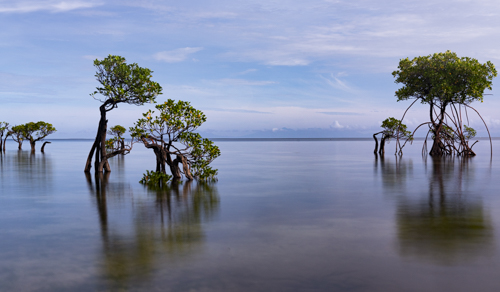
In reality, the dancing trees in the mangroves of Waingapu beach are short with stumpy aerial roots that are visible when the tide recedes. The tree is unique (but has a touch of anticlimax vibes )in that it is only found in this part of the world. Madhu’s eyes lit up as he composed in black and white. Ram focused on iconic captures, getting his gear, clothes, and even passport wet to get them! Yes, an after dinner story that many of you will hear soon! A true once-in-a-lifetime experience in photo travel.

Back to Bali

December in Bali is off-season. Humid and wet. But lush. As we drove downhill into the hidden entrance of Natya—our resort east of Ubud—it felt like we parted the thread curtain of the banyan aerial roots to enter center stage of an exotic resort nestled in terraced rice fields. Sounds stunning , right?!

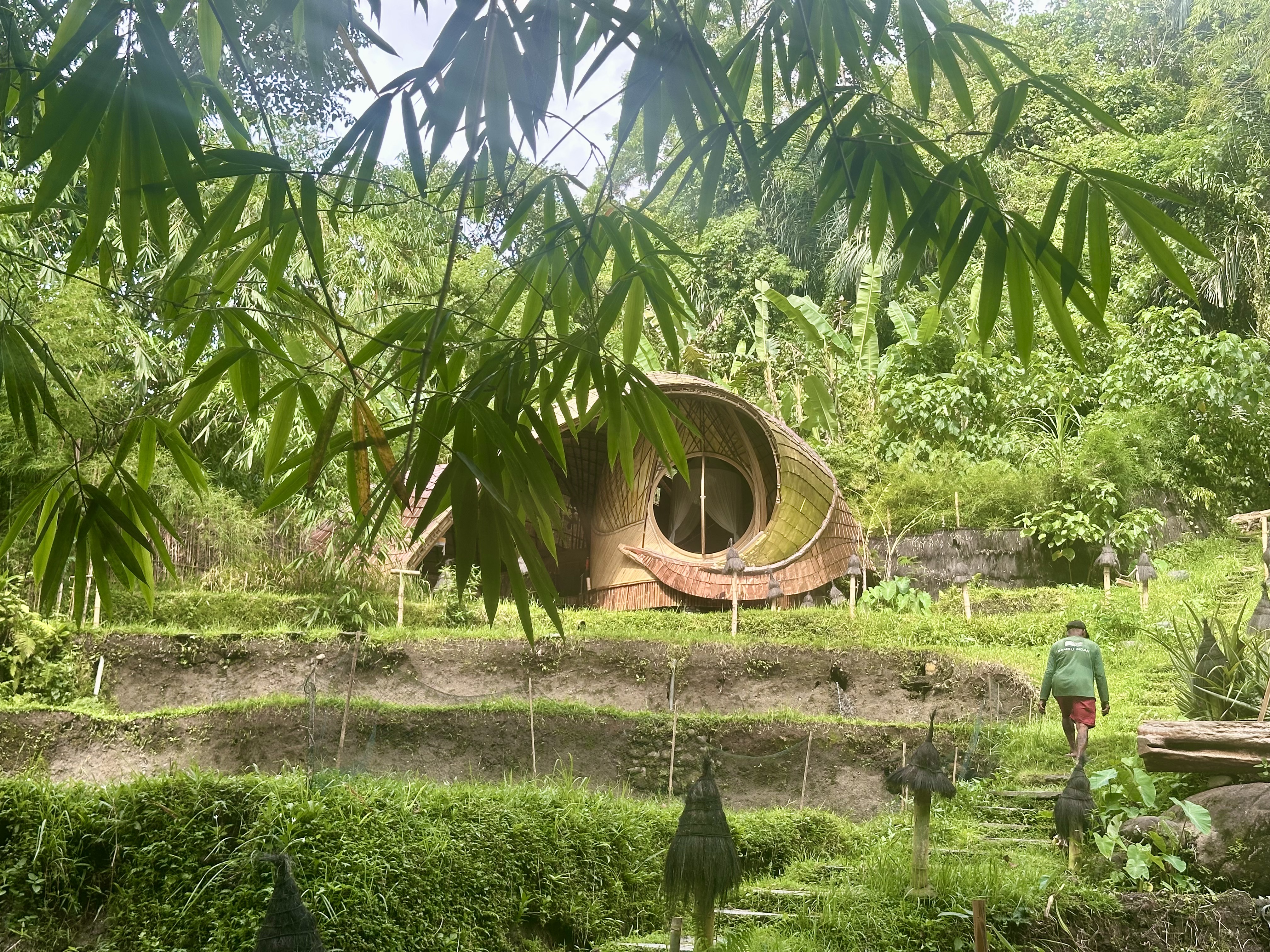
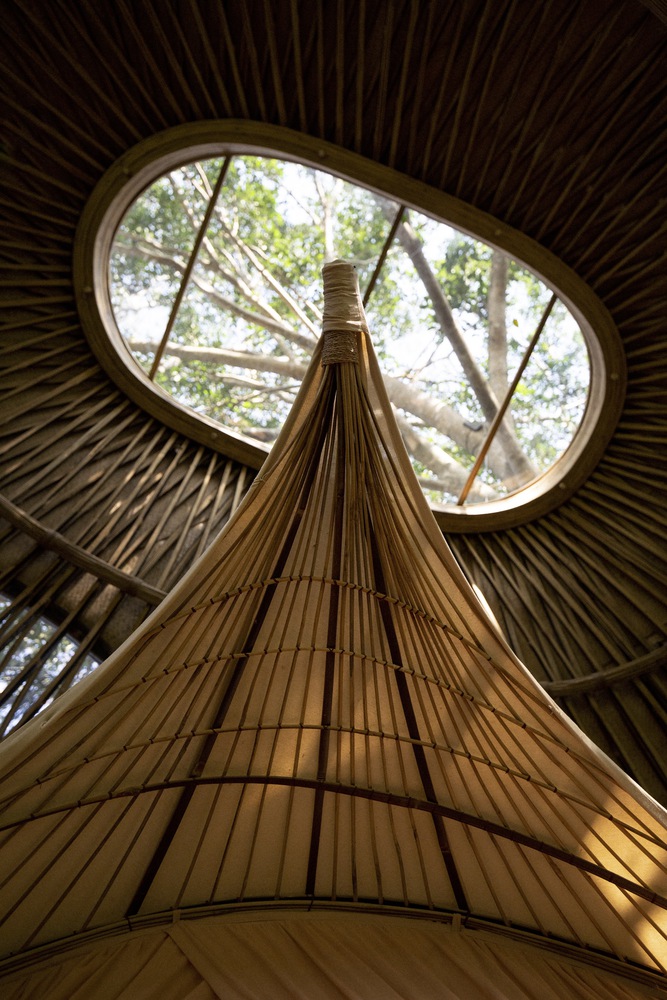
Natya Resort works on the concept of tegalan and subak (a plantation and its irrigation system). And I must mention another fascinating resort: Bambu Indah—one of the world’s first eco-resorts in Ubud—resembles a basket. Its curved walls cocoon guests while still welcoming daylight and a natural breeze through skylights and windows. A connection with nature paired with unlimited luxury—and an unforgettable, limb-melting massage. Superlative luxury in most of the stays, often offering a truly private experience. I simply have to link Eat, Pray, Love in my blog. I’ve decided to use them as paragraph titles but in a different order. Let’s start with PRAY.

PRAY

Hinduism in Bali

The brand of Hinduism varies in Bali, more deeply influenced by nature and spirits. The mighty Agung Mountains, for example, and Agama Tirtha form the foundation of religious life. In fact, they follow Agama Hindu Dharma. Balinese Hindus have one supreme God, Acintya, while being an Indian Hindu often equates to polytheism—a more freestyle approach. The average Balinese seems to be far more committed to daily offerings and rituals than an Indian.

Balinese Hindus place significant emphasis on rituals and ceremonies to appease the spirits of ancestors, a practice more prominent in Bali than in most parts of India.

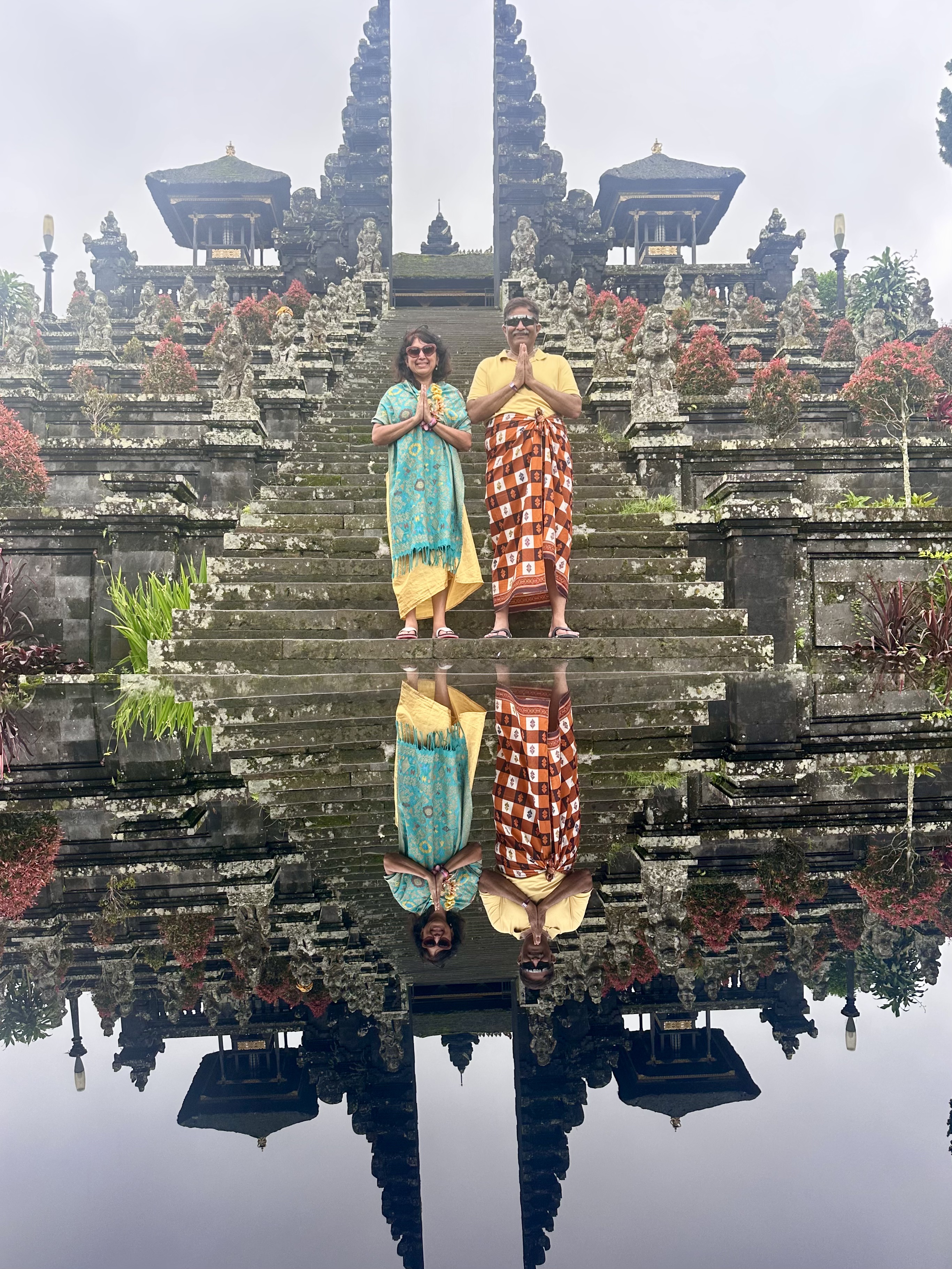
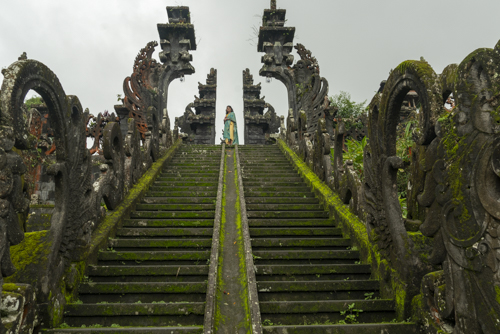
In one of my previous blogs (I know, you cannot obviously recall), “Gopuram” the entry tower of a temple, was in the title. Bali’s Candi Bentar is a split entry citadel with a green misty background, often capturing a mountain peak. This sums up the connection and inclusion of nature into Hinduism!

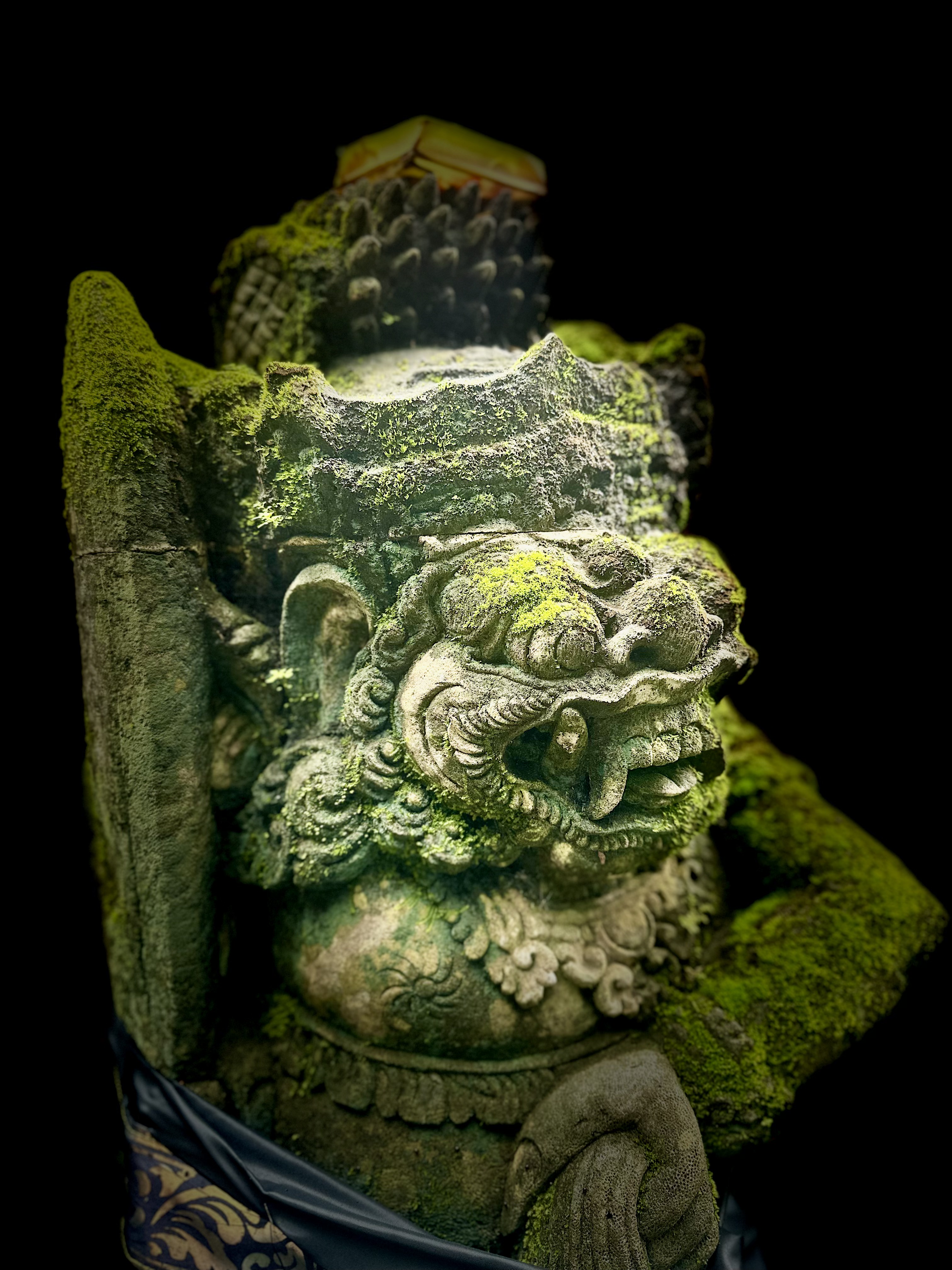
The temple was made of dark volcanic and terracotta bricks. What took them to a “wow level” was the aging moss plastered over—adding depth and dimension. The checked gingham cloth, “kain poleng“, seemed to be the fabric of balance. Every sizable stone and vast tree had this checkered cloth as an apron.

Now, let me take you on a virtual temple trip in Bali. Imagine a mid-morning fragrance from the “dhoop” or the incense sticks. Adorn yourself with a long sarong and maybe a long-sleeve lace top, ladies. Next, add a “bija” on your forehead. This is a pinch of holy rice grains washed in water and stuck in the middle of your forehead. You are now sprouting divine essence. Step 3: Take the famous canang sari.

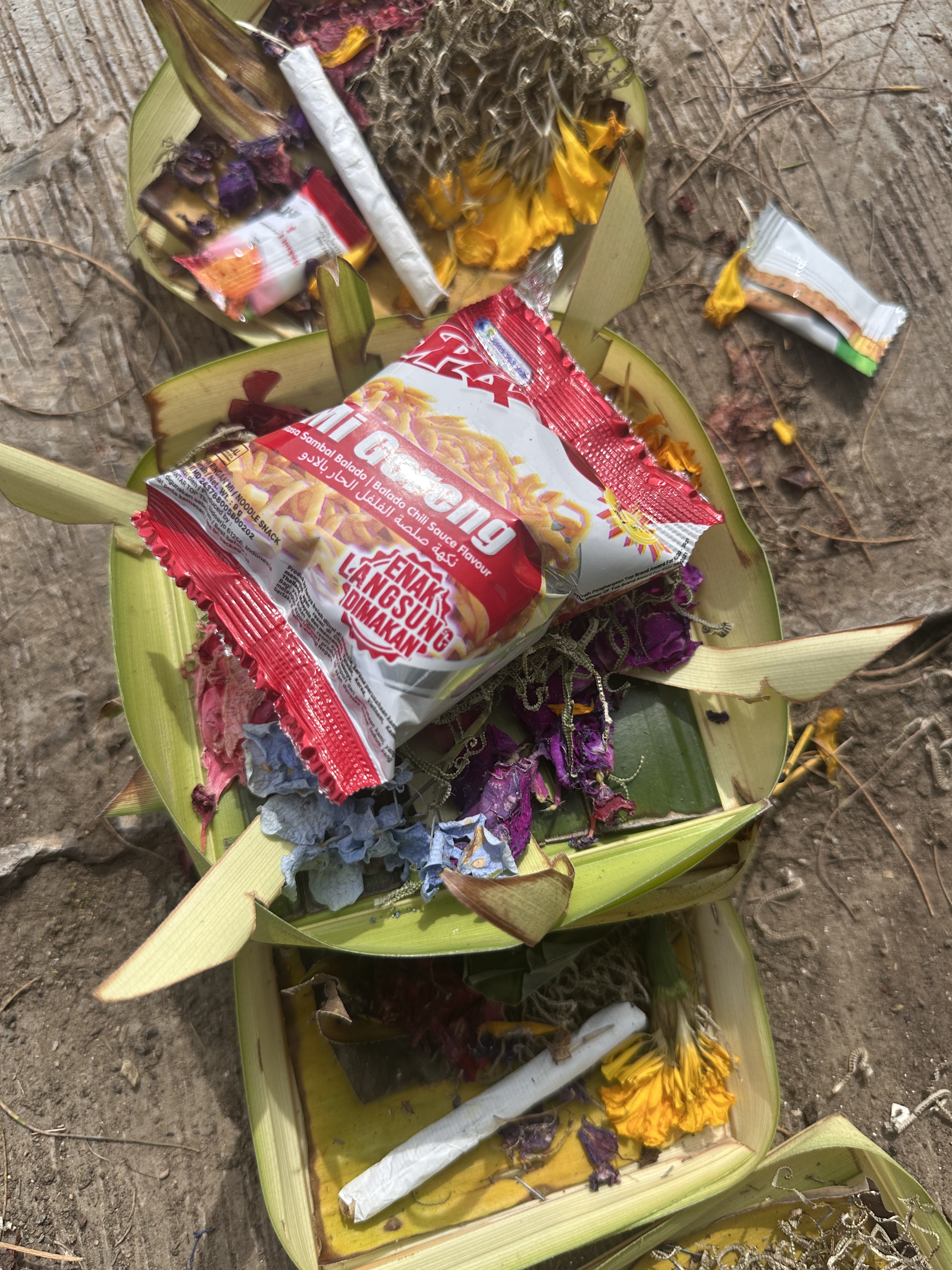
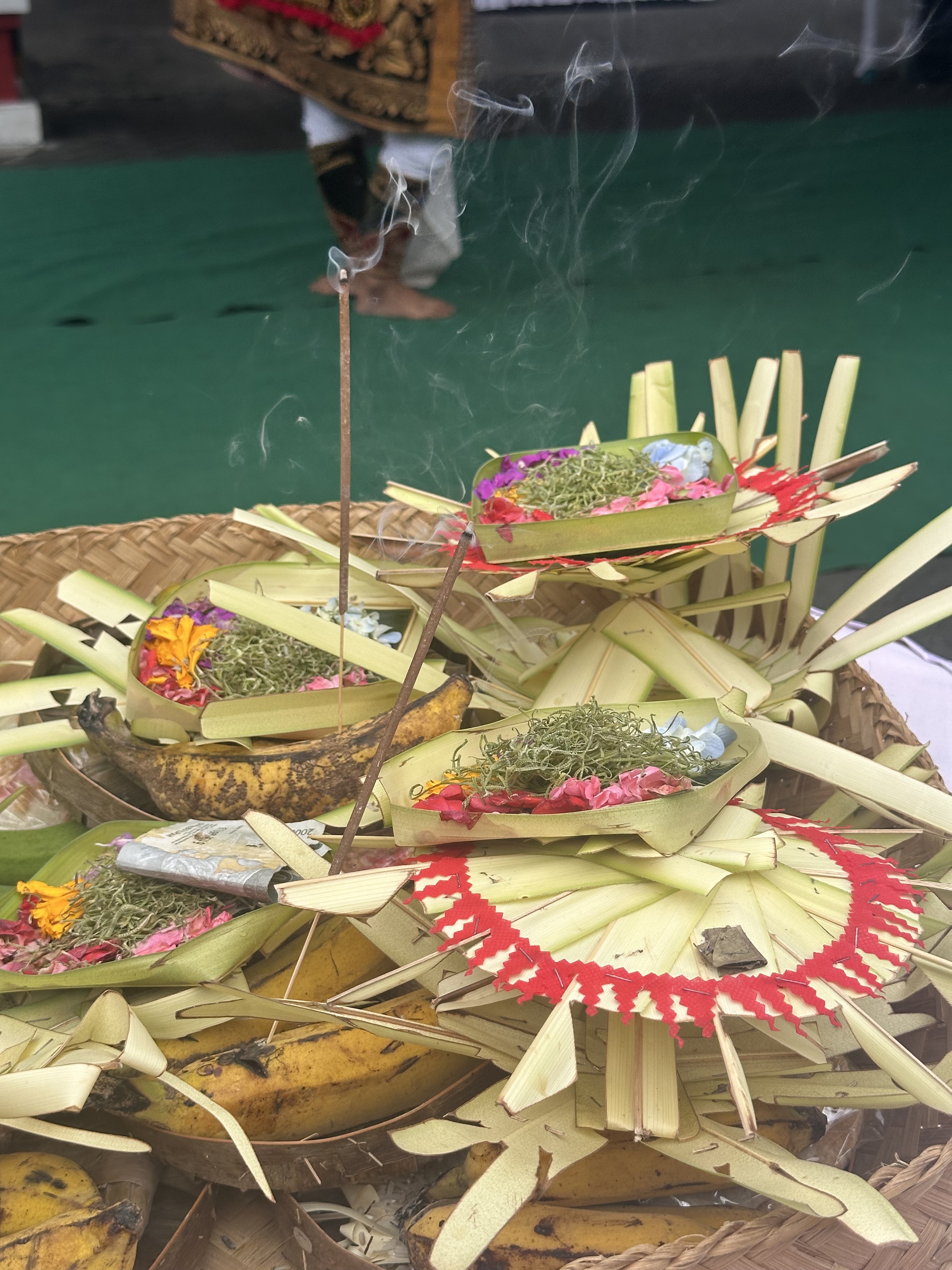
The daily offering, “canang sari” (translates to “a beautiful purpose“), was third to Wi-Fi and oxygen! Ubiquitous. This square tray made of banana or palm leaves has porosan—a mixture of colored flowers, leaves, fruit, or snacks (some even had cigarettes!) as a daily offering. As said in the Bhagavad Gita, any offering that is done with genuine purity of heart is accepted by God.

As you walk through the split towering candi bentar, imagine penjor—tall ornamental bamboo poles covered in palm leaf decorations and holy drawings that flutter in the breeze. I remember it as janur art. To me, they were large question marks in the sky! A tad different from the billion-watt glitter billboards of Times Square, but no less riveting.

Before you step into the inner shrine, pause.

Do spend a pound or less for a commercial cheat picture that the local guide will expertly take with a secret mirror and your iPhone (my photography buddies Ram and Madhu tried emptying bottles of water for long minutes to achieve this effect with a DSLR). Instagram soul pleased, now let’s proceed to pleasing the true soul.

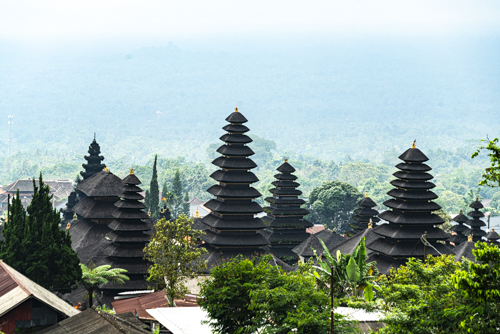
Climb several more steps as if we are getting a bit closer to heaven within the shrines and ascend the Merus. They have dark thatch pagoda towers that enshrine deities.

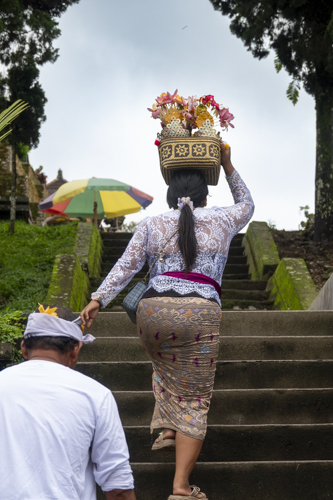
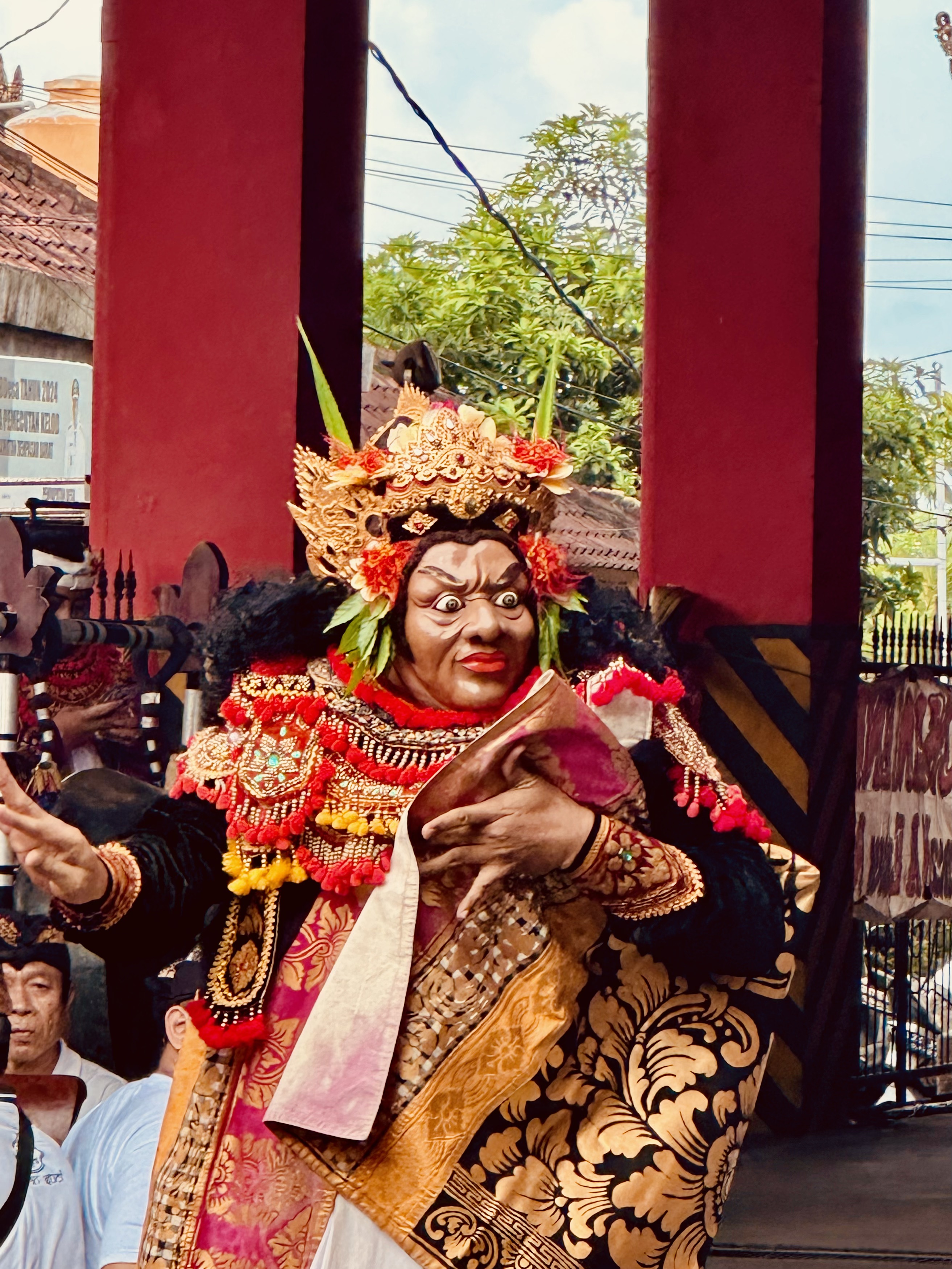
Young boys carrying colorful silk parasols and women dressed in white lace blouses and colorful sarongs carefully balance gebogan on their heads. Traditionally made from freshly harvested fruit and flowers, gebogan is a big conical arrangement that is carried on the head.

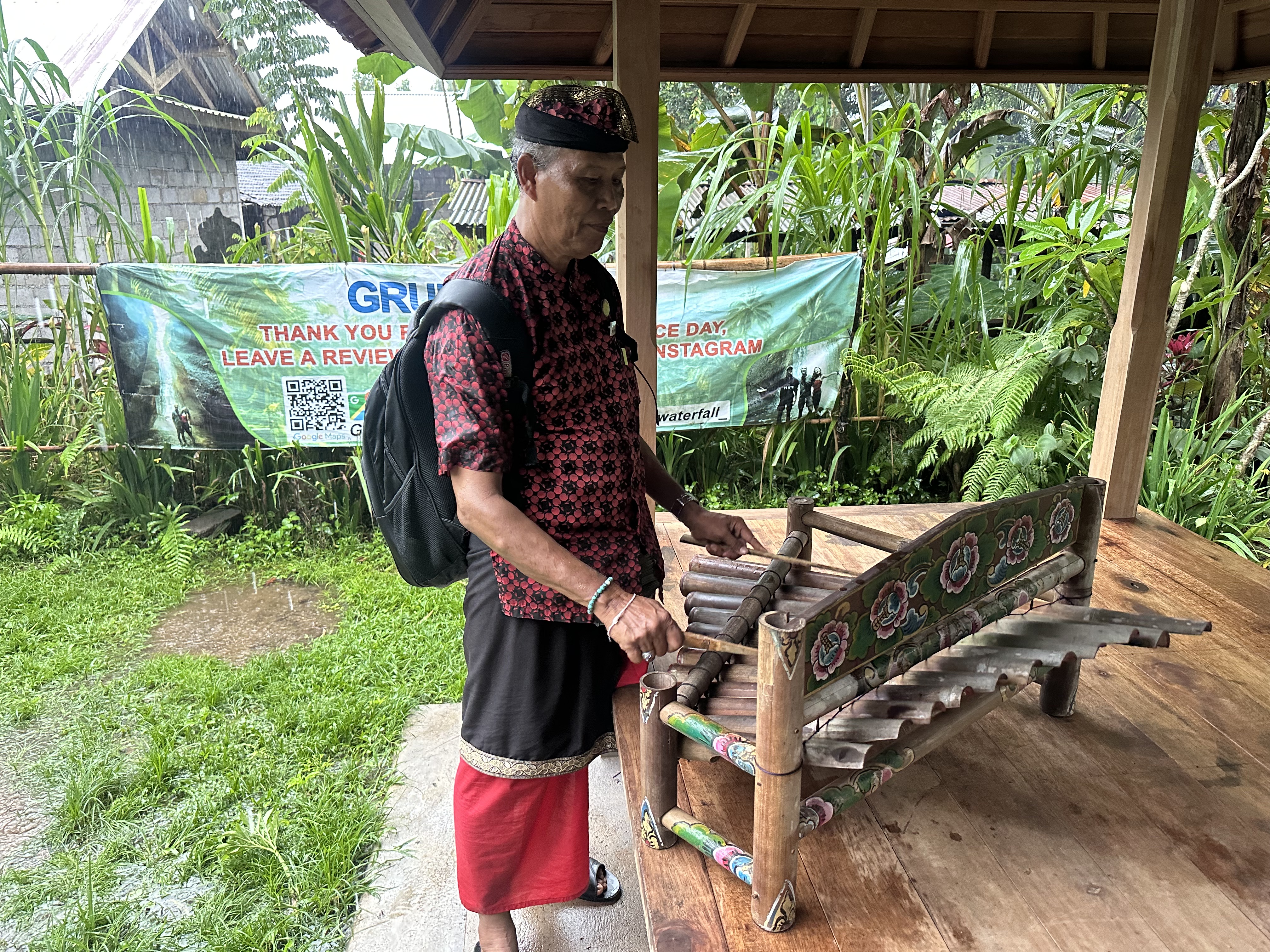
And finally, listen to some gamelan music or a rindik (a bamboo xylophone)in the distance.

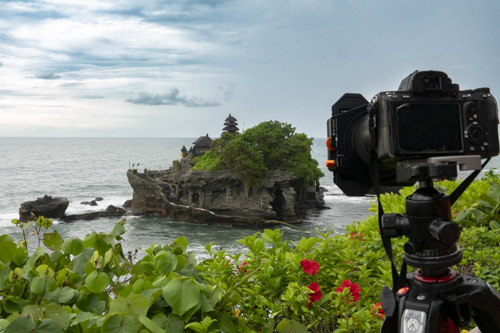
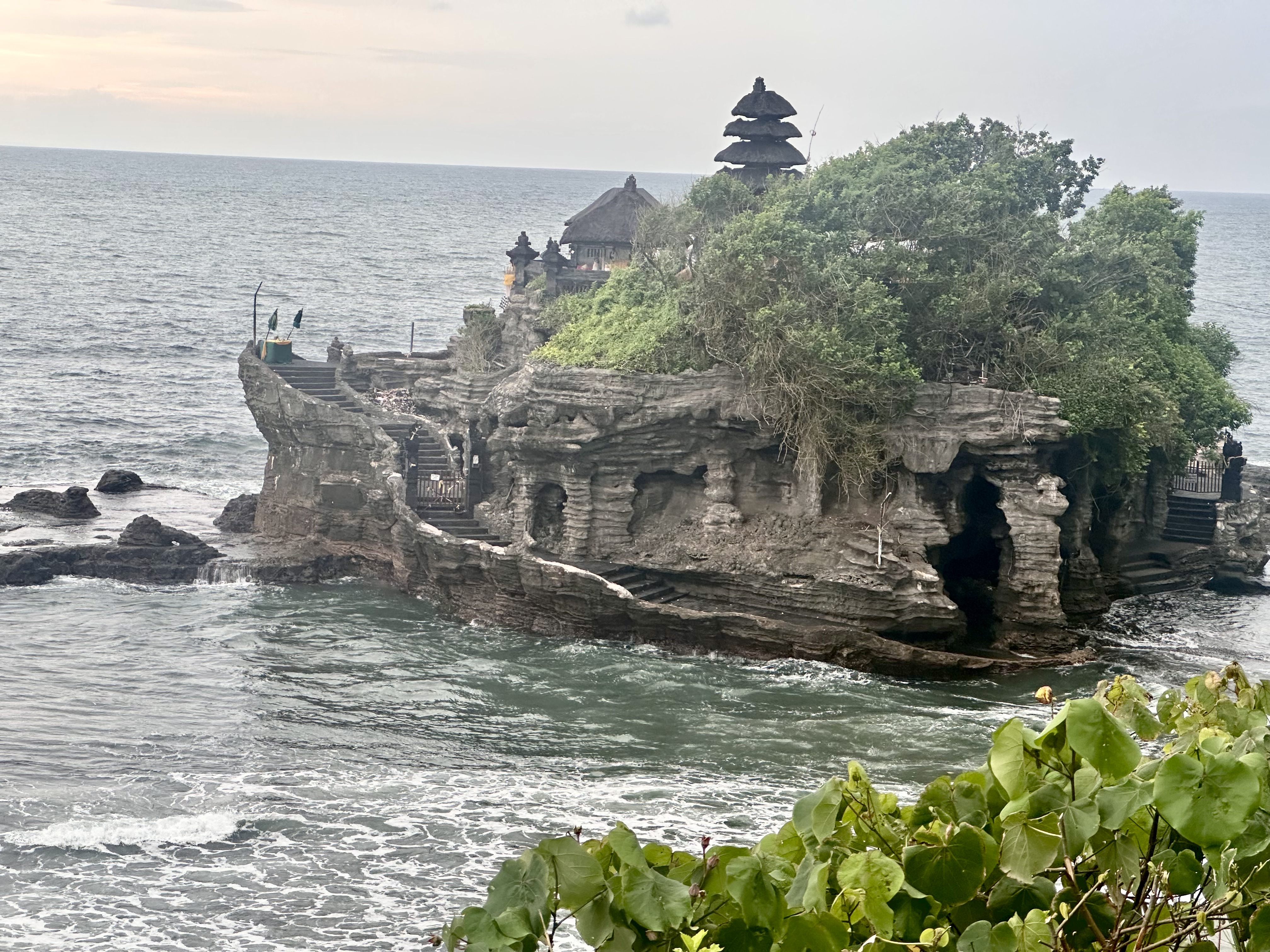
The temple could be by the sea—Pura Tanah Lot—or at the base of Agung—Pura Besakih, anywhere..everywhere! The small shops in the large grounds had bamboo scrolls, local effigies on arts (pratima and pralinga), masks, and so much more. I took a piece of the Bali as a souvenir for my wall back home.

LOVE

Bali without Ubud is like Rome without pizza. My first attraction in Ubud was my introduction to Gamelan music. While Ram took night shots of Ubud Palace, blurring the traffic into sizzling lines, I sneaked a peek into the Legong dance performance across the street. I was drawn by the deep resonance of the gong chimes. On closer look, there seemed to be several people hammering the same long xylophone-like instrument, generating a sound that reminded me of Ram dropping pots and pans in a busy kitchen. Fascinating.

Strangely, it felt like the musicians were having an animated conversation with God! It struck a deeper chord than even the dancers.

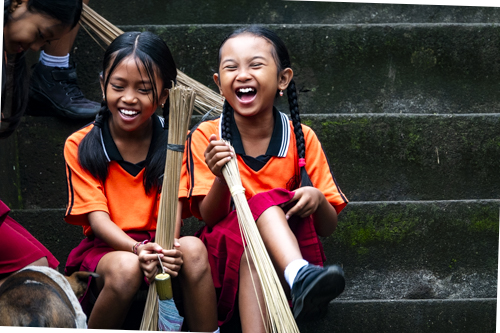
Ubud in the rainy season—is greener than green. Caught on camera: school kids sweeping the school, scooters weaving through hectic traffic, colorful fruits, tourists trying super hard to blend in with frangipani flowers on top of their ears, batik art, some odd but striking masks, the canang sari at every nook and corner… the list is endless. Love all of that. Ubud seems to have it all. Did not have time to venture into the famous street market.

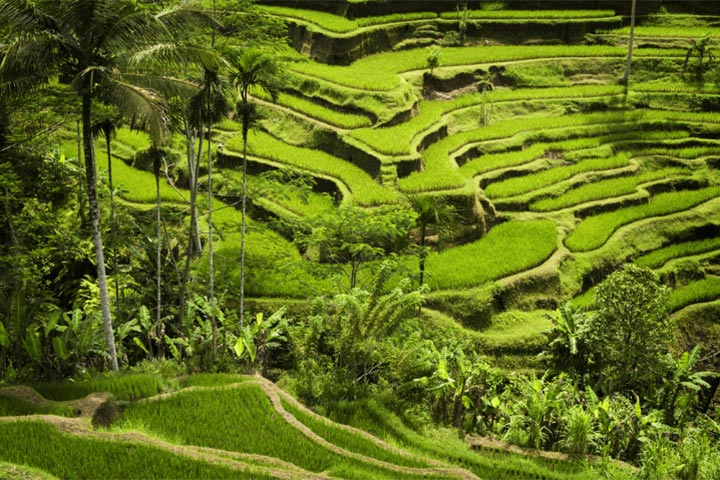
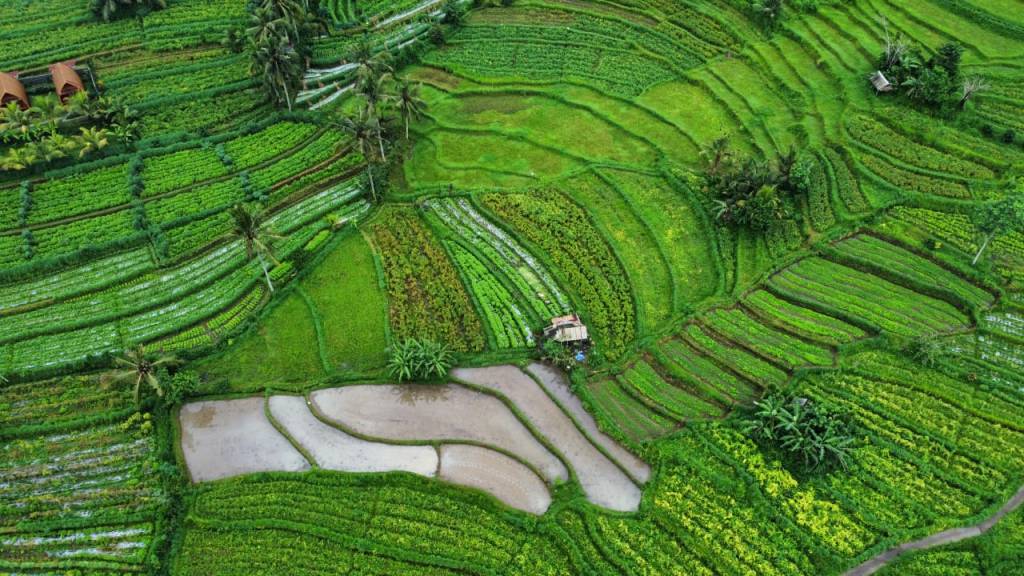
After Sapa fields in North Vietnam, I had decided that the rice terraces in Bali would be overrated here. I was happily proven wrong. Rainy season + a drone + the backdrop of Mt. Agung set the rice fields bar a notch higher. It was a “field” day for photography! Loved it.

Sideman paddy- deserves a drone!

A peek into Komodo. Back beyond Bali again.

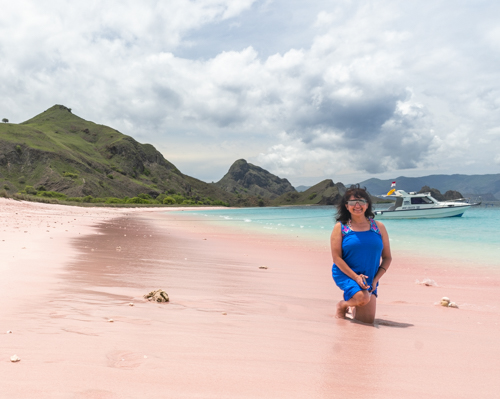
I have decided to call it Roja-Pink.

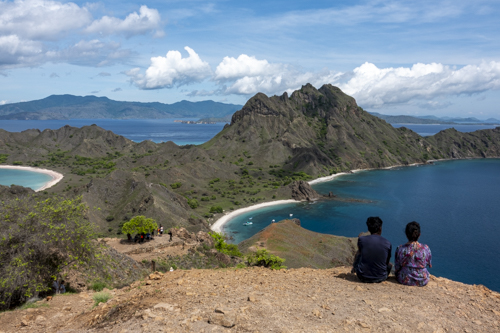
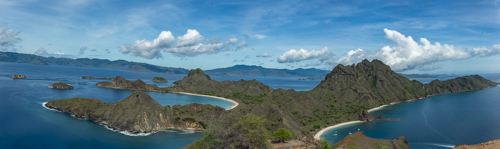
A gem in the archipelago of the Lesser Sunda Islands (wish Sundars had ownership of land here!). The name is synonymous with the Komodo dragon—a giant lizard only found here in Komodo National Park. Another Instagram mecca, particularly the Padar Islands.

The dragon, to me, was large, ugly, and worth no more than a couple of quick pics! But turn your head to the pristine pink beach—it is simply unreal! Just impossible to disappoint. Salmon pink and absolutely clear turquoise sea, a match made between earth and heaven. Add to this, snorkeling above manta rays was my idea of paradise (I often revisit this concept in every travel). The pink (unfiltered) of the sand is caused by microscopic coral insects—foraminifera. The reddish-pink shells are created when calcium carbonate covers them. Never a strong swimmer, I watched toruists like me roll off the boats with dive cylinders. I attempted a humble snorkel version. Boy, am I glad that I did! Once in the warm water, at the corner of my eye, I saw the first gigantic marble manta ray fish way below me and then.., saw 4 more! What made this spectacular was the clear aqua sea bed. Hands down, this was my trip highlight!

And a touch of Nusa Penida to share. An island that is shrouded by ancient beliefs of magic and spirits. Once only reserved for outcasts and criminals, this tiny island off the coast of Bali the Nusa monster story deserves a mention! Jero Gede Mecaling-is the menacing looking cleanising monster. Ask the locals..he exists!! They have spotted him on the beach at sunrise, some swear. He can be a cleanser of evil but the same time, if you annoy Jero Gede, he can liquify you to death with his fangs.

Did’nt spot him. So, settled for Kelking beach point pictures.

Go-Jek versus Grab war

Traffic in Ubud is dominated by two-wheelers, taxis, and the surge of tourism. Both the company apps have carved out their place in the “super app” ecosystem of the Eastern world, seamlessly integrating with e-wallets. Two-wheelers weave through long queues, carrying takeaways, parcels, passengers, and more. So, Indonesia has their Uber equivalent—Go-Jek. But the rest of the Far East has another taxi app giant—Grab. To top it all, there is the local taxi mafia.

Go-Jek covers it all. Go-Mart (grocery shopping), Go-Clean (housecleaning), Go-Glam (hairstyling and makeovers), and Go-Massage. Imagine—over 10 million downloads!

Chaos—I mean, it’s quite dangerous on those foreigner-filled streets! The spandex- and bra-clad ladies, and the first-timers on scooters, haven’t got a clue what to do on their scooty. The macho workout boys on their big bikes relive their video game personas, revving, cutting, and sliding their way to urgent appointments with the waves or their barbers. They’re usually helmetless, with noise-canceling headphones clamped on their ears, so they can’t hear the swearing and honking from locals.

Ram commented that Balinese drivers seemed relatively tolerant in traffic jams, showing fewer microaggressions. Hmmm… I’m not convinced.

EAT

Taste of Bali

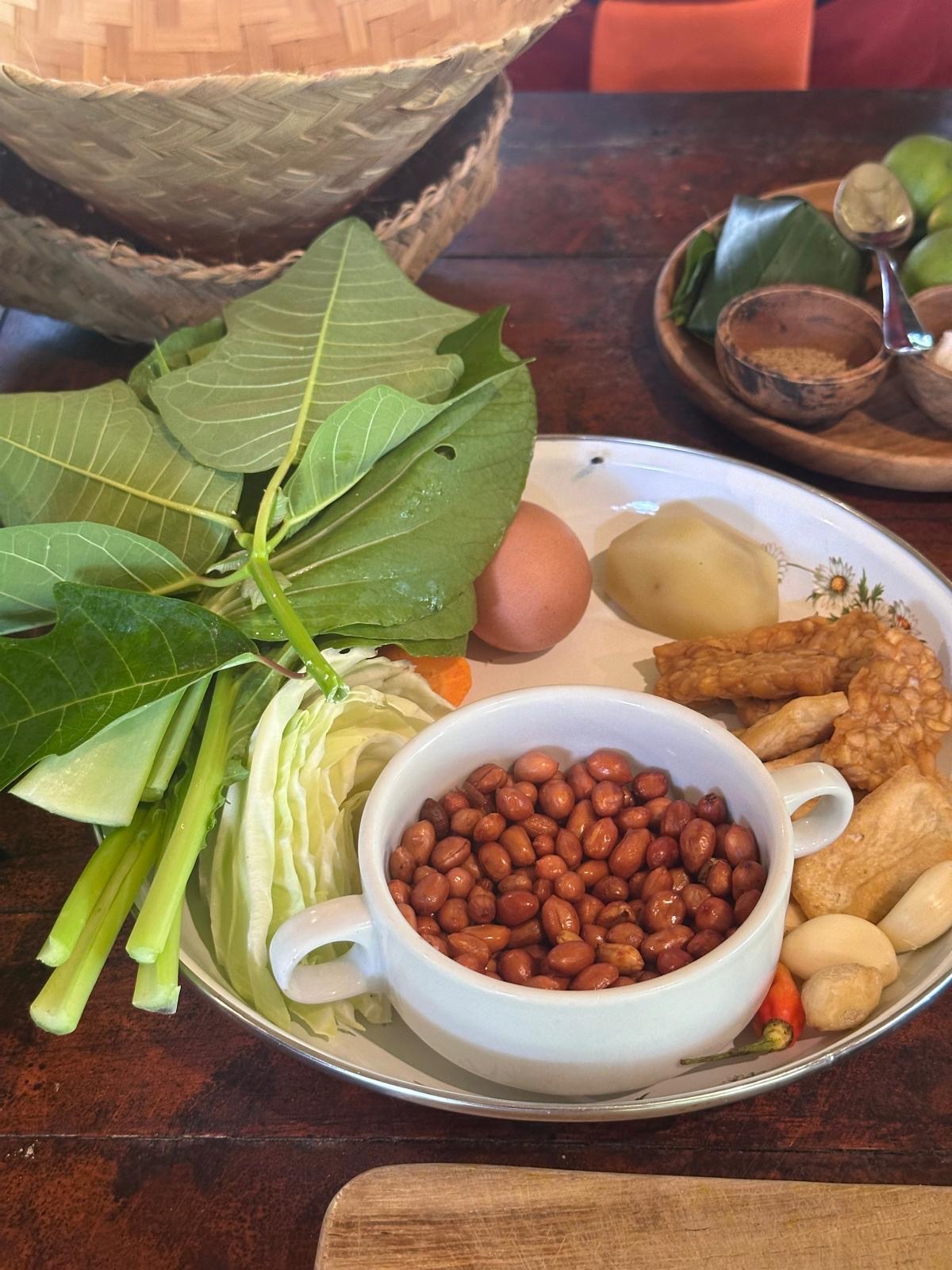
Bumbu Bali falls in line with the sounds of Ubud and the richness of umami. The flavors have simple magic—shallots, onions, cloves, nutmeg, fennel, lemongrass, galangal, and of course, peanuts… and more peanuts. Kecap manis (sweet soy sauce) elevates nasi goreng to national and delectable dish status. The farm-to-palate concept still thrives in many homes and Warungs (local shops) within Balinese culture.

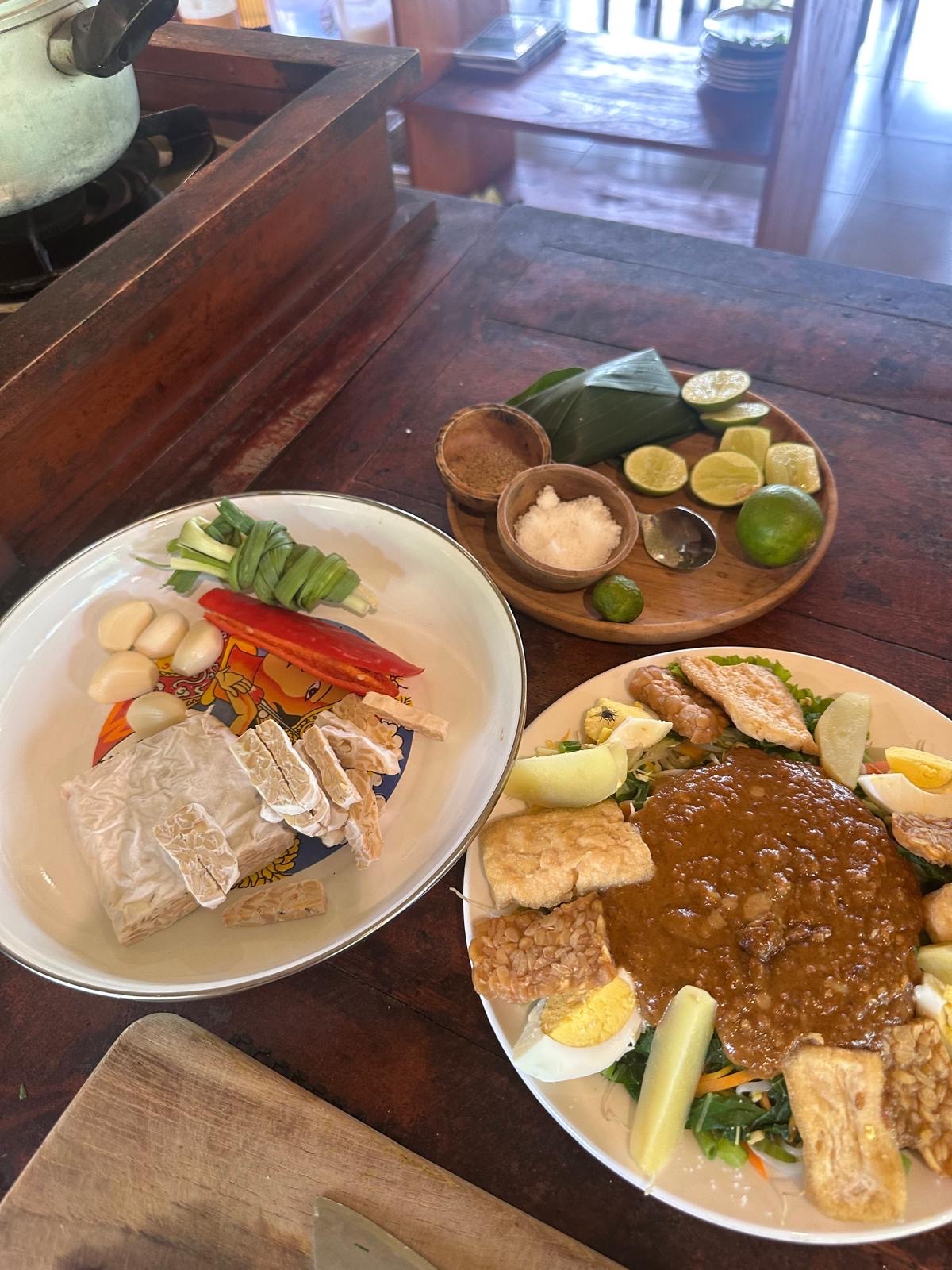
Mei goreng and nasi goreng (fried noodles and rice) remain staple foods. Gado-gado, a salad smothered in peanut dressing, was a dish I was first introduced to when a chef at a resort in Sumba taught me how to make it. Tempeh and lontong rice (rice wrapped in banana leaves) are added to this vibrant salad, and with ginger and lime leaves, it truly gains character.

The highlight for meat-eaters is the suckling pig roast on a rotisserie, called babi guling, which brings a vibrant flavor to the table. Nasi campur reminded me of Indian thali plates. Bintang, the local beer, and Luwak coffee (pu-wak coffee) remained the liquid highlights as I traveled through Bali.

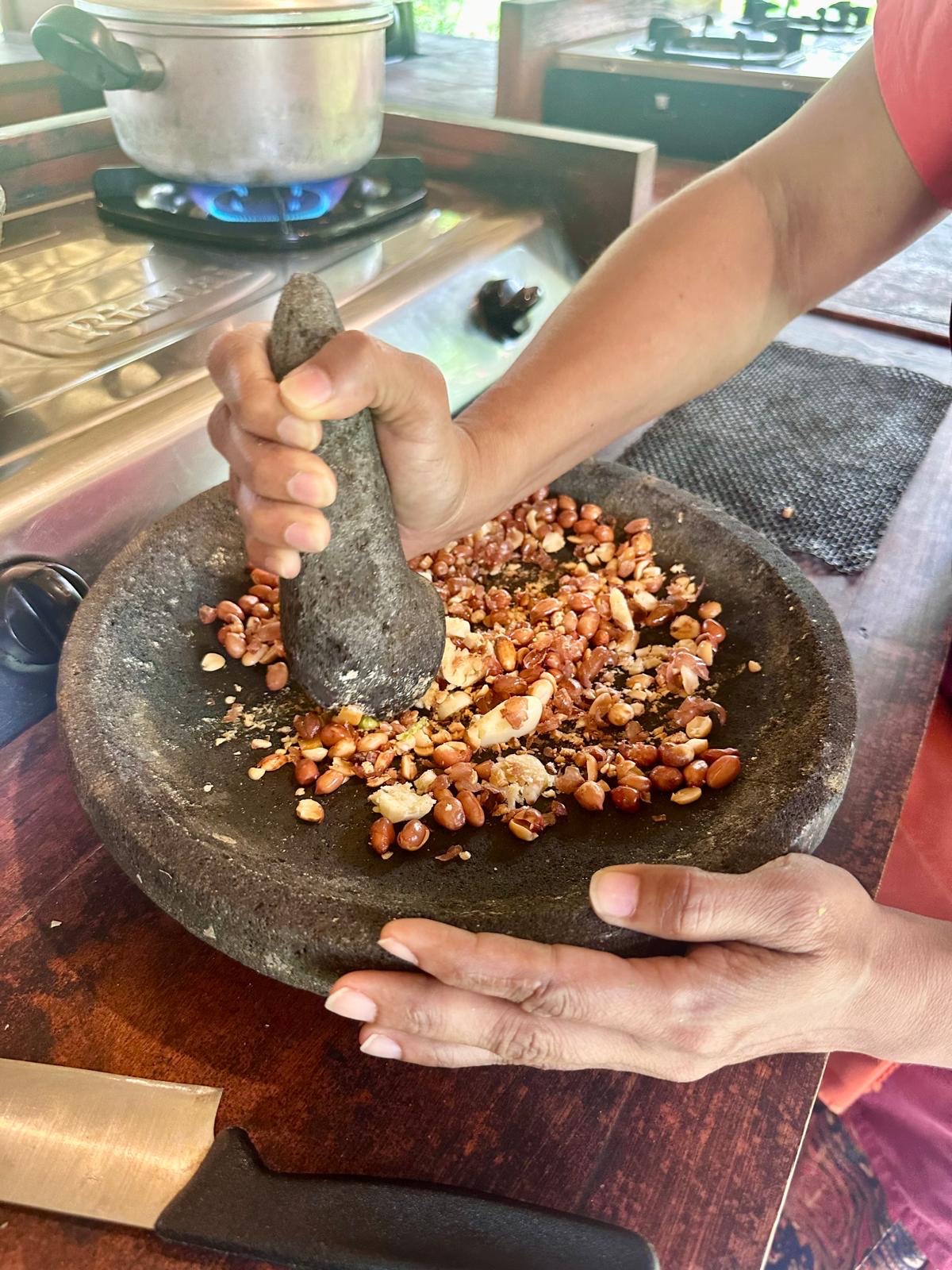
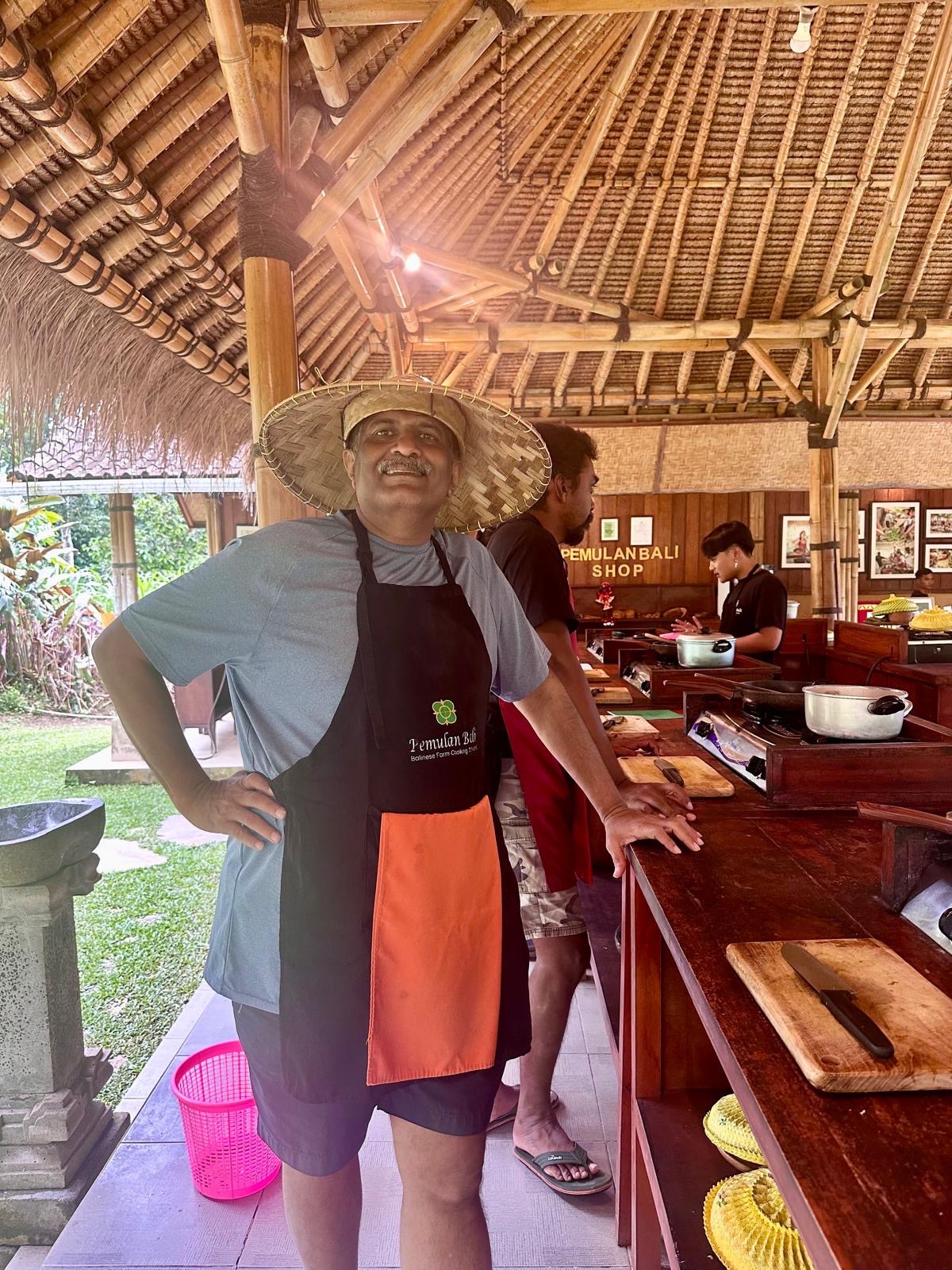
The cooking lesson we took was a gateway to learning how to make some authentic, basic pastes, but more than that, it was time well spent with a solid mortar and pestle, exploring different bamboo utensils.

Personally, I feel Indonesian food photographs like a supermodel—it often looks better than it tastes! And with that, we have Prayed, Loved, and Eaten! Minus Julia Roberts, of course.

Pushing travel remits beyond Bali into the islands of this archipelago added the dimension that made this journey unforgettable. I have had loads of commonly seen but rarely understood images in my mind. As I listen to podcasts and read travelogues, it’s clear that Bali is rethinking its future. I fear the Instagram world may lose sight of the real Bali. But isn’t that true for much of the world too?

Until we meet again, Om Shanti.

And thus ended this photo tale

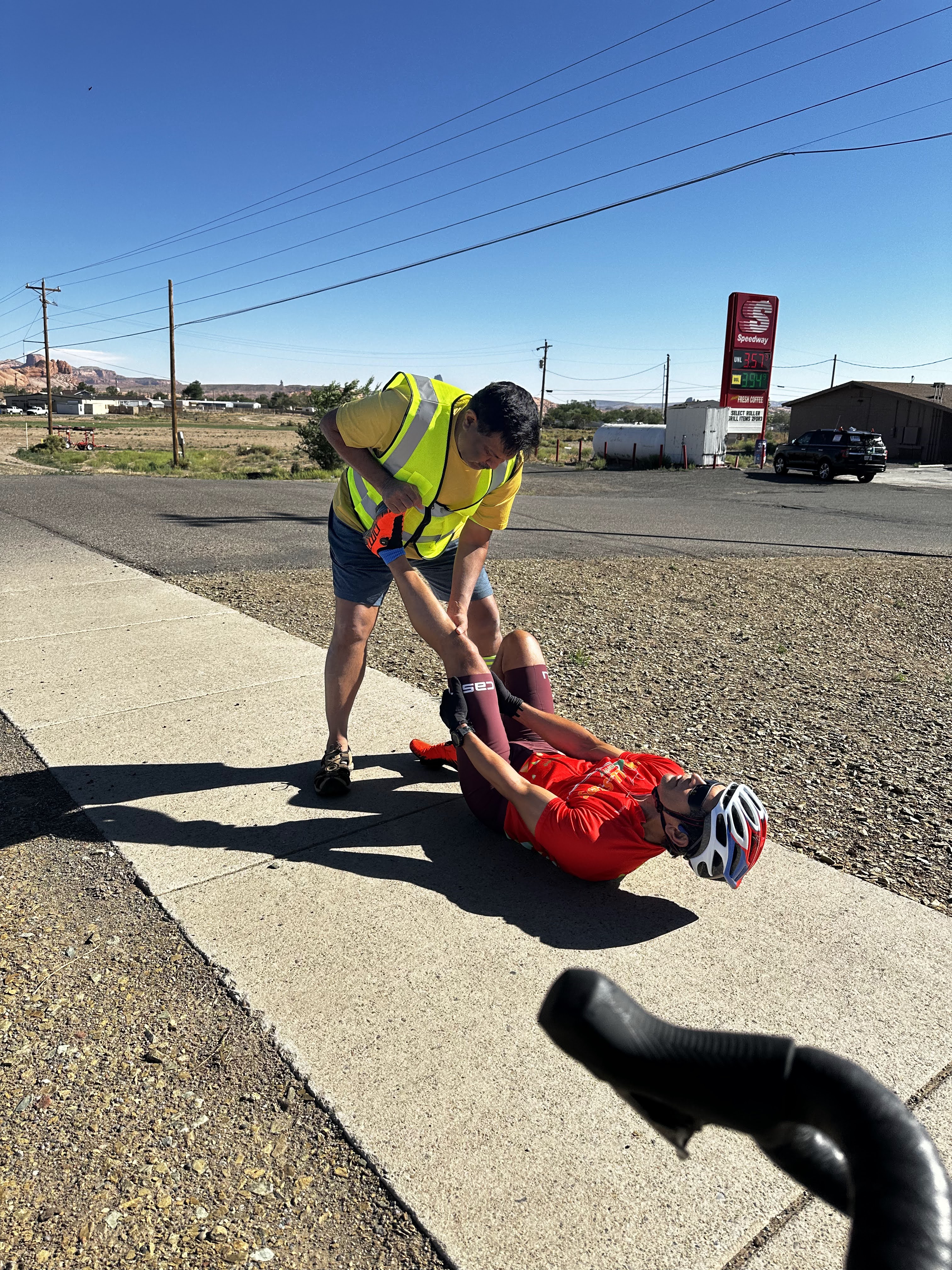
Where there is a wheel, there is a way RAAM2024

Our logo, our team with the ultimate arrow to victory

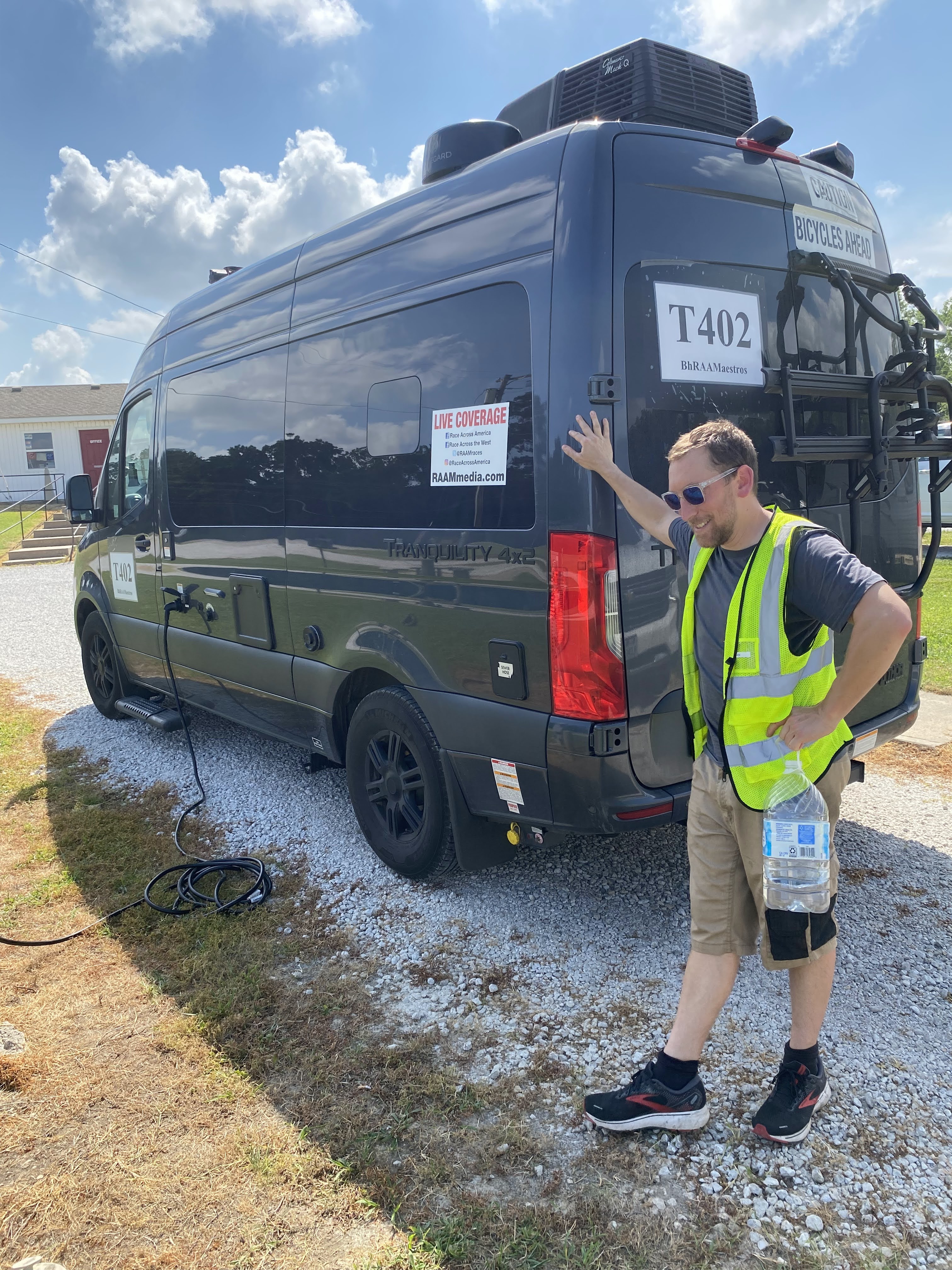
Team T402 -BhRAAMasteroes.

Racing and completing the Race Across America (RAAM)in the summer of 2024 is undoubtedly the toughest challenge I have ever undertaken. Consolidating the mamoth life experience and writing this concise blog is the second hardest ask.

Introducing RAAM (no, not a typo for RAM)

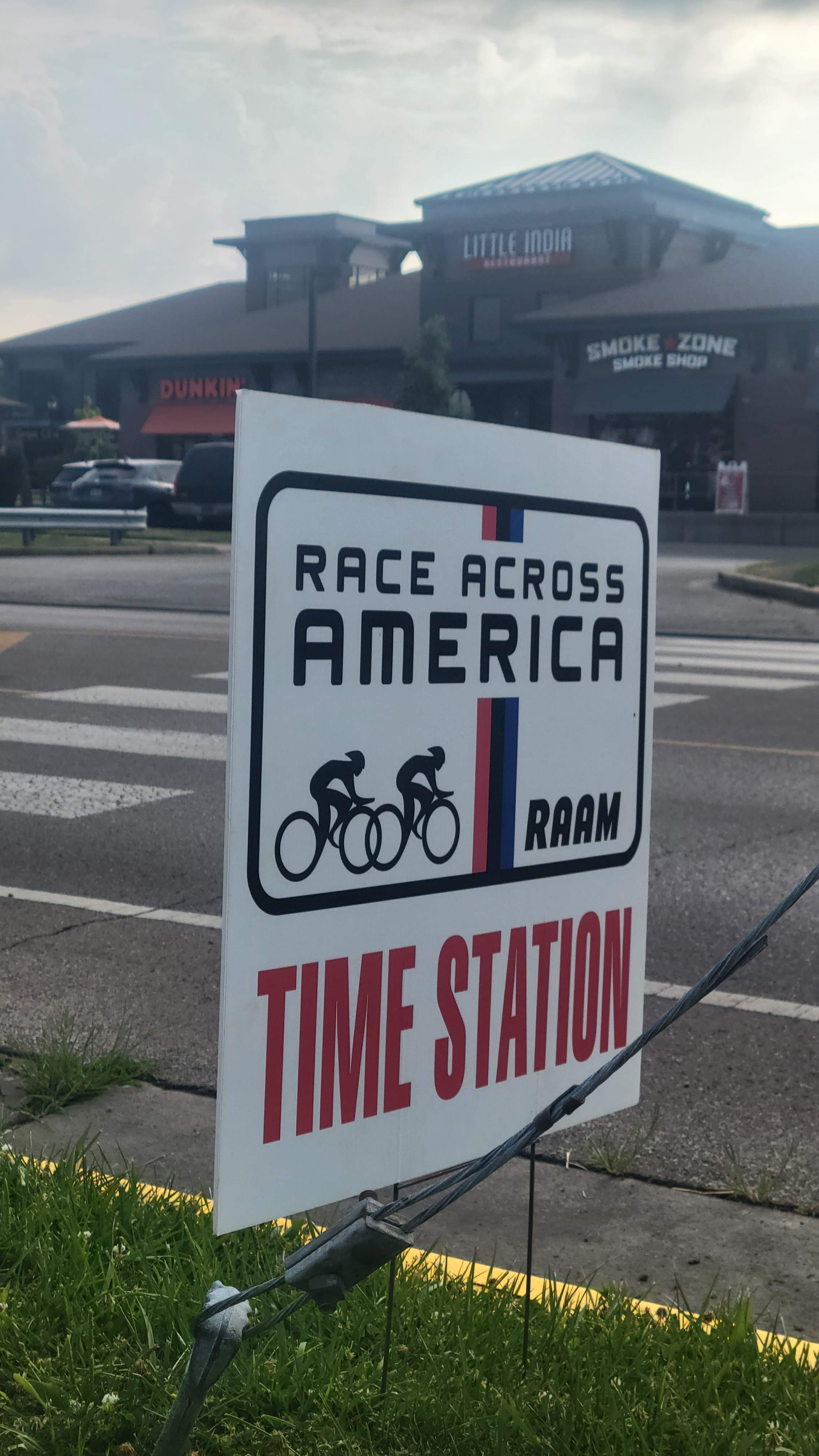
The world’s toughest endurance utracycling to date. 3090miles from the west to the east coast of USA. 175000feet of climbing. 3 mountain ranges. 13 states covered. 4 time zones crossed. 54 Time stations. Pedal by the day and by the night. Pedal one stage ie NONSTOP!

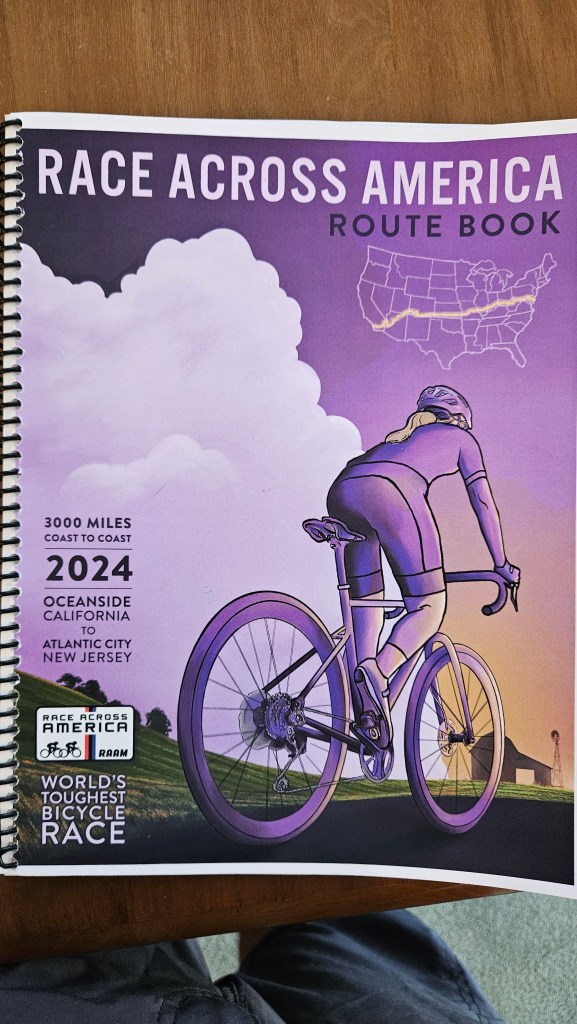
Now, for the real introductions. The 9 days of racing can make and certainly break you. Your best and worst are likely to be discovered. The power of the dreaded “RAAM Route Book” and the possible penalties to the team had riders and crew surrender in toto. After the initial couple days, the riders lost ability to think and could only process orders. And as for the crew, it was perhaps the worst part paid vacation ever. Every single one of the team of 20 had a bad hair day. Including bald Manoj! The Crew Chief held himself together with his ability to soak everyone’s distress, “dynamic flexibility” and endless supply of red bull! The team crossed the start and finish lines officially. Off the record, we crossed the line of patience, privacy, outrage and ultimately, the line of limitlessness! For every member of Team 402 of RAAM 2024, it was hands down the most incredible experience that we would never trade for any price!

RAAM is historically less known than Tour De France. Arguably, it is more gruelling. RAAM is 700miles longer than TDF, 15 days shorter. When the clock starts at flag off in California, there is no stopping. But there are 8 stages in TDF. And finally, there is no sleep deprivation and extremes of heat in TDF.

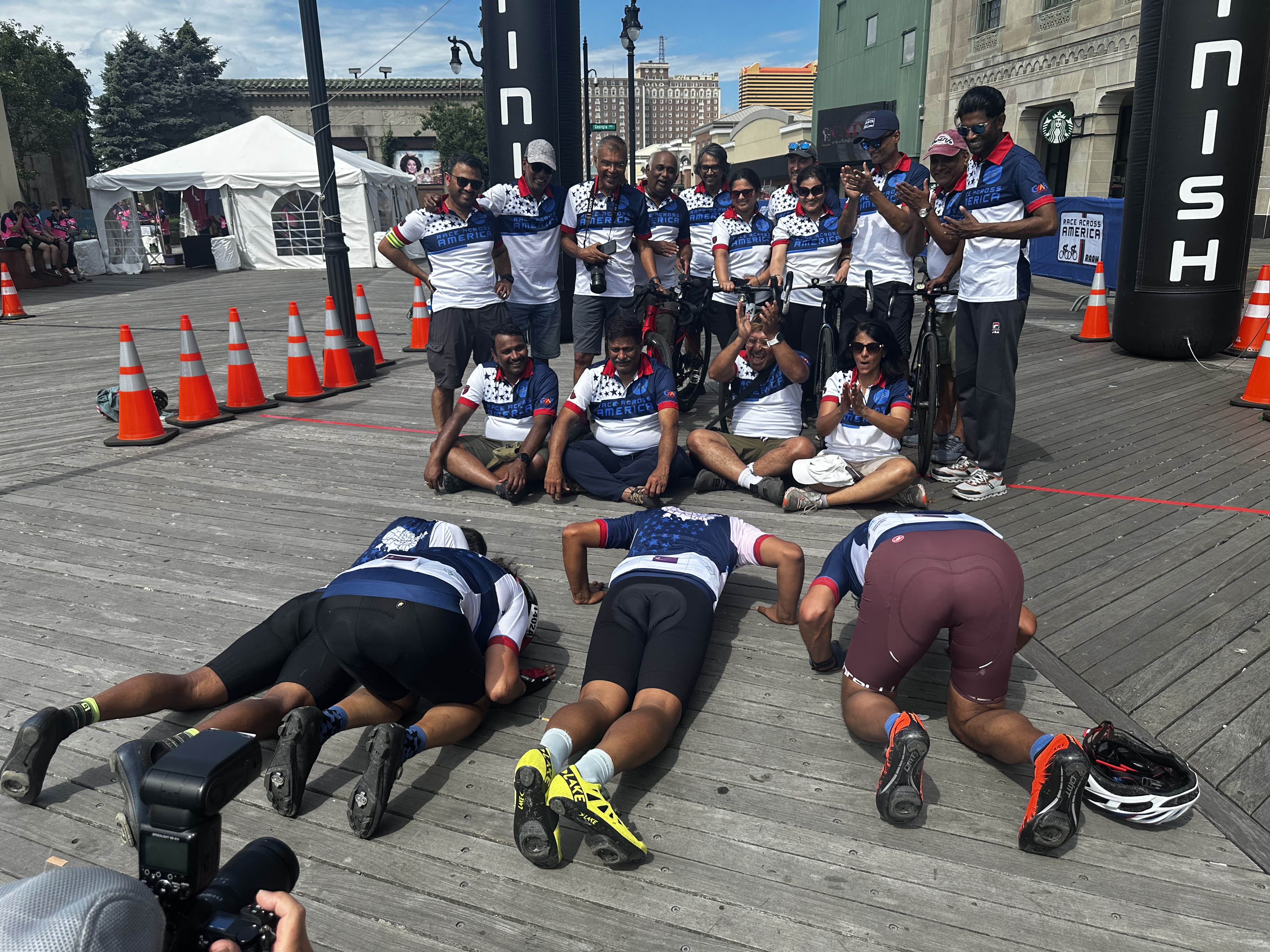
We were 4 Racers-in our 50s and 16 crew members form 3 continents. The racers – Arasu, Bhuvan, Mahesh and Kalpa. I have now concluded men have worser mid life crisis than us women (and no HRT to the rescue)! Between us, we shared the distance over 219hrs. Individually, we pedalled our best. Together, we gratefully carried the sweet burden of the sheer selflessness of the 16 supporting crew members and pushed to our “pulls”. And altogether, we DUG DEEP to cross the vast country mile by mile and arrive at the finish line ahead of the cut off time 8 days and 22hrs later in Atlantic city on the east coast. Truly amazing. Actually, humbling.

Feb2023. When Bhuvan popped the question to be a racer in a 4 member team, it felt like an outrageous aspiration.

Dec 2023. The true dimensions of the challenge dawned on me. Our first weekend of continuous day and night ride commenced and was introduced to sleep deprivation.

April2024. Courage and character replaced the confusion. Crew chief cemented the team and introduced coach RK. Training ramped to peak.

June 2024.Team BhRAAMasteroes triumphs. Together, they cross the finish line and gain an irreplacable life experience.

August 2024. RAAM demistyfied and motivating fellow cyclist embarked.

Flagged of at the parade in Oceanside, the four racers DUG DEEP with our Kickass formidable crew chief Ram and 15 other selfless crew members.

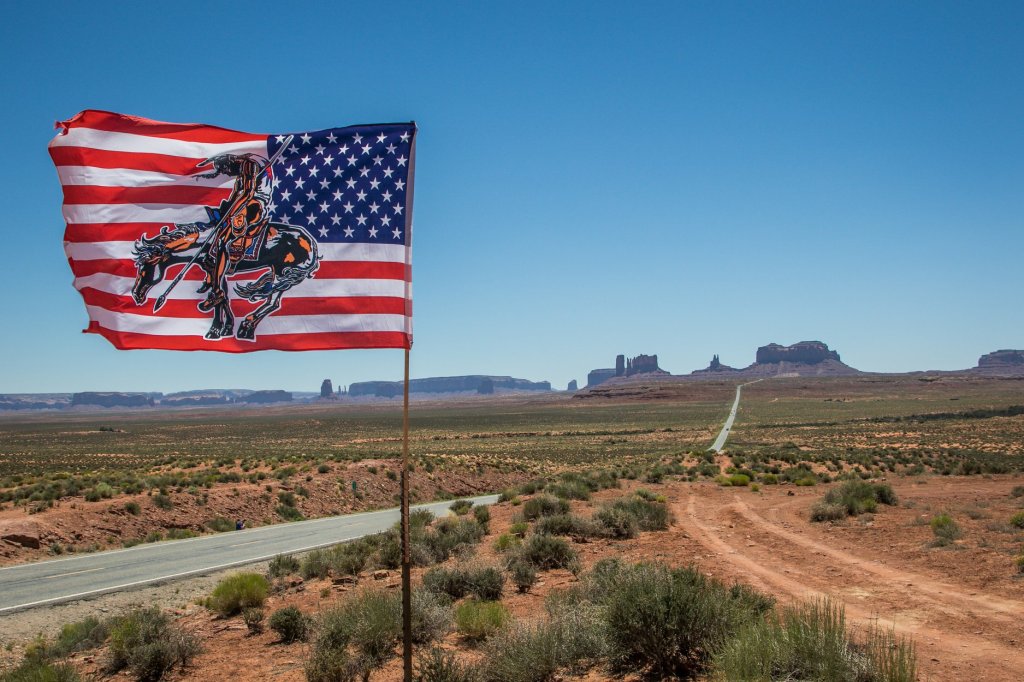
Our route covered the Forrest grump area, the Montezuma creek, the Oljato-Monument valley, Navajo trail, Ozark land, the colorado rockies, Sierra Nevada, Kansas flats, Missisipi crossing, Jefferson monument, Appalachian trail, Amish country, Gettysburg war country, NJ turnpike into the Broadwalk of Atlantic city.

WOW

To me, it was all one single big blurr. Sharing a pictorial glimpse

We prepared

Mind, body and soul for at least 7 months. As individuals and as a team. I prepared indoor and outdoor. Day and night. Joined metcon classes and online inner engineering. Went global with practice rides to the UAE, Spain and France. Rode the route to Durango virtually in stages, picked routes like Wolf creek pass, the Backbone mountain near Maryland and some Appalachian “rollers”. All on the indoor trainer. My outdoor romance with my new Pinerello was slow in winter.

Zindagi na milegi Dobara shot..messing around in Spain

And in springtime came in RK, our coach. RK put his foot on the pedal or rather made us put our foot hard on the pedal. Shook the racers from our slow slumber. The prep plan for April and May was intense. He trained our hearts to work better, legs to get the faster. He made us reruit slow twitch fibres, increase our FTP, VO2max, focus on power and cadence. In short, he simply converted us to more professional cycling. He didnt stop just there. He got the mind set focussed on setting the mind for the ultra cycling. Yoga, weight training and mindful medidation was added twice a week over and above the intense 4 days a week training schedule. The shift from cycling to ultra cycling was slowly achieved. It was like replacing sight for vision.

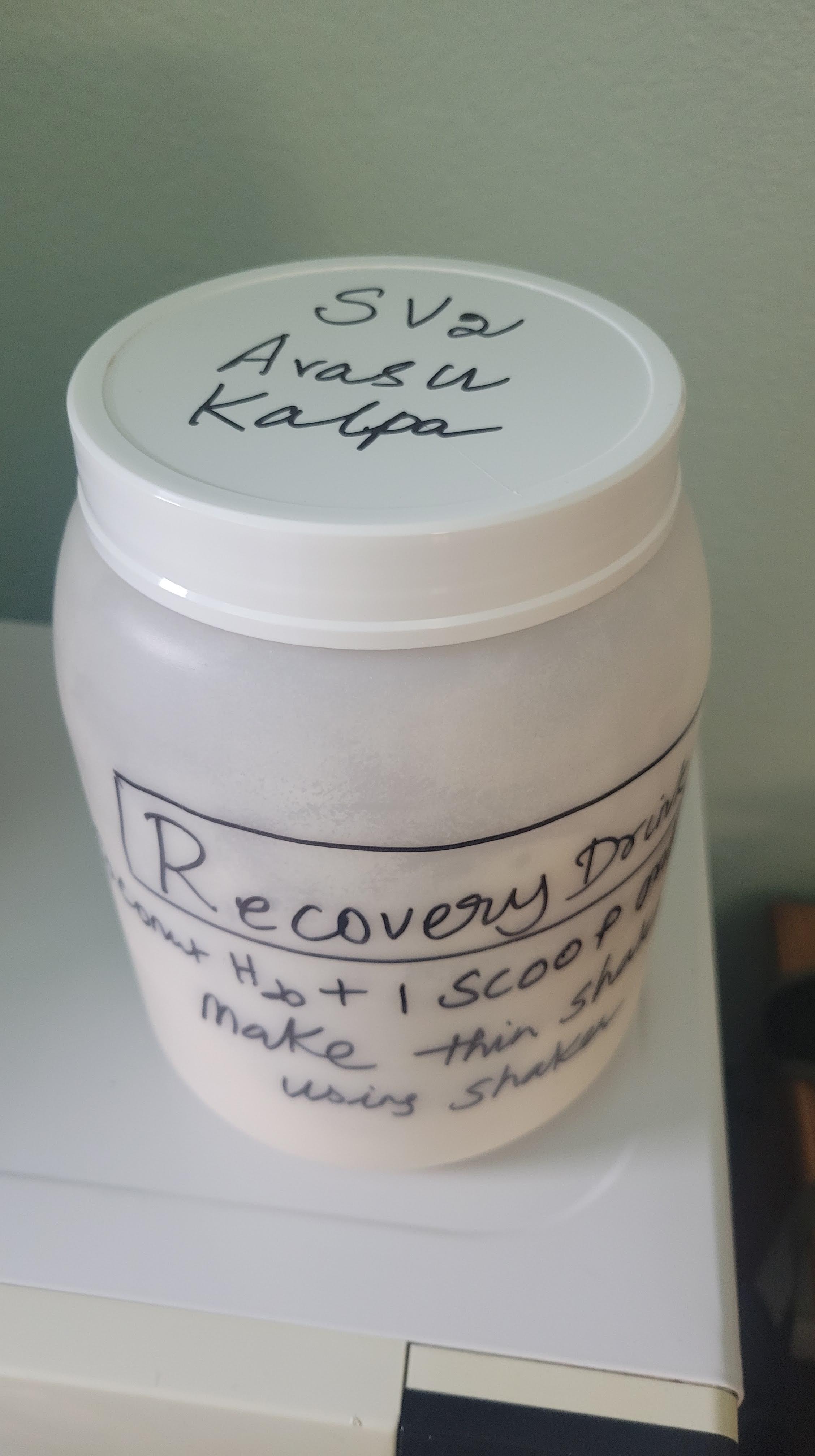
I knew I had to learn to love two new items- indoor cycling and eggs! I am head over heels successful with the former and reluctantly tolerating the latter. That nicely brings me to the hardest challenge I personally faced. My nutrition. This was often brought up by the team and so, I sat with a patient Suma to work on it one whole Saturday. The list for the vegetarian picky eater was made but it was hard for the support to source this enroute. I tried all the new liquid feeds and recovery drinks before the main ride and became an eggetarian. Hydration, supplements, meal times, complex carbs, smoothies with calorie dense nuts etc etc (we even had a portable smoothie maker in the support car), were discussed and tried. I watched Arasu consume ravenously and tought to myself “how does he do it?!” We had at least a dozen labelled bottles placed in a box between our back seats in the support vehicle for hydration and more beta fuels were ordered enroute. The cool box in the back had high portein yogurts, ice cold tender coconut, coke, red bull and ice to cool the sizziling heat in Arizona. The RV had poha, puliyogere and the gentle all time pleaser yogurt rice. During the 9 day ride, I consumed over my month’s quota of calories. Personally, I think I handled my food crisis successfully.

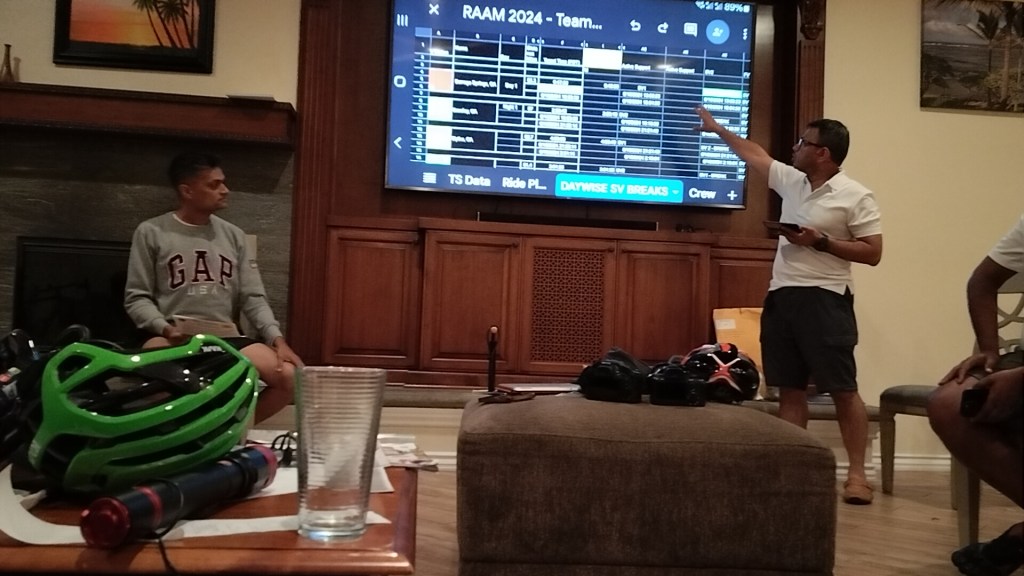
For over 9 months the Crew chief and team (Ramesh, Vijay, Manoj and Ram) were up at odd hours working routes and planning the process. The others worked relentlessly in their allocated roles. Sometimes the planswere thrown out as useless. But planning was indispendable. For me and Ram- as racer and crew chief under one roof- we breathed RAAM for 9 months.

I studied the route over and over again most bed times and revisited it next morning when I brushed my teeth! Even memorised the first 25 time stations. I took micro naps and practised sleep deprivation seriously. I woke up at odd hours at night to train on my indoor trainer and learnt to sleep in odd chairs and cramped spaces. I set alarms at 2am to wake up and head to the indoor trainer for a 40min pull. I embraced yoga nidra, positive thinking yo get my mind trained. I read about Nazi concentration camps in this context, spoke to RAAM finishers and visualised a completion. I slept till the brink of deep sleep and forced myself awake. Great. Till I discovered that one early morning in the actual ride, I was found sleeping briefly on the tarmac in a moment of mutiny when the crew chief ordered me to cycle during my allocated sleep time !

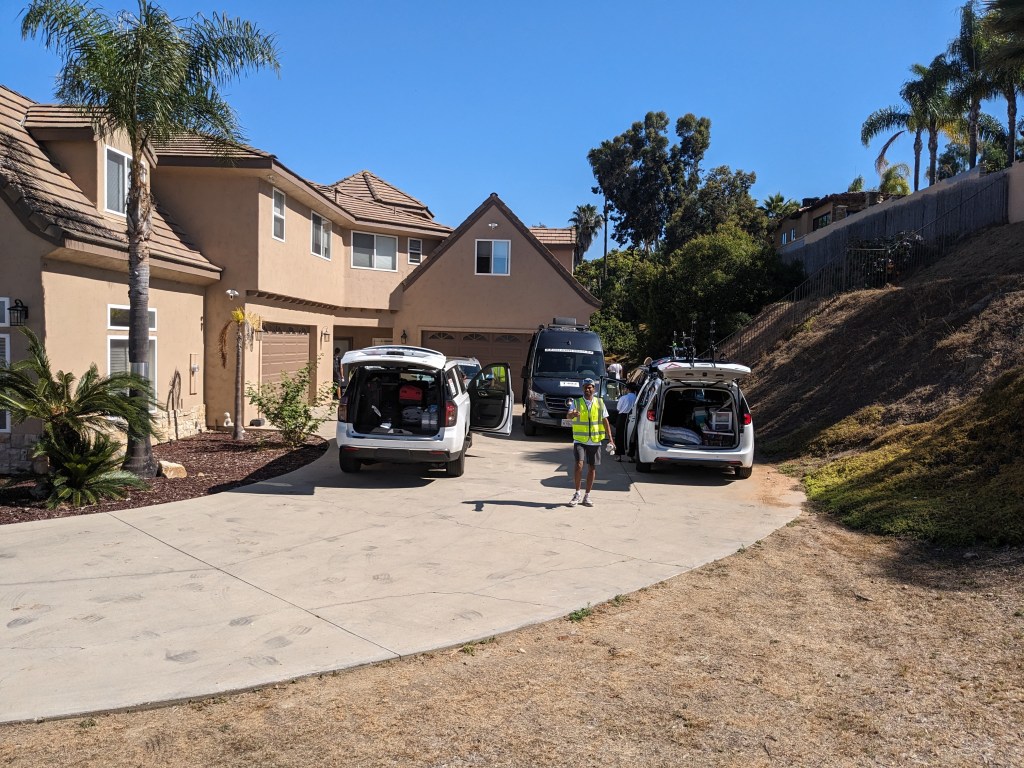
The crew chief invested in the team members meanwhile. They were scattered over 5 countries with busy day jobs. It was a mamoth task to bond as a team. We used multiple WA groups, Discord, biweekly zoom meets, cardo trial, training rides abroad..phew! All for the sake of achieving one job, “to keep the riders on the bike for 3000 miles”. The entire team assembled in a sunset villa atop a hill in Sandiego, in the week prior to the actual ride. Team bonding happened seamlesslessly as the ladies took on nutrition (eggs by the hundreds, even had freshly grounded coffee and lemon from the garden pickled), Dan assembled and prepped bikes, our physio form Edmonton multitasked, Kaushik worked on purchases, Vijay/RK/Anand ran the 24hr back office, the US based support Dinesh/Manju worked on cars and driving, Bomma/Prasad drove one support vehicle with stocks for 18hrs to join us and so the list went on. 1 RV, 1follow vehicle (yes, they followed the rider at the slow pace all the 3000 miles!!!), two support vehicles for 4 riders, and one errand vehicle were created overnight. Anand had a pre ride meeting slot with “The rule book trivia” in the evenings alongside crew chief’s desi TED talks to round up every drop of positivity and logistics by Ramesh. It was here that I witnessed a fundamental bonding of the team.

Something clicked as I gazed around the hive of activity in the villa. I knew I was stretching beyond boundaries. But I was in my element-body and mind. Felt a new layer of psycological toughness. I sensed we would just do it.

Work on site redefined our support team to becoming an Ultra support!

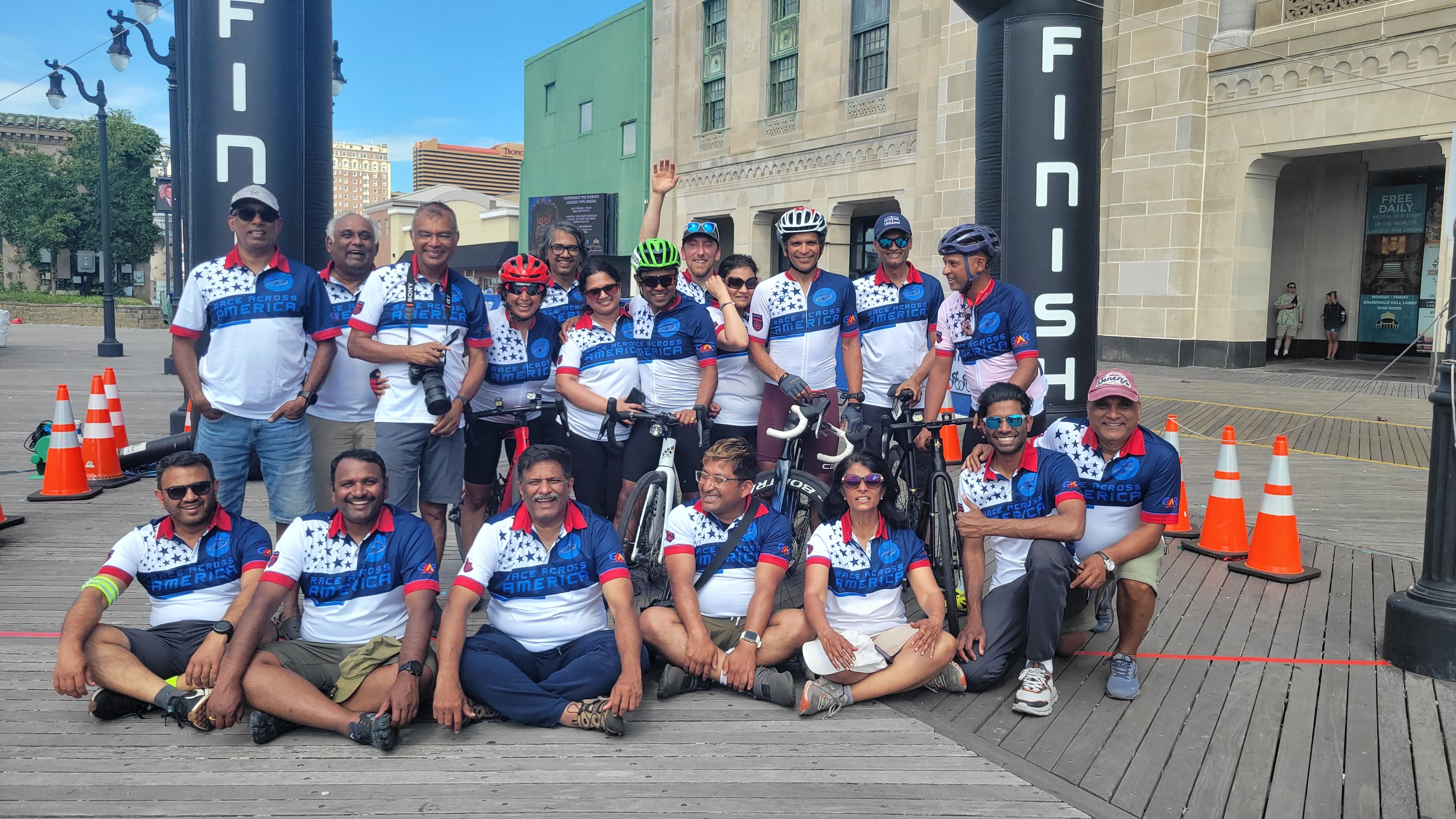
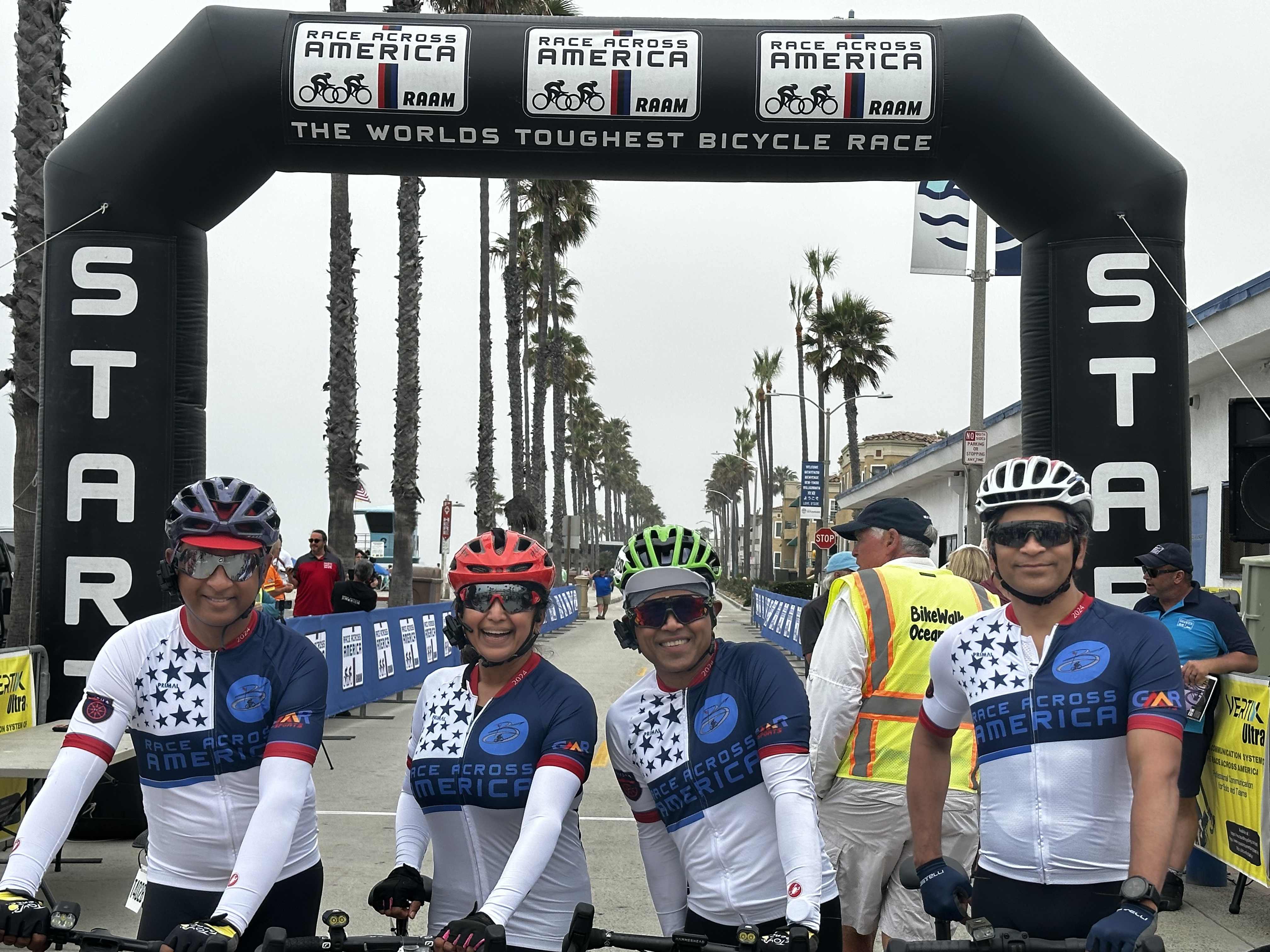
And on the Saturday, we set off after our customary coconut break to the start line at Oceanside. Team 402, in official jerseys, with a well concoeled anxious energy. Pictures clicked as all 4 of us assembled at THE start line.

I glanced at Prasad(my brother who was baptised to support by fire) and smiled at Crew chief Ram. He beamed with positivity as our team was announced on the speaker and we rookies took centre stage. I glanced ahead and together we took the first thrust at the pedal.

Team BhRAAMasteroes had crossed hurdle one- the journey to the start line which I believe is the toughest. We were as prepared as we could ever be!

We performed

The pomp at the parade start was short lived. We turned right into Surf riders way. Arasu picked the pace. I followed him at a short distance as he climbed the first hill. The unsupported 26miles ended in Old station road. Mahesh took over at the pull and led us into the arid Californian desserts. The boys battled the scorching sun with ice vests past Lake Henshaw and took pulls on Yaqui pass. Bhuvan had his Glass elevator descent dream turn true and I took over at Christmas circle in Borrego springs. In the background, I heard the crew discuss an early penalty, an errand vehicle (the white Suburban) stuck in the soft treacherous sands of Anza Borrego. And, guess what, I promptly took the wrong exit off the christmas circle and powered through on the wrong route. I was soon pulled into track. Much later,as I researched for this blog, I discovered that Star wars was filmed on this very stretch. The heat continued to exhaust the crew and the racers. I hammered throught the kinder evening heat of Blythe and Brawley. The pulls came up quickly. The zone of optimal performance was elusive. I was in autopilot- watching my pedal and speed. Arasu kept sweeping several climbs. Mahesh peaked the momentum to max and Bhuvan ramped up at all downhills. We barely spoke to each other in passing. We whizzed past (sorry for choice of the verb,Vijay in FV!) the wide American vistas without a second glance. I overheard the odd conversation in the FV between Vijay and Manju about various bits and bobs, imagined a stunning burnt sienna sanded cliffs in the build up to monument valley area in the darkness of my long full night shift. I listened to the same set of spotify songs over and over again. Around dawn, Bhuvan crossed wheels to relieve me and braced himself for the next long hours of heat and climbs. The boys covered the rest of Arizona and small segment into Utah before arriving into Colorado. We made it to dreaded Durango with hours to spare! Relief flooded through us. The decision to pause the ride for riders and crew to rest and charge up was bold, measured and sound. I was reluctant but out voted in.

Let me share another performace moment which is etched in my mind with you here.

Day3, Time – early twilight,

Location- somewhere in Kansas, near Pratt? Maize??

Racers on road- Bhuvan, Arasu, Kalpa

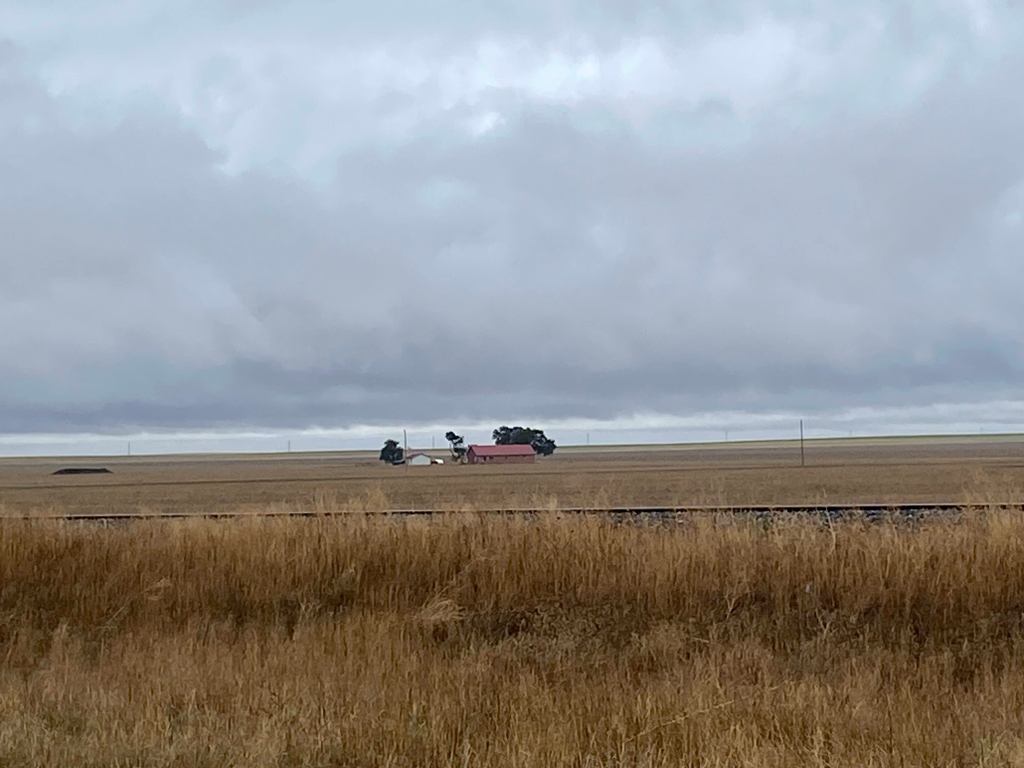
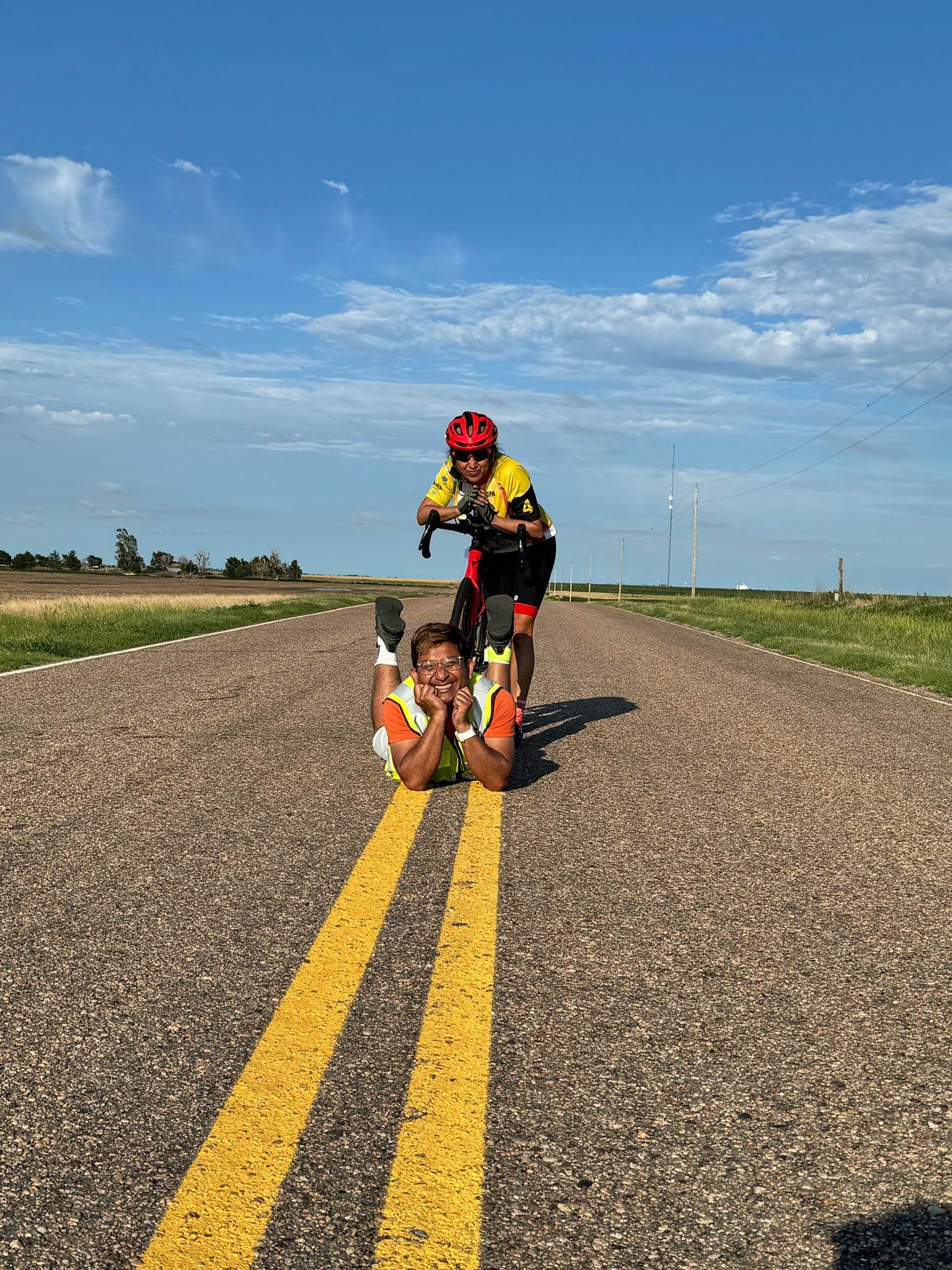
I was getting ready for my pull. As I waited for Bhuvan, I leaned over my Pinerello and gazed around. I watched my cycling life buddy Arasu close his exhausted eyes in the car for a power nap. Suma was busy taking a picture of Kaushik who was fooling around and posing lying on his stomach in the centre of the long endless stretch of straight road. The earth seemed ultra huge in Kansas and the endless grasslands in bleached beige swayed to the wild wind and of the corner of my eye I noted a lone red farm house. At that precise momentmy confidence surged. RK’s words resounded- “Kalpa, your patch will be Kansas, go for it. ” I grabbed the moment and give it my all. This was the moment I fell in love with ultra cycling. Cadence, speed and power to my hamerring best. I realised I was process oriented. I developed a confidence irrespective of the outcome. I loved the liberating feel.

The Mississipi river crossing happened in the background -no pressure. A beautiful dawn on the river. Once again, I had the all night shift Arasu. By now, I lost count of time stations, pulls, showered in truckers stops, and performed to order and lost my capacity to process and think. Our average speed fluctuated based on terrain but we consistenly caught up as a team. We had 48deg heat , cooler colorado, windy Kansas, wet misty mid west to name a few weather zones. The crew had no rest. Crew chief and RK had warned us that all tem will be on road for the last 24hrs. Even at this point the real fear of DNF (did not finish) never surfaced.

The priority was to keep moving.

Let me take a moment out for Vijay. On yet another long night shift, I heard a solitary applause as I went past the FV at mile 2000 something at day break for the 100th time. I nodded weakly. That was all I could do. That nod, epitomised a myriad of emotions. That nod cemented so many intangible bonds of camaradrie. His faith in us (and he certainly knew the truth statistics about our race capacity) was unwavering. This was when I discovered ultra friendships.

We had the Applachian rolling hills and four steep climbs before Maryland pending. A group huddle with all four racers was ordered by crew chief. A few moments of pause, pivot and recharging done. Emotional. Sweaty. Smelly but, we dug deep once again. Soon, the 7-8% climbs were done and we were at the New Jersey turnpike after a hectic night when none slept and we strayed a tad away from RK’s precise race strategy and lost a couple hours.

The pinnacle of the perfromace has to be Mahesh’s final push to overtake T405 the JSNT legends for a nail biting win. It took us only 3000 miles to get into this mode! when the race officials totted dead time and staggered starts, 405 scored better but nevertheless it was hair rising finish!

We certainly performed!

We pondered..

But then, one must, Post RAAM.

June 2023. I had sustained mutliple injuries and was not able to ride outdoor for months.

June 2024. I was the first Indian Brisitsh female to compelete RAAM in a team of 4!

I realise now that cycling has defined me over the past decade. Without a doubt, it is my happy space. Transitioning to “ultra cylcing” seems a natural pedal stroke forwards. Even as I did my arm chair research into the concept of “ultra” the announcement of a whooping jump into a world of focus, self disciple and consistency is loud.

Remember the pottable smoothie maker in earlier paragraphs? Well, it you add emotional resileince, goal setting, team skills, Vo2max, tempo training, shokz pro, SRAM, gear ratios, beta fuel and add a dash of dopamine and oxytocin and give it a buzz in the same smoothie maker you will arrive right at the recipie to the transition that I am in.

I realised that my need to be “minimalist and clutter free” as a nature of mine was my strength and own weakness too. My crew buddies Bomma and Manoj will smile as they read this as they decluttered the support car just for me in a sleep deprived state many a day! Believe me, I am trying to get better! A personal take away learning on post RAAM ponderings.

Pre RAAM, cycling connected me to stunning landscapes and quaint villages and local wine -a time to pause and admire life’s wonderful moments. Post RAAM, cycling scaled me to start the clock and the press the pedal to my best effort as long as I possibly could. The rest of the world is a blur around you. I guess, I have succumbed to this addiction as I pondered how I need to do it the next time!

For now, I am content blending the small and the big rides. Either way, I get to ride my bike! My only DNF(Did Not Finish in RAAM terminology) to report in this blog is my love affair with “ultra” expectations in life.

Bye for now. Ending with a total surrender to the support -the temporary demi Gods!

Zero to Zen, Bhutan

Punakha Tshechu

Feb2023

The next journey. Now, I was looking for deeper connections. A time to ignore the itineraries and follow the mind.
This time the travel is with my brother Prasad to Bhutan.

Perched on the edge of the Mighty Himalayas, travel to this tiny unassuming kingdom is like taking a Buddha pill. Creates an inner calm (at least till I reached Terminal 3 in Delhi)!

Inspiration source- a TED talk about Gross National Happiness by the PM of Bhutan when I got back form Costa Rica a couple years ago. Bhutan is Carbon negative and tops the league table for happiness. Reason enough to go.

Bhutan is ruled by a much loved monarch Jigme Wangchuck (by far the most popular surname in Bhutan). A constitutional monarchy with a parliament democratically elected. The country defies stereotypes. This land locked country has no Ubers, Starbucks or western food chains. TV arrived in this country as late as 1999! Tourism started in 1980s. Rice is red here. There are more flags than houses. No card machines. No traffic lights even in the capital city of Thimpu! People were driven by karma. Time is measured in cycles. As a strong collectivist culture, individual birthdays aren’t considered important- everyone takes 1st of Jan as their birthday (not good for password choice!!!)

Hold that thought. Keep the scene in your mind alive.

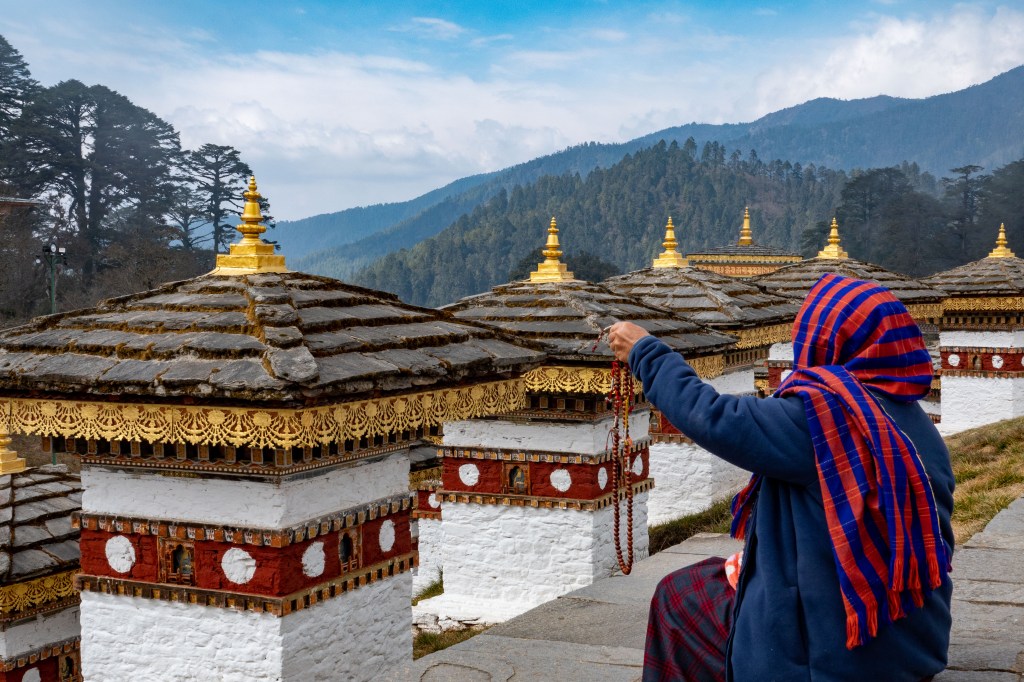
Add boundless meters of flapping colourful flags on mountains, the mighty Himalayas with snow peaks as a backdrop, colourful chorten prayer wheels in street corners, an air resonating with spirituality, marooned by monks, whitewashed monasteries and a symbolic tapestry of faith. The locals are in traditional attire- Ghos which was akin to scottish kilts with a dressing gown for a top! Add an unclimbed world’s tallest peak at 24500feet, rare red neck cranes, Tangka paintings and a country full of trees to this image.

Close your eyes. Mix the two and marinate! What you see is Bhutan.

If you are destined by the Gods and GPS

You land in Paro. The airstrip at Paro is super short and sandwiched in a deep valley. The Druk Airways flight (even the airways sound mystical) is a quaint aircraft that reminds you of air travel in the 70s and takes you over Everest literally. It makes a sharp 45-degree turn and faces this ultra-short landing airstrip of 2000 meters at Paro just at landing. This makes this a challenging landing that only a handful of pilots can handle. We stepped into the most beautiful airport that I have ever seen. Felt like entering into an art museum with traditional Bhutanese woodwork. A vision imprinted in my mind(and my phone of course). It was indeed a vision- of His Majesty the King who inspired the concept to reflect the country’s art, architecture and beauty as visitors walked through its arrival doors. 60 local artists worked tirelessly to produce this fantastic entry into Bhutan. A QR code connects you to the art. For the rest, there is Mastercard.

Even the armed gaurd at immigartion smiled serenly. A happy start, in a happy place.

Kuzu zangpola (Hello)

Punaka Tshechus

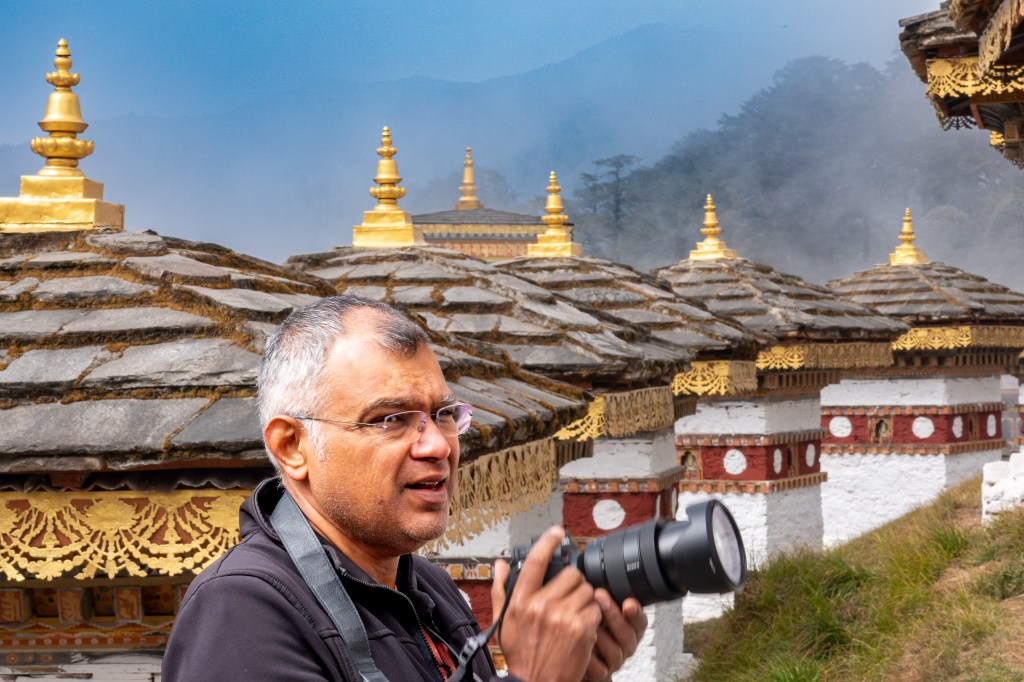
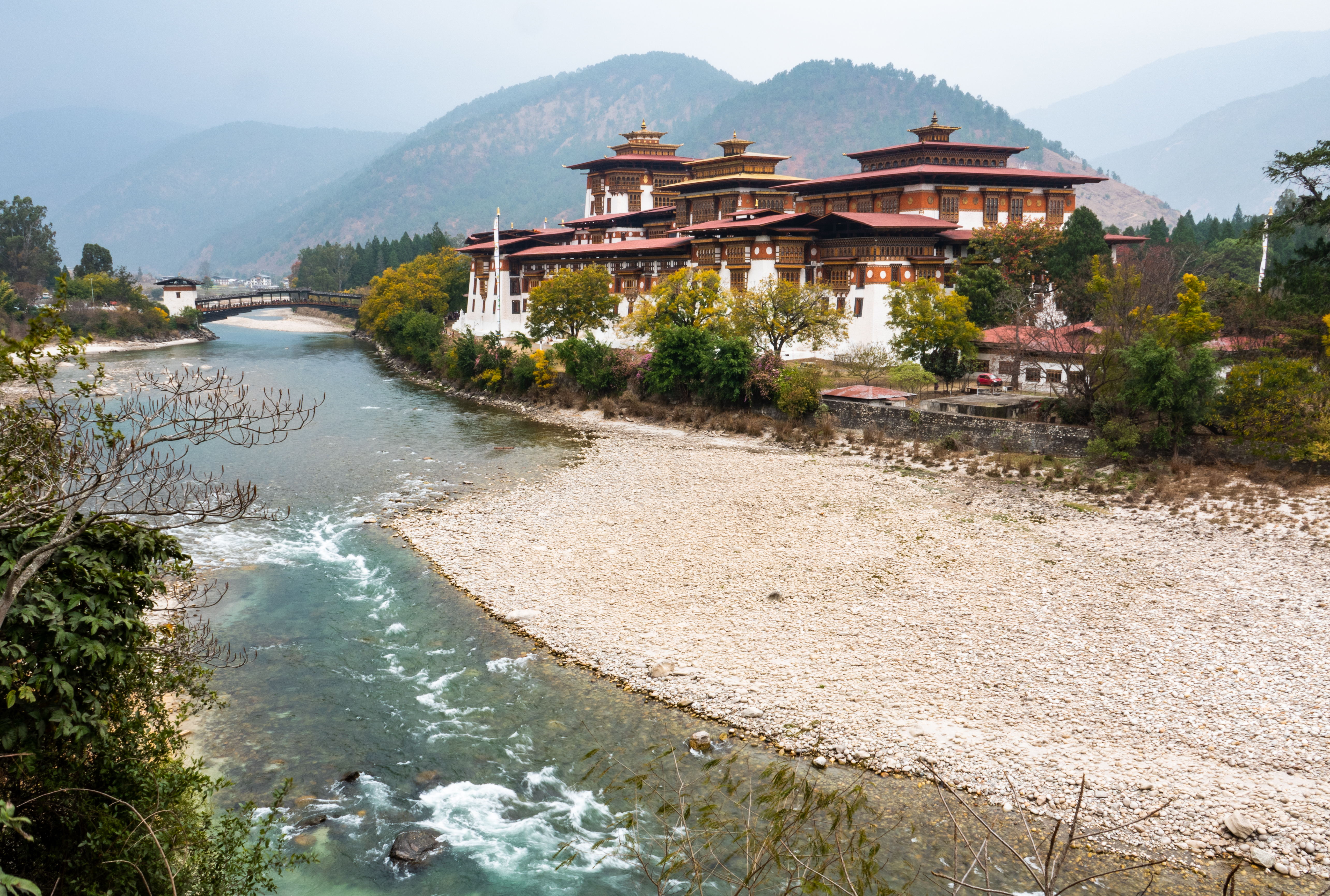
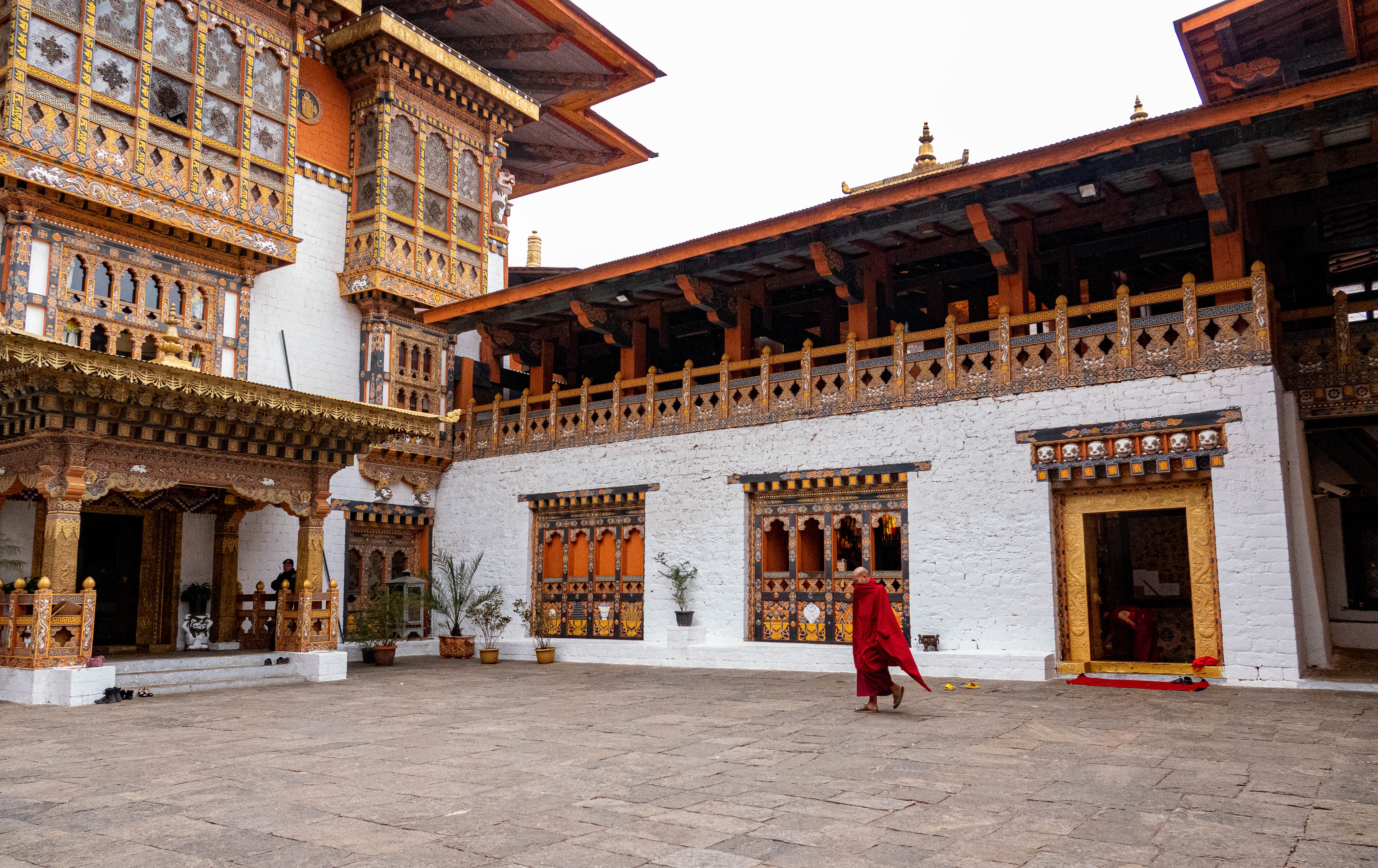
Punakha sits at the confluence of the Pho and Mo rivers(the male and female river according to our diver). As we negotiated the bend of the down hill from Dochula pass, the regal imposing whitewashed fortress -the Punakha Dongz stares proudly at you. Stunning. Sharing some views.

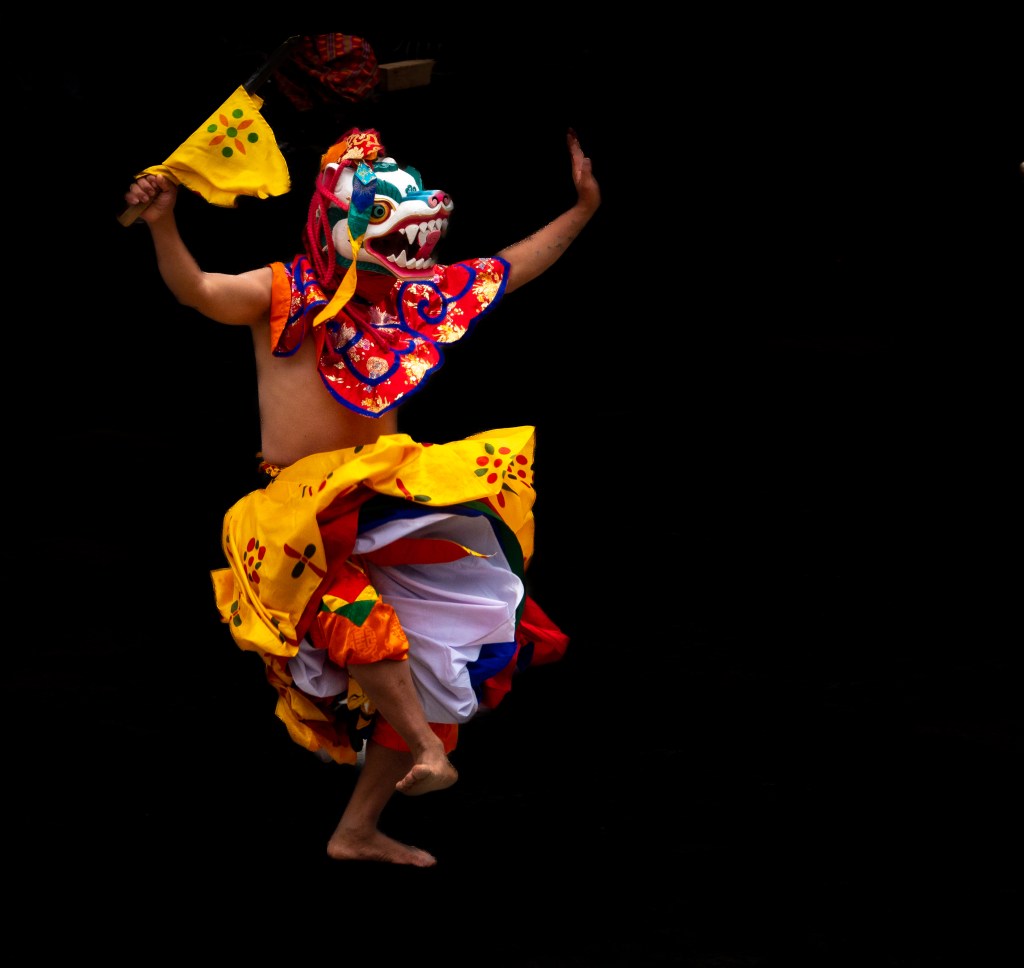
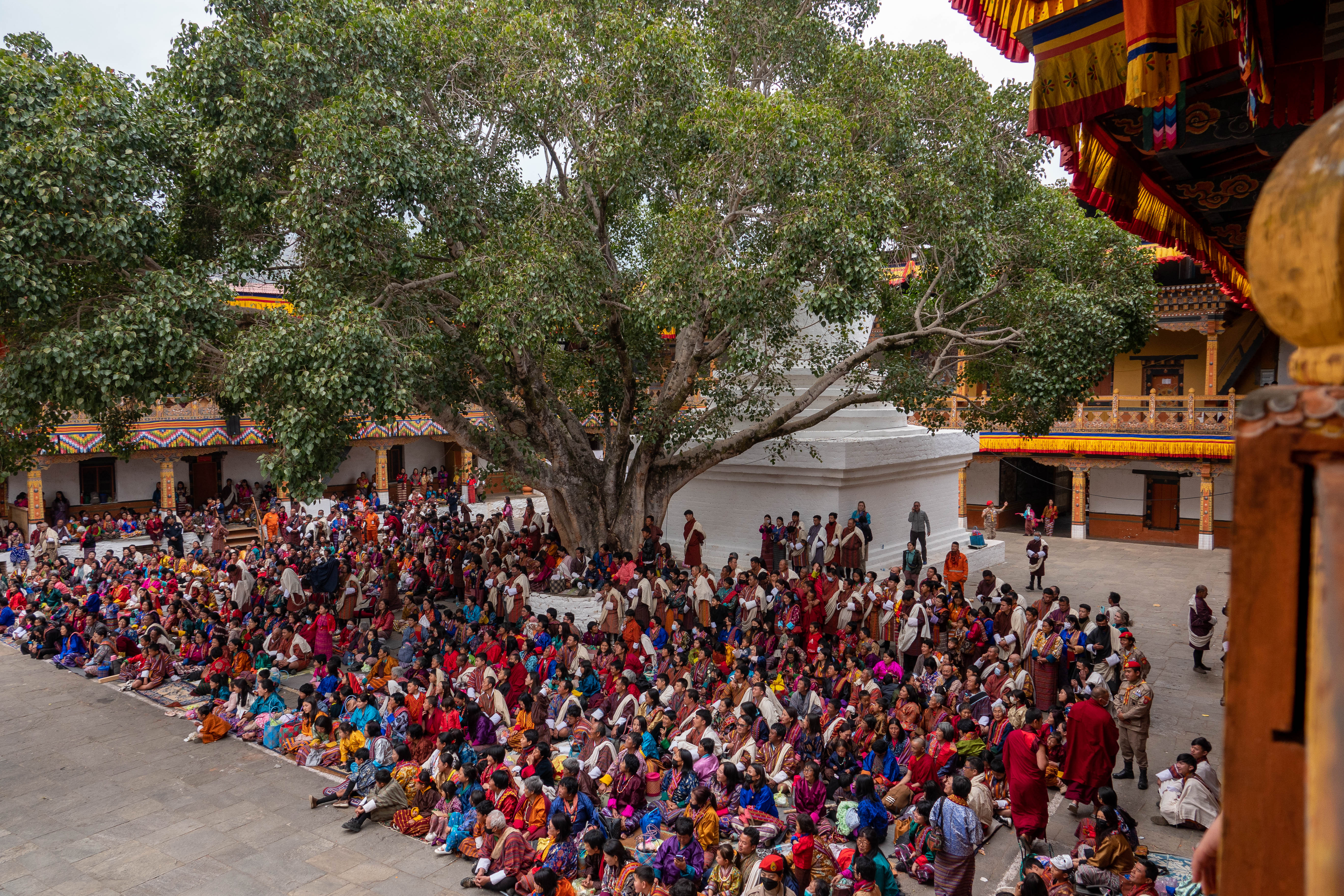
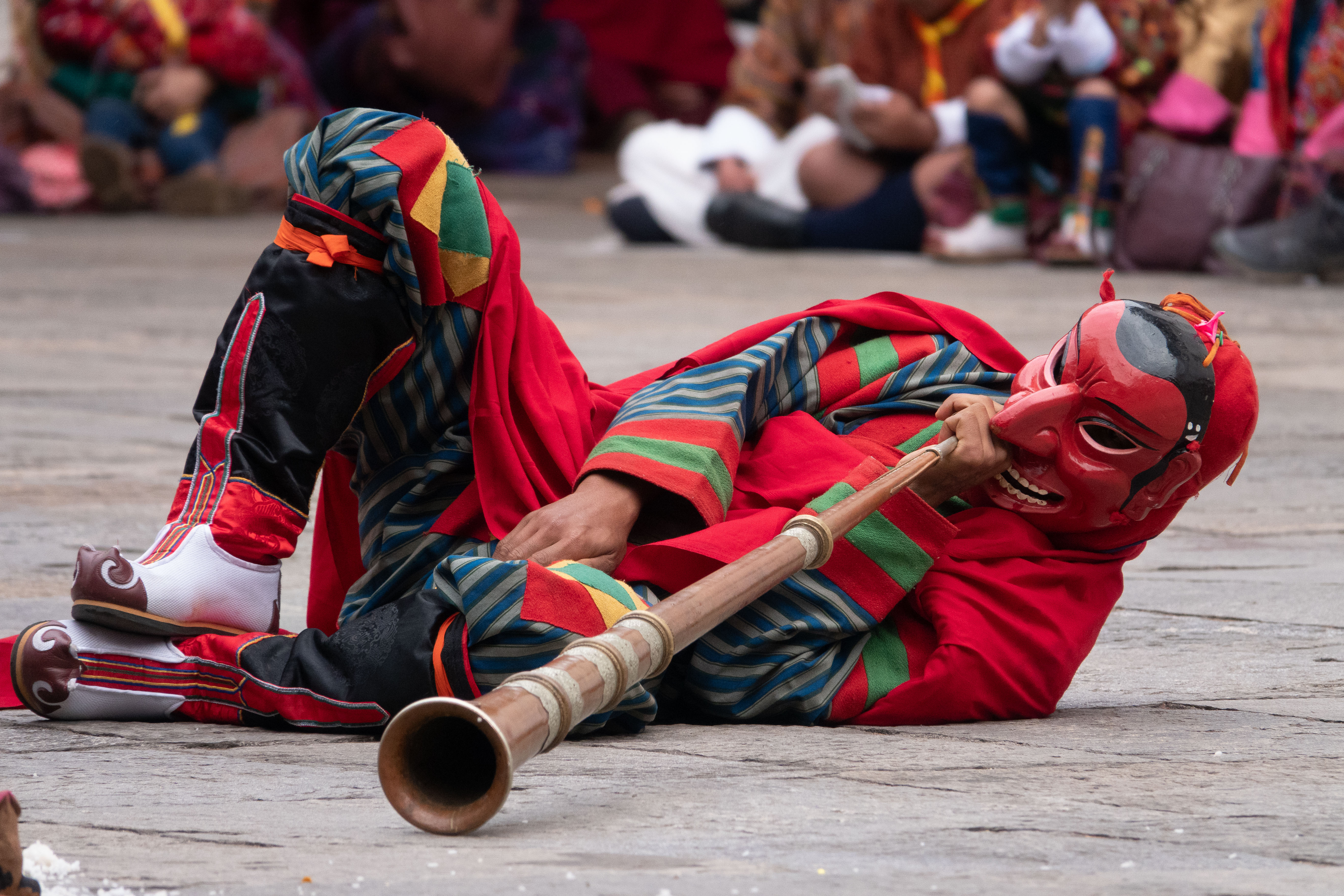
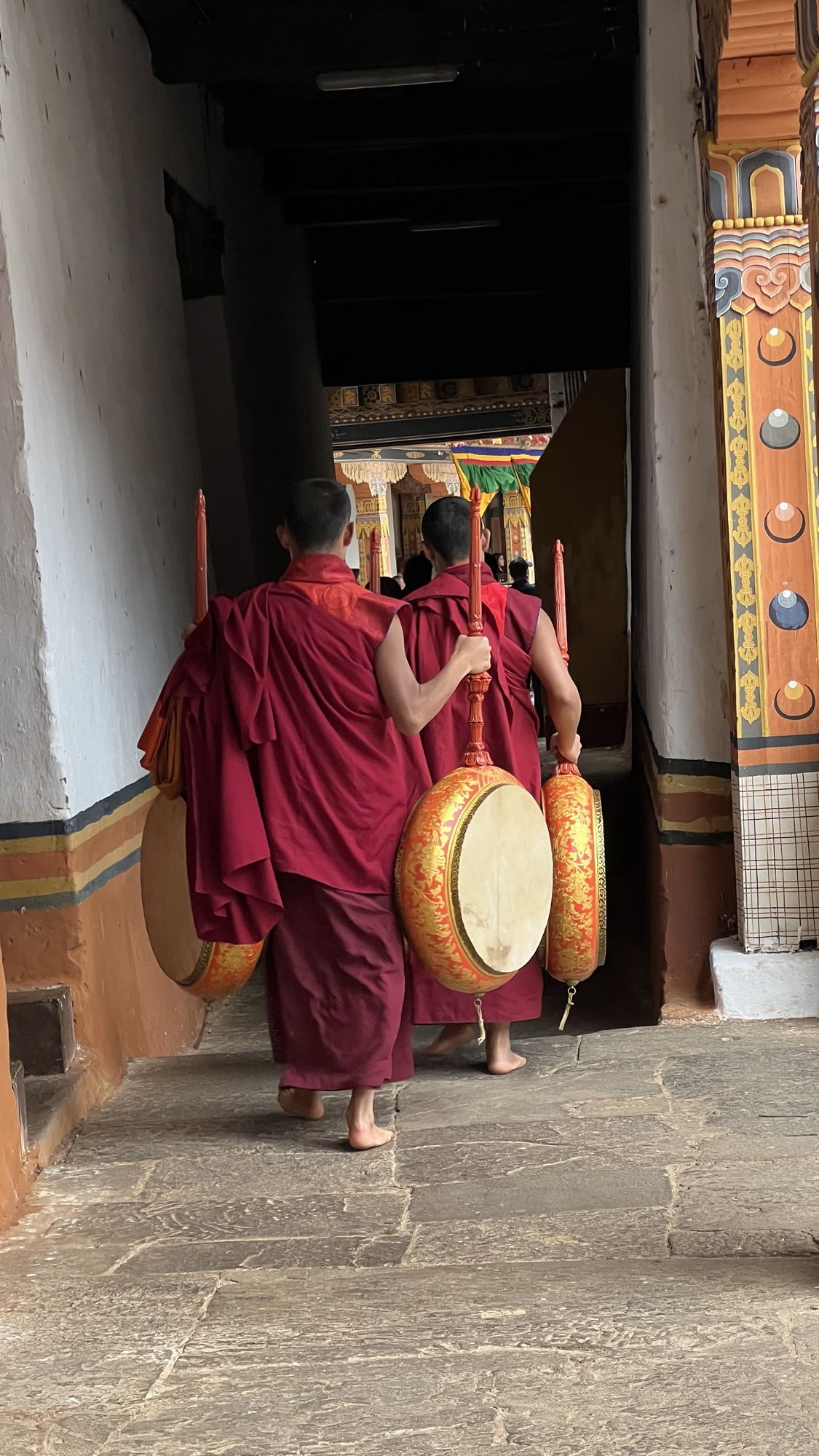
As Ram and Prasad chase the birds with a long zoom lens, my eyes get drawn to a riot of colour at the enterance to the magnificnet Dongz. The Punakha Tshechus in all its glory was on. Tshechus is a local festival where locals dress up in their finest and come to the Dongz for the day to witness colourful dance dramas in lavish costumes with a big tangkha painting of Guru Rimpoche unravelled on a tall Dongz wall.

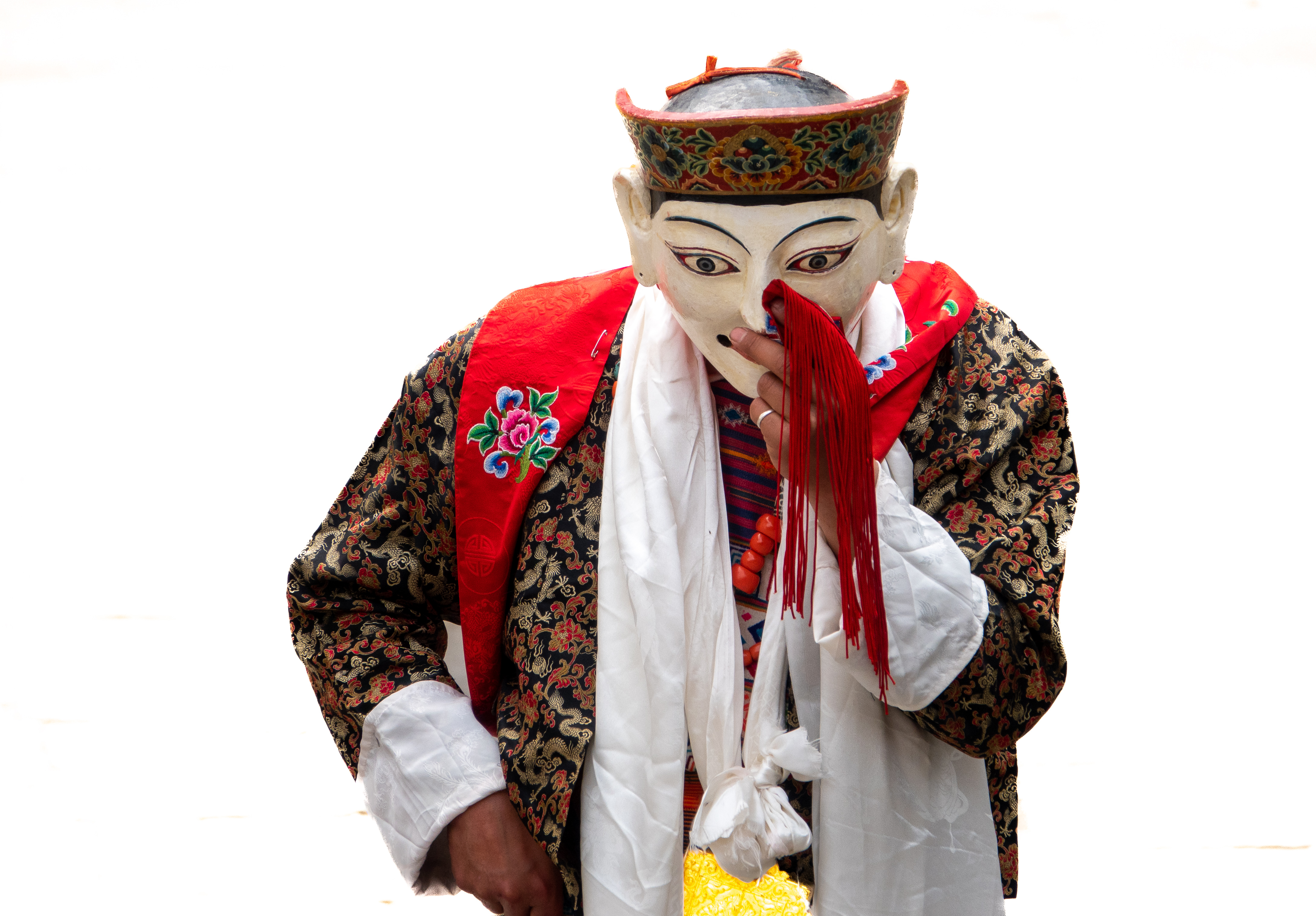
The day long open air event is a riot of clour and hosts masked dancers, monks dancing, jesters and there is a Tantric cham. One of the tantric visual aids for meditative practice is the mandala, which means “circle.” In Buddhism it is a device for leading the initiate deeper into the realization of the nature. The dancers are accompanied by monk musicians chanting and playing long horns, clarinets, cymbals, drums, and conch shells. The red-masked Atsara figure is a traditional comic character, his act combining wit and wisdom, humour and responsibility. His role is to help the audience to forget their worries with his jokes and to puncture their self-importance, hypocrisy and false propriety through his pranks.

The atmosphere was festive. The musedover the faces behind the masks, the monks who watched the world go by, the long barritone of the horn and a rather bored head monk was central to the fesitval. A scene to remember.

If the traditional male dress of Goh reminded me of the Scottish kilt, the Tshechus was akin to The Edinbugh Fringe!

An absolute do not miss in the trip to Bhutan!

I say this again, its people who make the differance. (A dollop of stunning scenery to this does’nt hurt).

Now for the photostory.

Dont worry, Be happy

Gross National Happiness (GNH) -heard of it? The term ‘Gross National Happiness’ was first coined by the fourth king of the Kingdom of Bhutan, King Jigme Singye Wangchuck  in the 1970s. GNH was more important than GDP he stated. This is achieved by incorporating 4 pilars into the constitution (Governance, cultural and environmental preservation and socioeconomic development). People are the happiest and country is green. Not a coincidence surely. Bhutan has weaved sustainability into its national identity. This is in the face of increasing tourism (which only opened in 1974, by the way) Most tourist pay a daily fee of $200 (SDF -Sustainable Developement Fee) which contributes to basic accomodation, a guide, internal non flight travel. A daily sustainable development fee of $65 is also included in the package. This goes towards funding education, healthcare, and poverty alleviation, along with the building of infrastructure to accommodate growing tourism. High value low volume tourism concept.

Children are taught hapiness in school. Time I caught up on these missed lessons.

Mindfulness city-heard of it?

6 weeks ago, the Monarch announced this riveting concept city to be created close to the Indian border. Gelephu-the mindfulness city. The masterplan shared features ribbonlike neighborhoods in the new City resembling paddy fields, cascading terraces from hills to valleys. The city’s density gradually increases from rural to urban areas, facilitating a smooth transition between different living environments. Shaped by waterways, Gelephu becomes a land of bridges and connect concepts of past and future. I read they house airports, meditative staircases, traditional Dzongs (monasteries) etc.

What an amazing future plan!!

Eye of the Tiger

For the few who have googled Bhutan, the first and lasting image of this spectacular Monastery perched on the edge of a 3120m vertical cliff called the Tiger’s Nest would have flashed up. Paro Taktsang monastery is a cliffside Buddhist temple in the upper Paro Valley in Bhutan. Accessible only by foot, the site is one of 13 small “tiger lairs” where eighth-century Buddhist master Padmasambhava, also known as Guru Rinpoche, is said to have meditated. It gets its name because he is said to have made his way here on a flying Tiger. He finds a cave on the sheer rock face and meditates for 3 years, 3days, 3hrs and 3 mins. From the vantage of a wooden bridge, the valley unfolds — golden light casts a glow on tree-covered mountains and sacred peaks. Prayer flags with tattered ends that have been eaten by a hungry wind are hung precariously over a drop-down dead gorge. We trudge skyward with locals and claret-robed monks and enter the cave.  

“We call this the wish-fulfilling temple,”

Fully soul filling it was indeed!

My blog check listFood. The locals clearly believe that meal without fiery chilli is unworthy. If you agree (as did Deepika Padukone), you will be in heaven. Even before the praying monks!! The country’s national dish -Ema Datsi is strong “Dole” (a red chilli) , local cow cheese. Replace chilli with crowd pleaser potato-it becomes kewa datsi. Ezay and thingey- are side kick chutneys and a must to taste . Best with hot momos. I watched and learnt our homestay hostess Lhakpa, make the spread and realised the locals like simple easy assembly cook (not exactly Avadhi dum biryani). Suju, the salty butter tea followed from Ladhak her and was make of yak lassi- or dare I say- “yuk” milk! These were the best around the Bukhari (a central heating Aga like room heater) in Gangtey village. 3 Michelin stars straight for ambience.

Try out the “Dotsho” the hot stone bath with some mugworts thrown in. Try it at Punakha Aman resort if the pocket is feeling heavy!

And a “dolma” paan if you want red lips and teeth stains via a legal stimulant to give you the spins. For me, the altitude and company was enough!

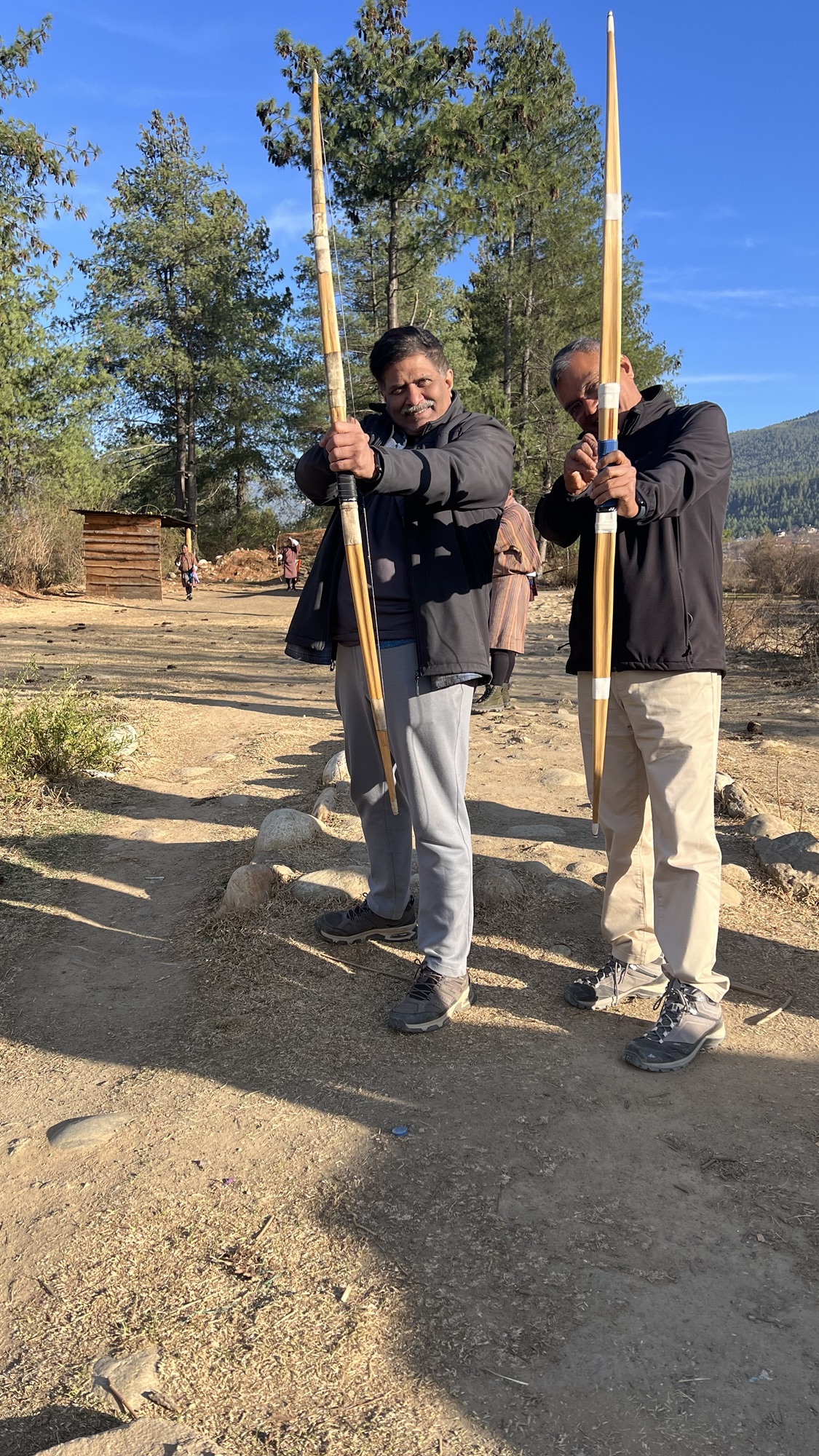
And, dont miss a hand at Archery-the national sport!

Om-Mani-Padma-Hum

The chant to enlightenement. Two portals- the flag and wheel!

Flags everywhere

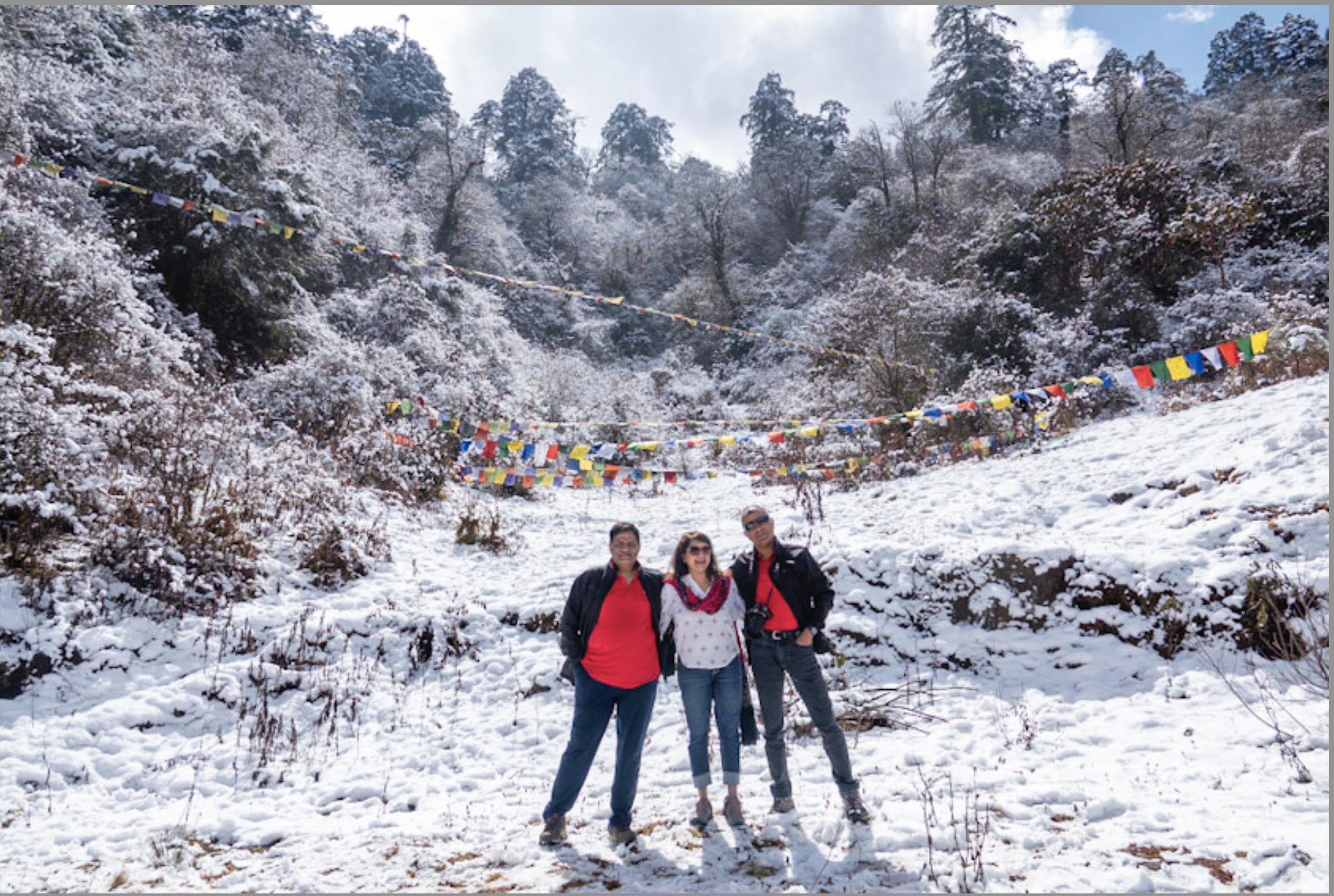
The prayer flags of Bhutan casts the fluttering magic spell everywhere. Ubiqutous. The flags come in basic colours, have deeply religious mantras inscribed on them. They are tied in spots where the wind force is the best. Each flap, releases the mantra into air, each flutter multiplies it to the heaven. The five colours represent the five basic elements of nature: earth, fire, water, air and sky. They can also represent the five basic emotions: joy, fear, sadness, disgust and anger. A positive mindset and pure intention sets our Karma and this is carried by wind above. The flags had me in Ladhak but they mesmerismed my soul constantly in Bhutan. The tall verticals (Dachog), the reems or rows (Dhars), the white verticals (Manidhar) signify various senitments and as they fade, it is beleived the prayers have been despacthed and accepted.

Wheels in motion

Again seen everywhere. Spiritually rivetting.

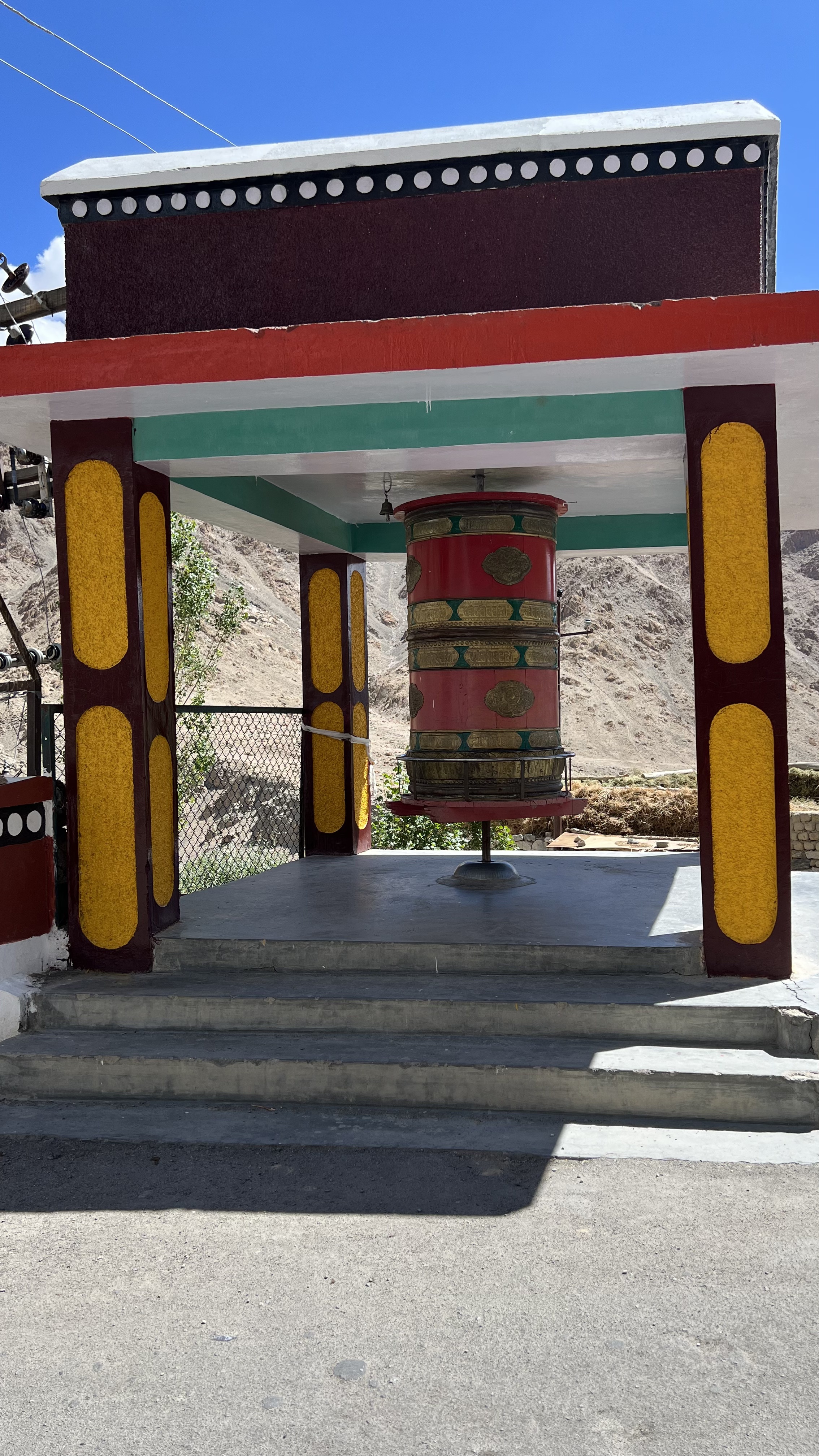
Buddhist texts speak of “turning the wheel of dharma” which led to the concept of the prayer wheel, a mechanical device that consists of an embossed hollow cylinder and a rod that runs through its height. Inside the rod is a tightly rolled-up scroll of mantras. 

Spinning the prayer wheel is equivalent to reciting mantras. Each spin of the wheel is as effective as reciting the mantras orally, multiplied by the number of times the mantra is printed on the scroll. A common souvineir, portable hand help wheel (Mani) , a wind wheel in the centre of Paro, a water wheel .. they all turn clockwise . Turn it once in your life and perhaps it will cleanse your karmas and create a right rebirth! Believe in Bhutan!

Bhutan, Believe

A tagline that speaks the unspoken.

Bhutan is at the cusp. There may not be a Starbucks hiding behind the Wangchuk homestay yet, but certainly the Google impact on balance between tradition and modernity is happening as we speak. Will GNH become complementary to GDP and macro economic reforms? What happens when the youth of Bhutan travel west and return home a generation later? Does Bhutan not have to keep pace with the fast changing world? Will the Khira and Gho be in garment bags next to torn jeans and T shirts in the Bhutanese cupboard? What about the brain drain of the youth to Australia? I could snse a gaurded approach to embrace the big bad West. The locals steered away form small talk about “western infulenece” that might complicate the Bhutanese Tourism Board narrative of the only Shangrila status. Is it going to be the last “Shangri La standing”?

Well, as Buddha says You can only show the way..

Hope I have inspired you to try this tonic for the soul travel one day! Dont leave it till too late, Starbucks may beat you to it!

Thank you for reading, Kardin Cheyla as the locals say!

Burnt Orange

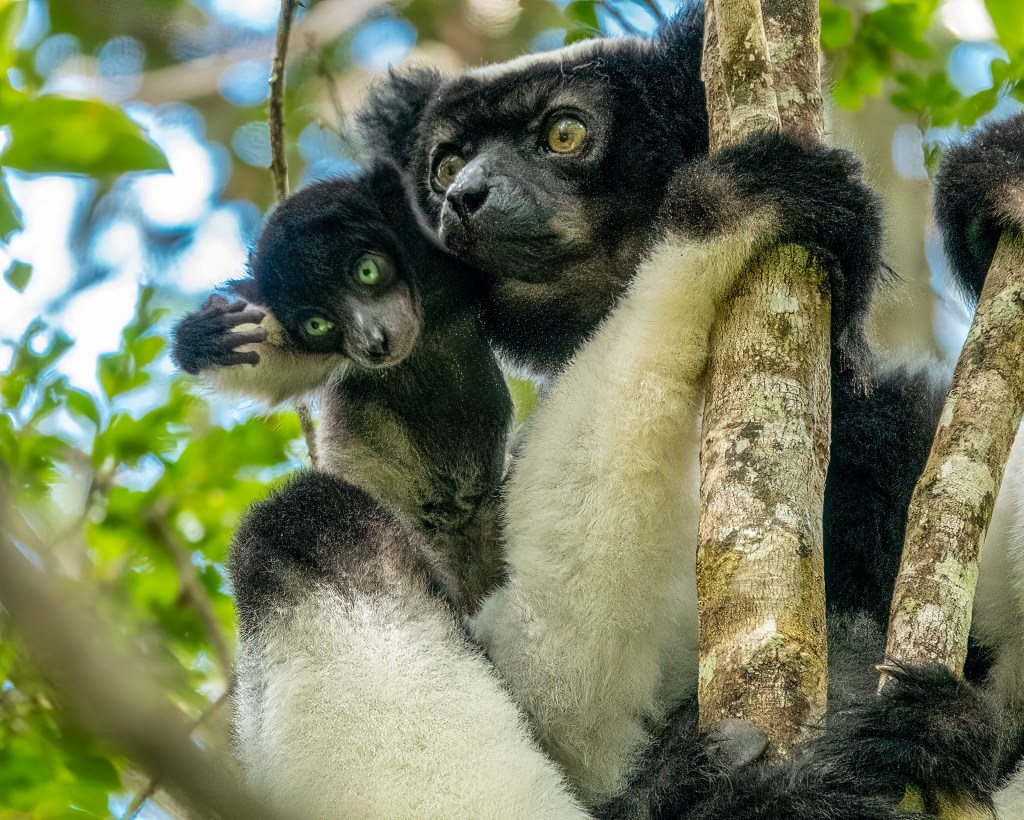
Indri indri, can’t take your eyes off the pair!

Summer 2023

Destination Madagascar

Like every other tourist, I went looking for lemurs. I came back fascinated by the Malagasy people and more taken by the intensely fertile burnt orange soil of this almost extra terrestrial piece of mother earth. In an artist palatte, the shade would be described as “burnt sienna”. An intense orange sun in a bluer than blue sky above and a vivid burnt orange soil to match below. A match, making this heaven!

Madagascar. A place which screamed of “Utter otherness”(to coin a phrase)! Wikipedia will tell you that it is the 4th largest island, 250km off the coast of East Africa in the Indian Ocean separated from Africa almost 100 million years ago. It is home to more than 200,000 species of fauna and flora, including 11,000 endemic plant species, 420 different kinds of endemic reptiles making it a biodiverse hotspot.

What it will not tell you is that it is a bit of French, a bit of Afrikans, a bit of Borneo, a lot of unique madness and very wild and very poor! Evolution towards oblivion!

It is all about optics!

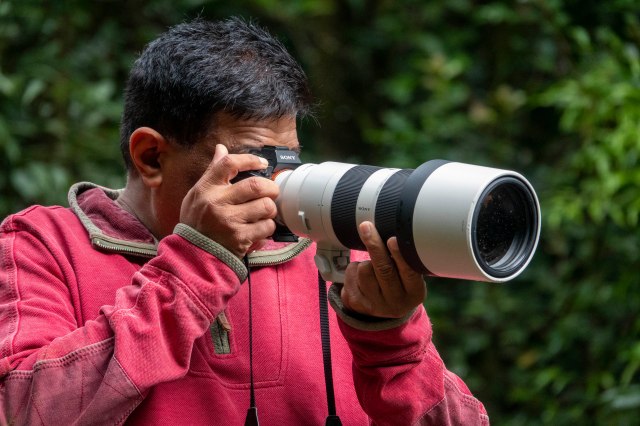
Come, let me show you Madagascar through Ram’s telescopic camera eyes and my own reading glasses adorned eyes!

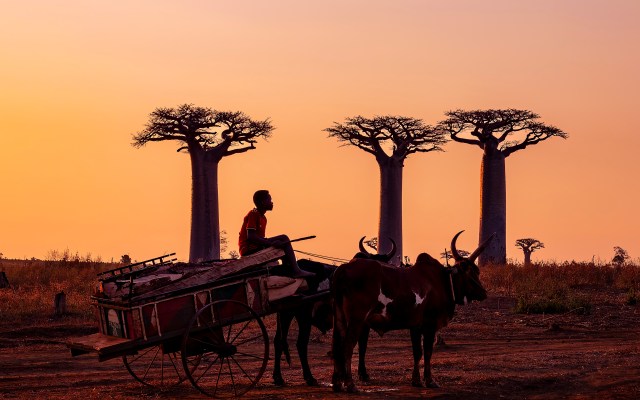
Imagine a cloud or great melee of russet brown dust, add a Cebu (bullock) cart and a dark skinned innocent Malagasy lad atop. A glorious sun. This would be the setting.

The lad, the Cebu cart, the colour orange

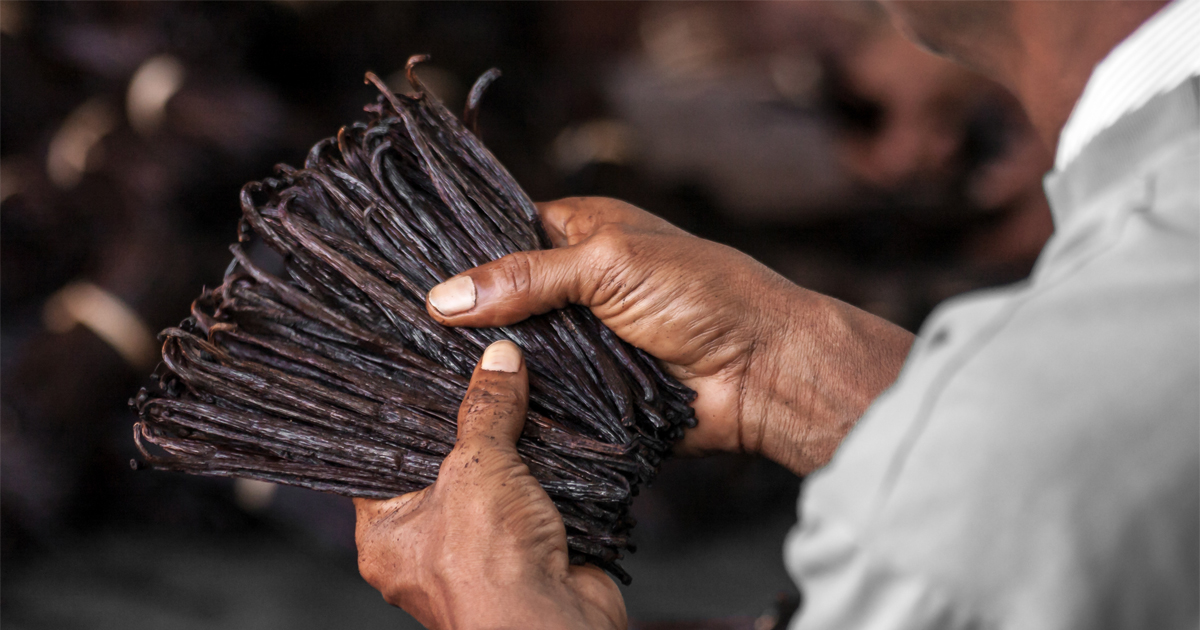
The scenes would be Michelin Madagascar(the terrain is like unique courses by a master chef)+ the Malagasy people (the centre point)+ Faddy (the unusual culture) + Poverty and Corruption (+ the sad reality of Madagascar) + the Madagascar Vanilla!

Michelin Madagascar

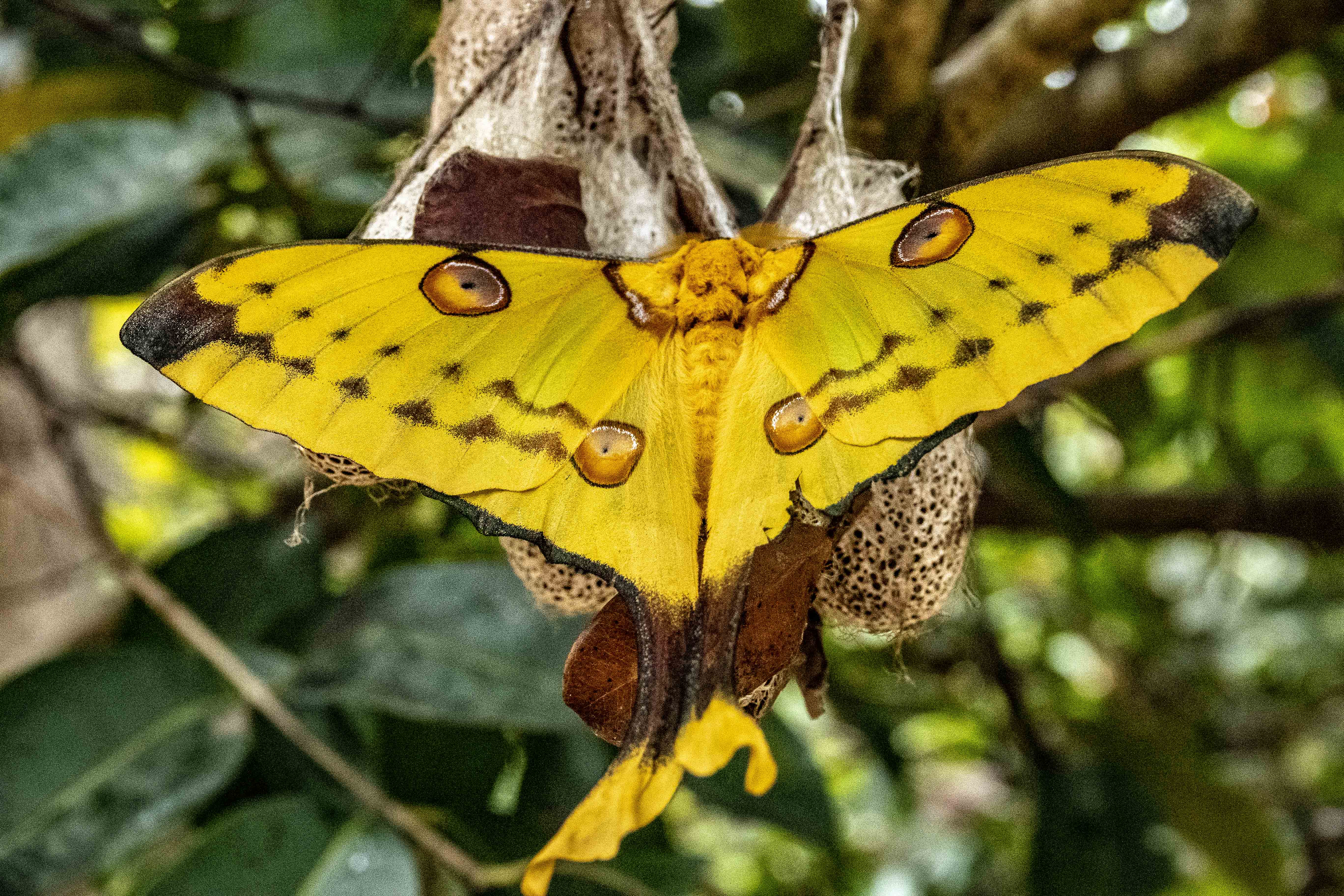
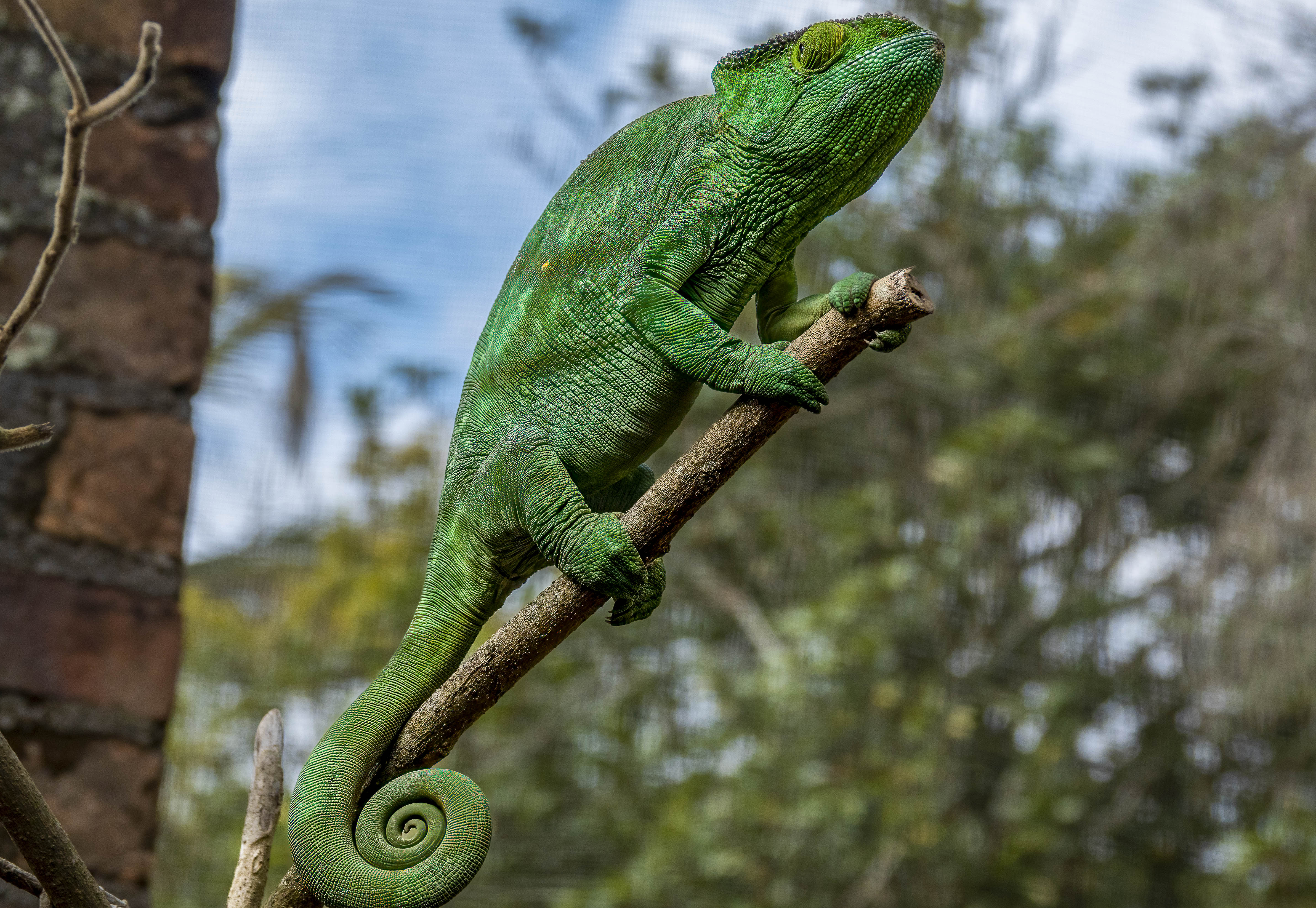
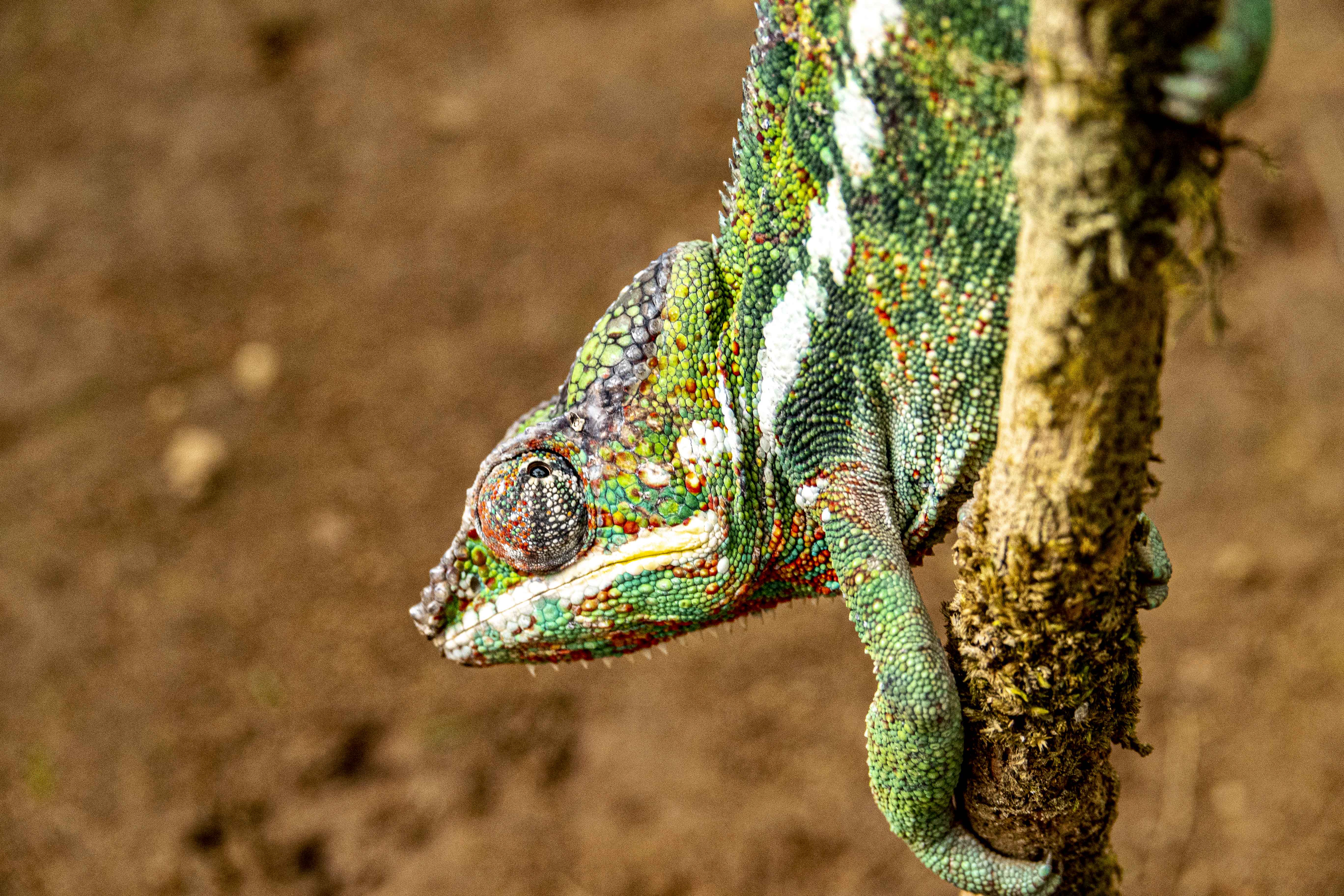
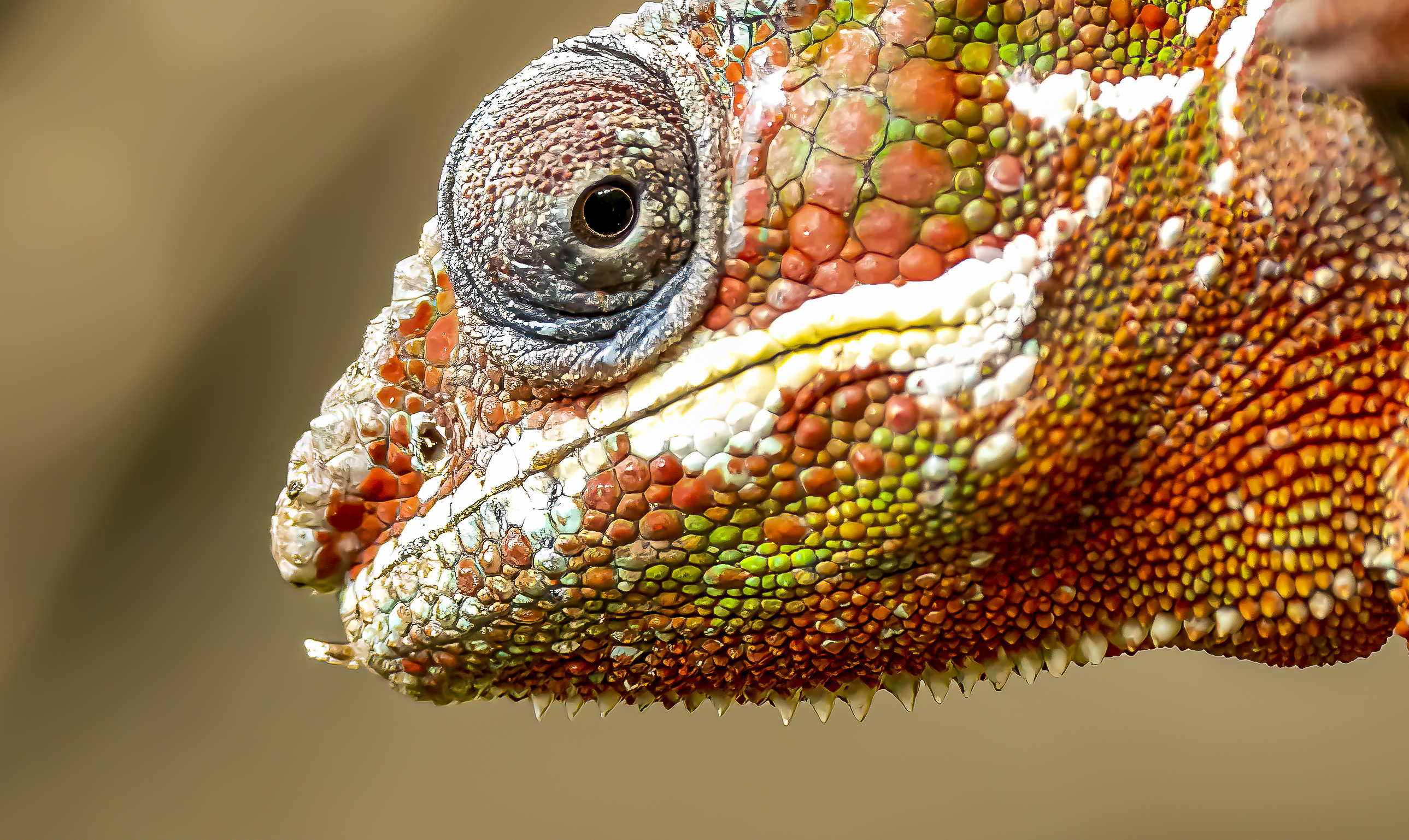
A restaurant is usually awarded a Michelin star based on the quality of the ingredients, the harmony of flavours, the mastery of technique and it has to have a personality! The 200,000 plus species of flora and fauna, neon coloured chameleons, the lemurs, the sacred Baobab trees, the long leaf orchids certainly are a few top quality unique ingredients. Not to forget the gremlin-like aye-ayes and satanic leaf-tailed geckos, indri indris, sifakas, fossas. The harmony of the dust and people lends personality to this biodiverse island. Ultimatley, what you see and hear in Madagascar, you only can see and hear in Madagascar.

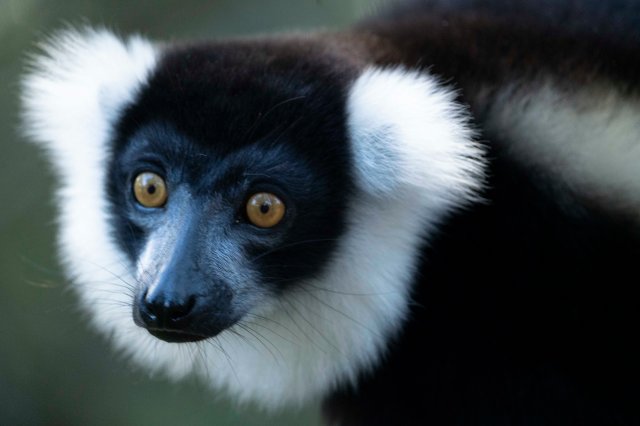
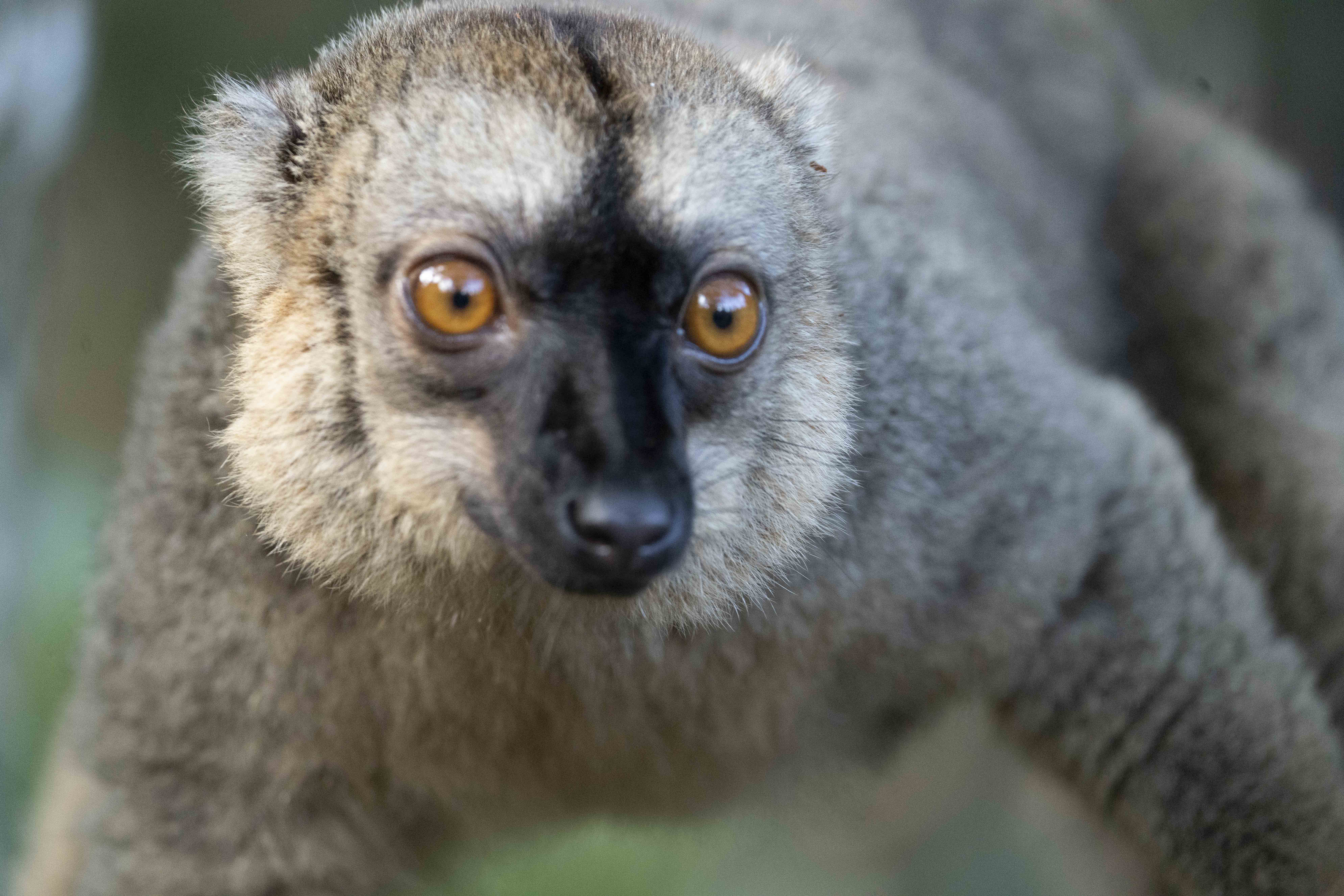
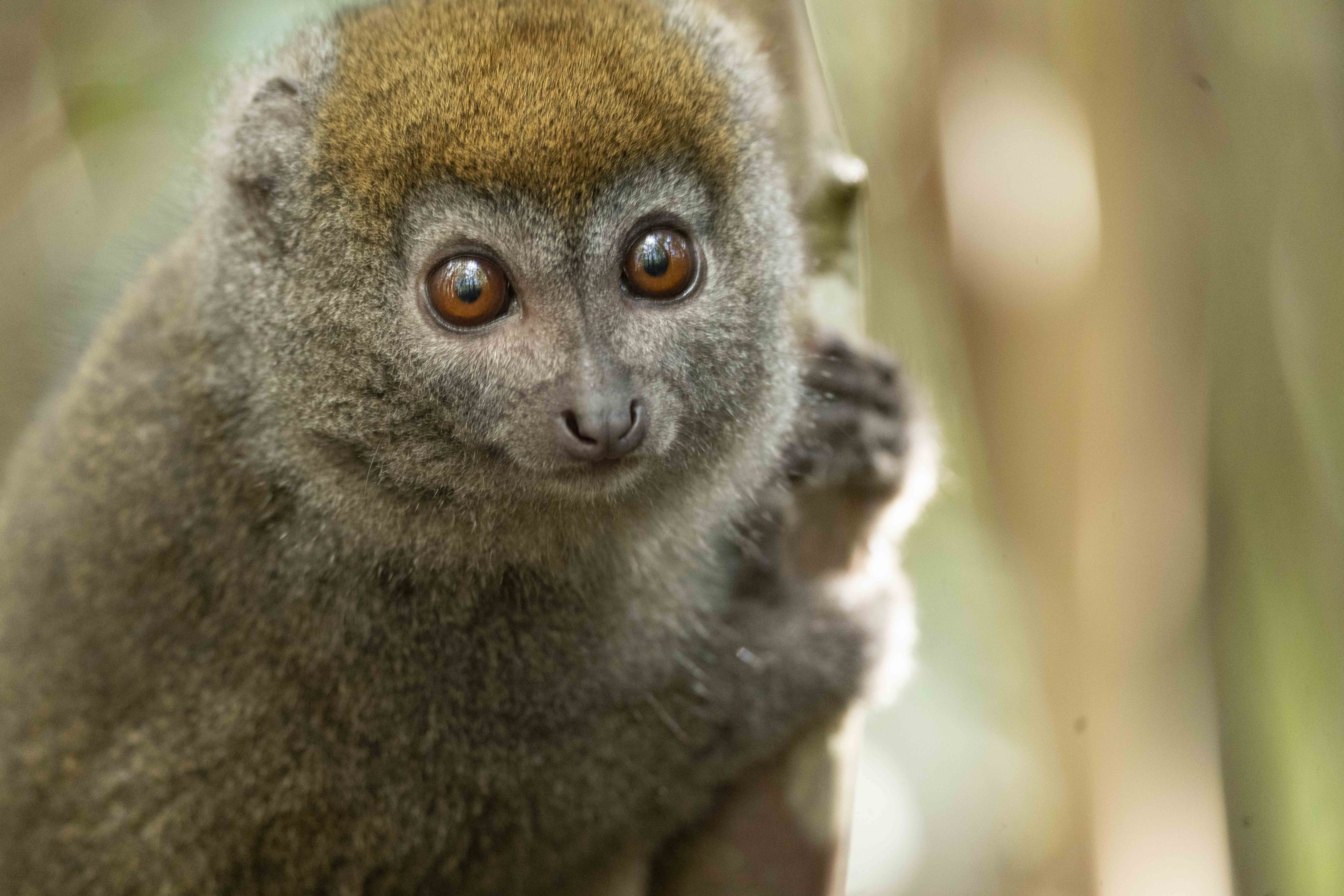
Legendary lemur

The adorable Lemurs are what old grand masters are to an art critic. They are from pre monkey primate times and their brains are capable of processing some complex information. They have a steroscopic vision and nimble grasp. Now, I simply have to mention their awful vocal cords!

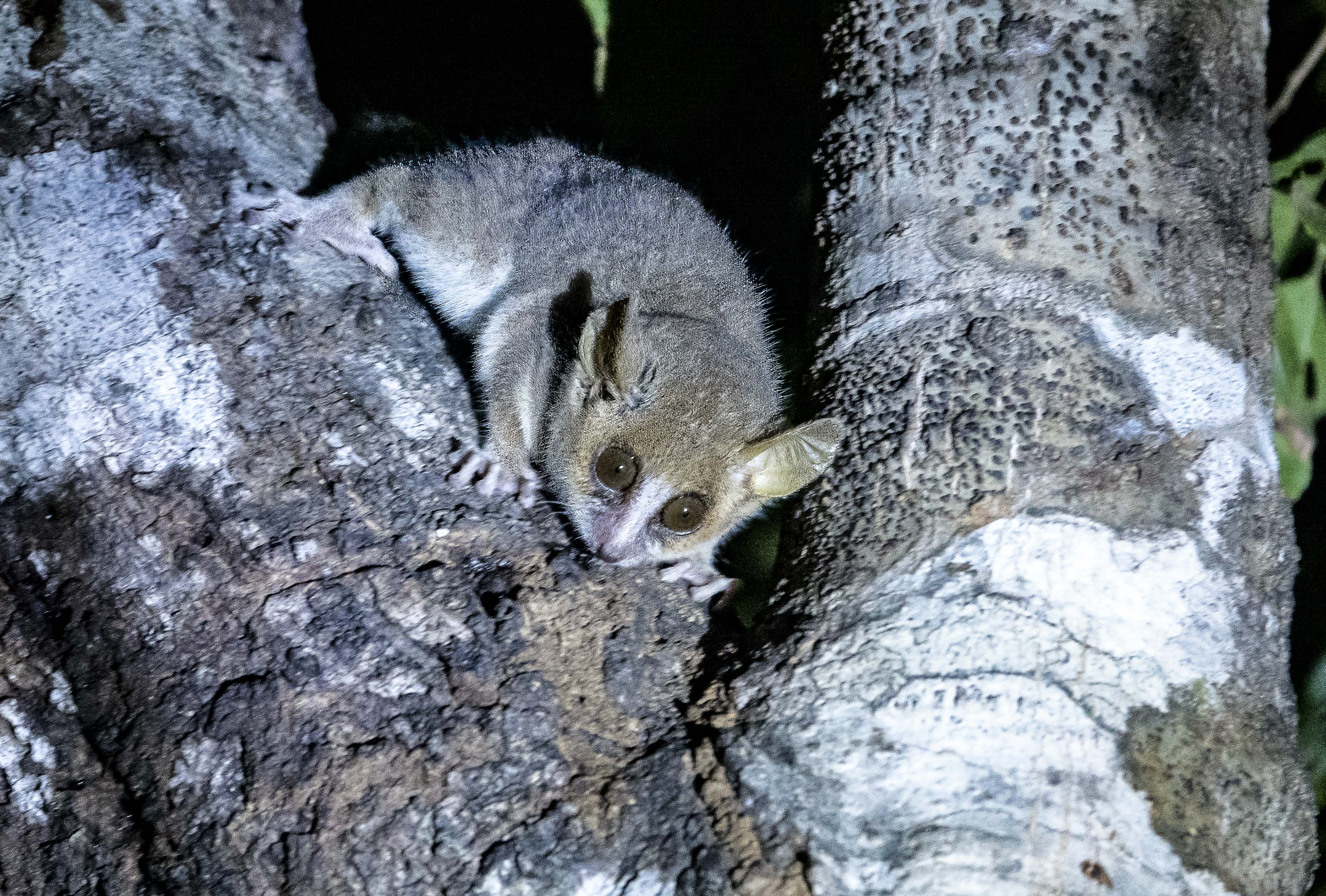
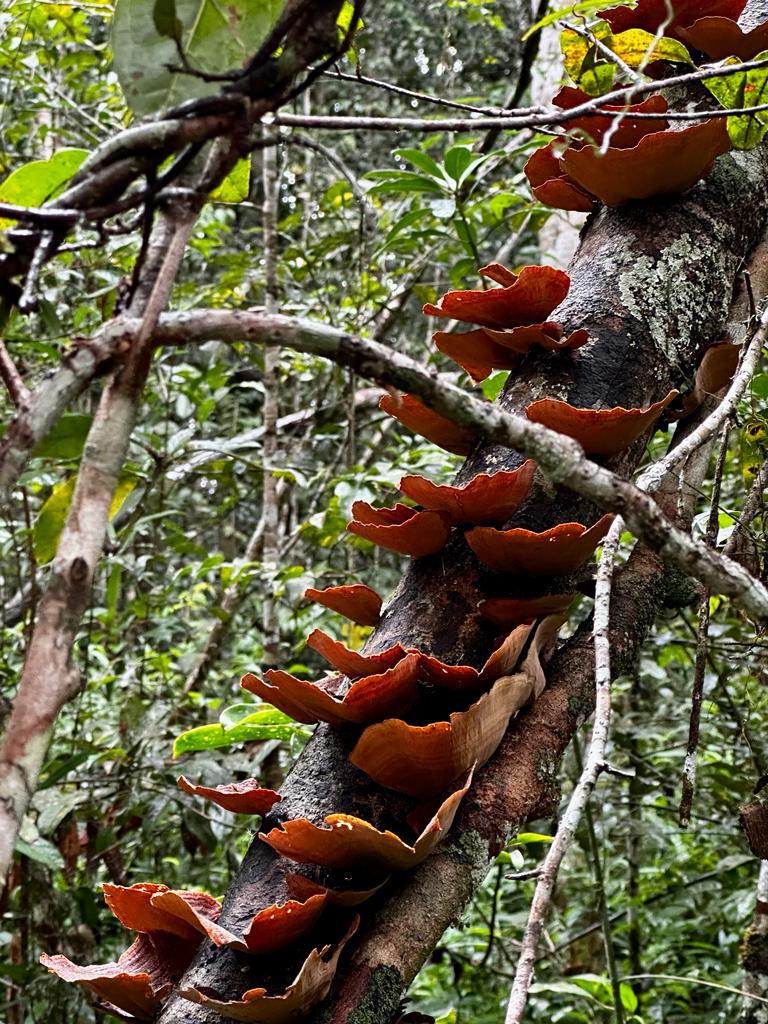
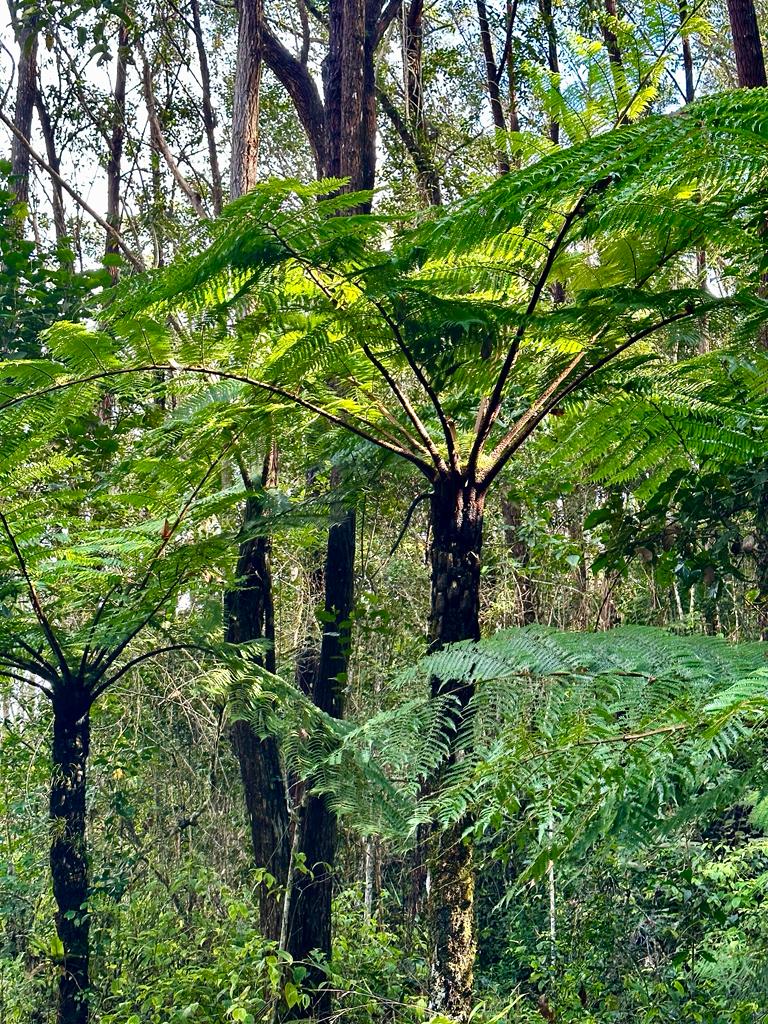
We walked the wet rainforest in Andisebe by day and night and the dry beige forests of Kirindy under the sun and moon too. The giant fronds of the ferns and cycas, the carnivorous plants, Madagascar jasmines and the large tree orchids grew wild and dense.

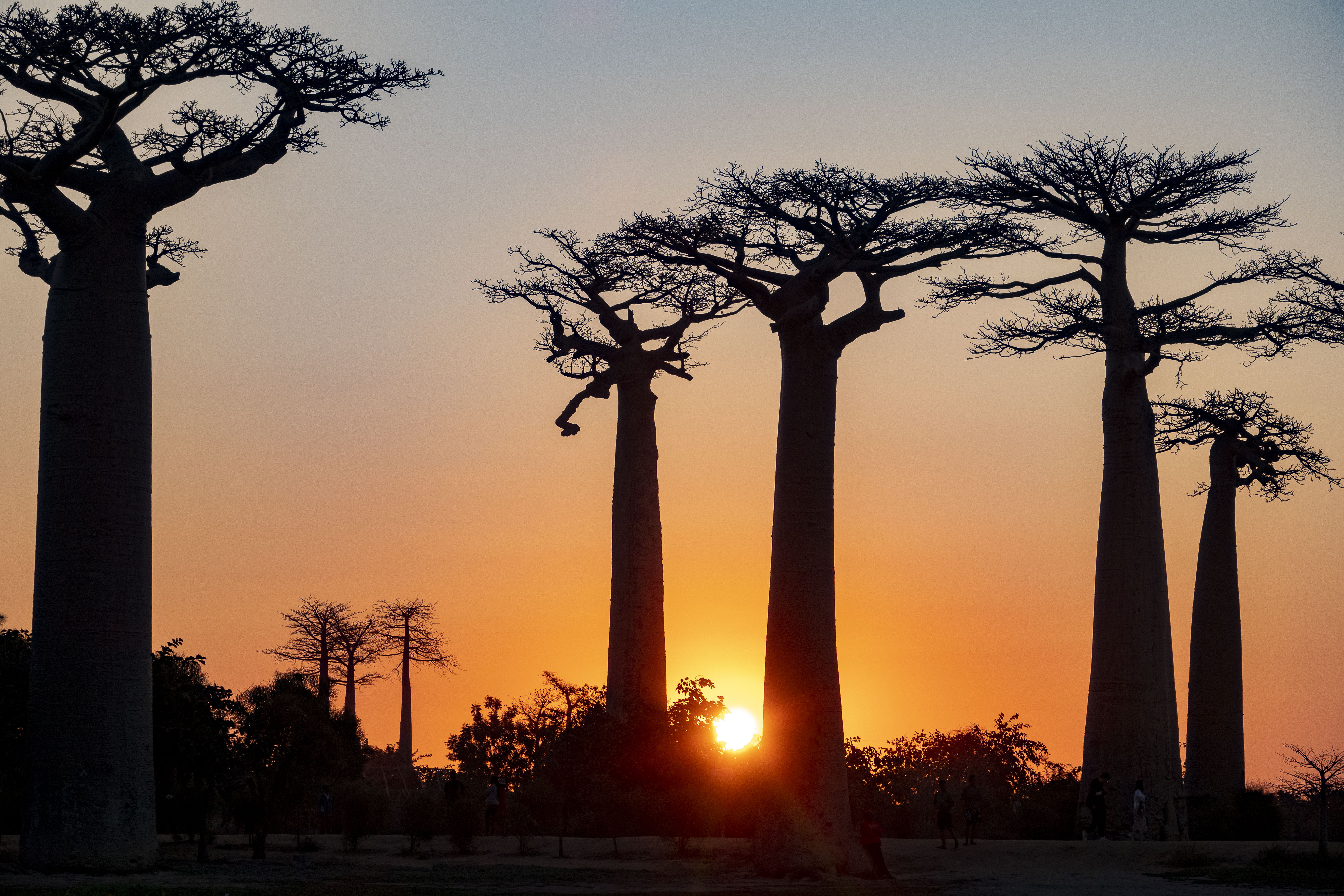
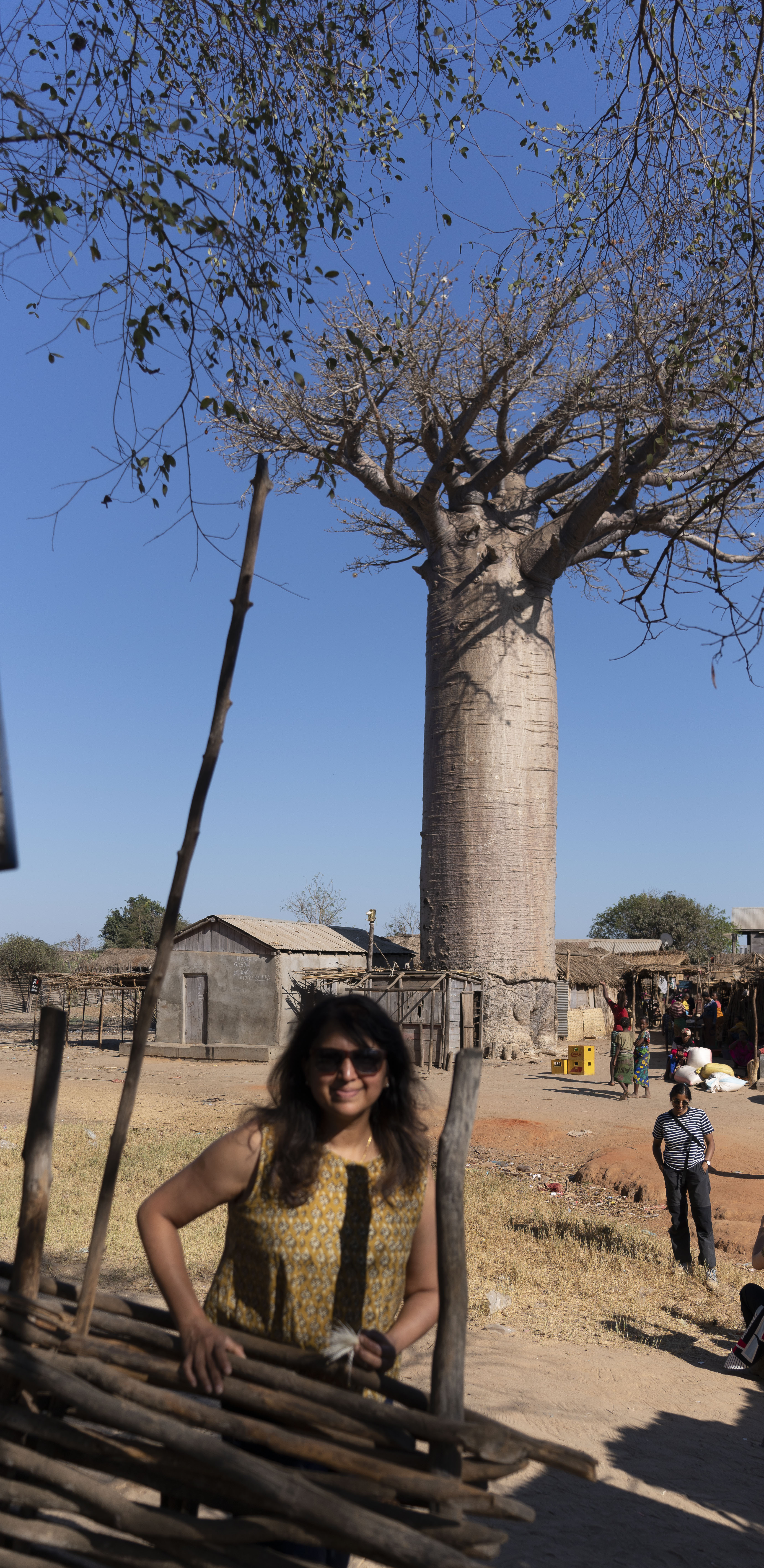
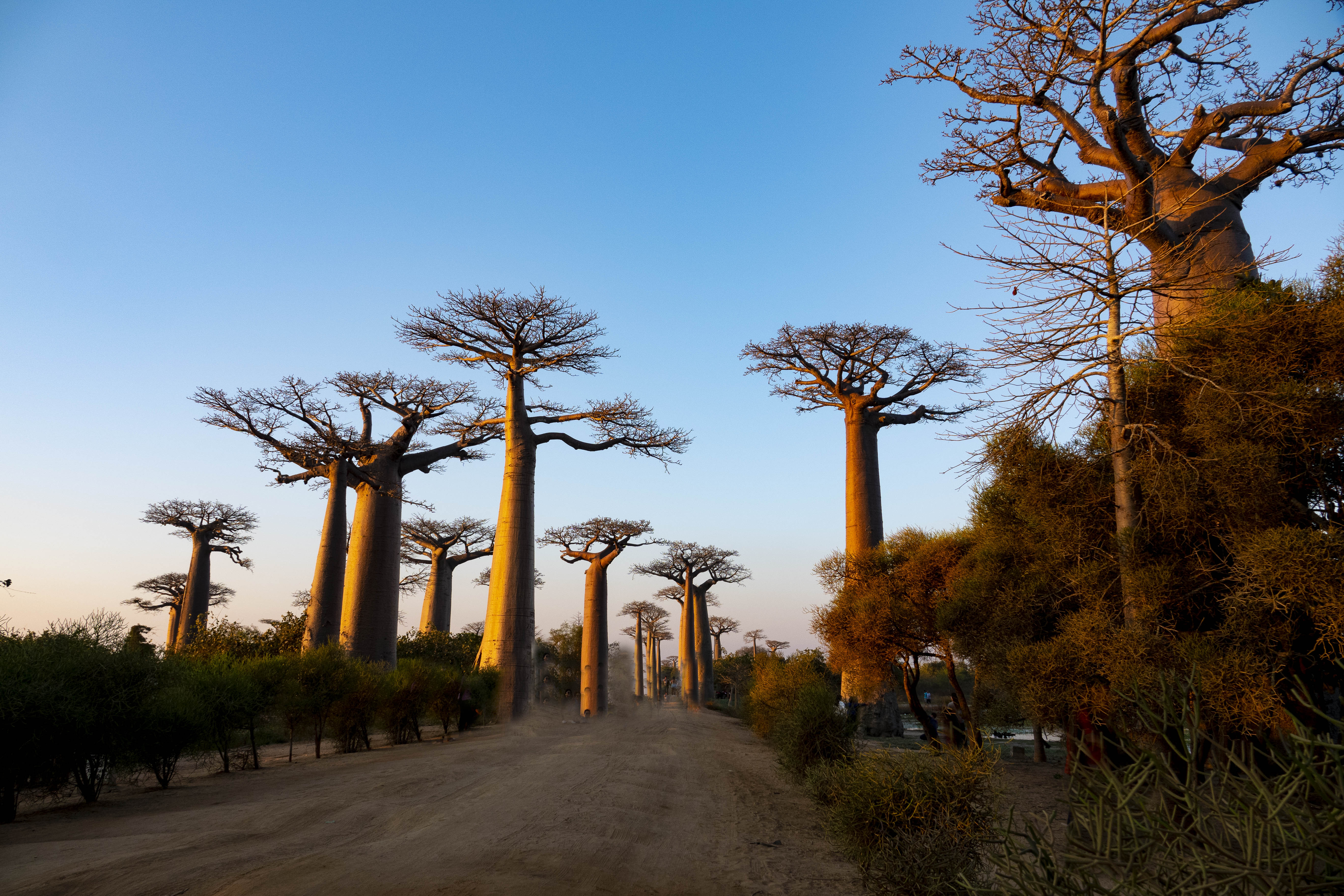
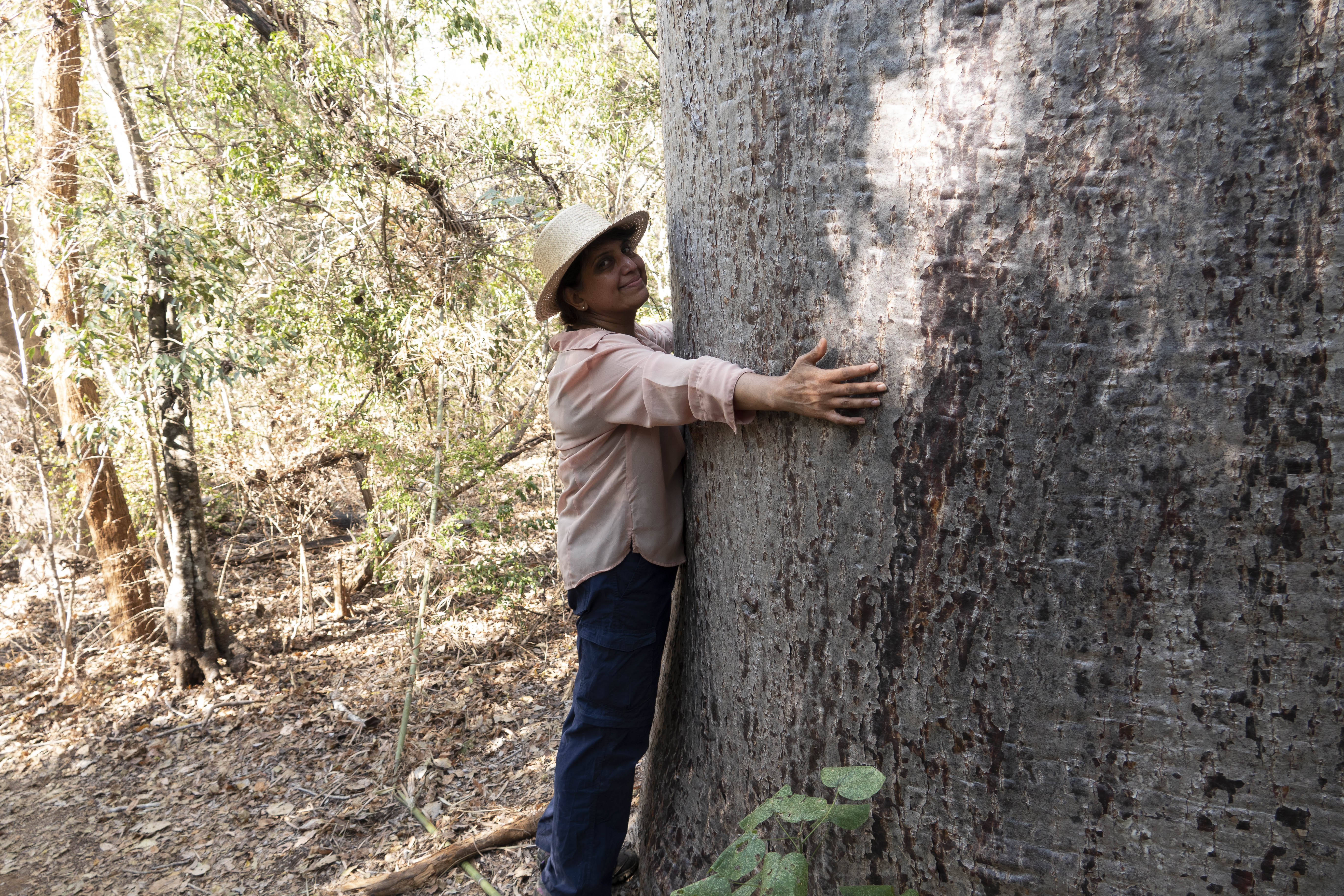
The amazing Baobab trees in Alley de Baobab was everything I had imagined and mega much more! In reality, it is actually totally gaunt and awkward unlike a stunning autumn acer. It is larger than life or a bit like what dinosaurs are to animal kingdom. In fact, it looks like the big tree was up rooted and placed upside down as the branches are leafless. The bark is harsh, spiky and this mega succulent cannot be easily destroyed even by a bull dozer. The Afrikan sun did total justice to the magnificence and our cameras just did not stop the clicking noises till the sun completely set. Capturing the magnum opus of this larger than evolution tree at night with the milky way was a different challenge!

The photographs of the this world apart clearly demonstrates that Madagascar has more than a Michelin personality . In fact, they have custom made their evolution path. It is like Noah’s Ark tipped a few odd looking fusion creatures in the fossil era into this island called ‘Mad’agascar into the Indian Ocean. This land is truly Michelin! Just do not expect Michelin restruants, particularly if you are vegetarian!!!!

Malagasy people

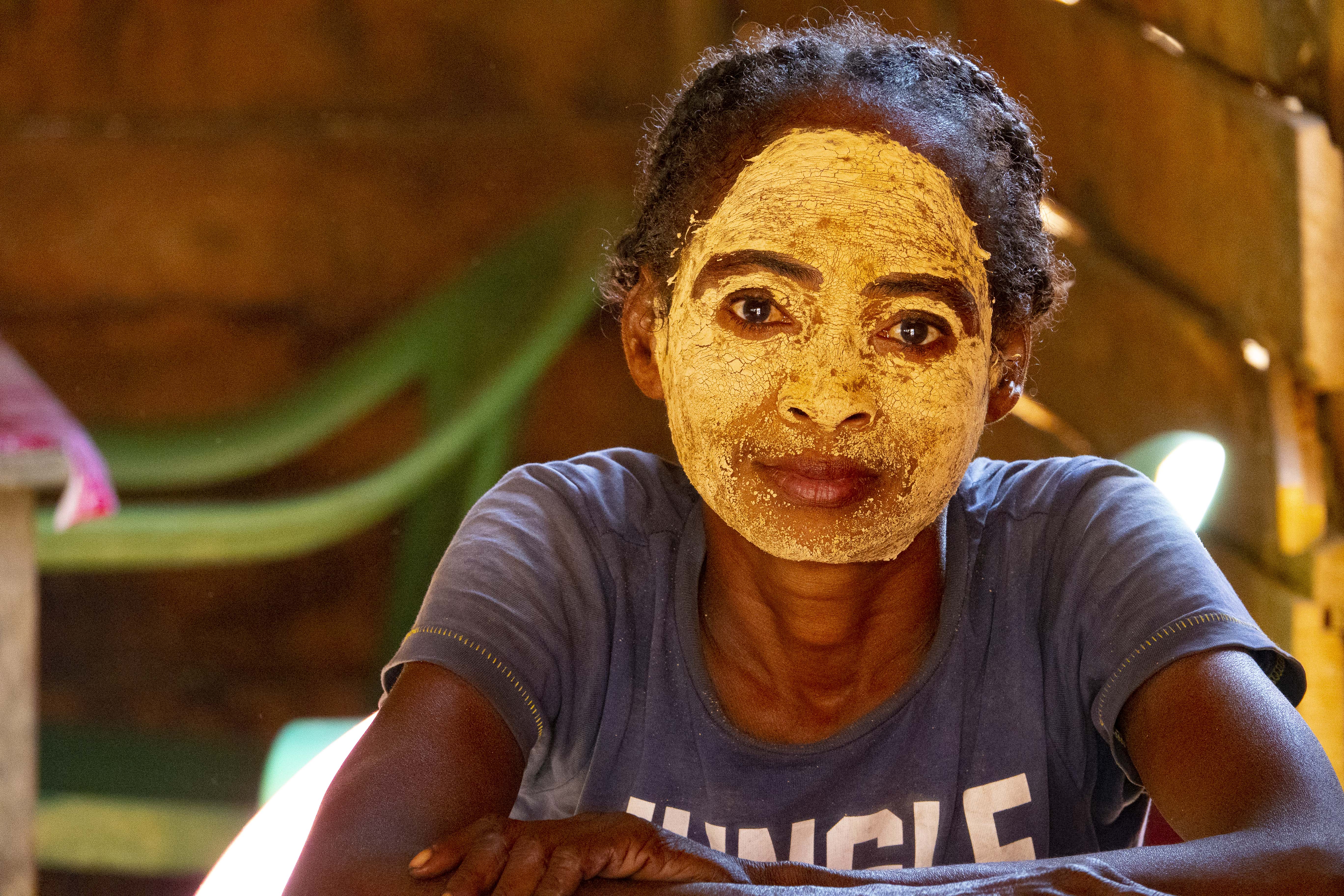
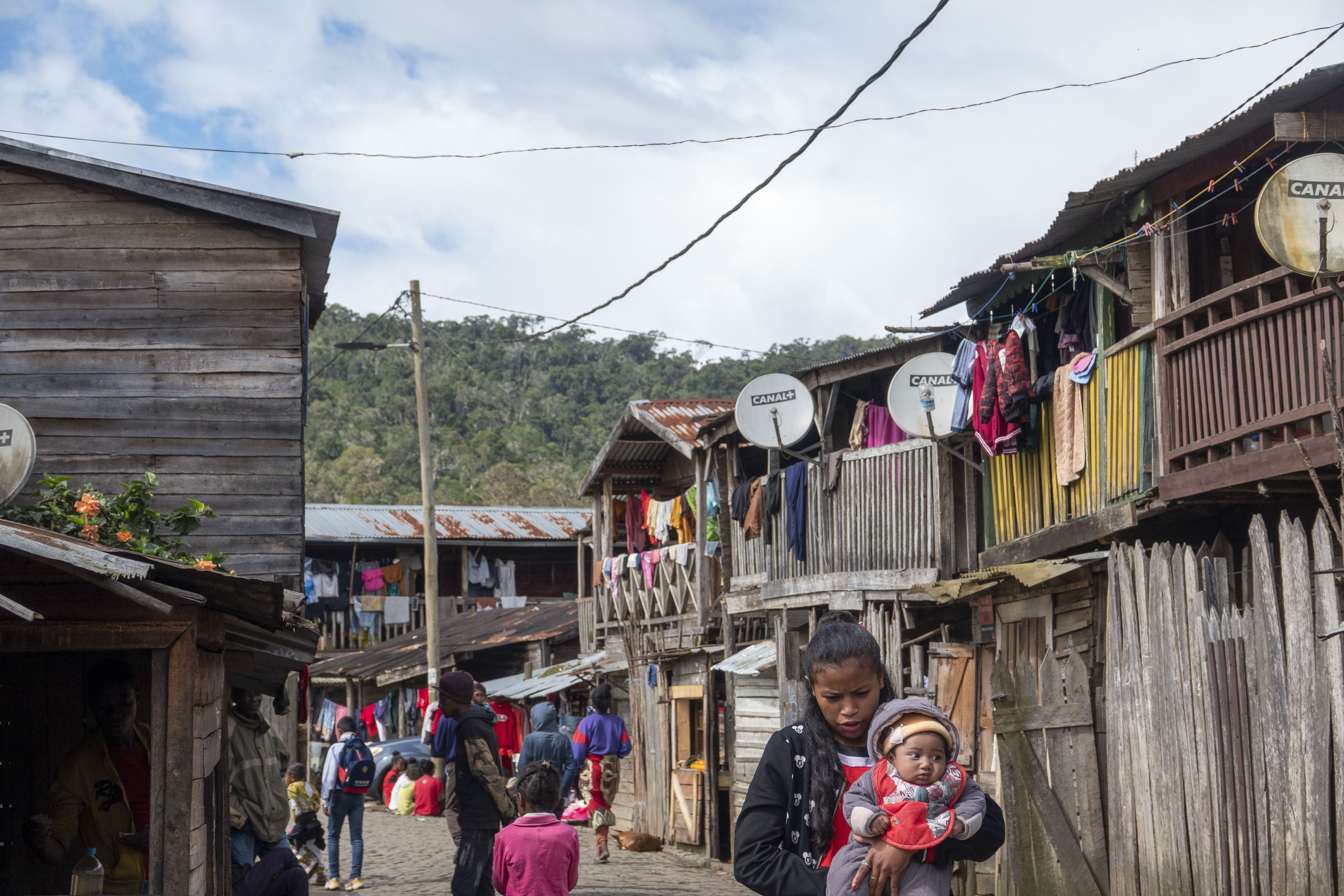
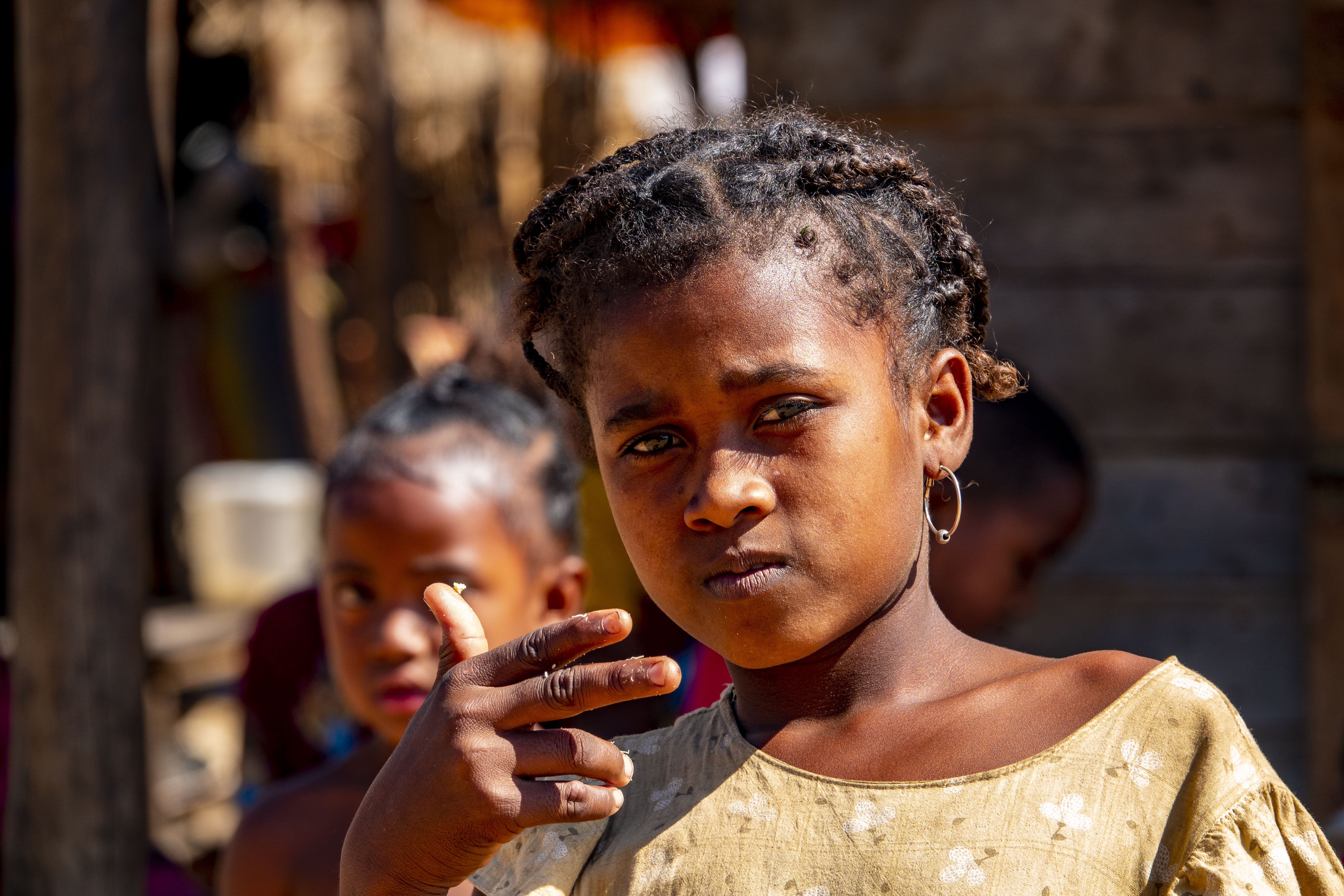
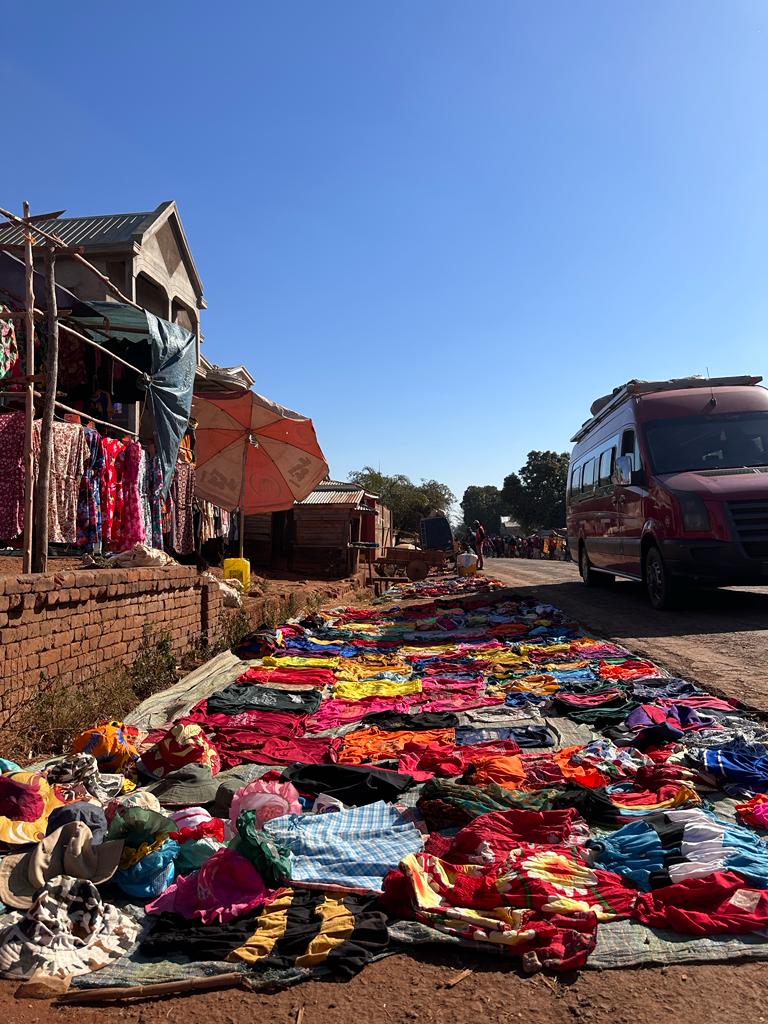
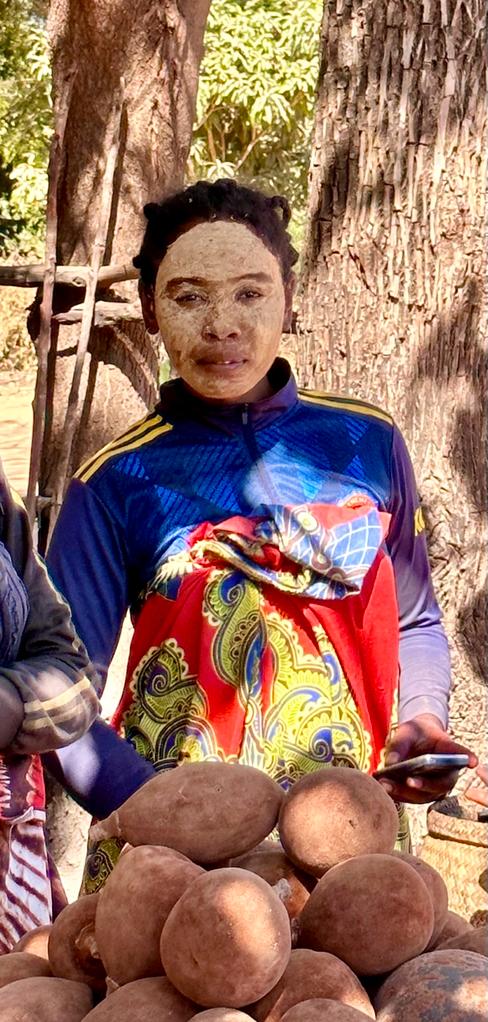
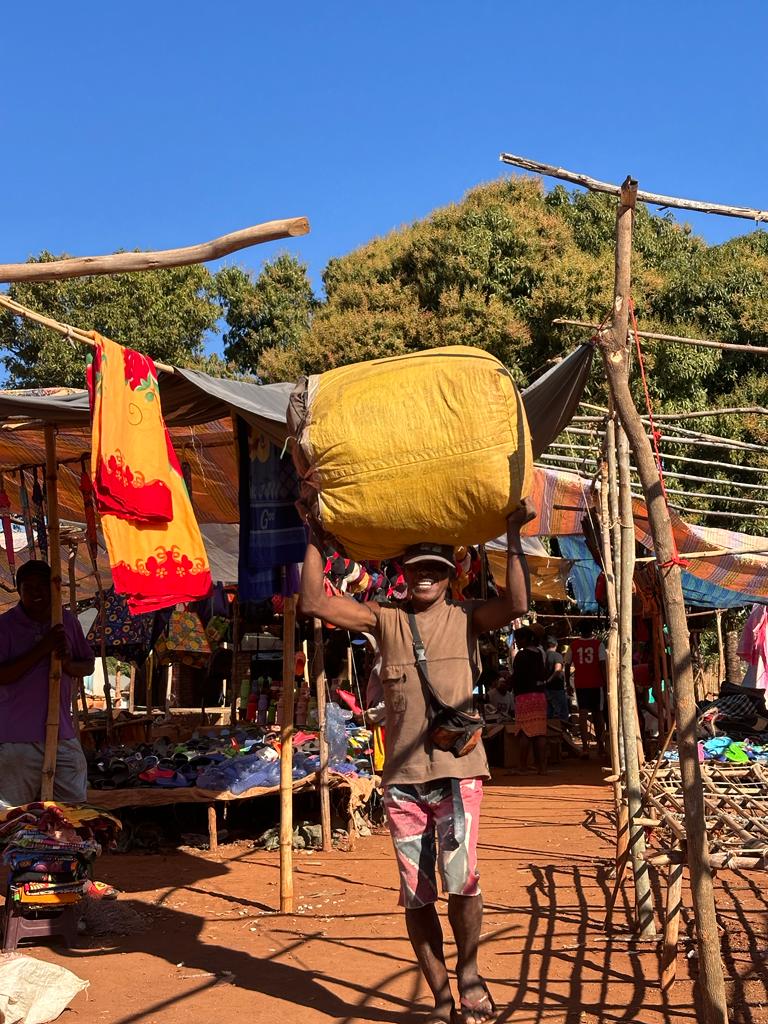
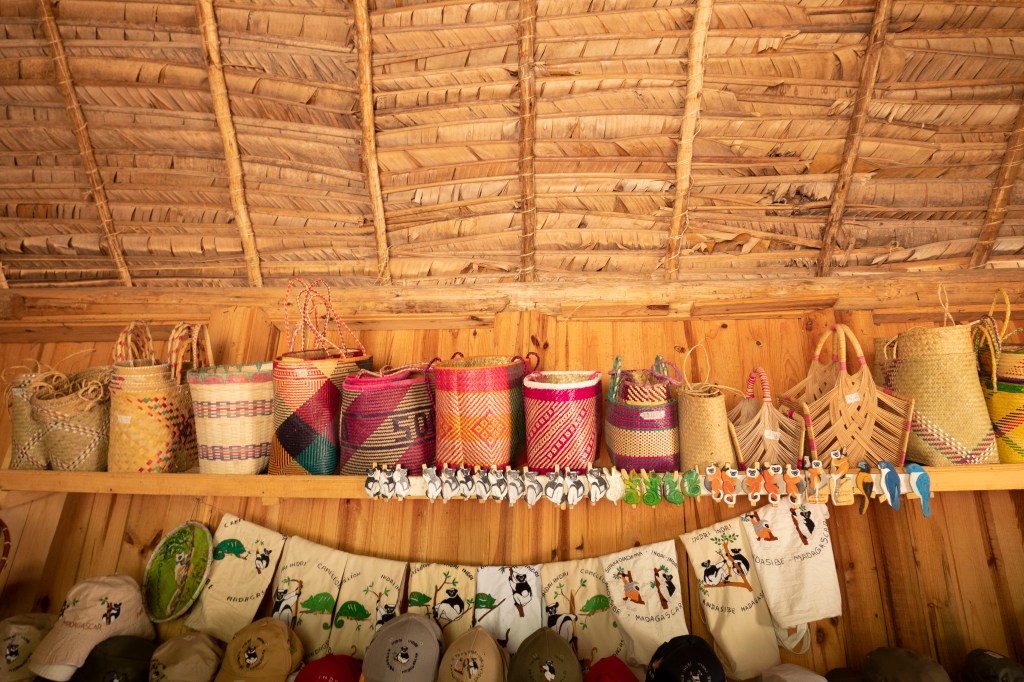
And so, we arrived in the capital Antanarivo (Tana to the locals). If I dropped a pin for location, it would be 300miles to the Tropic of Capricon, 1000km to the nearest Mac Donalds (in Reunion), and 2000km to the closest Starbucks in Joburg. I watched a local Malagasy lad balance a mobile phone on his rusted bicycle. “It is a fake Chinese phone” said Tujo our driver. The Malagassy Lamba was a rectangular cloth that both men and women wore wrapped around. Some had bright Baobab prints, some a sunset. A Malagassy hat and a yellow face pack on the faces of the ladies completed the look. The market places were full of chaos, colour and clutter. A mix of hand made baskets and second hand mobile phone. People seemed happy and comfortable in the dust.

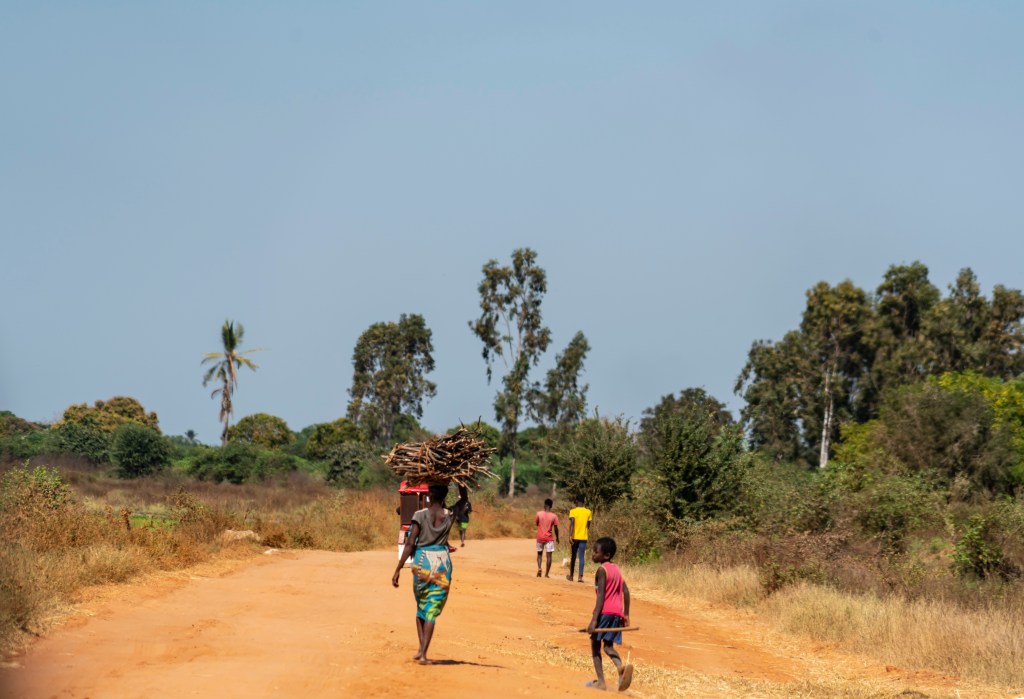
The country has over 18 well known tribes and in Antirabe town, a pillar was created with all their names. Merino (those who come back home), Sakalava (those in the gorge)were the only two I could remember. We crossed back west to east from Morondovo to Tana which spanned more than 600km on muddy pothole carved roads and saw several villages and tribes enroute. The small towns enroute were often fithy, unlit in the night and has small “hotely” which sold rice and cebu. Toju paused in one hotely for his rice meal and it was here a middle aged woman smiled and looked with interest as Ram sprinkled salt and chilli on a freshly cut pineapple which we had for lunch.

I walked with Nester, our rain forest guide to see his home in his village crossing a railway line and a small rice field. Time had stopped in the early 70s of rural India. The small wooden shelves in the shops had basics.

Mora mora which means Slowly slowly is THE Malagasy mantra. Everything takes time here. Patience and forbearance are therefore good companions in Madagascar.

So if you are a punctuality fanatic and mutate into a choleric if something goes wrong as planned, Madagascar is the wrong destination for you.

Faddy (FAH-Dee’)

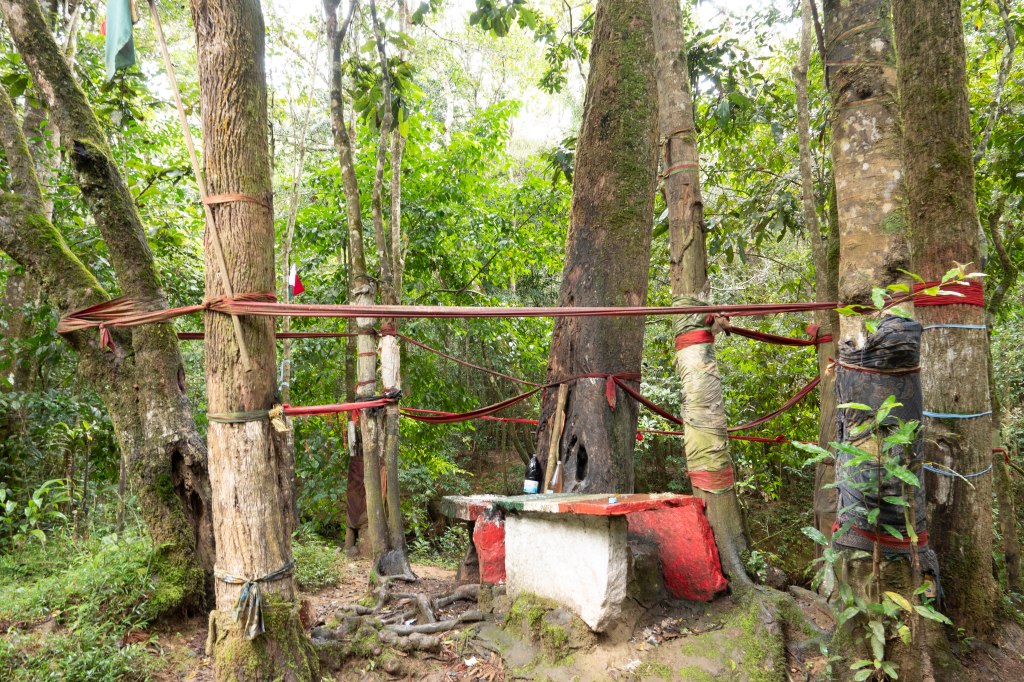
In this bizzare island, a lack of faddy or social taboos would have almost been disappointing! Fadys rule the Malagasy community. Wearing red to a funeral is faddy but you wear red to meet your elders and ancestors. Nester, our Malagasy guide showed me a Faddy in the dry forest of Kirindy- a red cloth tied around a few trees – “the bleeding tree” he whispered “dont touch it but make a wish” he said. Similarly, the Merino tribe feel seeing an Aye-aye is faddy, as it represents evil and so they were often killed on sight.on the other hand, killing Indri indri is again faddy as it reperesents the ancestor spirits.

Tujo, our well travelled Merino tribe guide told me never to point a finger at a tomb or passing graveyard. Tsy ny tany no fady fa ny vavan’ny olona, He quoted a Malagasy proverb: “It is not the land that is taboo but the opinion of the community.” Faddy was a link between the sacred and the current.

After a taste to Vaasthu, fengshui, a touch of quirky faddy is totally understandable.

PS-Do not pack a red swim suit! It is faddy!!!

Dire Straits-Poverty and corruption

Tujo said something to me when I got chatting with him about his life and his children’s future-“Alep maty rahamtiso Toyizay maty androamy”. “It is better to die tomorrow than today“. It sounded fatalstic to me. To put it in perspective, an average Malagasy daily wage is $2 a day. There is a thread of desparation amongst the locals woven into the fabric of their lives which is around the political apathy. The Malagasy practice of slash and burn where a portion of the forest is torched down by the people to cultivate rice in the land is a prime example of “good for economy but sad for ecology“. Like wise there is a frail balance between the fading lemurs species and human needs. The coverage of illegal trading of rosewood form Madagscar in the Gaurdian recently demonstrated even intervention of the IMF has done little to stop this. Trafficking routes for wildlife, ebony and precious stones or cannabis seems to be same and the porous laws are not strong enough to reduce the depeletion this unique biodiversity. Tujo says, “A big mafia is behind this and they’re close to our government.” Empty political promises are reflected in the eyes of the locals, guides. It made me pause and reflect upon life. Mind the big gap!

Madagascar vanilla

Did you know, vanilla is an orchid! It is a liana that leans on a tree trunk, usually a mango tree or an avocado. It blooms 3 years after planting and it is necessary to wait further 8 months for the pod to ripen. Its preparation is very tedious because it is entirely manual and requires a lot of rigor, patience and love. The pods are first scalded, parboiled, sun dried for two weeks, flattened by hand, then dried in the shade for 8 months in trunks and finally calibrated. There has been a ten fold surge in the value of the Madagascar vanilla. Voatsiperifery is a very rare wild pepper found only in Madagascar. feeling pleased with my small packet of exotic gifting, I decided to get a bold wooden abstract for my travel wall. Zafimaniry are an ethnic group in southeastern Madagascar, and are known for being skilled wood craftsmen. Typical Madagascar now on my study wall. Madagascar’s famous Antemoro paper has a grainy appearance, is an off-white and often dried flowers are embedded in its finish. The long road trip back to Tana provided a great opportunity for more hand made artisan products.

As I watch the grey blue sky at home, I imagined leaning my cycle on a magnificent Boabab tree in my front garden and smile wistfully to myself. Wonder where the next journey is to! I realised, like the chameleon of Madagascar, one eye is in the past travels and one eye looks to the future! For now, a fistful of burnt orange soil has made the difference!

Mora mora, bye for now.

Mora mora, the sun went down!

Gopro to Gopuram

Feb 2023

Vanakam, vaango and welcome back to yet another blog!

This time, the blog is a narrative about our hybrid cycling trip. The destination- back home to Dakshin- the South of India. Over 30 friends (travelling from across the pond, the UK, Dubai Mumbai to Chennai), an assortment of riders and non riders (our first true hybrid ride) set out to explore the traditions and temples of Tamilnadu, India.

A tribute to Ram.

His vision of cycling the Ponniyin Selvan trail years ago created a template for cycling in the South of India covering some of the magnificent Chola temples. Add Madhu (yes the same Leh trip creator for whom what is uncharted to most is home for him) to the concept. Then spoon a huge laddle of South Indian hospitality at our family home in Salem. The result, an unique and bespoke custom made, hybrid trip on cycle and coach from temple to temple. As always, Ram’s eye for the perfect imperfections of the journey added a soul to concept.

Next three 3 key components- dear friends , dearer cycling, dearest traditions.

As I gaze at the laptop screen weeks later, trying to relive this journey, I reflected deeply .. I realised that this trip represented a “True Me”. I was equally at ease with the 6 yards of sari or the bib shorts, tender coconut or isotonic fuelling gel, cycling up the Alps or along the banks of the river Kaveri. The “Kovil-cleats- Kaapi” combo bridges everyday mundane to the spiritual eternal with a cycle .

Lived it!

Loved it!

Cycling

340kms. Flat land except for the Yercaud hills.

The route- commenced in the temple town of Kanjeevaram, covered parts of Ponniyin Selvan land, (made more popular by the timely Mani Rathnam blockbuster release, PS1) and made its way towards our hometown of Salem and ended in the Yercuad hills

The path was along some well-paved roads via bird sanctuaries, east coast roads, some busy and some quiet country roads along the emerald fields by the river Kaveri and finally up the zig zag hairpin bends of Yercaud hills.

The bikes arrived in untraditional tempo travellers! And the support vans were a couple more of the same bright yellow tempo travellers! Madhu smiled confidently after the traditional coconut breaking and flag off. And,

The GoPro was on!

Early starts at dawn meant lesser danger on the roads. As riders, we were pretty disciplined. As riders of Indian origin, our basic instincts and reflexes on roads were right back with us within the first half day of cycling. Apprehension was soon replaced with cautious confidence. We all unanimously loved it!

My daysack had Amma’s Kanjeevaram sari, a bindi and some flat footwear instead of weatherproofs, arm warmers and inner tubes. My headphones had Vedic chants and an audiobook of Ponniyin Selvan instead of hip-hop and jazz. Our pit stops had tender coconuts instead of water and were at small roadside idli stalls!

We stopped cycling well before midday and eagerly looked forward to joining our non-rider friends for lunch and the sights. The helmet on the head was rapidly replaced with the jasmine flowers on the hair. A transition that I loved!

We managed to cover grounds in the history of the Chola empire on two wheels -a golden era of the South Indian past. In spirit, for some of us cyclists, this was a ” golden era of our cycling ” – back to our origins and cycling in our home territory.

On the penultimate cycling day, will remain “THE” most memorable day in my cycling memory. Pedalling along the lush banks of the Kaveri river, I reached my 190-year-old ancestral home belonging to my grandparents. Funny, I never even had a dream to achieve this. One word to sum up this coronation moment in my decades of cycling- I felt-“overwhelmed’ The experience renders me fumbling for words and then, of course, paved the way for this blog!!!!

Sharing pictures as I. am still fumbling !!!

Finally, the hairpin bends of Yercaud

Kanjeevaram Korvai

Our carefully curated trail commenced at Kanchipuram( the iconic town with the maximum number of “Gopurams” or temple gateways). For some, it was at the famous Kamakshi temple, others at the Kancheevaram idli house and for most at the exclusive sari shopping retailer!!

Like the warp and weft of an iconic kanjeevaram sari, this blog is intertwined and locked with timeless memories and unusual experiences. The tale is woven with korvai. “Korvai” refers to the nimble way a border and Pallu is attached to the main body of the 6 yards of the body of the sari. It also means “being in sync” as Amma explained. A korvai sari gives freedom to splash colours to the body of the sari, experiment with new and old border patterns- the annam, peacock and plays with contrasts in the pallu and pleats. So much like cycling. Cycling unleashes the free spirit, explores contests of the world and weaves patterns form spiking peaks (the tower) to giddy zig zags linear flats.

Every single one of us succumbed to the allure of the silk in the silk sari shop. Each one had an unhinged desire to take home a sari fresh off the looms. Linda and the retailer made the experience truly exclusive. Face time calls to wives in the UK, no inhibition haggling, some of the men even modelling some rich weaves with surprising grace, the rummaging of the entire stocks in the shop for “that” perfect sari…etc made the atmosphere at the store a huge form of retail therapy!

I paused. I stepped back and took in the displays. Certainly was an Instagram sensation. The narrow streets of the holy town spanned countless gopurams (temple towers) and my eyes roamed over several gopurams on the sari borders and the temple motif continued on silk. Weaving meets worship. Seamless!

And thus, the scene was set with the Gopuram backdrop for the days to come. The GoPro captured the Gopruram on the road and we bowed in salutation as we biked.

The korvai continued to intertwine with the kovils as we adorned in saris to most of the temples visited.

Kaapi

Coffee is a beverage.

Kaapi is an emotion.

Kumbakonam dabara kaapi is a kick ass life loving experience.

Morning Kumbakonam dabara kaapi in Mantrakoodam is celestial.

As a child on summer vacation, I watched my Thatha wrap a thin towel around his steaming hot stainless steel tumbler and froth up his decoction kaapi. Breaking the Brahmin orthodoxy, I have caught up with barista coffee, Vietnamese egg coffee, Italian strong brew, civet coffee, Turkish coffee, Costa Rican coffee tasting, to name a few. But, have reverted full circle to the first Filter Kapi with South Indian coffee powder, as the morning brew at home!

The Kumbakonam degree kaapi for the uninitiated is a strong frothy filter coffee with the purest fresh undiluted milk brewed with carefully selected chicory beans. The “degree’ suffix stands for the degree of purity of milk -using a milk meter.

Mantrakoodam- our CGH Earth resort at Kumbakonam was a perfect setting to wind back time and take a sip of the brew early in the morning at daybreak watching the fog drop on the Paarvati shrine in the resort. The chettinad breakfast was being laid out as I waited for Vijay to go to Uppaliappan kovil and dare I say, I percolated in the moment.

Chapter two of coffee calling was set in the stunning 100-acre Irish Tipperary estate in Yercaud. The cycling route took us into the coffee plantations. Coffee was grown, roasted and packaged in-house. Sathy, the humbly proud owner of this slice of nature’s heaven perched on the very edge of a hill, shared his estate with all of us. By day we took in the experience. By the evening, every single one turned a poet or singer by the crackling campfire. In fact, it was our own “Sound and Light show” by the nostalgic embers of the bonfire.

A hospitality unparalleled.

Well, the natural progression from kaapi to tiffin in the South Indian household takes me to write about our “saapadu”(food). Of course, idli, dosa and sambar were an integral part of the week. Having eaten a few thousand dosas in my lifetime and having listened to the word being pronounced in myriad ways by my friends from Texas to Chennai ( at times it sounded like Homer Simpson’s “Doh”sas even!!), it regained the top favourite unanimously. Tongue-tingling delicacies three times a day, interrupted by snacks on the bus and the insatiable urge to constant munching did damage to our waistlines and Bhuvan will single-handedly vouch for this! Eating Chettinad-style saapadu in Lakshmi Vilas made me satiated enough to write a thank you note in Tamil. The palm fruit on the street vendor cycle(nongu), goli rose water sodas, delicious hazel nut cake from Vandana, the road side Biryani in Ramaligam hotel, Sathy’s live open kitchen in Yercaud, Jay’s last supper at 10.30am which was a wedding meal to mention a few. My priceless moment was sharing a Mysurpa with my Periappa in my grandfather’s home with some dear friends. A taste of the good life and an aftertaste to linger forever indeed!

Kovil

Kovil=temple

Madhu’s bespoke itinerary took us back by 1000 years to some spectacular temples of the Chola dynasty covering the land which was the mother of history, grandmother of traditions and great godmother of legendary temples. As the GoPro commenced from Kanchi Kamakshi temple Gopuram, we headed to the sand-eroded shore temples of Mamallapuram, Chidambara tillai Nataraja temple, Kumbakonam temples, PS1 famous Veeranam lake, Kadambur kovil, Gangaikonda Cholapuram (GKC as nicknamed by Solihull friends), Tanjavur Brihadeeshwara temple and my personal favourite of Darasuram temple to name a few

The imperial Chola dynasty reached its zenith in the 11th century AD and masterpieces of architecture “The great living Cola temples” was aptly bestowed on the last three temples mentioned above.

The Shiva Lingam in the sanctum sanctorum of GKC temples was lit up by the sun rays reflecting from the massive Nandi standing guard. Even if all lights in the sanctum are put off, devotees can see the Lord in the sunlight.

Darasuram. As we stepped across the temple threshold, my gaze is drawn to a stone-carved chariot with a charging horse which seems to hold the temple wall on the left. the Gopuram is tiered in a fluid pyramid and the attention to detail on the microarchitecture was perfect, to the last manicured nail and anklet details. A masterpiece!

Sculpture is indeed the art of intellect.

The “Big temple” of Tanjore has made it big among temples. Chitra Madhavan, an archaeology master calls it “the most monumental” among monuments. The Gopuram here has a massive single obelisk of a stone weighing close to 100 tons in the Vimanam. We walked down to admire the Nandi, soaked in the temple premises and took a piece of history as we headed home.

Whilst this blog provides no value to an arm chair South India tourer or an aisle seat reader enroute to India for the first time, it is a sharing of an unique journey on a cycle for a keen cyclist who has a thirst for history. A full circle moment where a marriage has happened between cycling and seeing the world with friends who have left India decades ago and come back for a rediscovery of their home away from home. Hope this inspires my reader friends to take that OCI card out!

Having dipped our toes in the River Kaveri, where my next landing page will take me!? Keep moving, keep moving with a smile..as they say..

Leh chal… Breathtaking Ladakh

Summer 2022. A dozen cycling medics. Our dreams stronger than our doubts. Together, we take on cycling some of the world’s highest motorable land amidst the formidable Himalayan ranges of Khardungla and Tanglang La. Well, literally took our breath away! But filled our souls with achievement!!

Julley! From top of the world

Ladakh (Land of High Passes)

An extraordinary territory. To me, this is how Mars would look. As we pedalled across the land, it felt like one continent had slipped under another mass of land in a tectonic dance. Mystical; actually spiritual. The combination of the cycle wheels and prayer wheels in this spectacular nomadic land woke my dormant “chakras”.

This epic journey, was a time for several firsts in my life. My first long ride on home soil. My first experience with an off road bike. My first ride on thin air, literally, as we cycled above 15000ft most of the times. My first ride where the support vehicle has oxygen and dexamethasone. No garmin needed. My first trip with a heady combination of photgraphy and cycling! And now, my first blog combining photo holiday and cycling.

Our softly powerful trip leader was Madhu (what a befitting name). Although every cyclist and photographer in the group was a born leader, when Madhu smiled and spoke, we meekly obeyed!! Madhu knew the land, sensed its moods, and kept us safely going onwards and UPWARDS!

The calling… the cycling

Even as I completed Lejog a couple years ago, in my cycling life, I had an urge to fill the gap of cycling in India within my own life cycle. At just under 19000 feet, it was THE next height to scale. When Ram mentioned winter photography in Ladakh, it clicked into a photo/cycling journey. And Madhu masterminded the two into an epic blend of seamless journey.
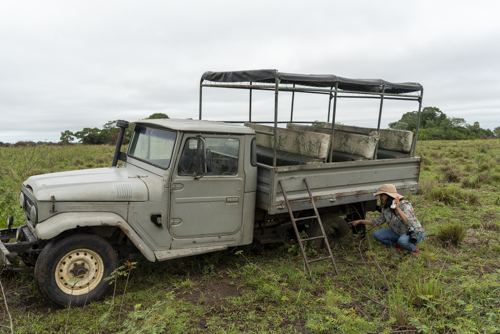
Our traditional coconut breaking before our cycling flag off was in Manali, but our trip began before that when we all met up in Delhi. In Manali, like kids wearing school uniform for the first time, we tested our hire bikes and said hello to Akash (our bike support who also held a certificate in level 2 mountaineering). We had 5 support cars which followed us as we set out of Manali. We took on the ascent to the Atal tunnel very early on. We were introduced to Maggie and chai in pit stops and never looked back to protein bars. We cycled to Keylong and reached Jispa via Sissu to our first night in the tents. I learnt there was no bar in Zing Zing bar and no whisky in Whisky Nalah (the bridge was certainly tipsy). A short ascent from Pang takes us to the extensive More Plains flatlands. A dream flat ride at 4800 ft. The only sign of life in this martian landscapes was the occasional nomadic Changpas tending to their herds of Yaks

Norbu, our driver from Tsokar, told us all about the Tsokar festival and his school life there; but said he wouldn’t bother going to his family home when we were in Tsokar, as he would spend all of winter there anyway. We camped in Tsokar on a freezing night and slept under a stunning milky way that Ram captured. That morning, Ram was up early and so was I. As he clicked in the distance, I got ready for Tanglang La at over 17000ft. My heart thumped, my lungs were as full (like the sev packet in high altitude). The road folded into long switch backs and cut right through the steepest maze of peaks. Arasu, Sajith and I paused, huddled and spoke some gibberish periodically and pressed the MTB pedals to the summit of Tanglang La. Madhu zig zagged on his motorbike through the barren, rich, iron mountains encouraging us with his smile. I took the final push and inhaled a piece of India and cycled the summit.

A day later, dare I say, the next peak of Khardungla at nearly 18000ft felt a tad easier. Arid rugged landscapes with some peculiar barren rock formations, loose gravel, pot holes and the never relenting steep gradients formed our landscape. I muttered my newly learnt Buddhist prayer line (Om mani padme hum), reflected on life and pedalled on, glimpsing Maninder’s flouroscent jacket a few hairpins above. I watched the Bihari workers chipping into the harsh rocks and their little kids watched us back curiously. As Maninder taught us through his daily diary- “Shramena sarvam sadhyam” (everything is achievable though hard work). PS- This is a Border Road Organisation motto- not Guru Maninder’s words. We finally did it! We had a sugary customary chai in the peak and headed to the tangle of prayer flags on top of Khardungla for iPhone pics. Hari and I created our own stone pile and left a legacy.

We were shooed out of lingering in the peaks to prevent mountain sickness, and took a glorious down hill from Khardungla. I was tipsy with an adrenaline overdrive. We paused. I craned my neck high to gaze back at the massive peak. Magnificent, rich burnt orange. Like an artist had used a large brush to take one enormous stroke. The art displayed hid a treacherous down hill. The memory remains etched in my mind!

As we cycled onwards into Nubra, the reels of prayer flags fluttered feverishly in the wild wind and seem to disperse holy mantras in the air, time and again – I loved seeing them. In fact, since my return to Birmingham, every time I see a traffic signal, my vision of the flags jump out in my mind and smile fondly. As we gained altitude, our attitude turned more positive. We headed to Turtuk. As we stood on the edge of the Indo Pak LOC, we listened to a narration from a tall Pathan villager about the 1971 Indo Pak war. Ram sipped his chai in the last Indian tea shop and Nisha dressed like a local. The terrain cycled was again spectacular.

Madhu had set expectations about Pangong high. Norbu pointed out to a ochre coloured range of mountains around a bend and showed us our first glimpse of this heaven on earth. Time for pictures.

And along the Pangong Tso, we rode and headed to the Indo China zone to complete at Merak. Even a humble cyclist like me felt invincible!

The Land. The People

The land was a veritable kaleidoscope. From the juicy apple heavy trees of Manali, to the formidable slopes of the craggy Himalayan mountains, to the army base territory of Siachen, to the lush green of Nubra oasis, to fine white sand stretches leading onto Tso Pangong to the fifty shades of Leh itself, every bend was a picture worth framing! (Just stole Madhu’s classsic line). There was a fragile beauty to old town Leh centre which housed the Tibetian refugee markets against the mighty Stok Khangri.

When we were at Leh, we witnessed the Leh ultra marathon and cheered the runners who ran the path we had cycled covering the Khardugla. As I turn the kaleidoscope in my eye – I see a range of pashminas (lots of Pashminas came from the town of Upshi), flashes of monks in maroon and colourful monasteries on steep hills. For example, the Jhampa Buddha statue in Diskit monastery loomed and looked down on the whole of India. Ultimately, the locals simply mingled with nature. They were kind and hospitable as if to soften the harsh and austere mountians. They were Indians; but they were actually Ladakhis.

Norbu is the 20 yr old driver of car no.3! He intrigued me. A scruffy, innocent face that hid a cheekiness. Scatter brained but switched on to keep a watchful eye on the terrain. He smiles sheepishly but dares his 4 wheels through a cascading waterfall. Arasu poked friendly fun and he responded with a fake girl friend picture. He was sport enough to be our local model for our idiocy with a sari photoshoot in Tso Pangong shores… famous for the 3 idiots movie! He was comfortable in a Ladakhi coat and a hoodie and sports shoes.

Norbu dropped out of school before he even started, stayed a nomad near Tsokar for 6 months in winter when he was not driving post season. It did not bother him when skipped fresh clothes and he loved his game of cards and a chang (local barley beer) with Dorge. He was a typical Ladhaki personified.

Dorge told me polyandry was common. A woman often married two brothers. Both weddings were graced by Lamas and the bride work a colourful headgear in turquoise- ‘a Perak’ which dangled shy of her waist. He aslo told me that wood was scarce and so they had an earth funeral and a sky burial where bones were smashed and flesh fed to vultures.

Talking of funerals, we briefly surfaced to Wifi availability to hear that the monarch Queen back in UK had passed away.

The toxic love for plastic by tourists (approximately 300 tourist cars a day add to the 50000 plastic bottles) is a very real problem, in a pristine remote region. Sadly, we were guilty of contributing to this! Responsible eco travel needs re inforcing in myself and this is a resolve. The BR road project hop to use this waste in road laying and one day in future make Leh carbon neutral.

Back in Leh, we has a cultural show organised by Madhu by the Ladhakis which gave us a further glimpse of the people and what each region offered and we joined in the Jabro dance Brummie style!!

Finally, the food

In this far flung corner of India, long caught between powerful neighbours, the culinary impact of this combination is Indo Pak/Indo Tibetian local food was evident. We opened our gastronomic account in the famous roadside Amrik Sukhdev Dhaba as we left Delhi where we had “happy one more bday Maninder”. Ram walked out with arm fulls of tongue tingling pickle dubbas and set the pace for our culinary journey.

Tibetian Thukpas made in umami base (often nettles) with lots of veg/meat and noodles certainly grew on us. I can still remember the one in Lato- after a downhill from Tangla La. I learnt khambir was the local sourdough baked in an open fire. In the farm to table homestay of Gyapthago heritage home, we had a live demo of making the salt tea. My notion of beloved Indian chai took a U turn as I took a sip of the salty brew with milk, Himalayan salt and yak butter! More like Yuk butter!!

Momos on the other hand were addictive. The fried ones – even better! Chutagi was like pasta daal dhokli and tsampa, yak cheese, chang (the local beer) were mostly home produced. We had an eclectic farm to table meal in a Baltistan area with walnut sauce and yogurt, fresh apricot juice and buck wheat pancakes and even a sizzler!

Even in the monasteries, parle biscuits, Maggie packets and coke cans were left as prayer offerings. A young monk gazed on and off at the food as he chanted from his scroll and I thought, spirituality runs parallel with food!! Unsurprisingly, almost everyone survived a day of a stomach bug but that did not stop us from having pooris for breakfast, parantas anytime, salt lassi or our joy rising every time we saw Rash walk out with loads of snacks from the tiny corner shops!!!

This remote stunning moonland of Ladakh faces ballooning tourism. And I am grateful that I was one of those. The 2 weeks of spanning this splendour in two wheels witnessing the surreal terrain, falling utterly in love with the white chortens (stupas) and the thanes (prayer wheels) has woken a passion to go back to the Himalayas again… and again. Everything is created twice they say; once in the mind and then in reality. The call of the Himalayas however is resounding!! The Tibetan traditions are endangered (like Cuba pre and post Starbucks invasion). I hope I have inspired you to add Leh to your travel list and visit before the magic is reduced by commercialism. As Ibn Battuta says- “Travelling- it leaves you speechelss and then turns you into a story teller”.
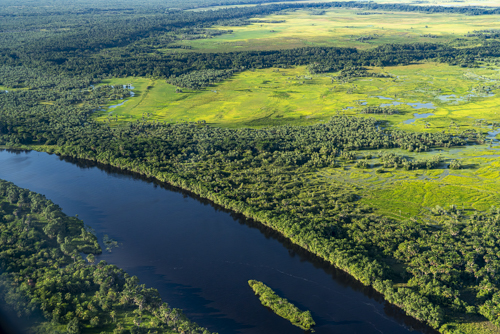
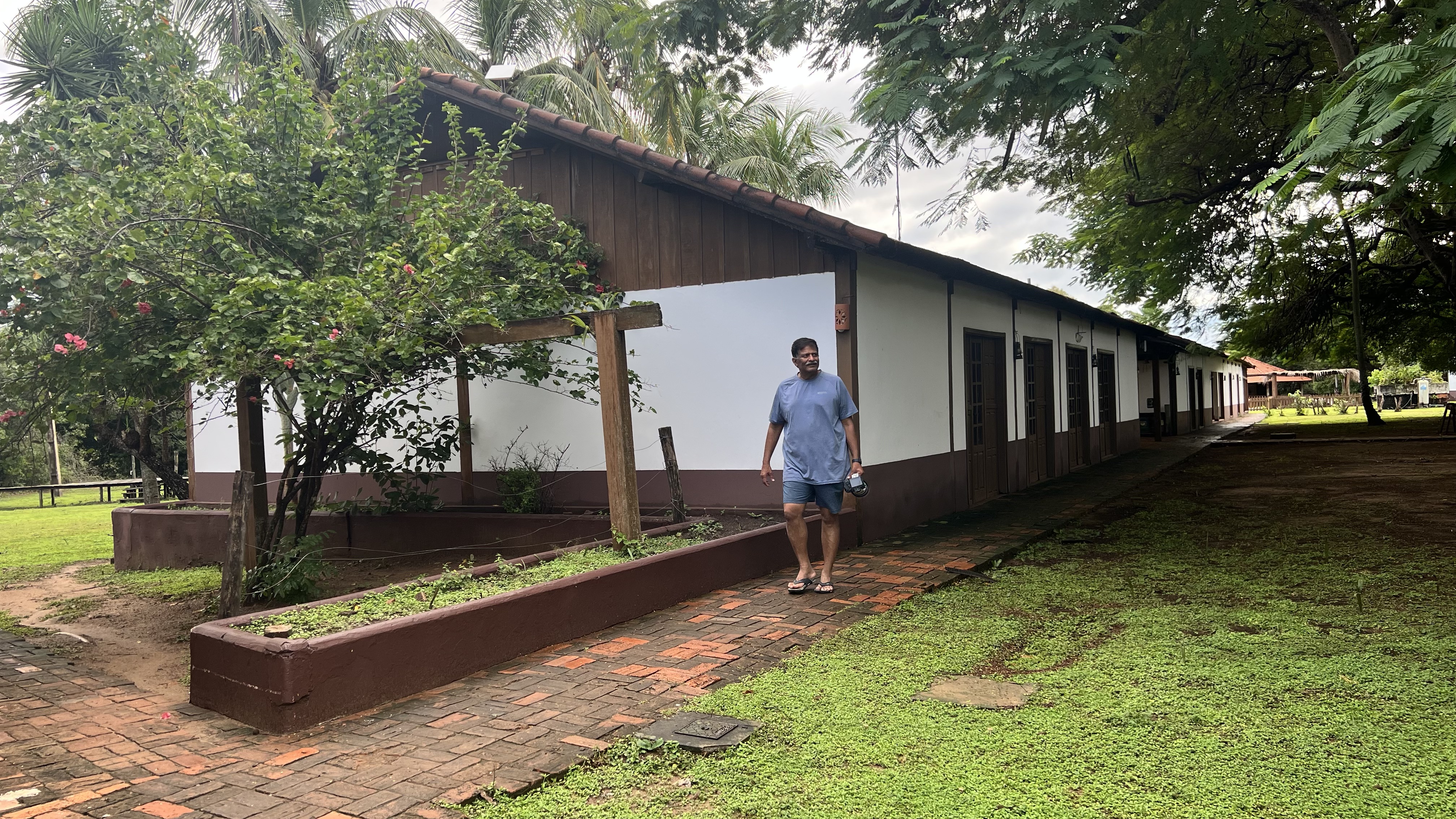
Leh Chal.. Ladakh is breathtaking indeed!!

Pura Vida -Costa Rica 2022

The impact of the pandemic on our travel has been deeper than I fathomed. A sharp increase in screen time, a damp enthusiasm even to armchair tourism, and my artefact filled travel wall had now become a zoom WFH background!!

Time to travel reboot.

The urge to connect with exotic biodiverse nature, inhale clean oxygen, watch the ocean drench in the sunset, taste local cuisine, create another tabletop album with photographs led us to the centre of the Americas..Costa Rica. A pure getaway for the soul. PURA VIDA

PS: The fact that we needed absolutely no testing was a HUGE deciding factor!

Let me set the stage for the documentary drama first. This blog has a background scene and three acts – The earth, The canopy and The sky. And of course, a grand finale!
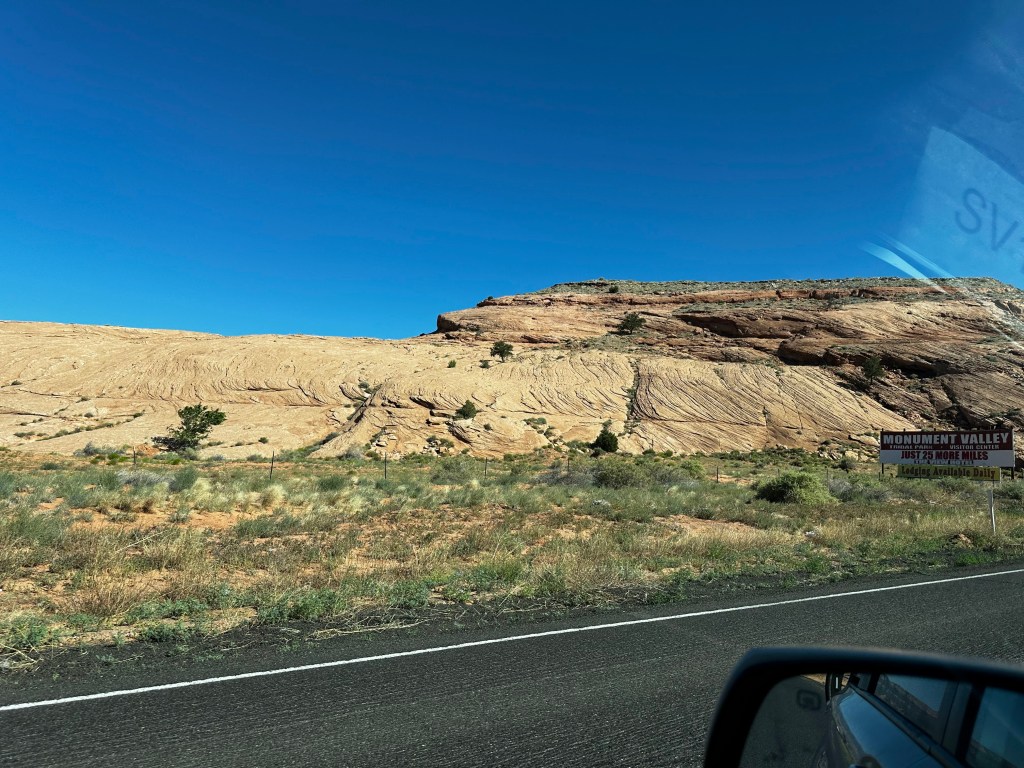
My creation of the background scene is hanging the Green tapestry.
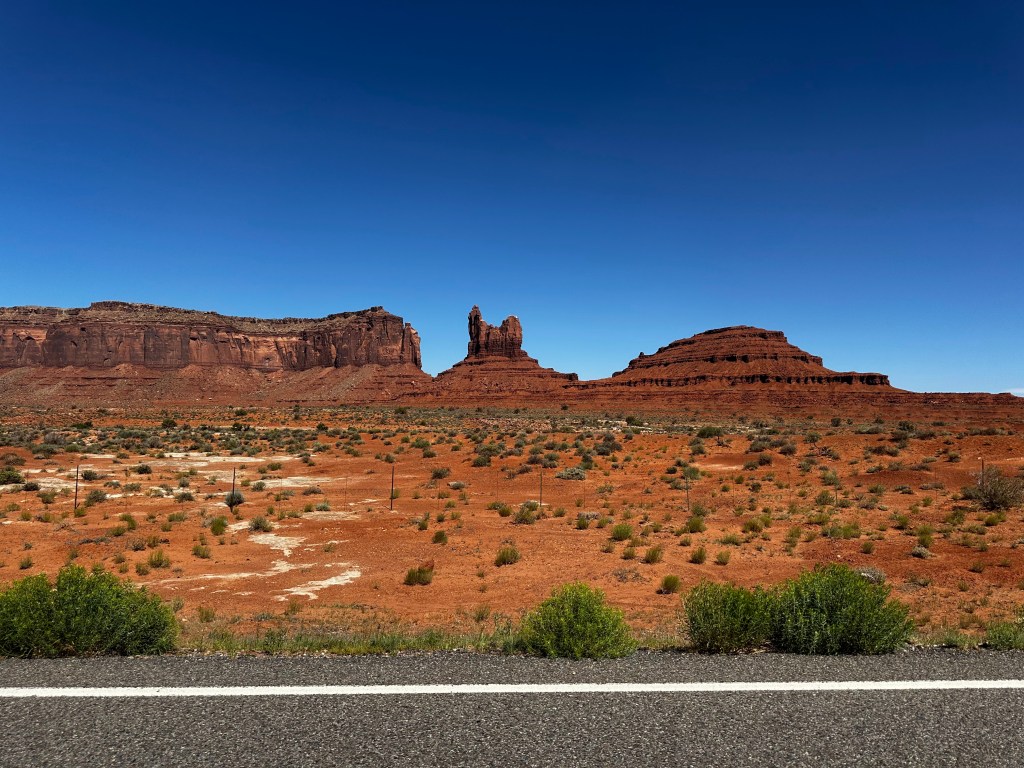
Imagine a jungle scene from Apocalypto- dense biodiversity of the tropics. Add a few vermillion macaws, rainbow tucans, stylish frogs. Next, a few celestial waterfalls and just not to disappoint- throw in a volcano! Then, moving onto a country build up. 2 seasons- wet and dry. Minimal fossil fuel use and very faint carbon footprints. Top-ranked Latin American country for happiness. No army, so military funding goes to sustainable ecosystems. This small piece of the planet was being proudly saved for the next generation.

I was sold- hook, line and sinker to this Costa Rican tapestry!

Scene 1- The Earth

Mother earth is at her lush best. It is embedded in the Tico DNA to nurture the earth and hand the legacy to the great-grandkids generation. Thick primary and secondary forests meant greenery at multiple levels. In fact, the levels are named- ground, shrub, understorey, emergent and ended in a canopy. The massive rainforests trees (Huro and ficus of 200m) fought to reach the top for sunlight! Photosynthesis was at its peak!! It was like these forests were the earth’s lungs and blasting out pure oxygen – PURA VIDA indeed. Heliconias grew everywhere as did bromeliads, mosses, lichen, giant ficus. To this thick rain forest, add a few blue morpho butterflies, red-eyed tree frogs, three-toed sloths, howler monkeys, green iguanas. They thrived on medium-sized understorey trees. In Manuel Antonio, the rainforest went right up to the Pacific coast dragging the wildlife and almond trees all the way down. I imagined having a roll call of exotic cuteness- capuchin monkey, howlers, hummingbird, iguana, lizard, oropendolas, rufous motmot, quetzals, poison dart frogs, tanger and sloth. Tell you what, just see the pictures!

Scene 2- The Canopy

Moving onto scene 2, I have to share my new hero -“the Queen of the canopy” Nalini Nadkarni. She connects the earth to the sky with incredible knowledge of trees. When in Monteverde, as I flipped my pano mode on my i-phone to the vertical direction and started scaling giant ficus strangler from the base upwards, I reached the sky after passing dozens of trees and shrubs and vines growing on top of each other! The low-hanging clouds hover around the upper canopy of the forest before condensing onto the leaves of trees and dripping onto the plants below. The sky essentially comes down to the forest, enabling you to actually walk through the clouds — especially when you take a canopy tour on a suspension bridge. And when it rains, you see it happening sidewards!!! Our guide’s narration moved from practical facts to esoteric. He made me leave the forset reflecting on the precious trees and so, I decided to take a look at them from a different angle- flying in with a zip line! Had to decide where to zipline- Guanacaste? Arenal? Limon? I settled for spectacular Monteverde. My senses were on an all-time high just looking at trees and the adrenaline peaked with the zip line and final bungee jumping. Scaling new heights indeed!! Let me rap up this Scene 2 with…

Wet and green moss,

I’m at a loss,

to describe the beauty,

falling on my boots

but held up by walking root strings

I’m feeling free,

blowing in the wind with little green wings

I walk on the ground but I feel a bird!

Scene 3 -The Sky

At sunrise, as I was woken up by tweeting birds (by day 2, I had become a bird watcher), the sky blushed pink and held the mighty Arenal volcano by a wispy rig of cloud. As I sipped Royal masala chai (prefer this any day to Costa Rican coffee) and gazed at the cloudless blue of the sky little did I know that by midday, the sky from the hanging bridges in Monteverde would quickly make me fall in love with the sky all over again. This time with a green lace web of slender branches. As we zig-zagged the hanging bridges in Monteverde, you feel you have entered a “garden in the sky”

In Tortuguero, the Caribbean coast meets the sky but not before sandwiching a labyrinth of canals and some famed green turtles.

And then, there was the night sky.. which was mesmerising on our night walk into the jungle. Starry starry night..with scorpions and snakes under our feet!!! The app of the phone almost told us about an Omega Centauri. Coming to think of this, we had an app for telling us tree names, David Attenborough’s earth, bird watching, Spanish words, sky watching, eating, sleeping to wake up to birds!!!

The finale..

The gastronomic quench was quenched with ice-cold tender coconuts, tropical fruits, palm-sized tortillas, pico digalo, piquant sharp chilli, tamal (wrapped in a banana leaf) and of course Gallo pinto (Tico beans and rice) and Guarro! Arroz con Leche was good enough (not quite like our kheer though). Oh- Costa Rican coffee, dark chocolate is at every tourist promotion! Talking of gastronomic, the currency is “colon”!

The myth -Living near the Botanical Gardens, recycling milk bottles, cycling to work, and minimising the use of a green car, buying local produce in a clean kilo, thinking of an allotment, planting veggie gardens and going paper free at work made me a contributor to the sustainable planet.

The truth… Need to do so much more!! I realised we humans will not be happy at home if nature is not happy at its home. THE FUTURE IS NOW!! Not sure how to champion this and need to reflect!

Until I blog again after our next destination .. Vamoos and Pura Vida

LeJog 2020

Where there is a will, there is a way.

Where there is a will+ bicycle+garmin +team LeJog, there is an epic chapter in your life. 

December 2019…. Arasu instigates, Kalpa acts. An outrageous goal was set. Lands end to John O Groats on two wheels.  9 cyclists, one master -Ram- who mapped our routes, plotted our training schedule,  fed our hungry bodies, minds  and dare I say..even souls! In turn, the cyclists obeyed. No questions asked. They did not think of the enormity of the commitment- close to 1000miles over 10 consecutive days. They just focussed on moving from pit stop to pit stop..one step at a time. 

17counties

1 global pandemic

2 storms

6 wet days

Over 100 hrs of butts on saddle time..

When I was at school..I was an affirmed zero in sport. At the memorable most, held the school flag in the march past. Certainly not the one nominated to cycle end to end of a country!! This simply goes to prove..NOTHING IS IMPOSSIBLE!

For my non cyclist  friends, LeJog is every cyclist’s distant dream equating to ultra marathons in cycling world where our endurance is challenged beyond borders. 

Our route End to End!

THE TEAM

Mad medics- Animesh, Arasu, Hari, Kalpa, Mahesh, Maninder, Nishant, Ram, Ravinder and the running insane legend Professor of Psychiatry Subodh. Together we trained. Certainly could have trained harder on two wheels. But, we made up for it by building a naturally strong team camaraderie. We all owe our success and enjoyment of this dream to the team! Like the spokes of the cycle wheel, each member held the wheel together and Ram moved the wheel with the right momentum! Amongst us, (for 10 days only), anything was allowed..from smelly wet gloves to temper tantrums. Whether in a peloton or a run away solo..we were in this together!

THE JOURNEY..IN A SINGLE WHEEL SPIN

Our body clocks were reset.  Early starts at crack of dawn..come rain come shine (more rain than shine sadly ). Bananas, gels, bars, back up charger in pocket. Day zero started with traditional coconut breaking , executed expertly by Christian at a busy start point in Lands End. I took in the rugged cliffs of Lands end as I said my ritual pre ride shlokam semi aloud. The heathers were abundant and the ochre lichen on the rocks set the Cornish scene for our start. We cycled past  “the last pub”  (or the first) of UK as our cleats locked in and butts settled on saddle. 

We had rider number 10 within 5 mins..Storm Ellen. Roaring. St Michael’s mount was in low tide exposing a rocky beach.  Cornish ice cream shops soon paved way to rolling hills of Exmoor.  Let me put this clear and simple.  The romance of Exmoor and North Devon coast usually had me think of Lorna Doone and the moors. Well, not any more.  Hence forth, it will HAVE TO be Quantock hills ! AONB- Area of no breathing @25% gradient hill.  Ouch!  The youngest in our group Nishant tamed this notorious climb in one smooth stretch. For the rest mere mortals, we took it and did it at our own pace! the last push of the ascent made Alpe D’huez and Dolomites seem a doddle! In fact, this single mile of crazy climb of 200m remains the best  mile of the 1000! Lets apply brakes for pictures..

The famous Camel Trail done, cycling along Severn Bridge we headed to familiar home territory of Midlands. The hotel conference room in Worcester doubled up as our bike store. I lay flat on the carpet of this big room doing my post ride stretches and thought- this is like a bike shaadi mantap- as I saw all our well wishers arrive to give us a much needed mid way morale boost! Smita and Nikhil joined us on the longest day form Worcester to Manchester and the miles melted in length with laughter as we poked fun at each other, passing stunning Kinver canal side and Stratford town centre. We whizzed past Manchester airport and a smile tugged my heart when I saw dear Shreeram waving a subway cookie as he cheered us at the end of 180km!

Furious storm Francis made Chief Ram call off the ride at 20miles next day as yellow card hazard warnings were issued due to torrential rains. In those 20miles, some never to be forgotten life lessons were learnt. Resilience! Yes Maninder, its already on my PDP as an entry! Compass was reset. Mental fitness overtook physical at this stage. We huddled like wet rats in a pub in Penrith and signed an unspoken treaty to keep cycling even if weather worsened! Perfect excuse for all weather gear shopping!

We bid adieu to England and entered Gretna – the town renowned for runaway weddings. Passing historic Lockerbie, we took on the Forth bridge and headed into the much awaited Scottish phase of the ride.

As I pedalled on the fresh grass that covered yet another cow catch and gazed around the moorlands, I allowed a love affair to take shape with remote Scotland and me. The highlands deepend the spell cast. Lazing cattle, marked sheep, a simple fence that created a boundariless boundary, windmills that emered from nothingness..it was mystical. We cycled in ribbon roads between stunning nothingness and limitless everything! Hari’s chatty banter in this undiscovered surroundings was more than music- a dessert island disc! The hamlet town of Altnahara will remain special for the entire group. For one- it was Maninder’s bday – a glorious beautiful celebration and also because it was undoubtedly the most challenging day to ride. A day which scrappped all our physical stamina and moved to challenge our mind games! Yet again, we did it!

The last day was picture post card perfect. We powered through Betty Hill and Thurso. We had some fab scones in the northern tip of the country (instead of Devon!) and tea at Melvich. Together we rode the last 3 miles with one final homeric push..to the iconic end to end sign post!!

PS- the start and finish was similar – one sign post to another!!

FOOD

The word created strong emotions in me. A salad based grazer, and a tambram thayir sadam eater like me had to face the reality of going into negative calories by day 3! I ate my first boiled egg and focussed on carb loading. The need for nutrition dawned too late and I had to work on losing my apprehension at meal times. “Coping” – another life lesson learnt! We had a loaded mobile kitchen- rice cooker included on the go! What else can you expect-after all, Ram ran the show!! Overnight oats with burfi- (Ravi’s nick name for squeezy condensed milk), eggs, boiled salted potatoes, home made power ladoos with dates and ragi, Arasu’s rose milk like recovery drink, Subodh’s maltodextrin fix, Maninder’s nimbu pani, my royal chai, Ravi’s beetroot concoction..we had it all – our fancies and treats!! Eating happened almost in the same frequency of breathing!! Not to forget local ice creams, scones, haggis, pasties, one shot venison, local whisky of highlands and of course group made kheer at Ganesh chathurti! Ram’s support was eclectic when it came to food!! Sammy’s healthy wraps, Sanchi’s chaat, Worcester feast and voted the best Linda’s idli vada for the beginning of the trip! A veritable feast all the way! As we took our finish line pictures, I resolved to go on a diet!!!!

THESE ARE A FEW OF MY FAVOURITE THINGS…

With the remoteness of the path came some hidden gems. We passed a train in Sutherland which I learnt was a hop off train wherever you wished in the middle of nowhere to cycle off ! Who needs a mindfulness workshop here! A remote barn, a solid stone bridge in the distance over no water, a close encounter with a sheep that gazes right back at you for invading its land, the pink wild flowers -rosebay willowherb that followed us for miles.. All these were balanced with the sight of our support car (blue Audi), a steaming hot drink in Chirstian’s van amongst nowhere, Mani darling’s “listen to me man”, and his early morning knock on the door to move us, our pink water proof socks!

The desi girls had every intention of putting of our trademark on LeJog. I can confidently say we are likely to be the original pioneers to wear our Saris proudly and photograph two loves together at the pinnacle of our ride- cycle and sari! We wanted to do it and DID IT!

We have literally reached the end of the road in UK . Strangely, it feels like the beginning of yet another life journey ! Miles more to go..before we sleep..Bye for now..