January 2026.
The Konkan calling.
Destination: Hampi–Dandeli–Goa–Gokarna–Jog Falls–Udupi.
Another hybrid cycle ride in India.
That odd combo from our first hybrid ride in 2024—
Kovil, cleats, and kaapi — demanded yet another sequel.
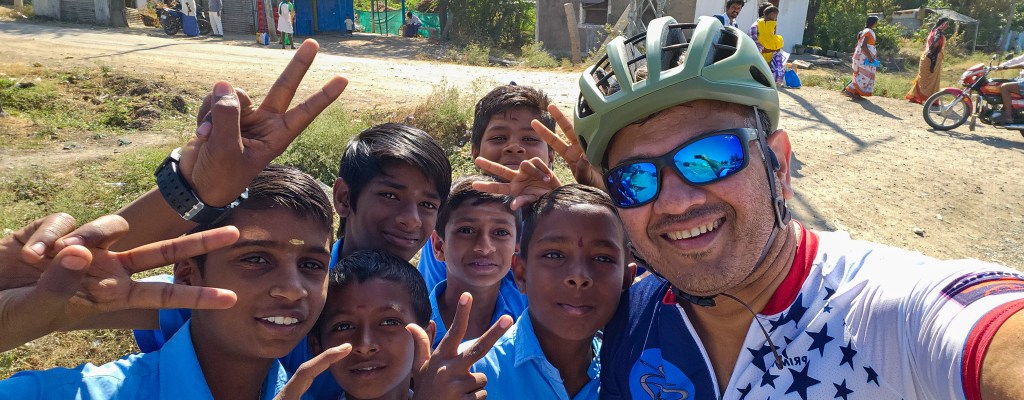
When OCI and helmets share the same packing list,the school-trip excitement among the fifty-pluses signed up for the ride( from Canada, the USA, the UK, the UAE, and India)reaches spirited levels.
28 riders.
8 non-riders.
Masterminded by Ram and Madhu from Uncharted Travels.
Yet again.
300kms of cycling over 4 days.
As a group, we’ve grown comfortable with the beautiful imperfections of hybrid riding in India—from chaotic airports to absorbing heavy history, and finding rhythm on Indian roads. It’s time now to meet the stone, the saddle, and the spirit of the Konkan coast
The Stone
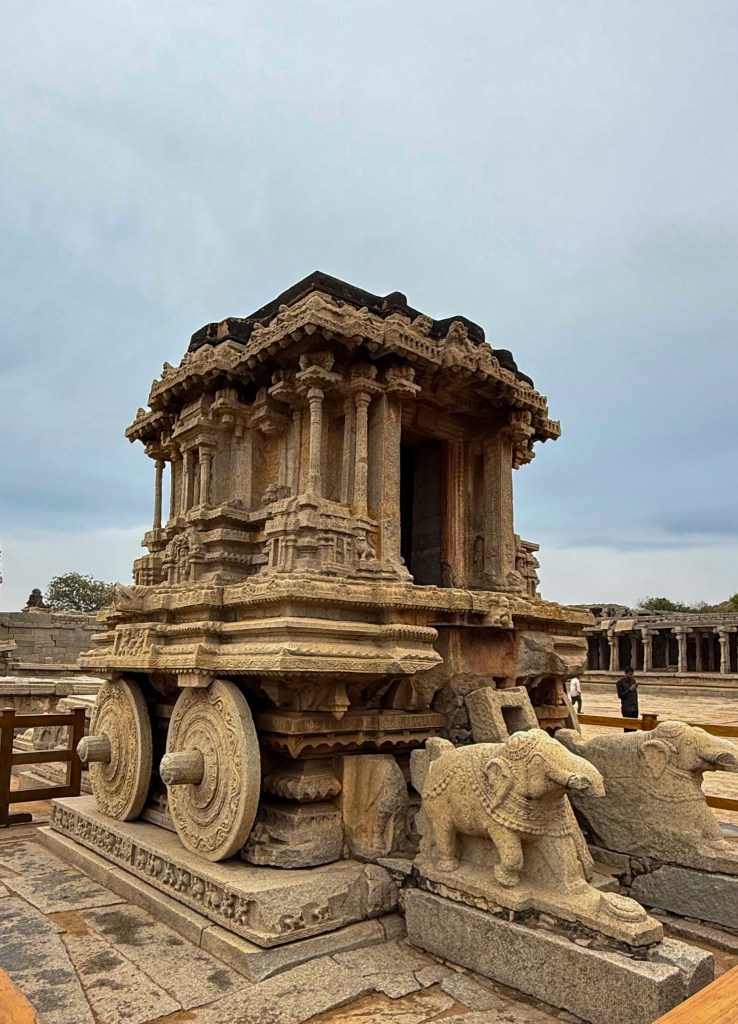
Shades of Hampi.
Founded by Harihara and Bukka (memory of history class from school days making a brief comeback), Hampi peaked under the great king Krishnadevaraya, which was the the golden age of the Vijayanagara Empire. This last capital of the Hindu kingdom flourised with a grandeur that would have seduced Ibn Battuta and Sanjay Leela Bansali alike. But sadly, only got the prominence of a foot note in the list of Hindu kings against Babur in 1565 AD. Infact, Tenali Rama, his Brahmin jester and advisor steals the show via the famous Amar Chitra kathas.
Today, Hampi is a ghost town.
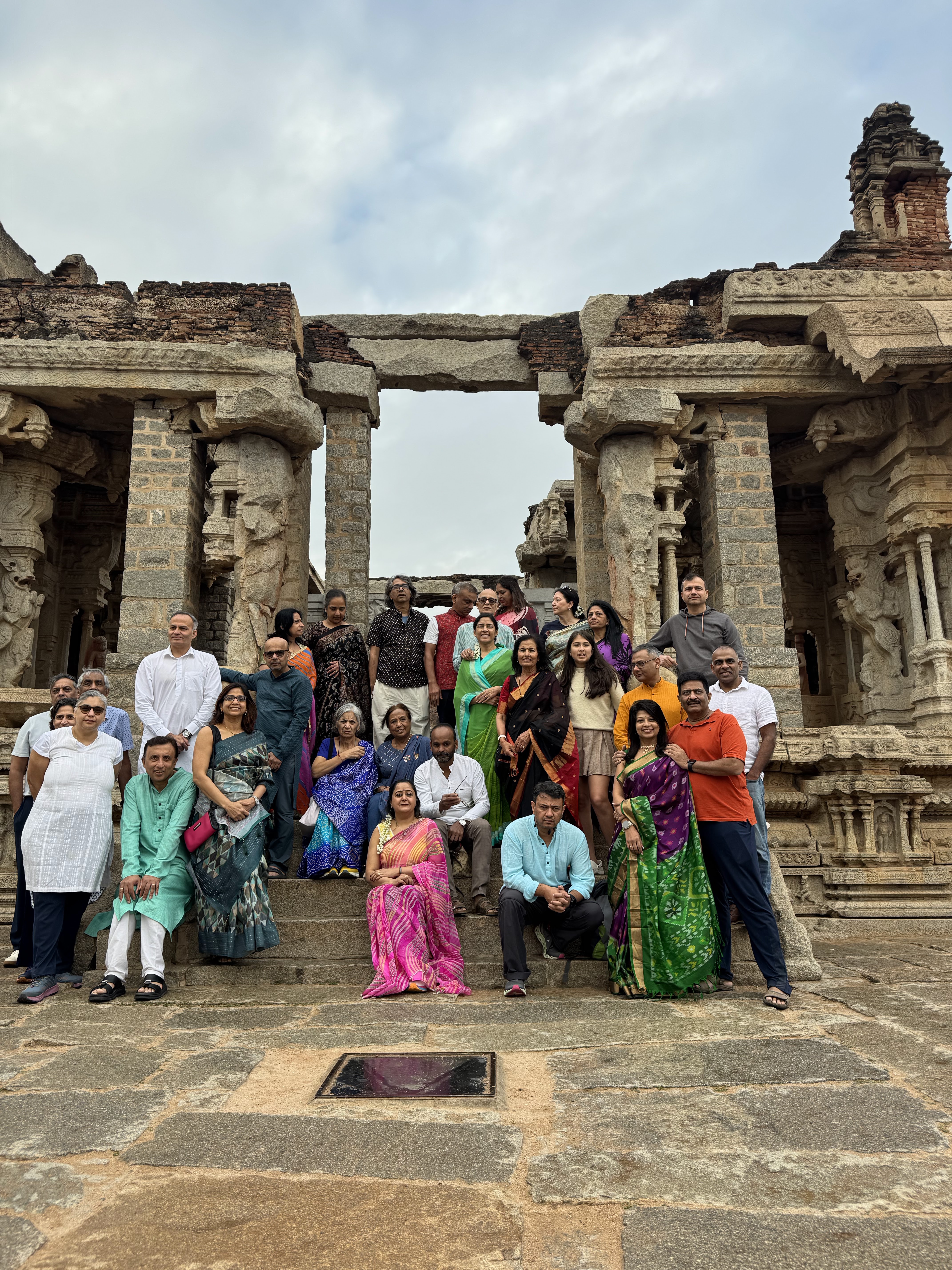
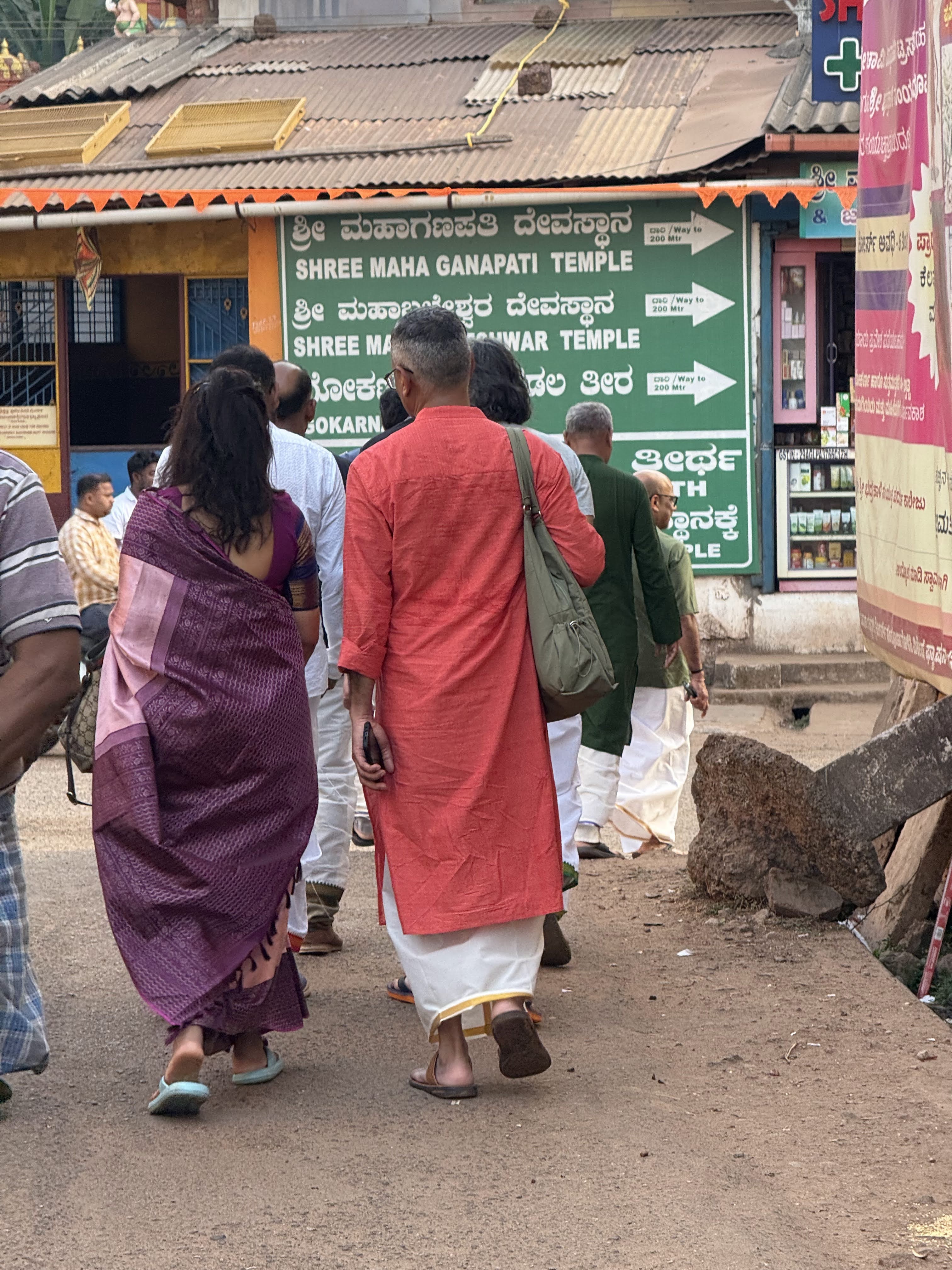
What remains is drama in stone. We waded into Vittala temple, traditional clothes and all. A quiet gravitas settled over us. Inside, the scale took over. Proportions overwhelmed. History stopped whispering and began to speak.
Three focal architectural features -The Vittala Temple. The Virupaksha Temple and the Lotus Mahal. At the Vittala Temple, we stood before the famous stone chariot. “Not a monolith, although appears to be” Raghavendra, our guide revealed.
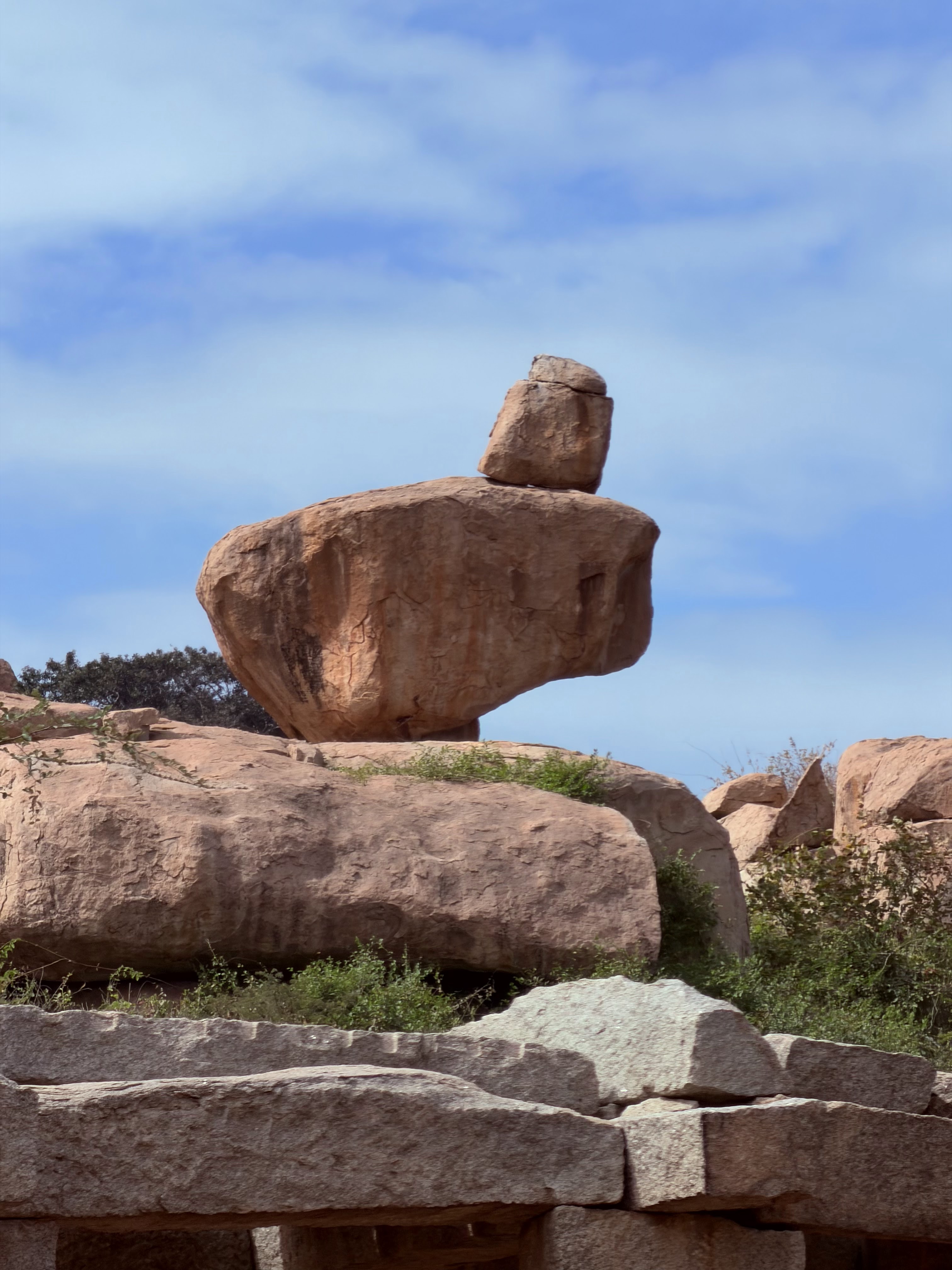
Massive boulders balance like they paused mid-thought.
Our guide systematically filled the landscape with stories—the bazaars of flourish, the depiction of life on stone carvings, Vali, Sugriva, Kishkindha of the Ramayana. Myth slid effortlessly into history. Monkeys, mischief, and memory everywhere.
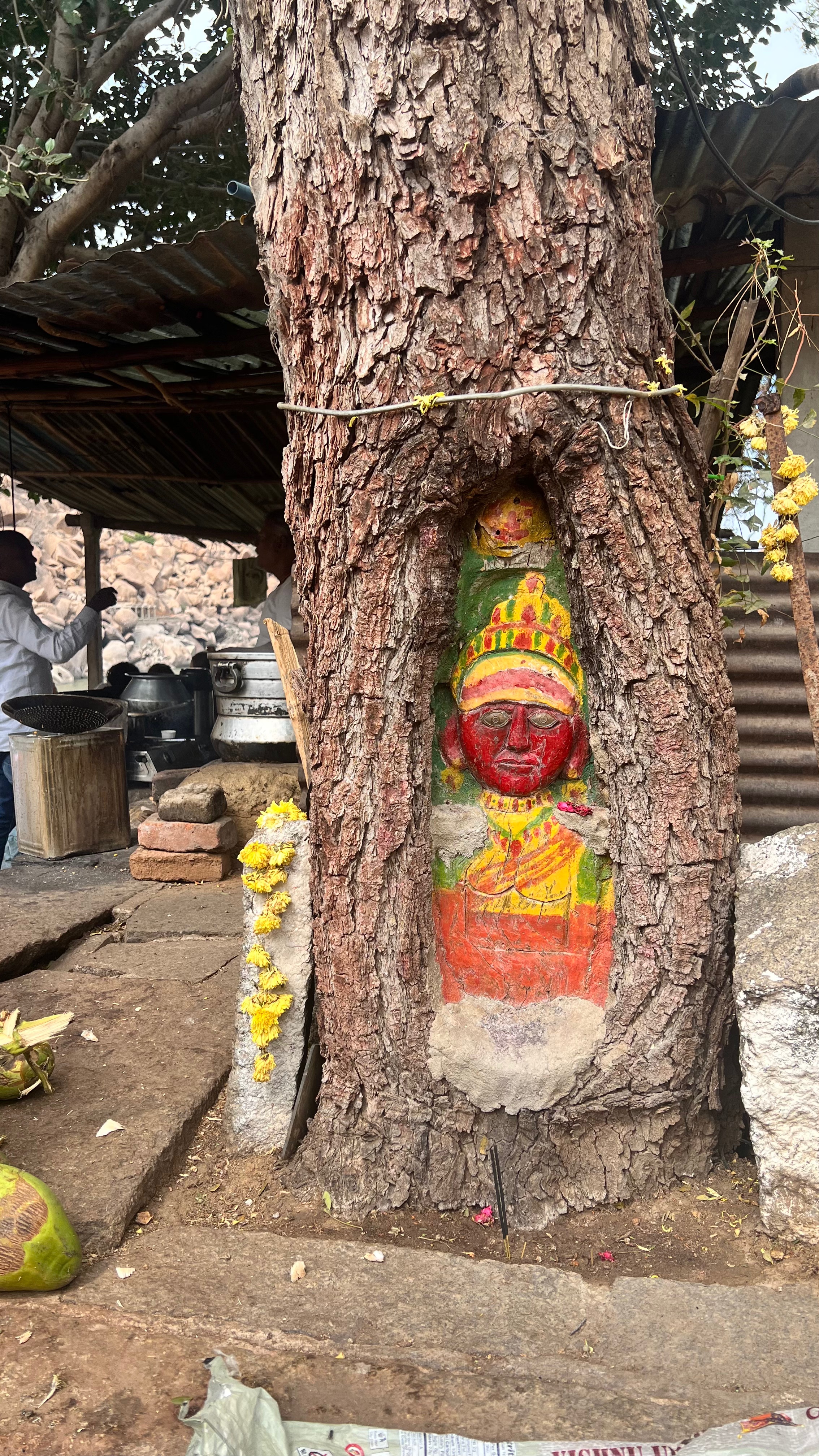
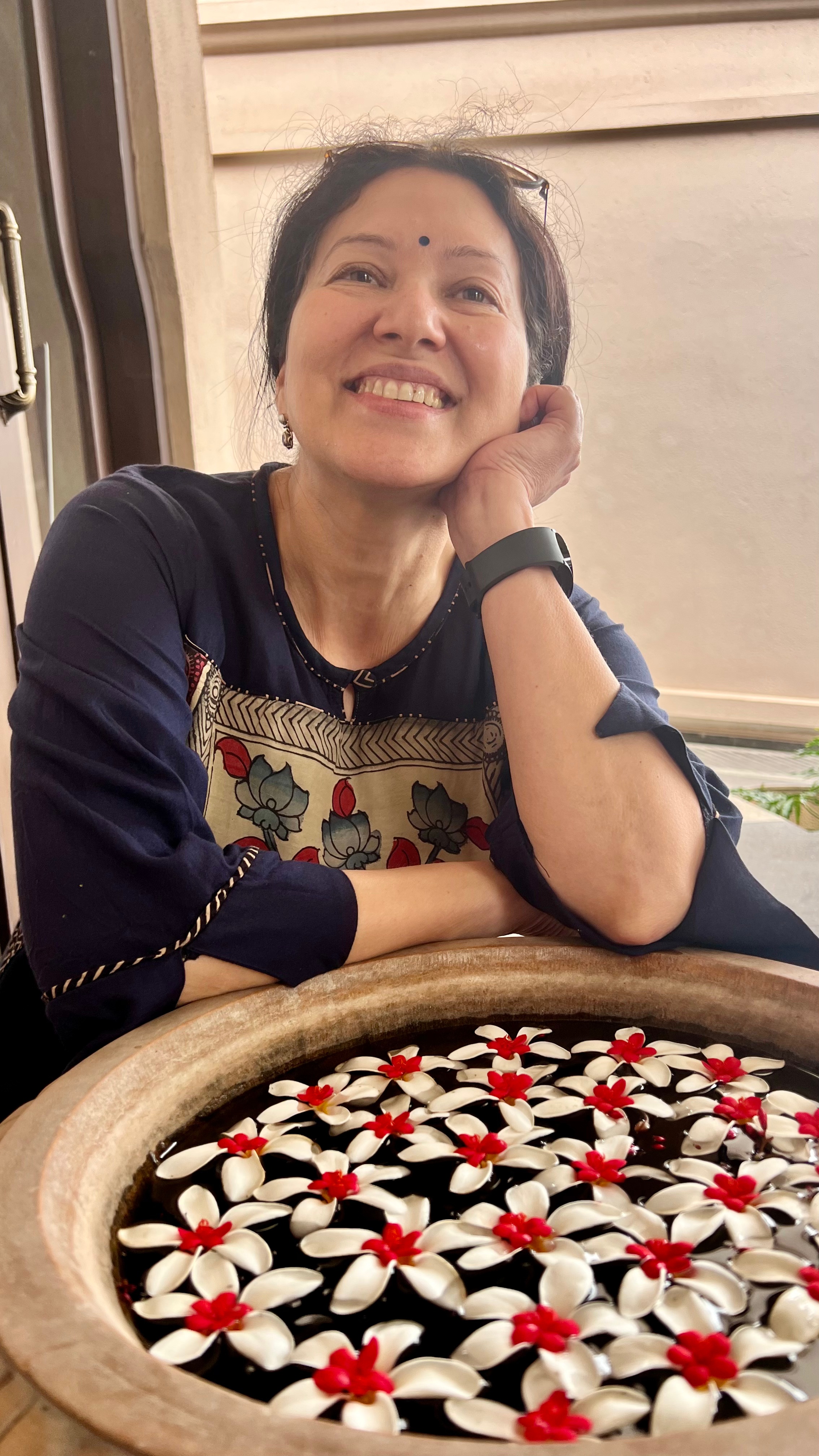
To me, the solitary Frangipani tree in the courtyard of Virupaksha temple spoke the loudest. Gnarly, wrinkled and in a leaning angle it still bears frangrant frangipani in season. A testament to resilience.
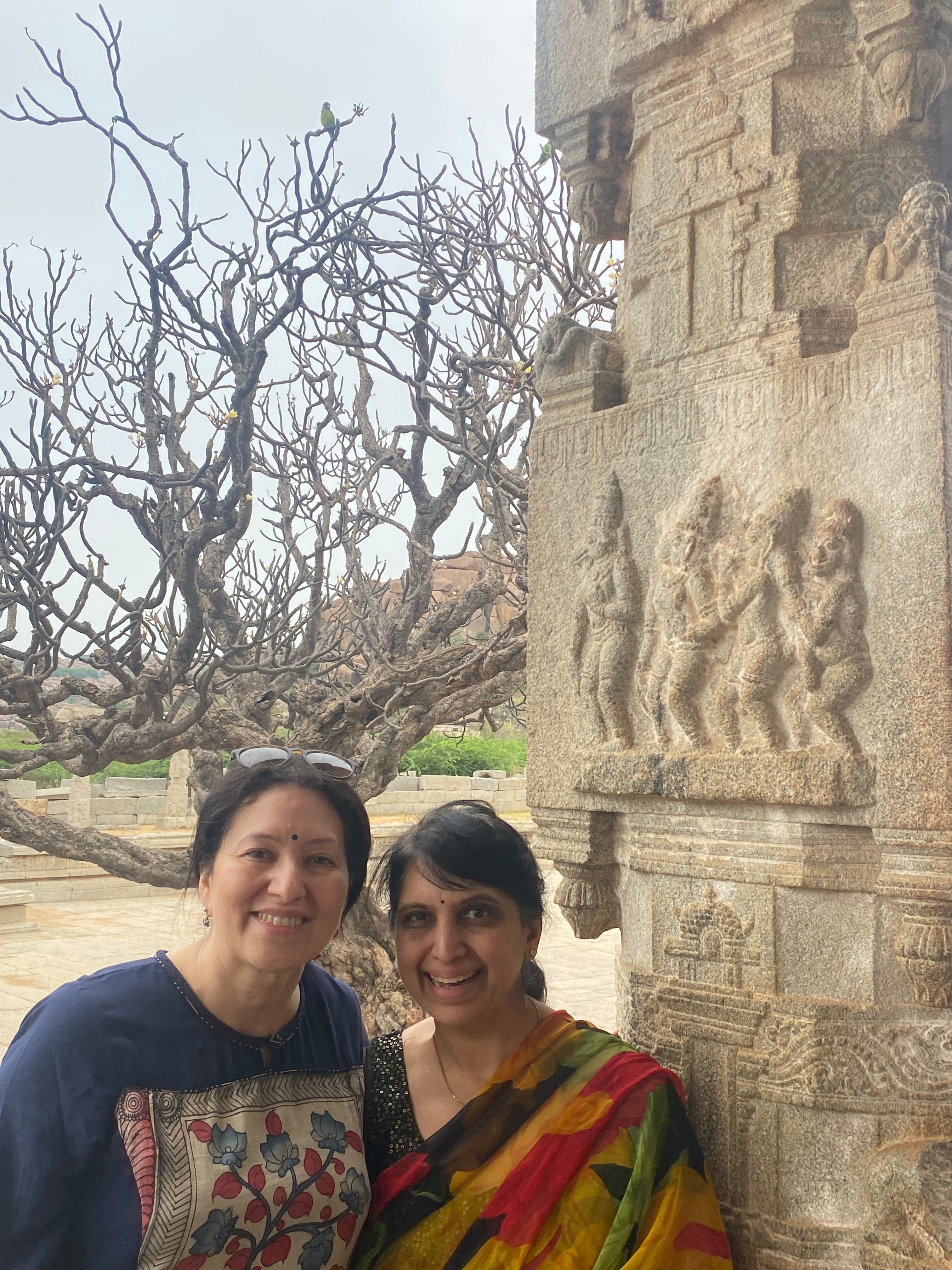
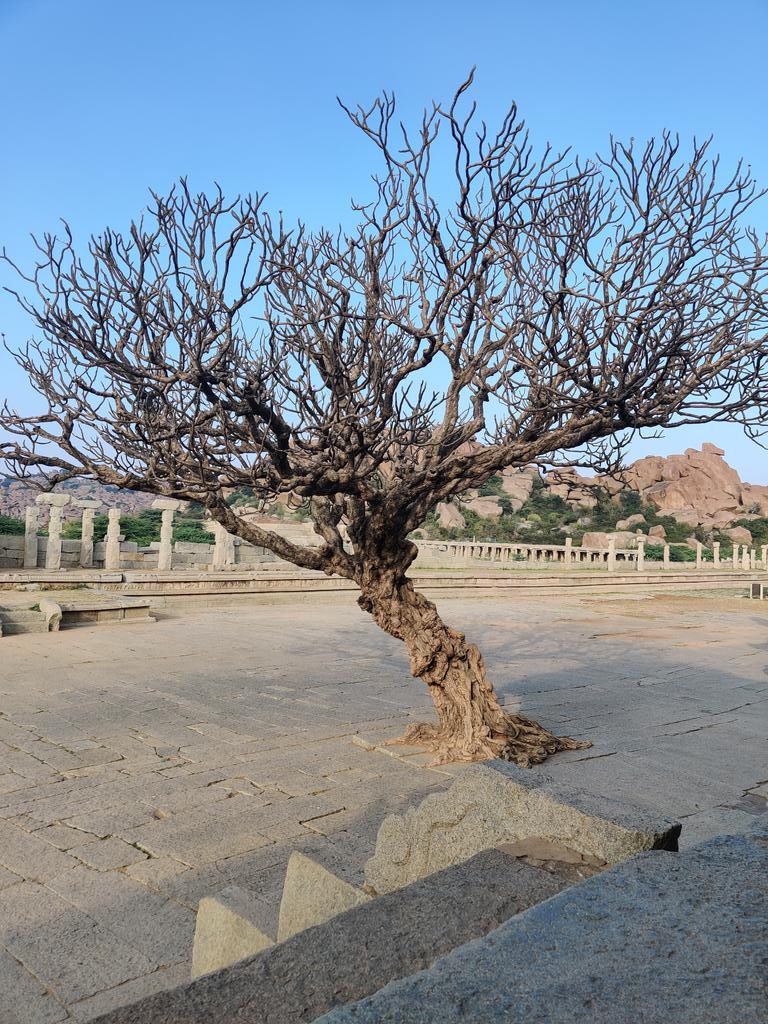
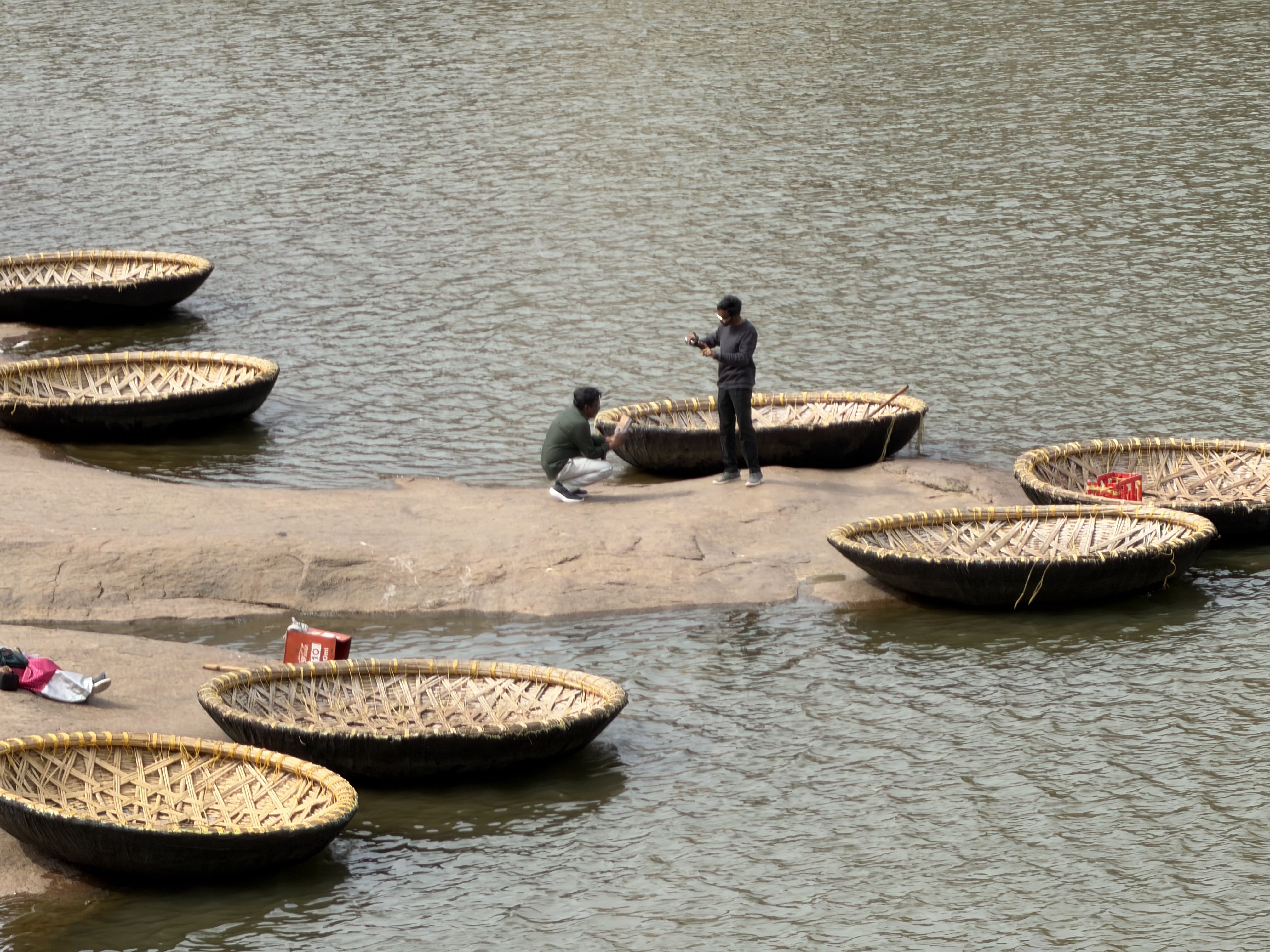
The Tungabhadra flowed quietly alongside. Green, fertile paddy fields softened the scars. A city of victory, resting—never erased.
Ruins upon ruins. Salman Rushdie in his book Victory City turns myth and scars of Hampi ruins reality into fiction while V S Naipaul, in his travels, sensed the unease of Islamic imperilaism versus the Hindu resistance that lingers till date in India. More questions than answers. As I listened to the narrative, the tension felt real and unfinished.
The boulders provoked. They questioned their sidelined presence till UNESCO added the world heritage site status. They reminded us why India is incredible.


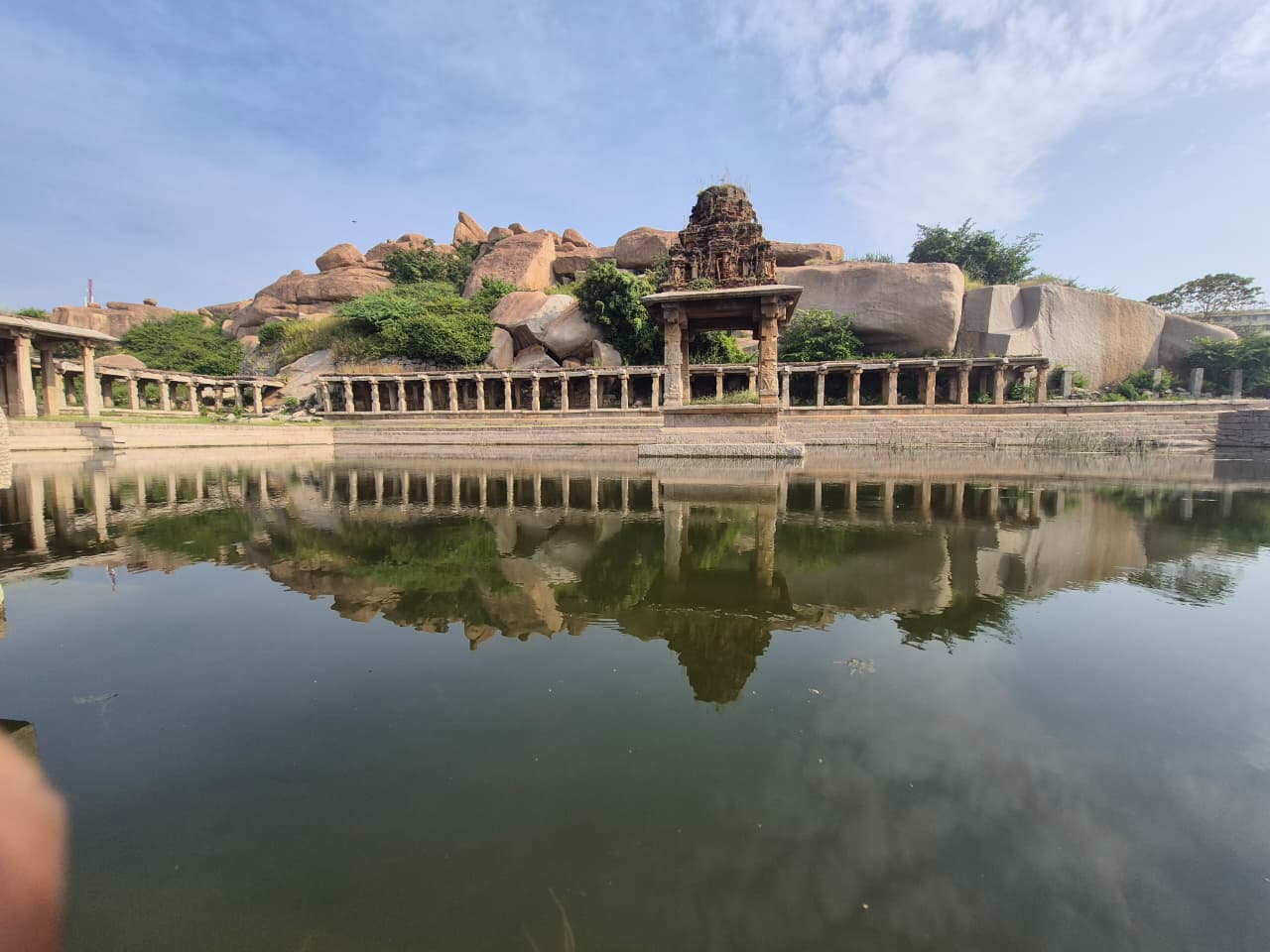
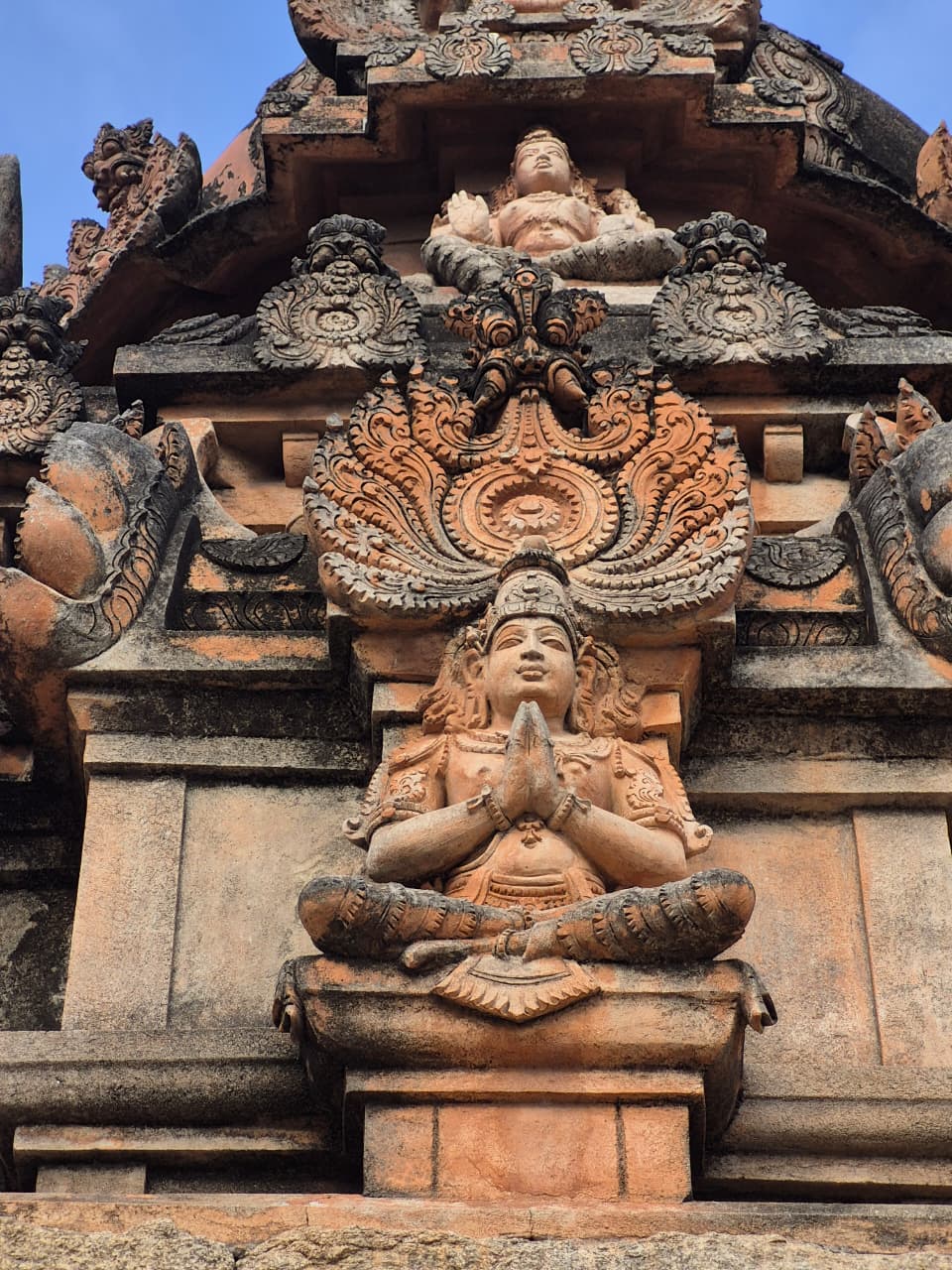
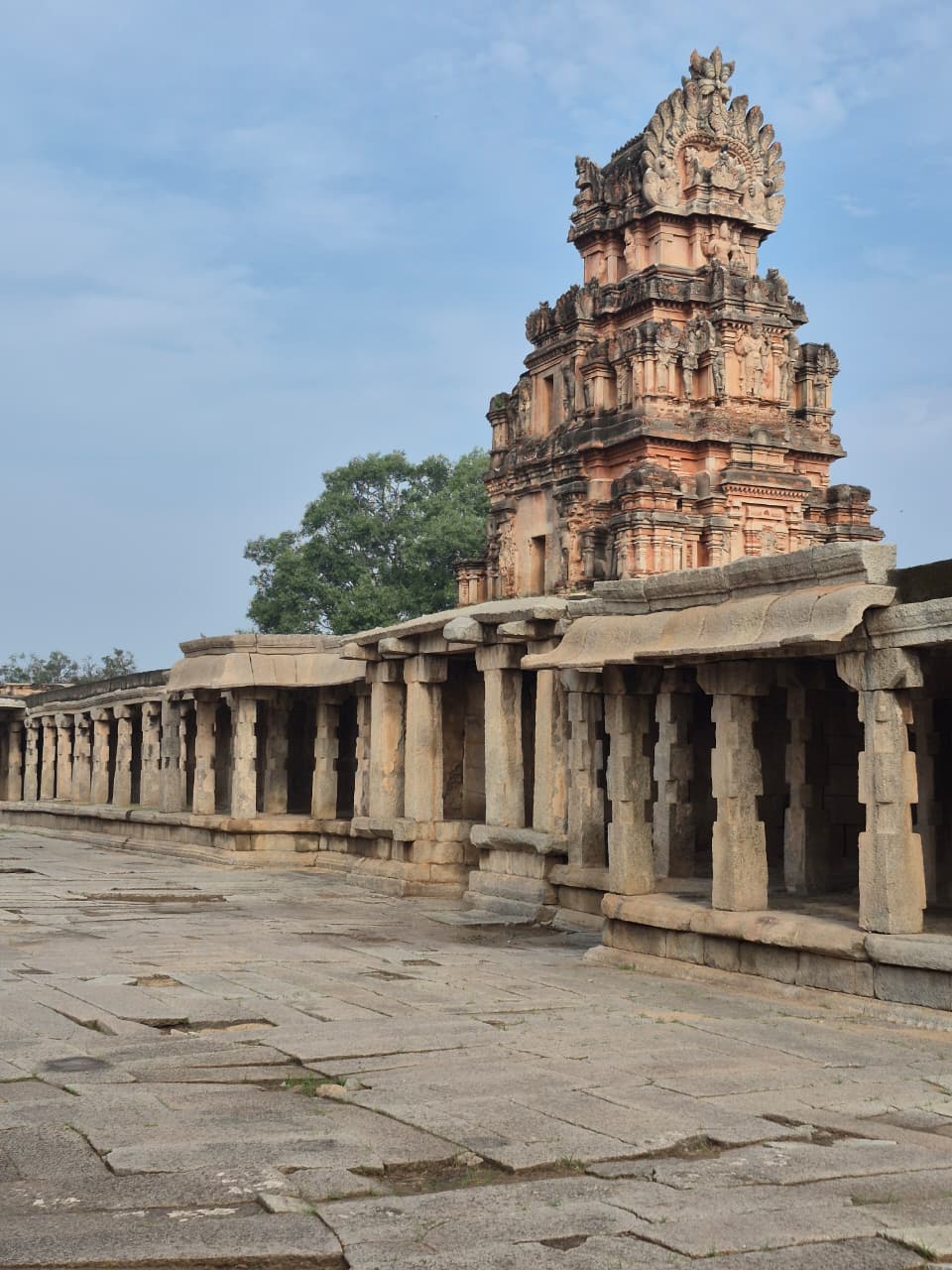
The ghost town is alive with memory.
I pondered all of this as I pressed the pedal from Hampi to Dandeli.
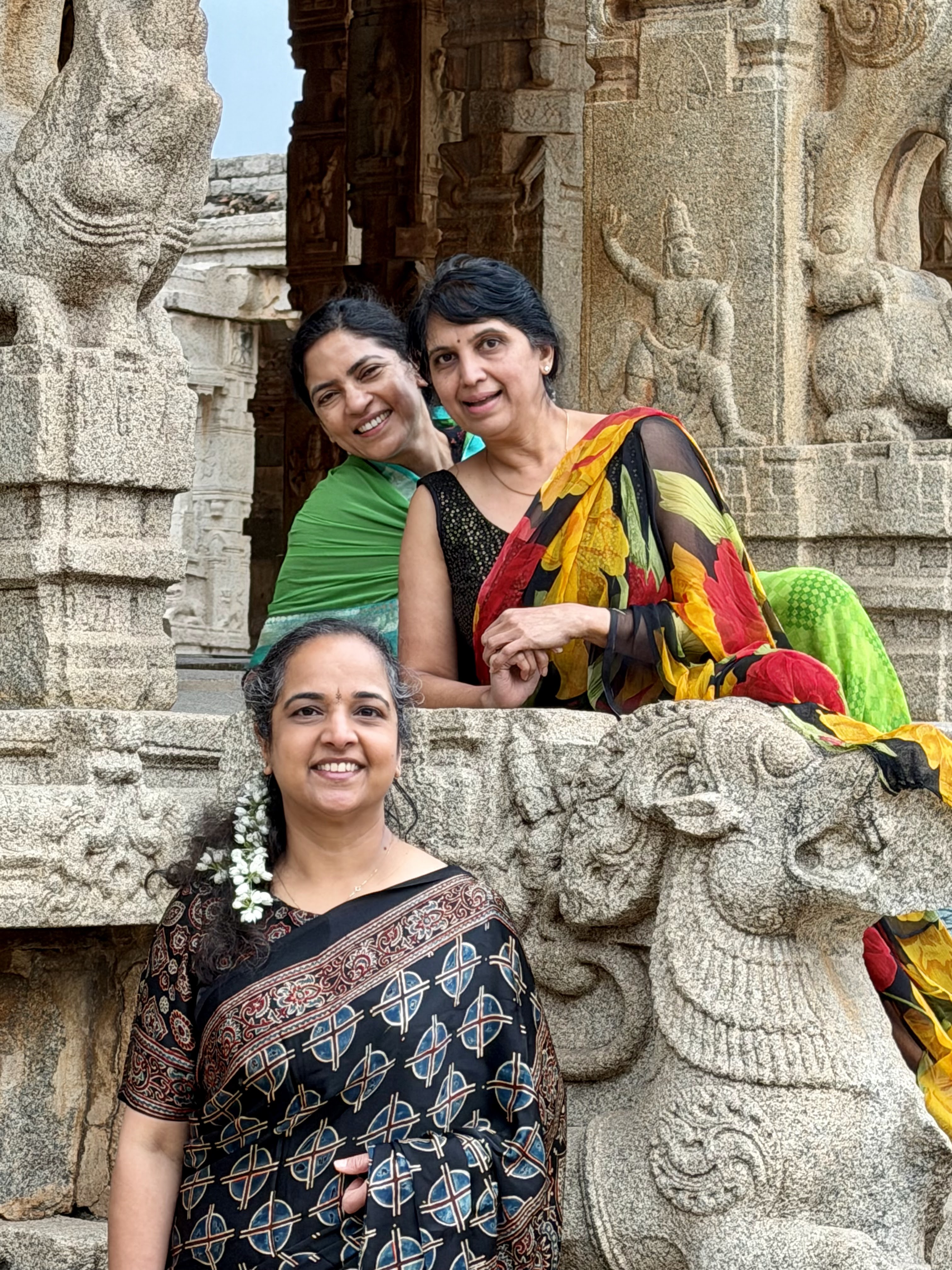
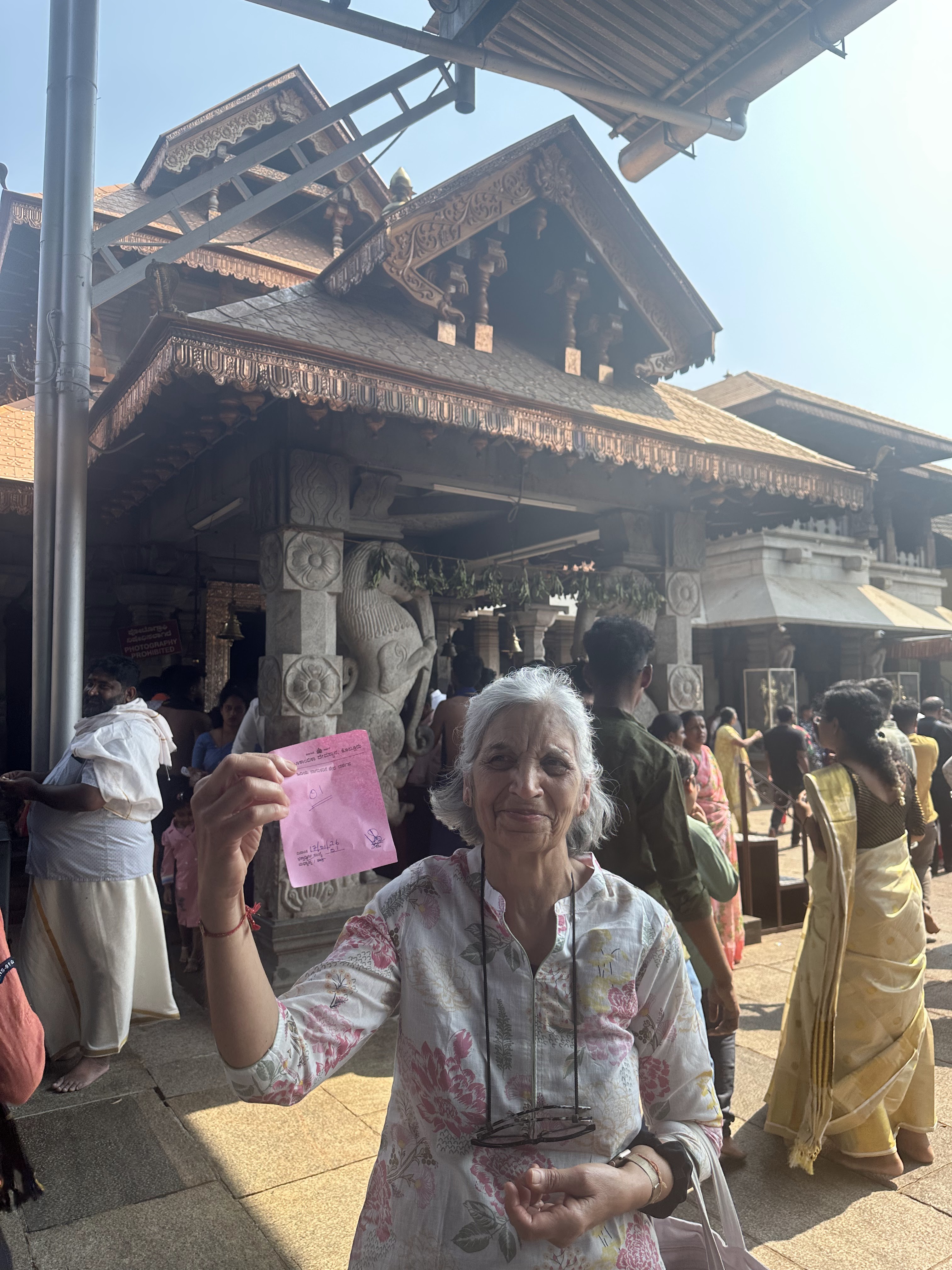
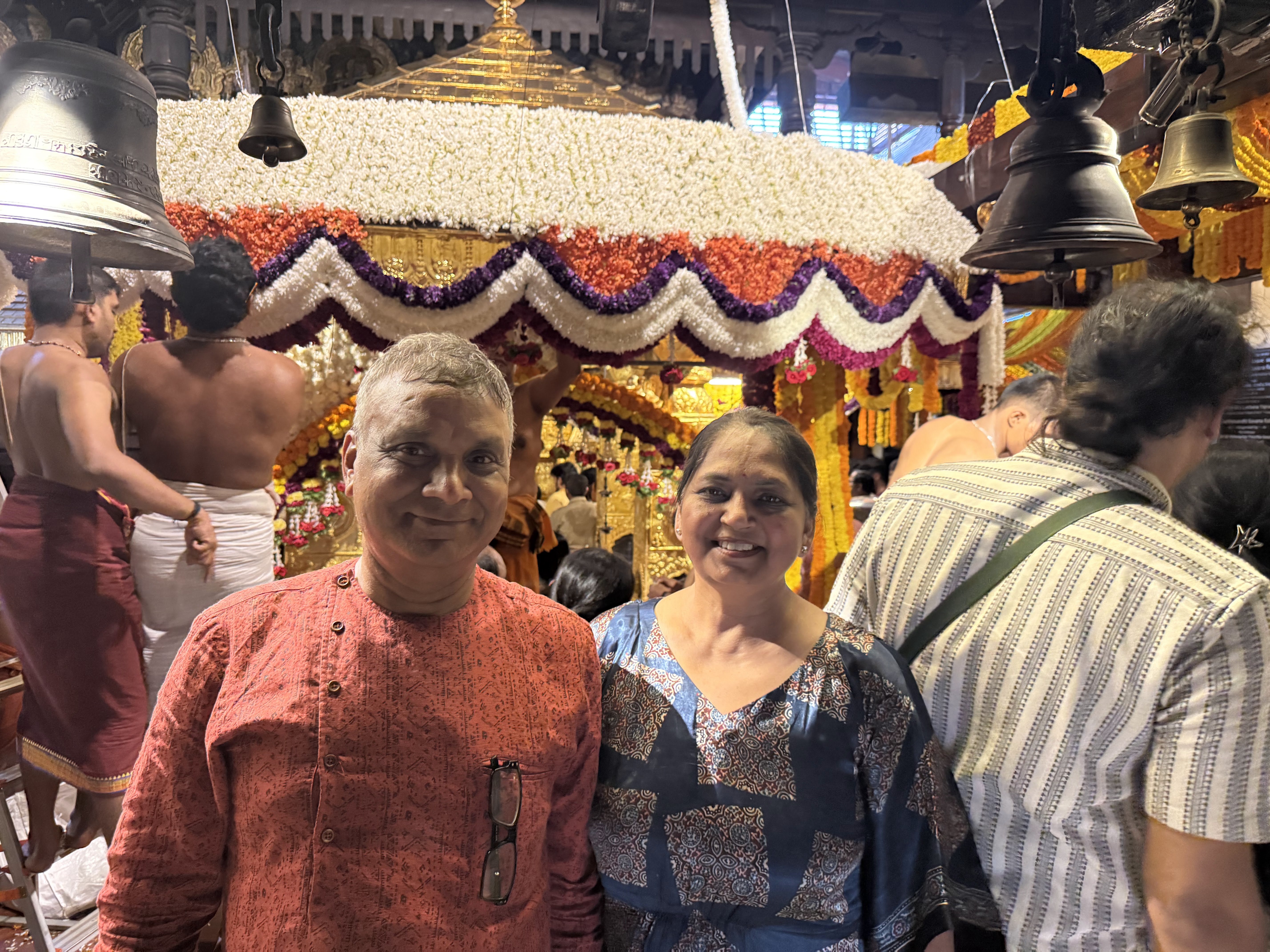
At Kollur’s Mookambika Temple, stone is living faith.
A Shakti Peetha. A powerhouse. Reinstated by Adi Shankara.
Unlike Hampi, not a memory.
This is presence.
The temple wears a South Canara tiled roof -like a graduation cap, modest and grounded, hiding a golden gopuram within. Mookambika rests in the sanctum sanctorum. Quiet. Powerful. Unadorned in her certainty. As a group, we sought our individual levels of divinity, I mused, as I looked around to spot a sugarcane juice stall on the road side once outside .
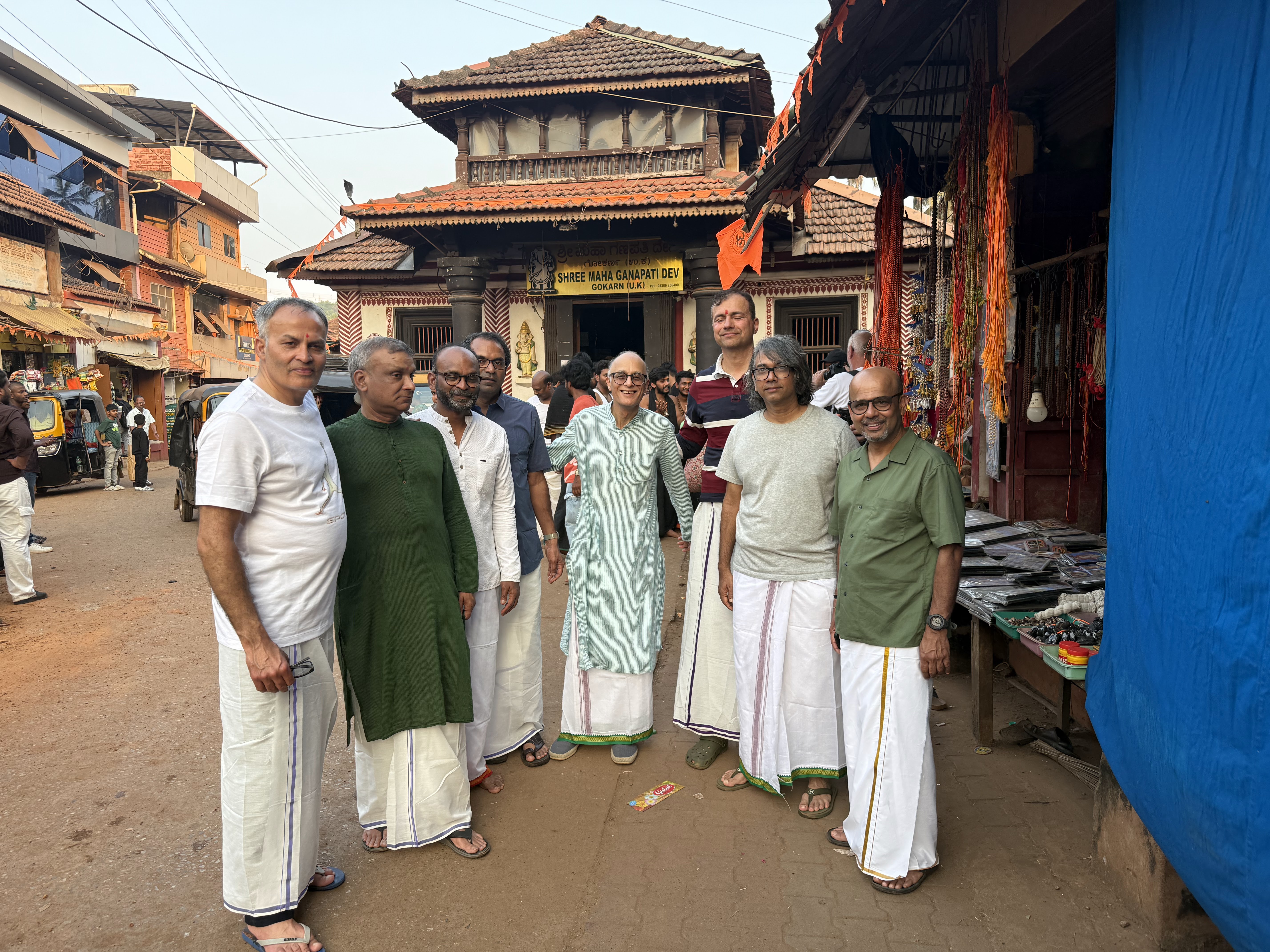
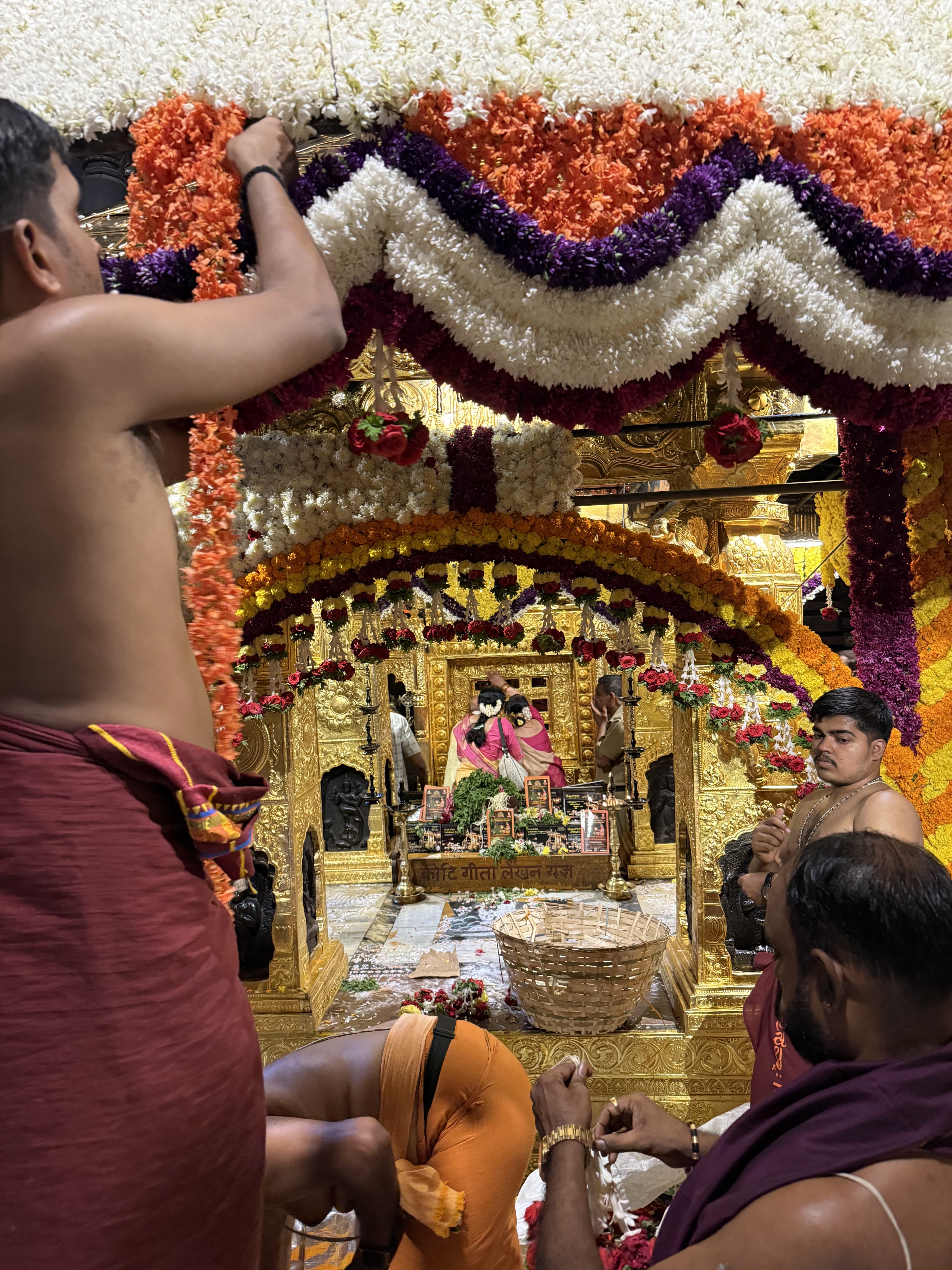
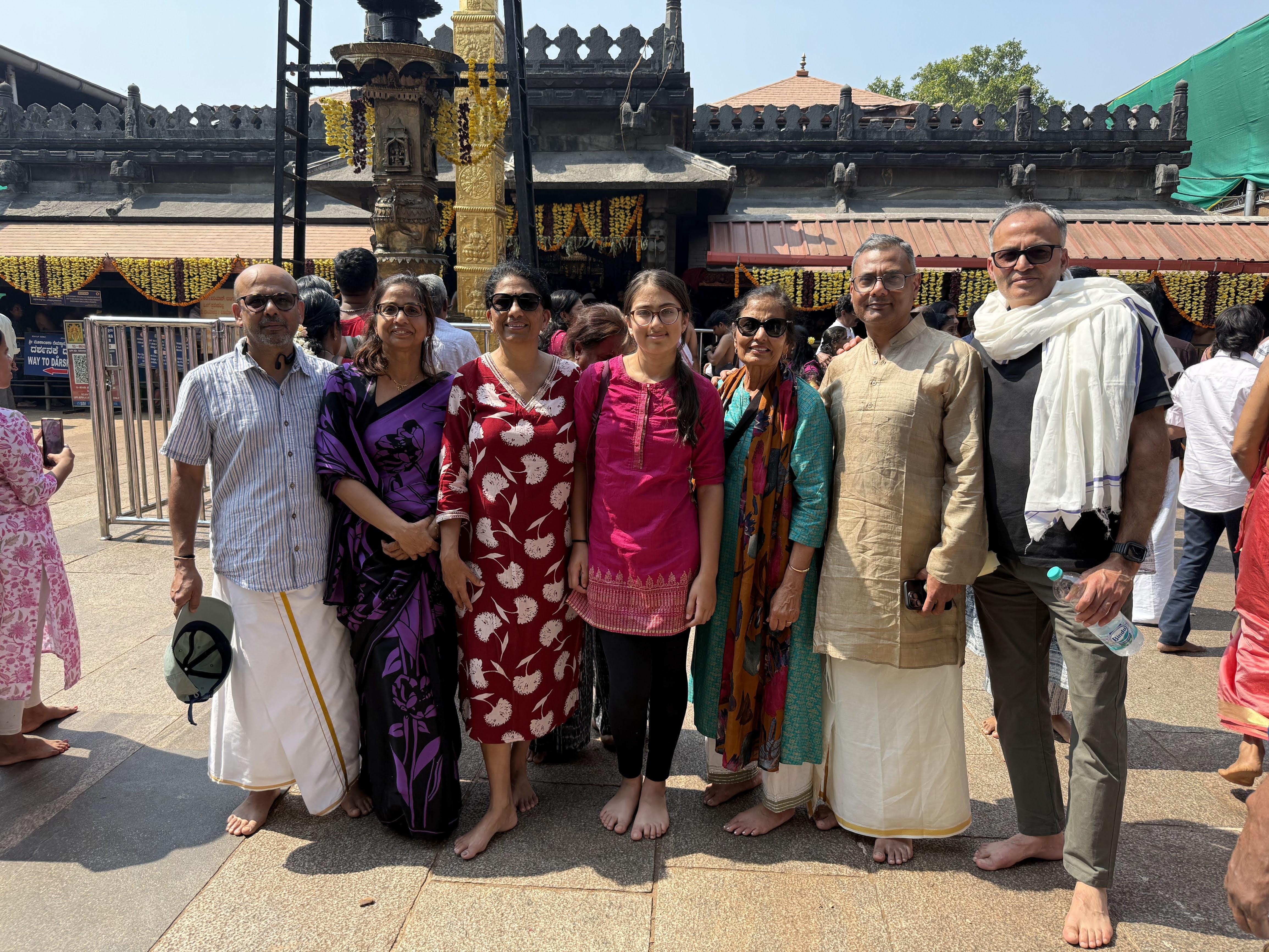
Further south, into Tulunadu, we arrived at Udupi. Here, stone softens.
The face of Balakrishna-the idol of little Krishna sits in the famous Udupi shrine. Not towering. Just intimate.
The main sanctum stands at the center, bordered by a small window with nine openings—the Navagraha Kitiki. The deity is viewed only through this frame. No direct gaze. Devotion filtered. Humility built into architecture.
The shrine now carries a newly fitted Swarna Gopuram. Gold above. Stillness below.
In Hampi, stone remembered.
In Kollur, stone radiated.
In Udupi, stone invited.
Lets move to the Saddle next-The rhythmn of the ride
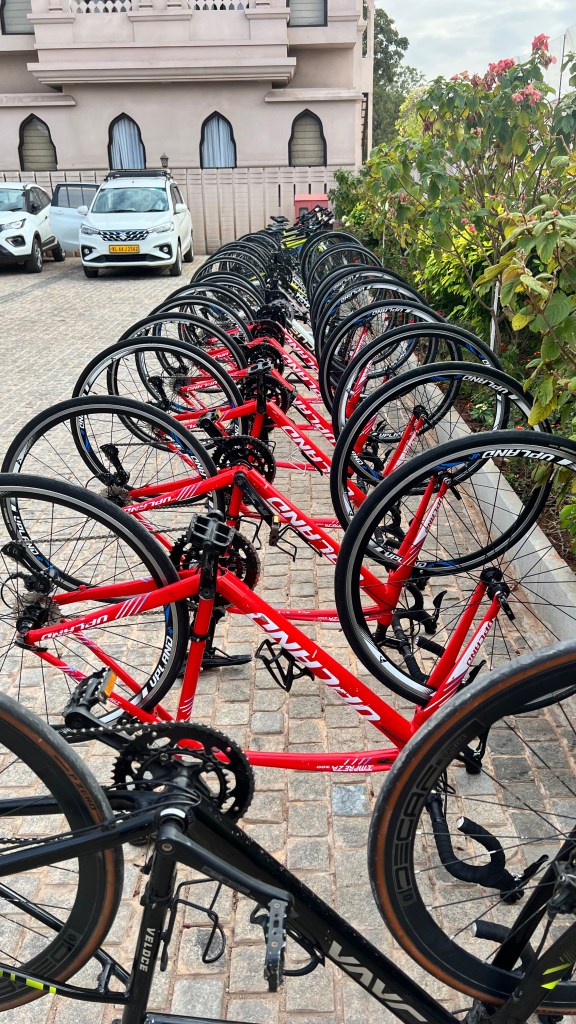
Ride with GPS—Go, Pause, See, I thought,
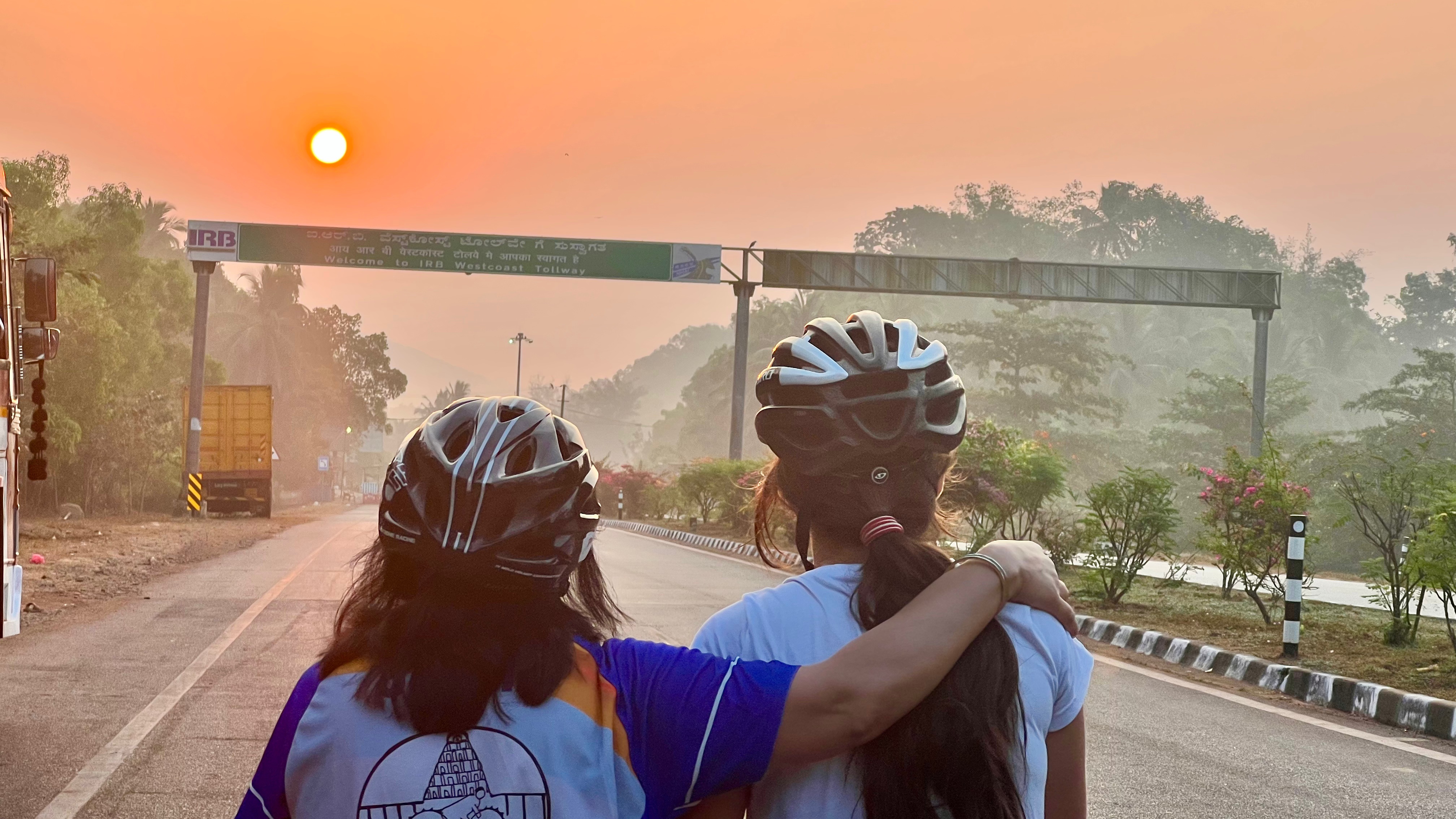
as we were dropped at our start point on Day 1, after the customary coconut breaking at day break onto the NH toward Dandeli.
Quiet roads.
Flat stretches. Riders took the easy streches with both banter and quite.
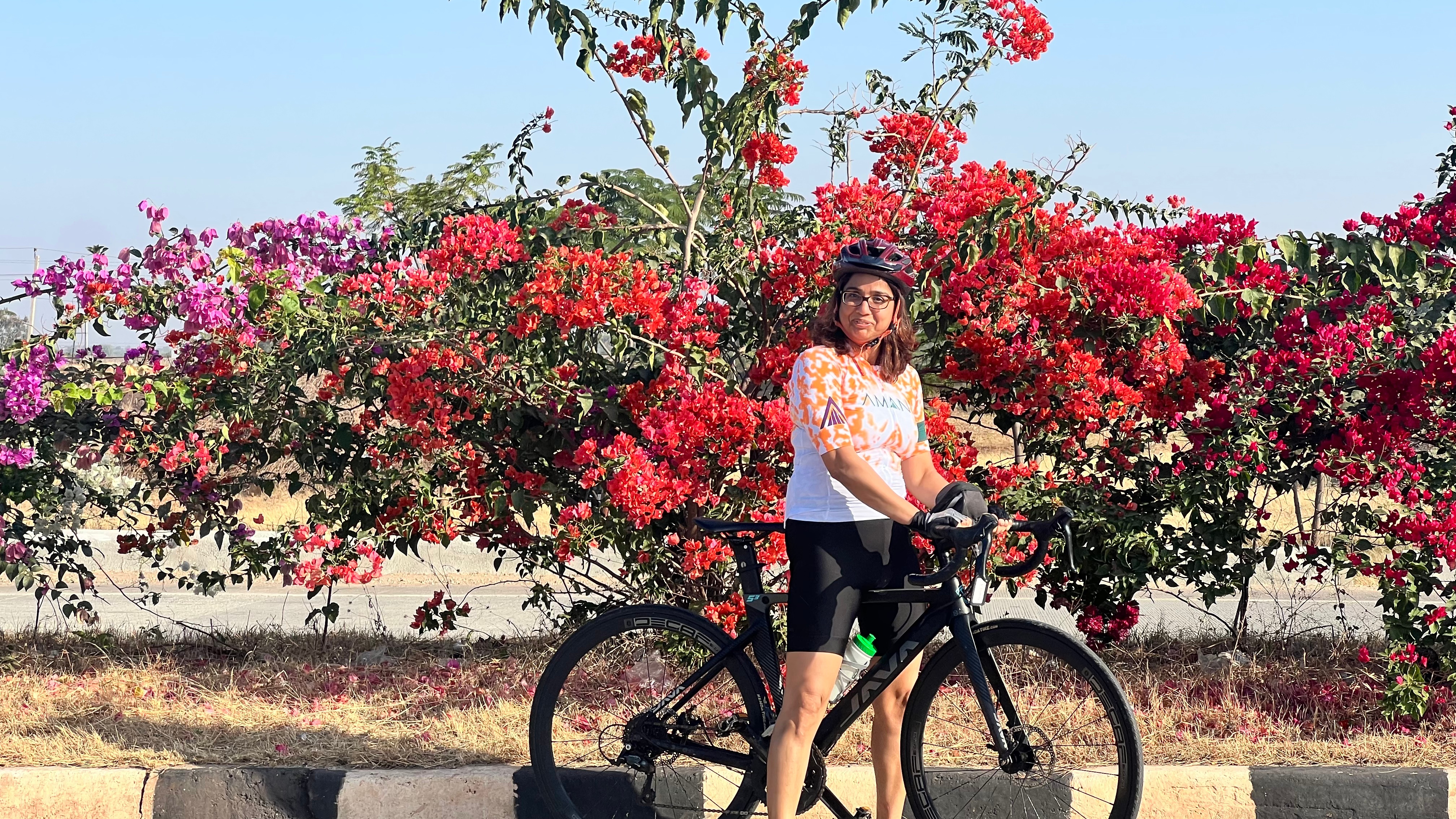
Bougainvillea blooming in the road divider,
showing off for no one in particular.
Indian cycling, in its truest form.
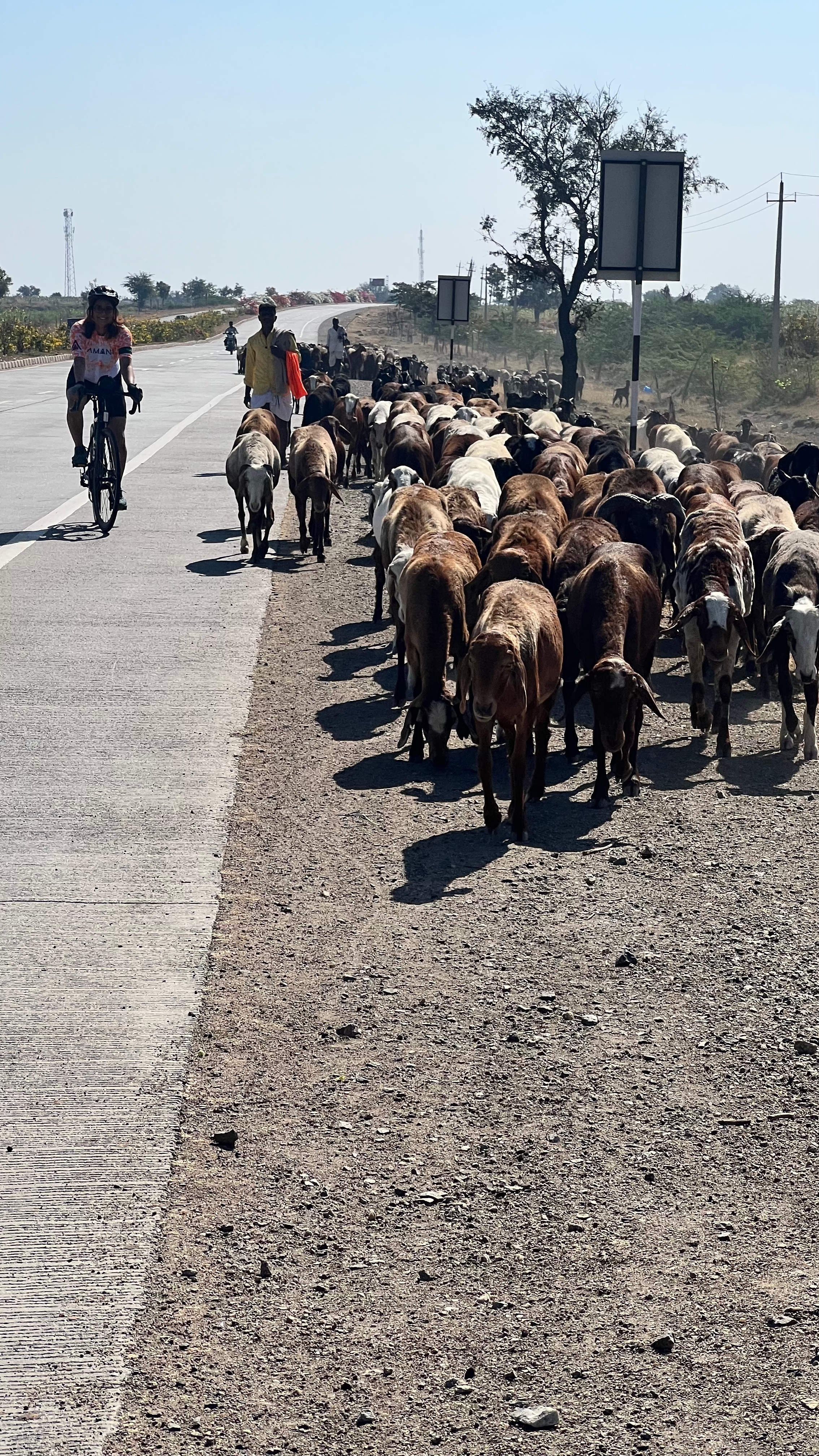
Cattle with ancestral right of way.
Traffic coming at us, not with us.
Reflexes sharpened.
Responses quicker.
At day break next day, Dandeli’s forests closed in gently.
Dense. Purposeful. We climbed the hills at our own pace.
These were not just forests for admiration. Teak all around.
Under British rule,Dandeli became a timber engine—a carefully exploited landscape,feeding an empire that valued wood more than wilderness.
An initial climb,
followed by a rewarding long downhill roll.
And suddenly, the Konkan revealed itself.
Greener. Softer. Road signs pointing toward Panaji.
And in moments of fatigue, where slowing down wasn’t a choice—it was wisdom,
I pondered about life.
Knowing that not every journey is about reaching faster.
Some are about arriving whole.
A familiar rhythm that happens on every ride for me.
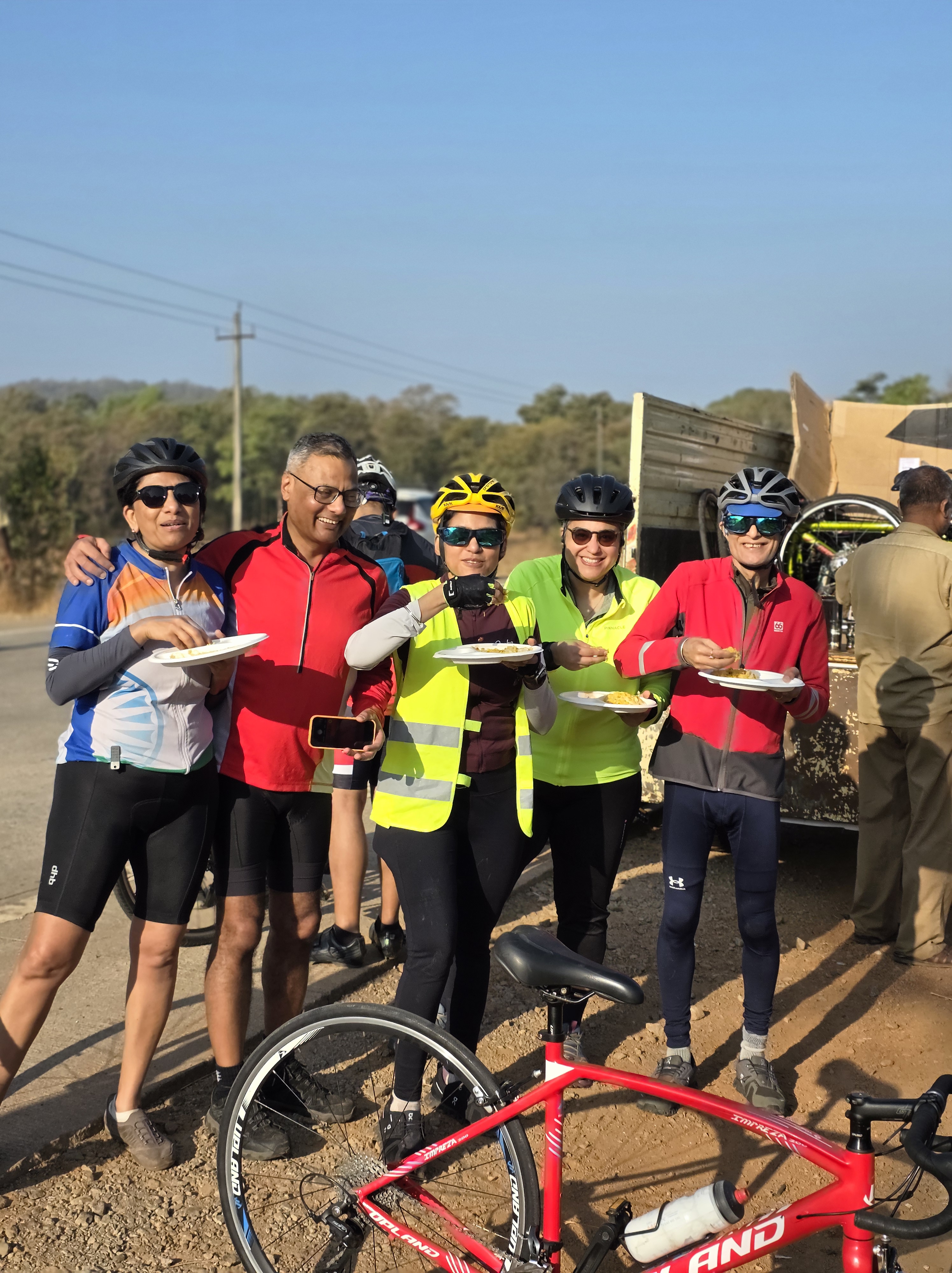
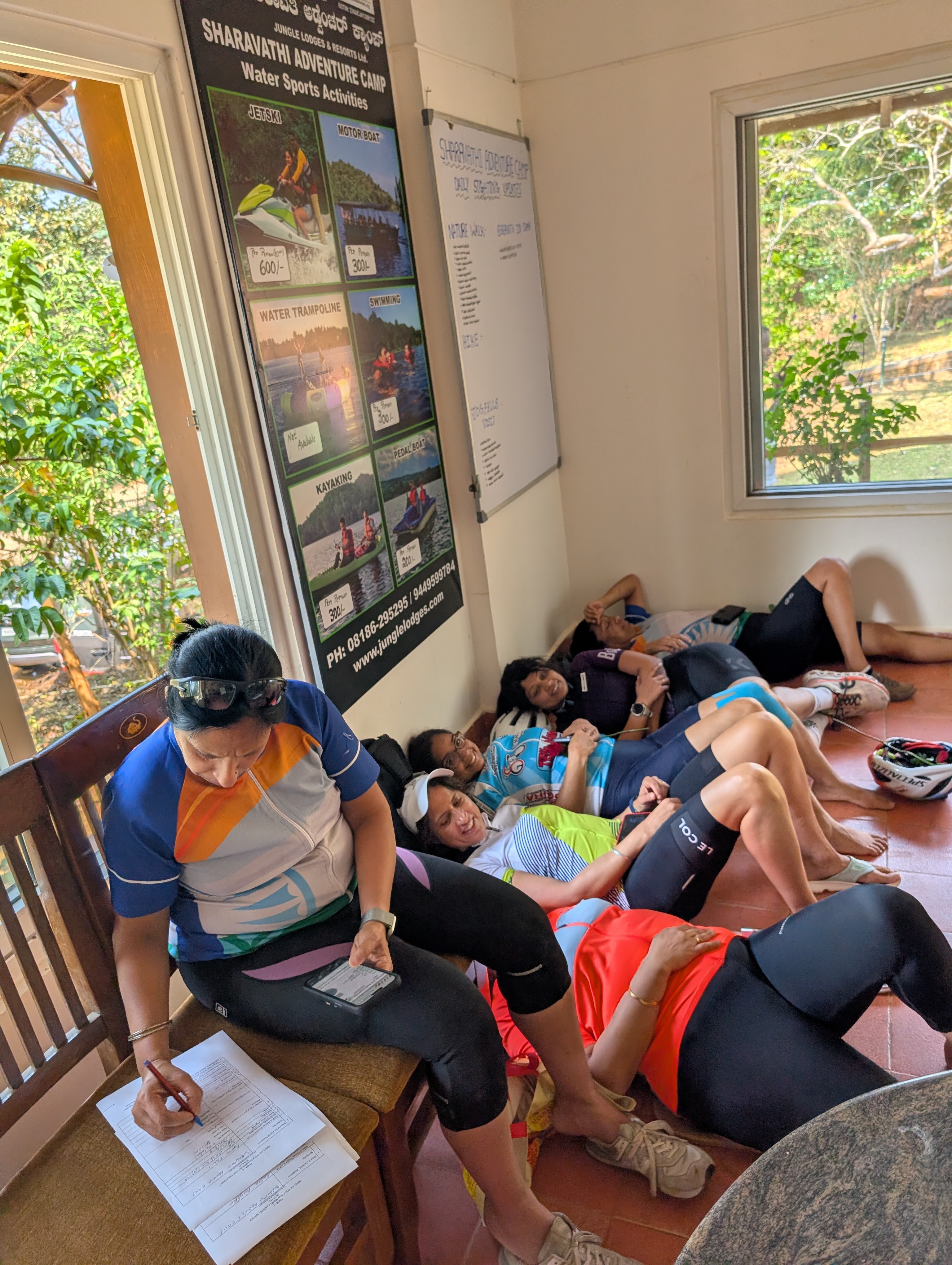
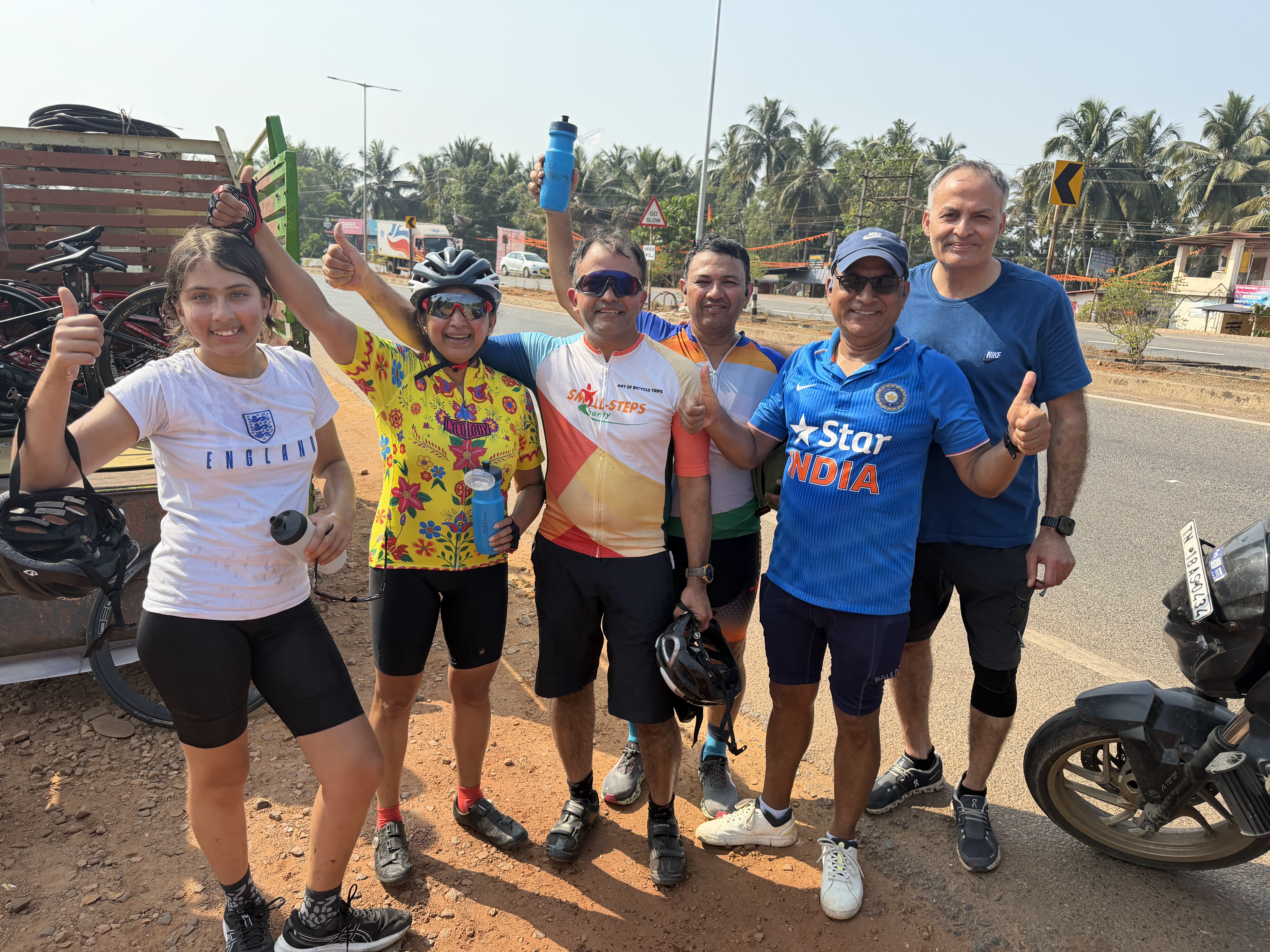
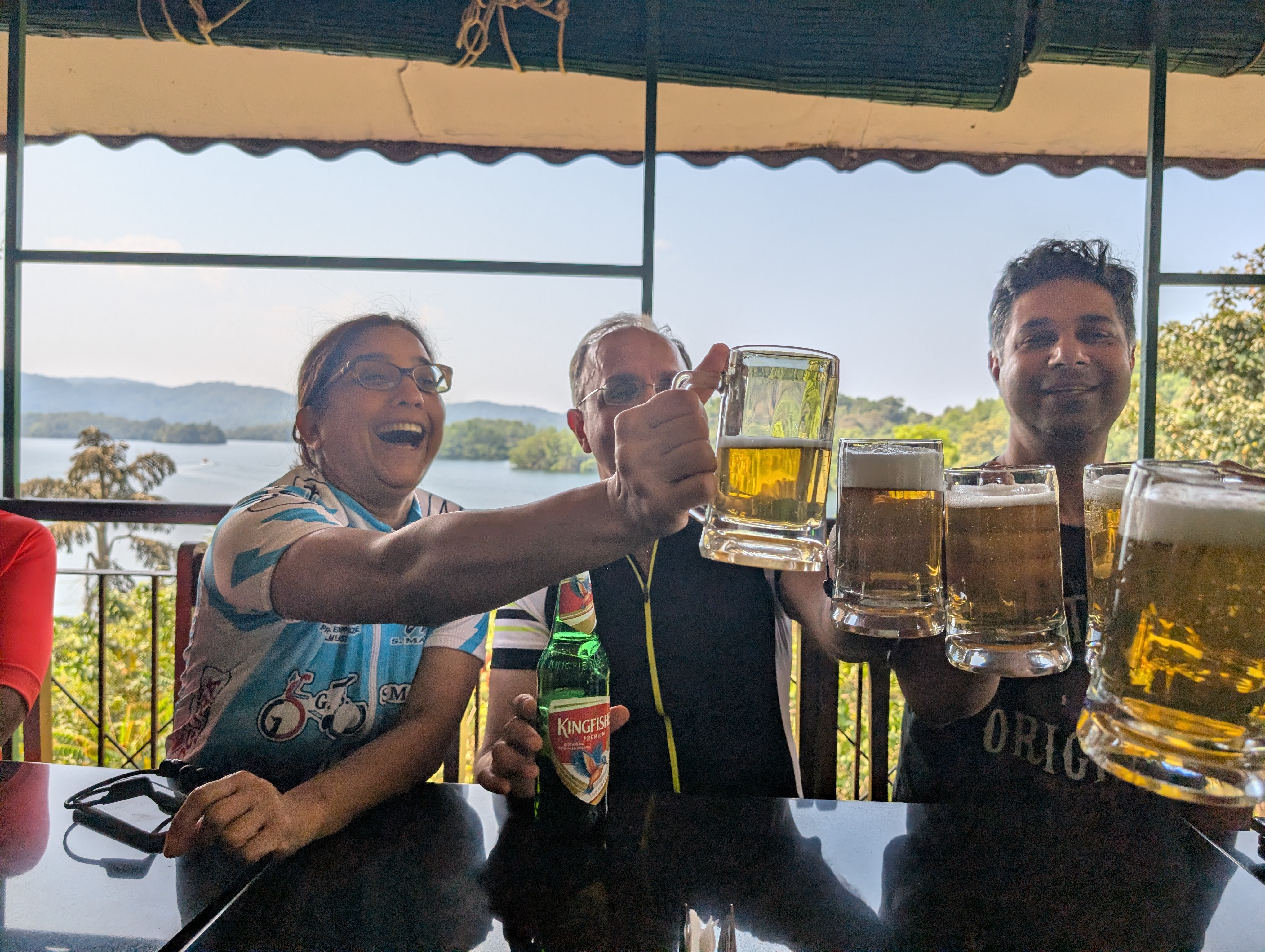
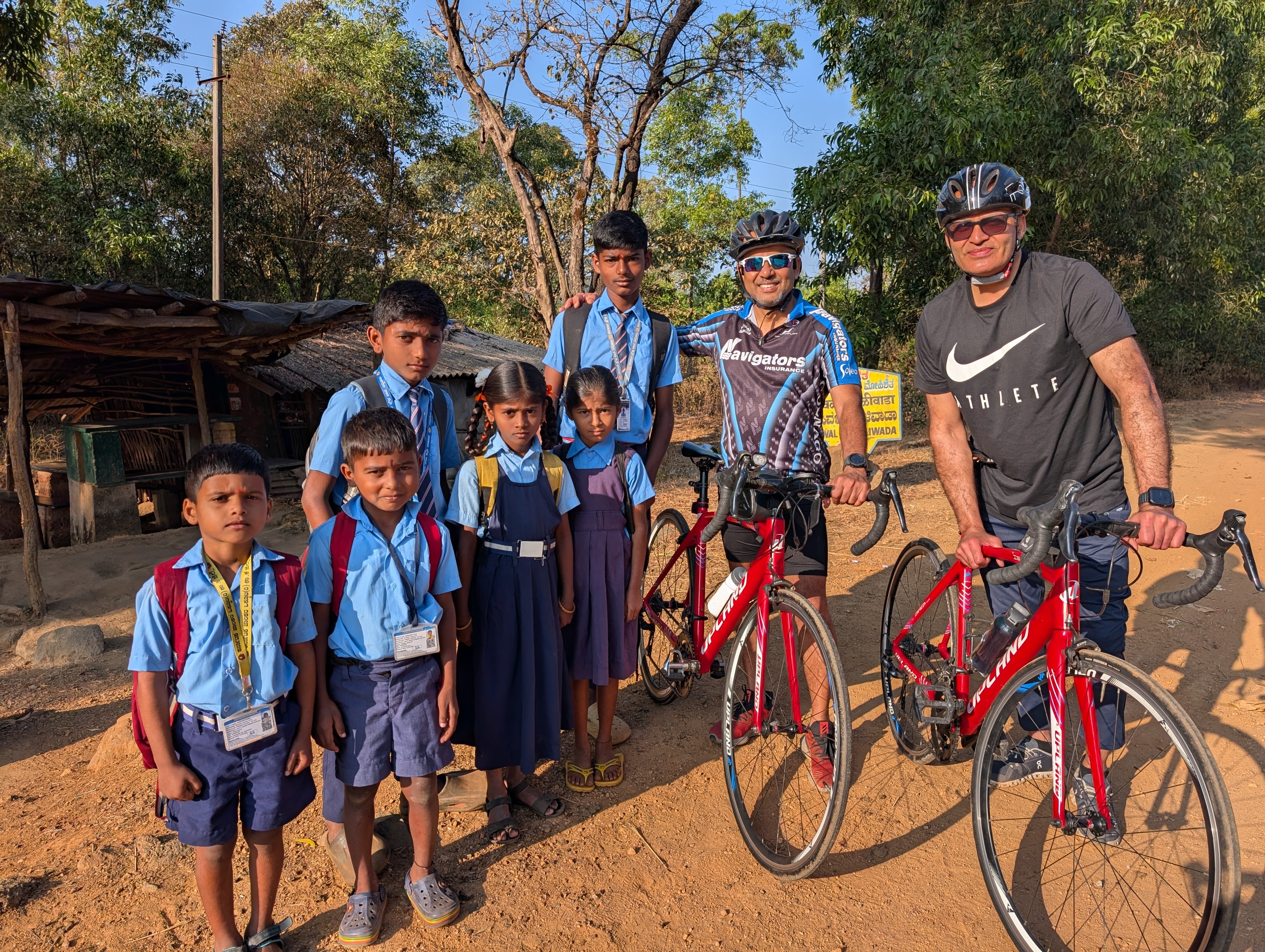
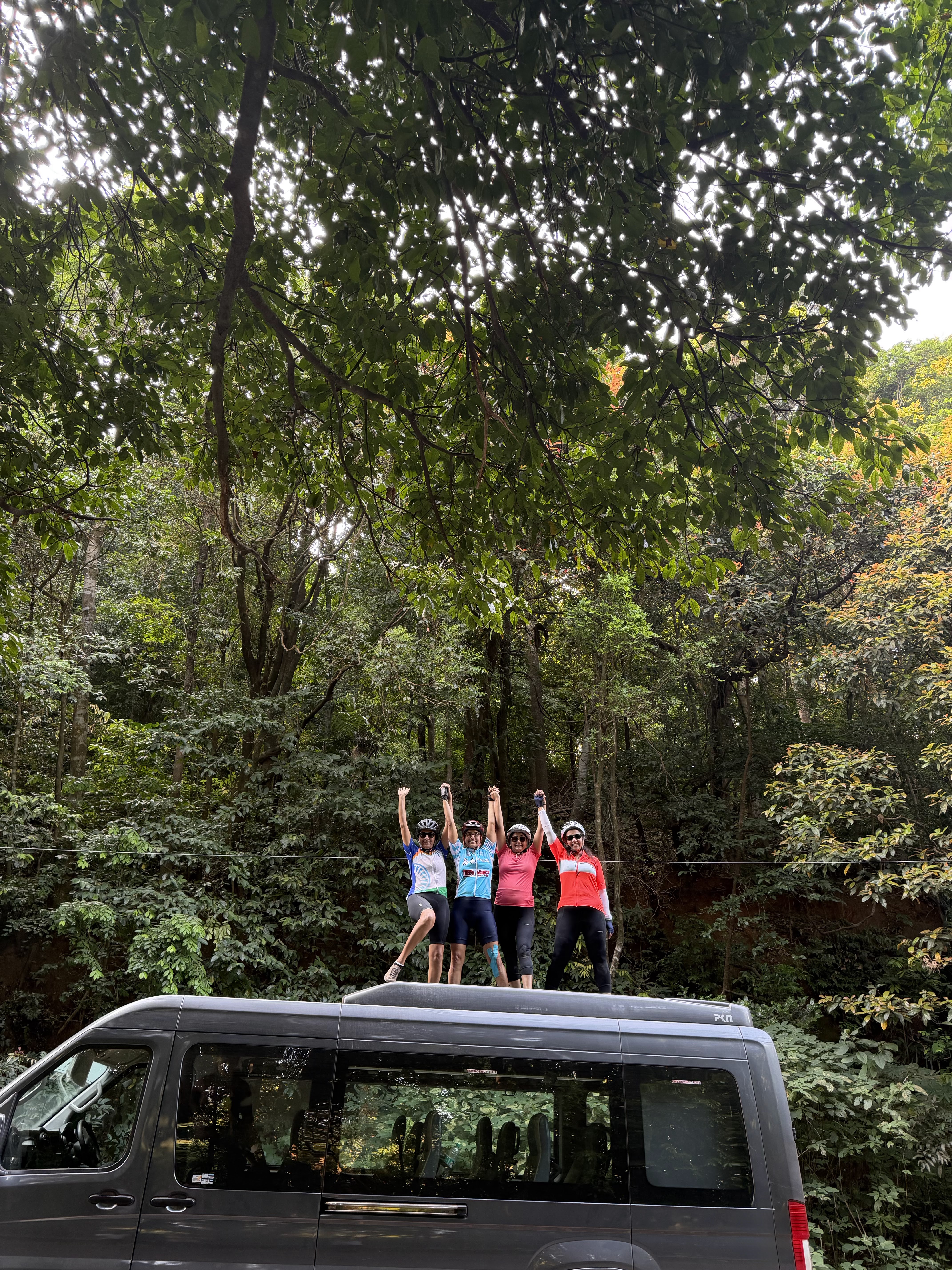
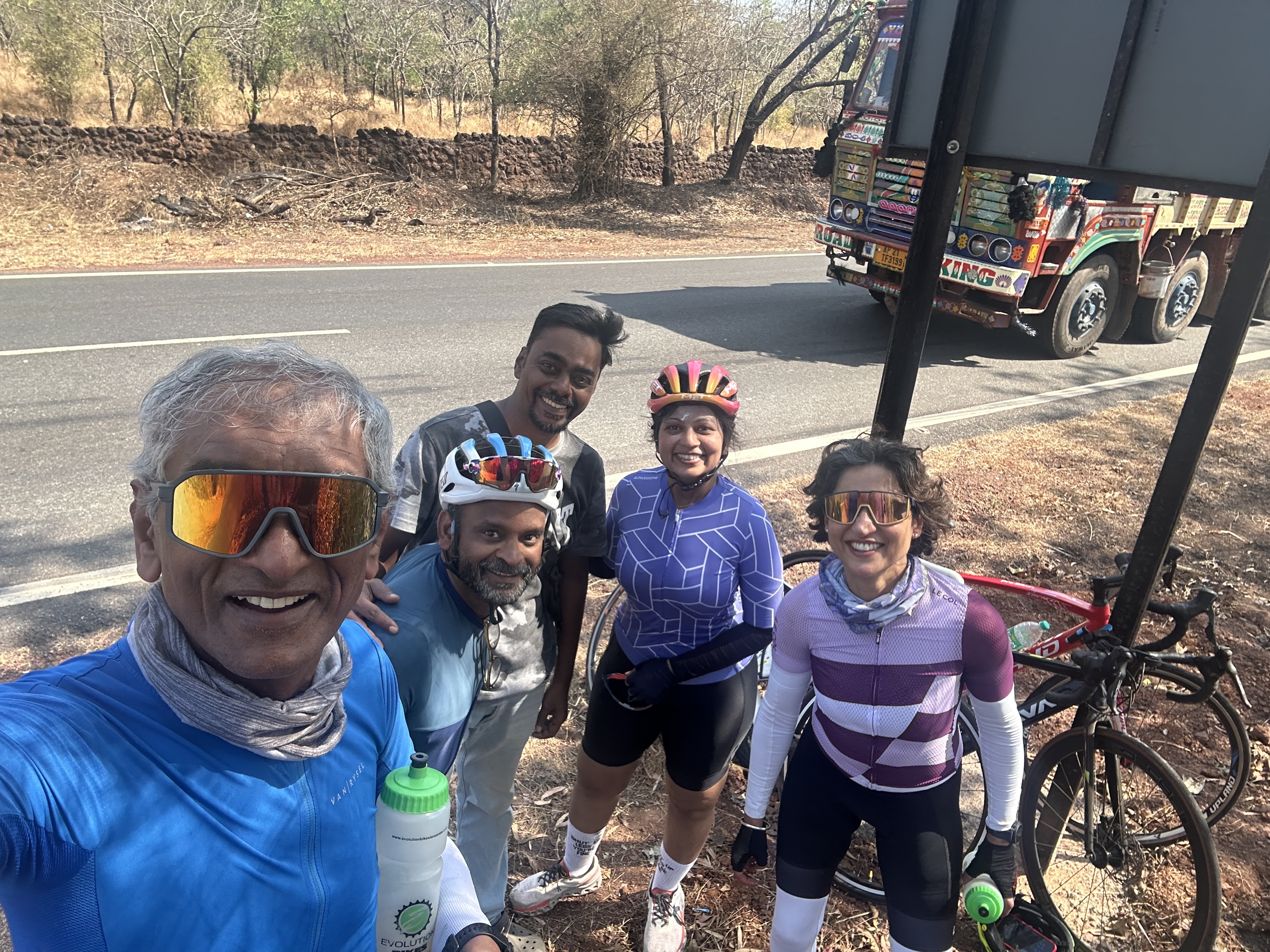
And now onto the Spirits..
What stayed with me most were the people. The spirits of the cyclists.
I have said this in previous blogs too.
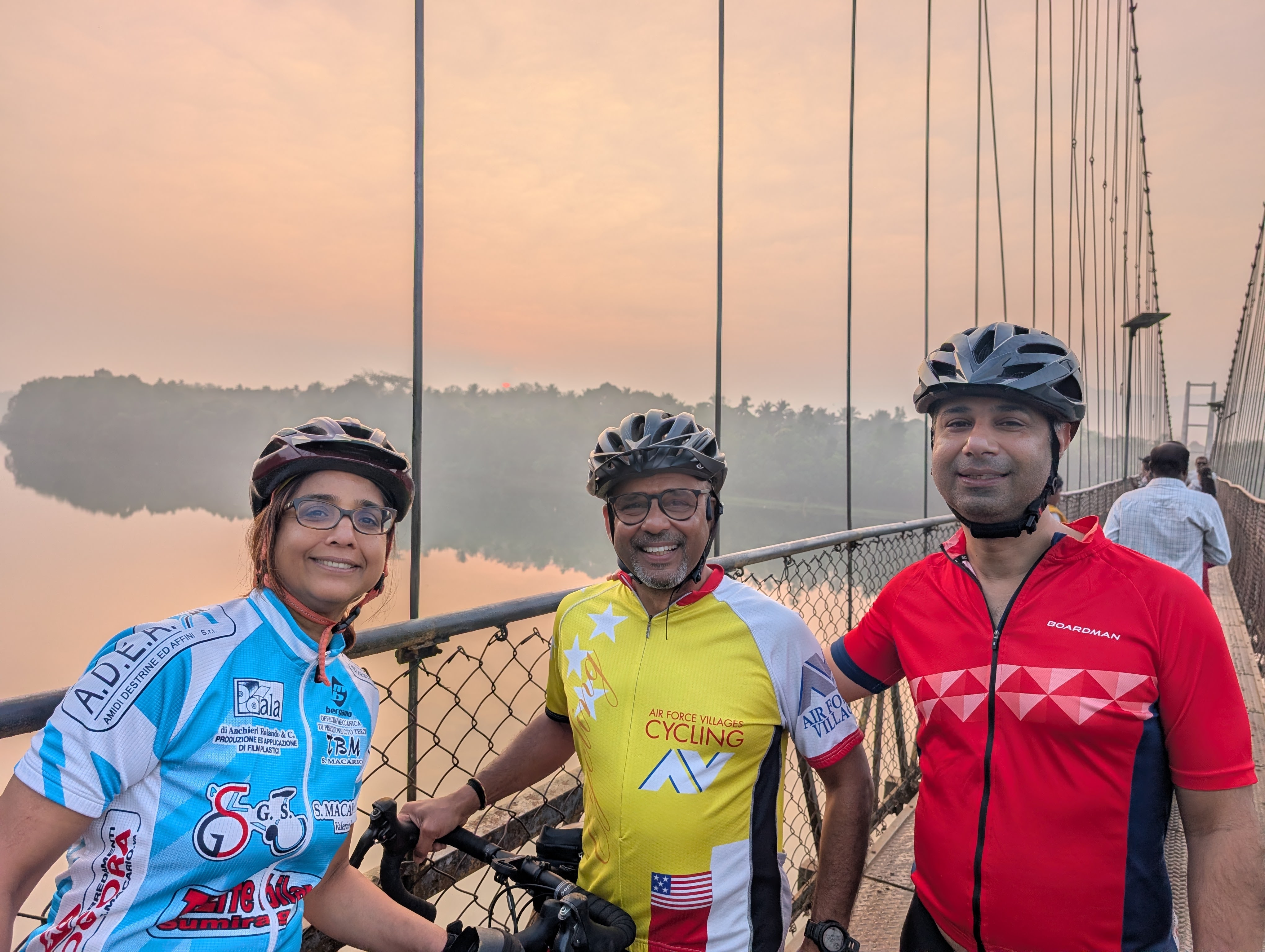
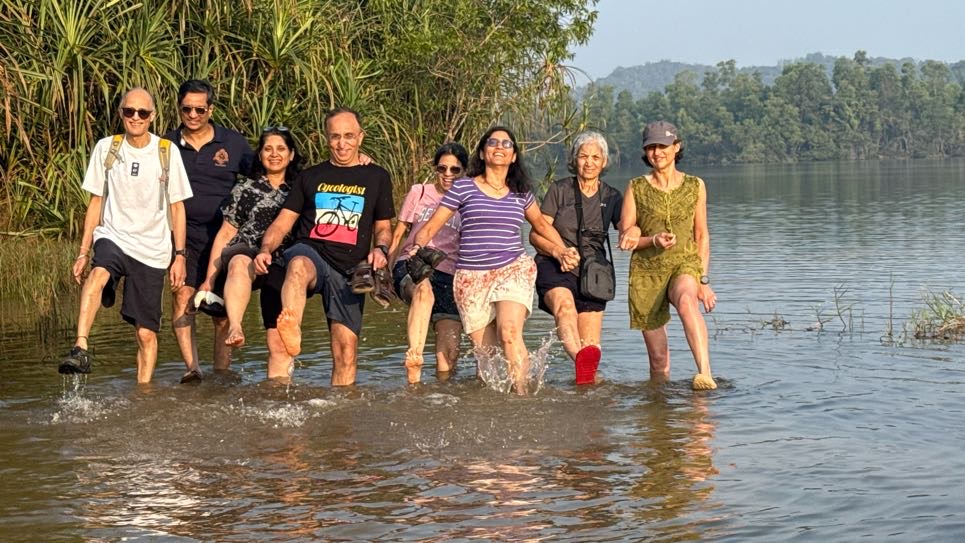
The cyclists were as always in these hybrid rides, a mixed bag. Schoolteachers. Surgeons. Techies. Finance minds. A yoga guru. A twelve-year-old student. Different lives. Different countries. One road.
On the saddle, none of that mattered.
We waited without asking. Slowed without speaking. Pushed each other when needed. Celebrated small victories invisible to the world—but everything to us.
But the Konkan ride hosted deeper, older spirits too.
The regal spirit of Krishnadevaraya still lingers in the stones of the Vijayanagara Empire—a reminder of when this land shaped empires, not just journeys.
Cycling west into Goa, the colonial spirit takes over. Portuguese facades fading under salt and sun. Tiled mansions, some still wearing their azulejo tiles, partly wrapped in tangled banyan roots and dust. Balconies holding memories. Time moving, yet strangely still.
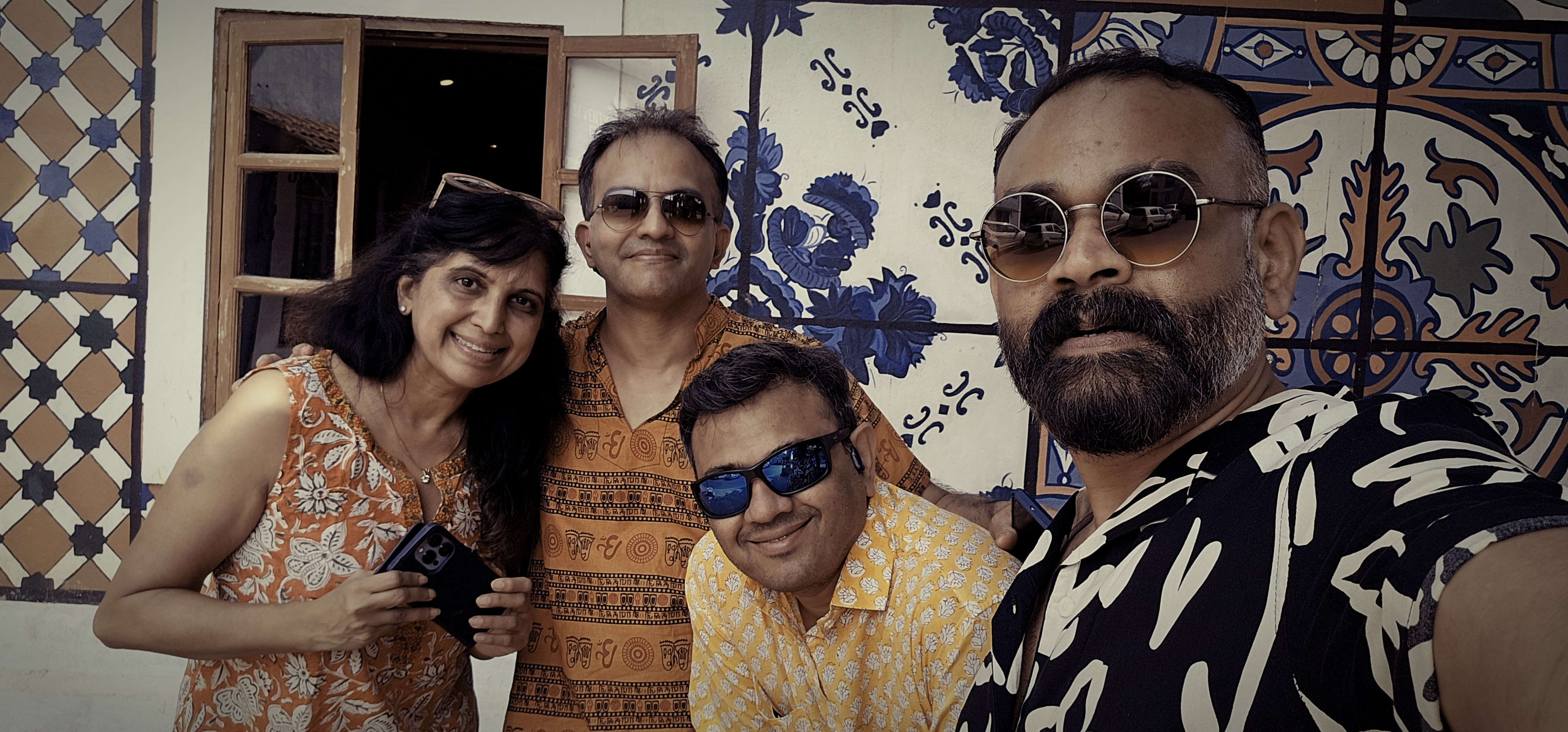
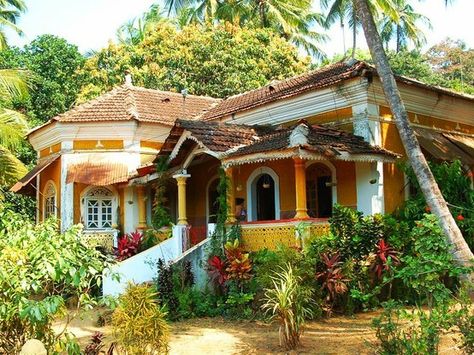
Goa rewards those who go beyond its shoreline. Past palm-fringed beaches and its bohemian reputation. Inland villages and old quarters whisper of trade, faith, and migration. Church bells drift across paddy fields. Spices linger in the air. A quieter, deeper Goan spirit reveals itself. Mario miranda, Fontainhais with a bit of Dil chahta hai beach memories produces an unique Goa spirit. The unmistakable spirit of strong cashew feni by the golden sunset—warming, loosening, tipping us gently to a euphoric spirit.
The spirit turns temple-like as we head south along the Karwar coast into Kundapura. Gentle and godly in Gokarna. Fierce in Devi Mookambika at Kollur. Celestial in Udupi.
Riding South along the Konkan coast from Goa, along the Mandovi River and into the backwaters toward the Sharavati River, the spirit shifts again. Through the forests of Dandeli and along hidden roads, nature’s spirit does what it always does—it strips away the unnecessary.
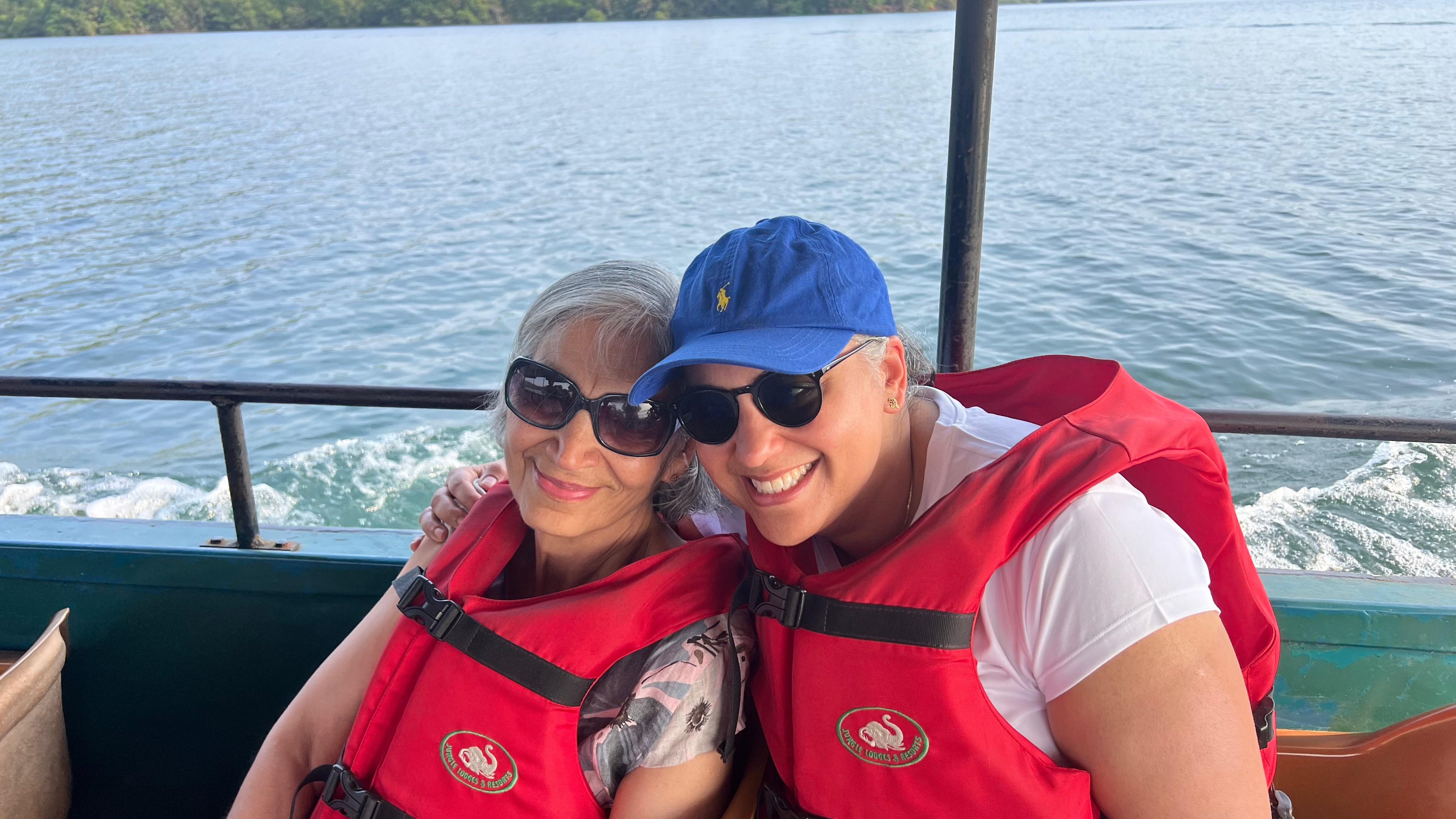
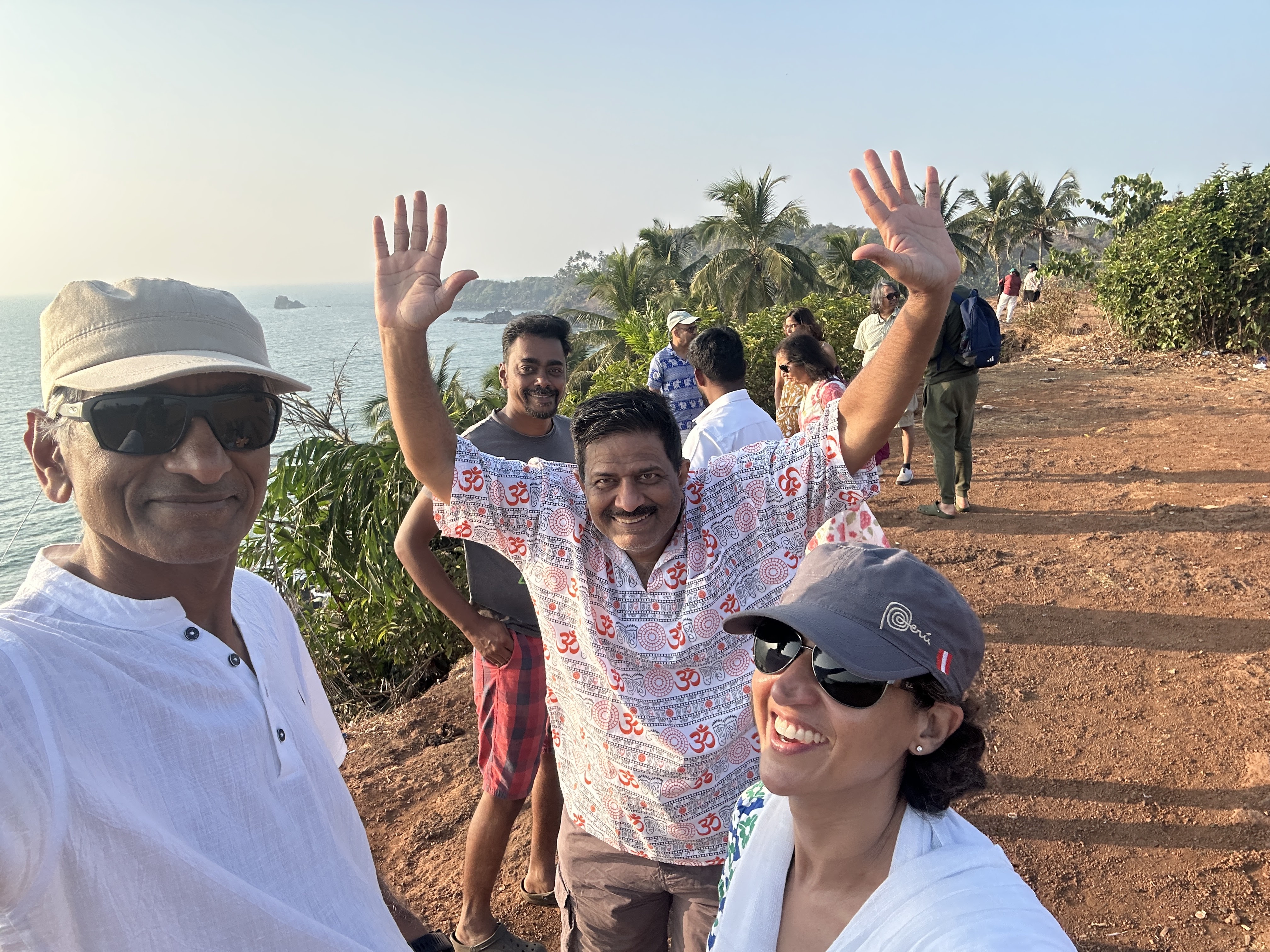
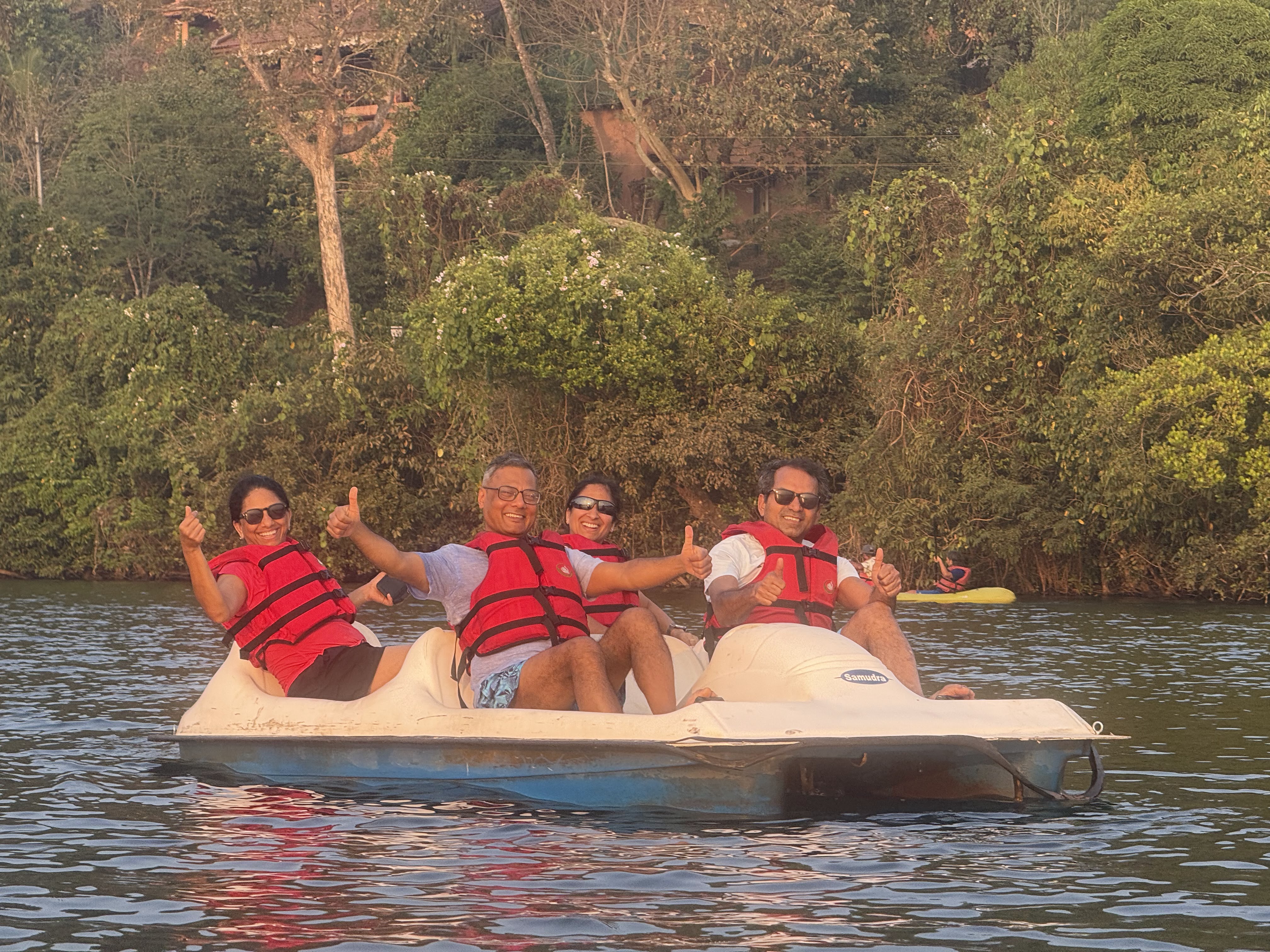
We rode where maps grew quieter.
Here, the spirit was emerald and breathing—monsoon-fed, river-washed, heavy with the scent of wet earth and wild growth. A spirit of lush abundance. A spirit of surrender.
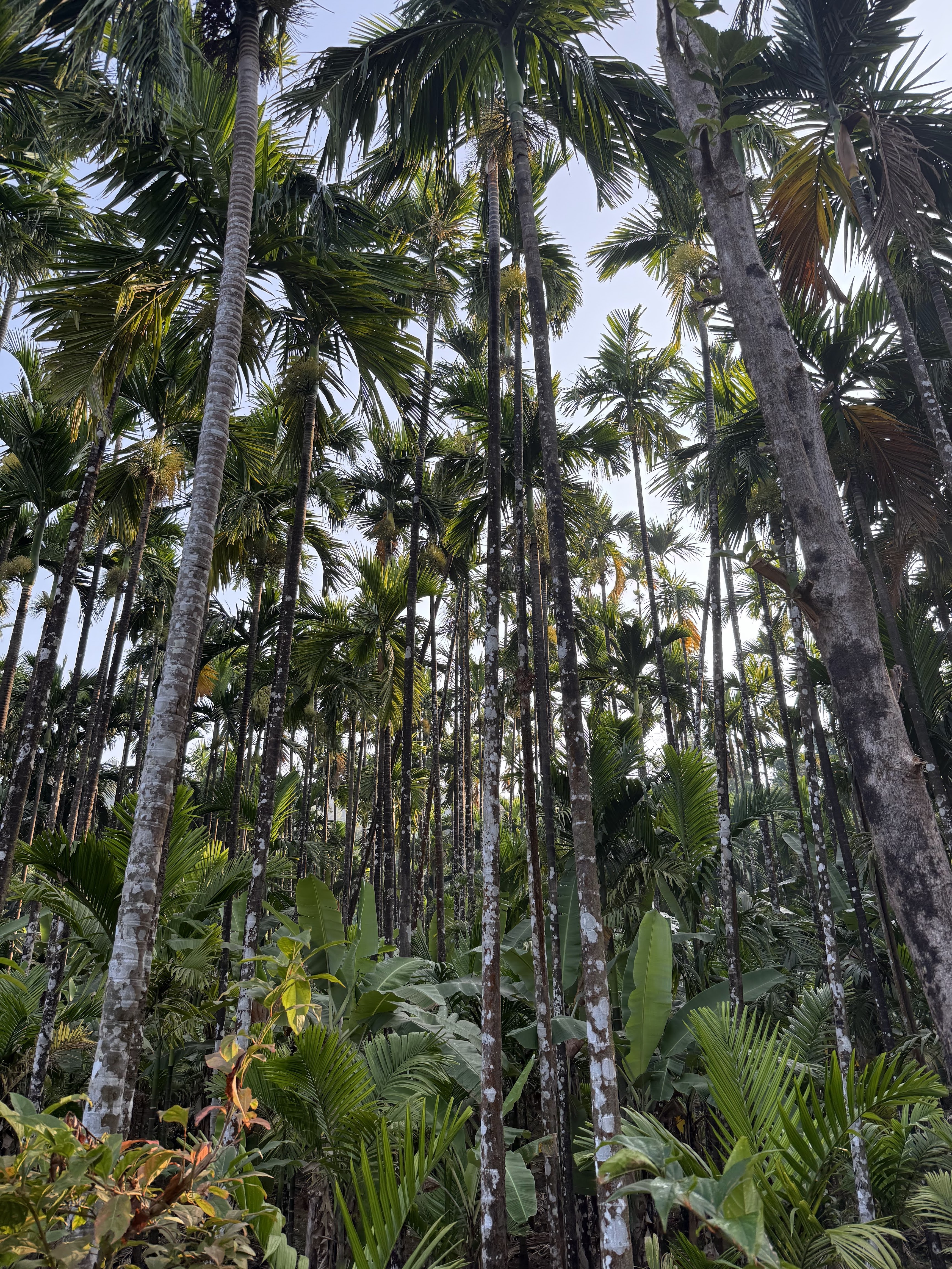
And somewhere between stone, saddle, sea, and self—the spirit was no longer around us, but within us.
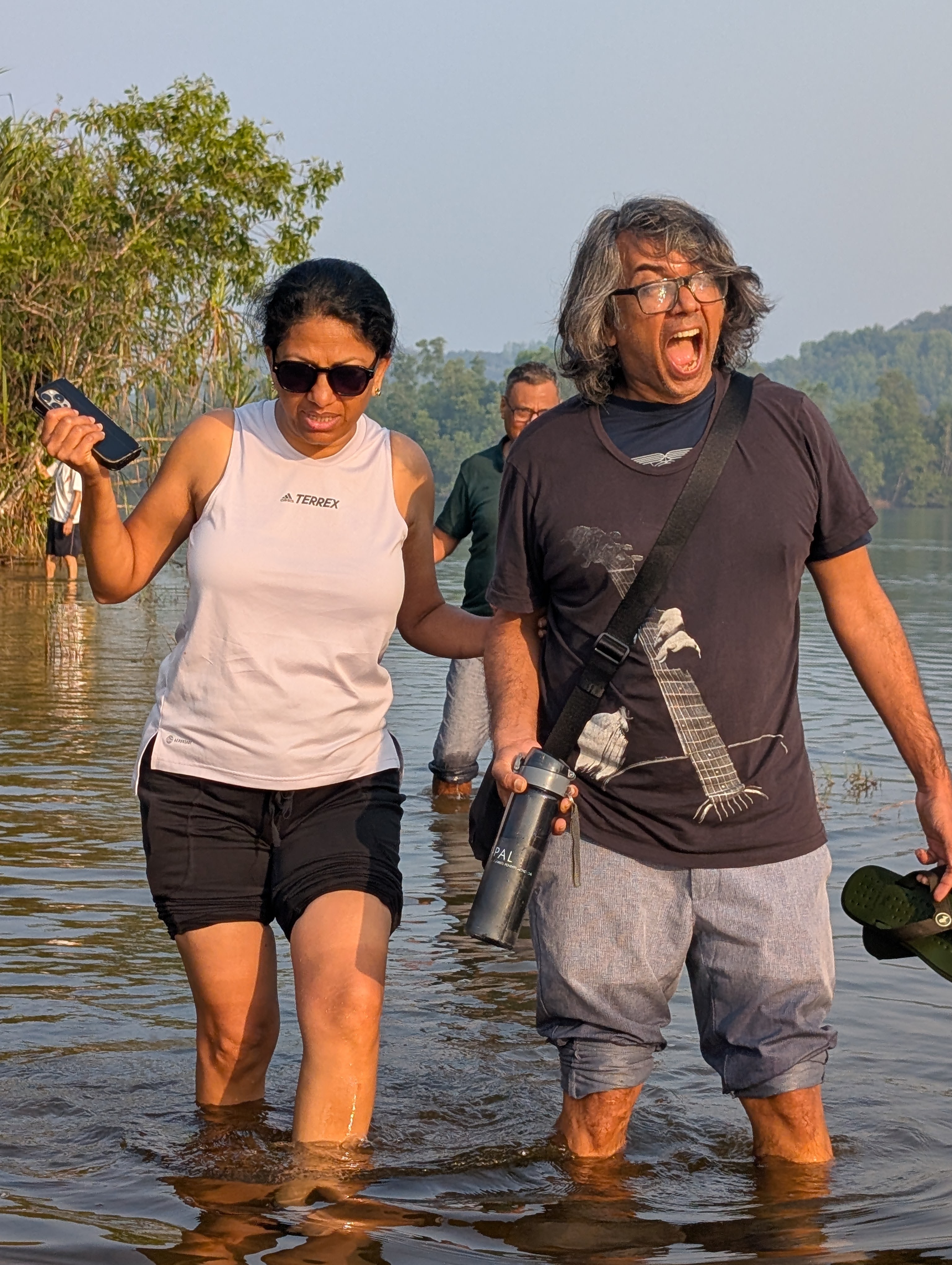
From Spirit to Sapadu
Soul food preceded the ride!
It arrived unapologetically in Dharwad—thanks to Indu’s family, who understood us foodies.
Sunil took us straight to Babu Singh Thakur Pedha in Line Bazaar.
Six generations. Same Dharwadi cows. Same patience. Same smell of caramelising milk that refuses to be rushed.
And then, the rivalry.
Mishra Pedha.
They became equals. And provoked comparison. We bought both.
Loyalty can wait. Curiosity cannot.
And frankly, the palate refused to choose. I simply loved them both.
If Dharwad peda was honesty and slow-cooked truth, its darker cousin— Kunda of Belagaum—was deeper. Moodier. Impossible to resist!
Naturally, sweetness made way for fire.
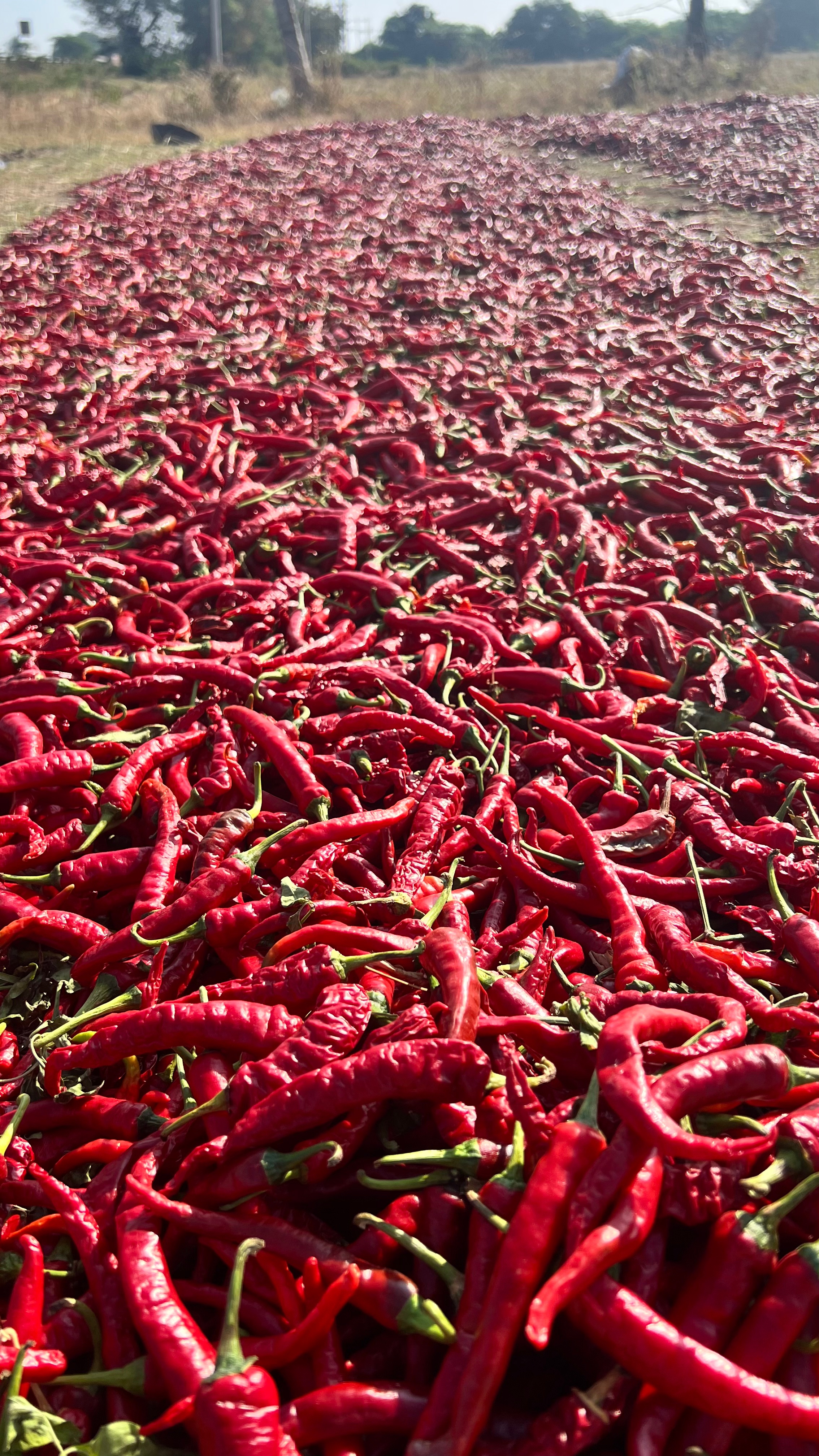
Byadgi menasinakai.
Deep red. Smoky. Dangerous without raising its voice.
Heat with dignity.
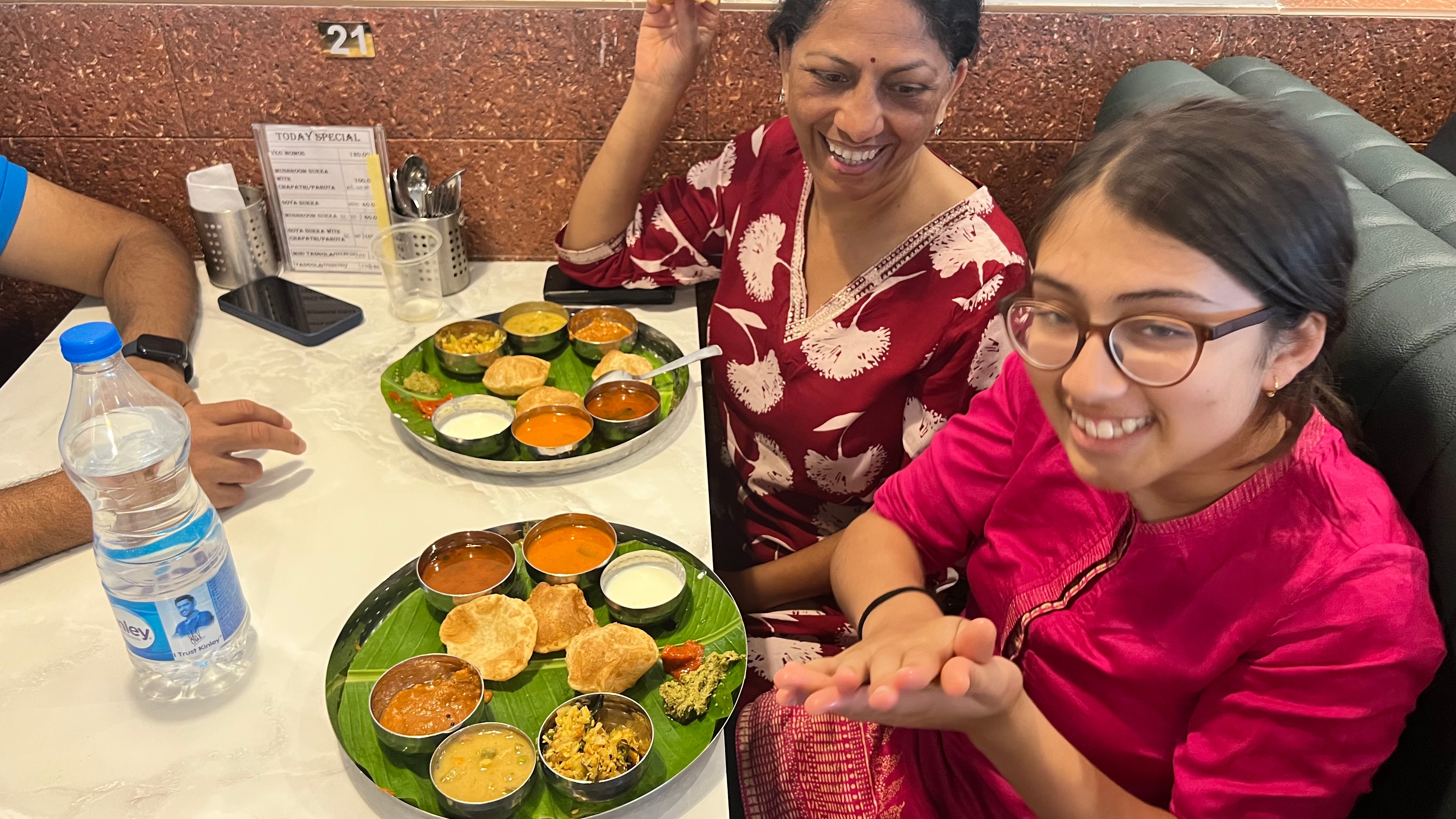
Lunch travelled with us in giant steel tiffin carriers. Still warm. Still breathing.
Jolada rotti. Ragi balls. Shenga chutney.
Food that didn’t accompany the ride.
It led it.
Further west, Goa changed the script.
We walked into small, nameless shops.
Wooden shelves. Ceiling fans. Time paused mid-spin.
Spices wrapped in newspaper. Jumbo cashews, skin intact. Honest. Unprocessed.
Every one of us left with an XL packet. Restraint had quietly exited.
The Goan thali was geography on a plate.
Fish. Coconut. Kokum. Sea and soil, in permanent agreement.
Dessert was bebinca. Layered patience.
It briefly lost the spotlight to the Instagram diva—tres leches.
Photogenic. Attention-seeking.
Bebinca didn’t compete. It had history on its side.
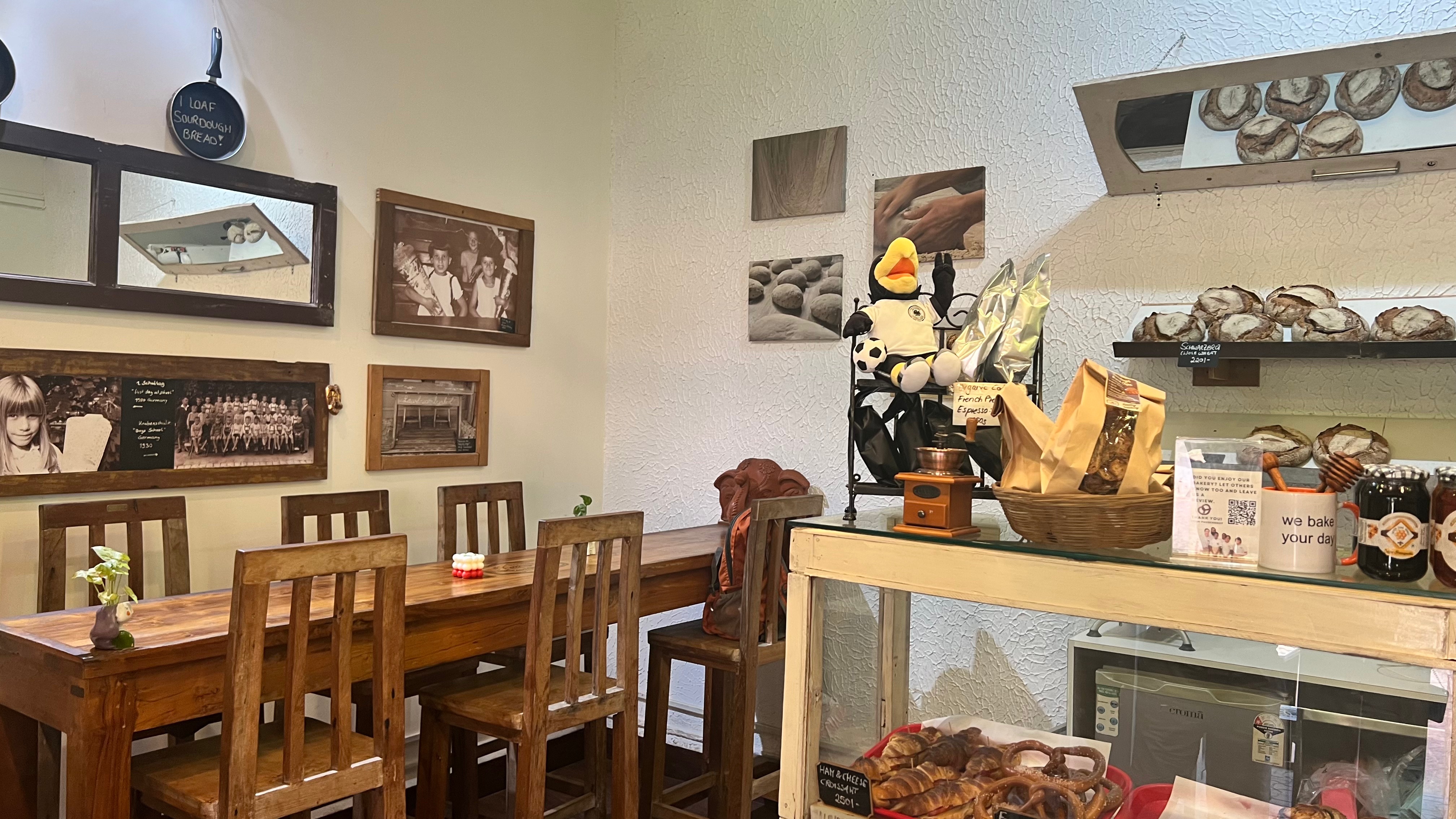
At the Sharavati River ecolodge, head cook Nagesh rewrote our mornings.
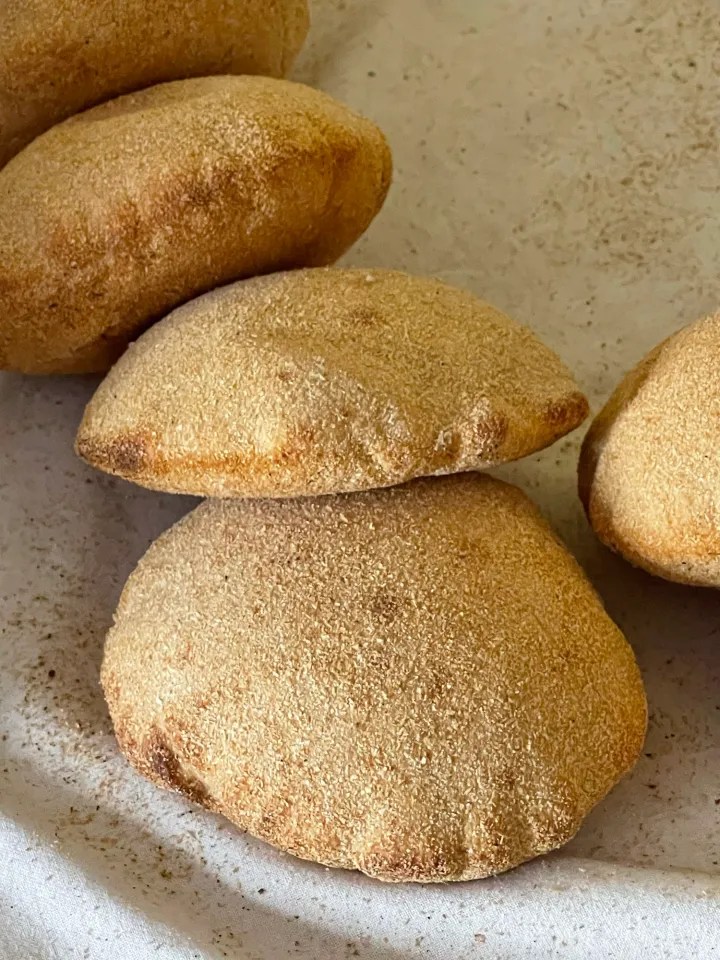
Mangalore buns. Goli baje. Golden. Fermented joy.
Further south, lunch in Kundapura prepared us for what was coming.
Because Udupi does not serve food.
It serves satiety. Balance.
Udupi Brahmin cuisine is composed rather than cooked.
No onion. No garlic. No excess.
Just coconut. Curry leaves. Asafoetida. Fenugreek.
Rice. Sambar. Rasam. Kosambari. Buttermilk.
The simplicity touches the foodie soul.
Confidence without decoration.
Our pit stops were not car boots with bread and hummus.
They were better.
Hot pongal, sambar, and vada at sunrise.
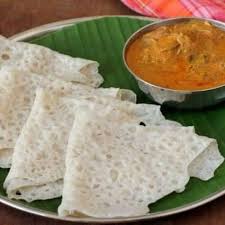
Neer dose in a roadside shack. Fresh chutney. Cooked Maggi. Peanut chikki.
Jeera buttermilk. Spiced soda. Boti puri.
And thati nungu—nature’s own coolant.

We carried one last souvenir home.
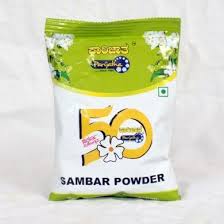
Parijata rasam powder.
Humble packet. Immense promise.
Because long after the legs forget the climbs,
the tongue remembers.
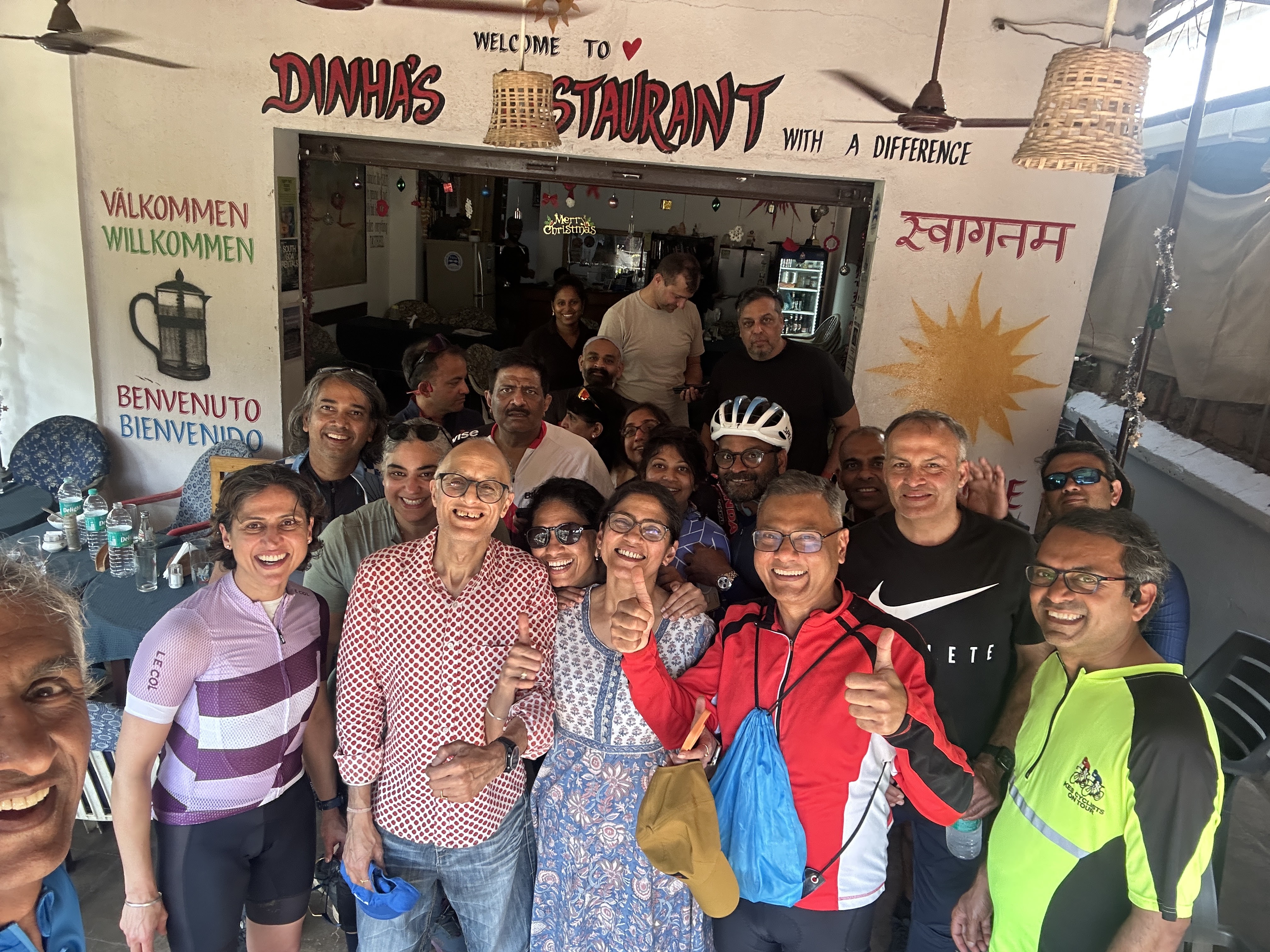
Finally, the debate—Solo or Social ride.
This ride was social.
That was its outward gift.
Chatter beside you. Wheels in and out of rhythm. Conversations without agenda.
Science has a word for what followed. Neuroplasticity.
Social interaction elevates Brain-Derived Neurotrophic Factor (BDNF)—the quiet fertilizer of the happy brain. Neurons rewire. And thus, the mood lifts.
Now, let’s flip the coin.
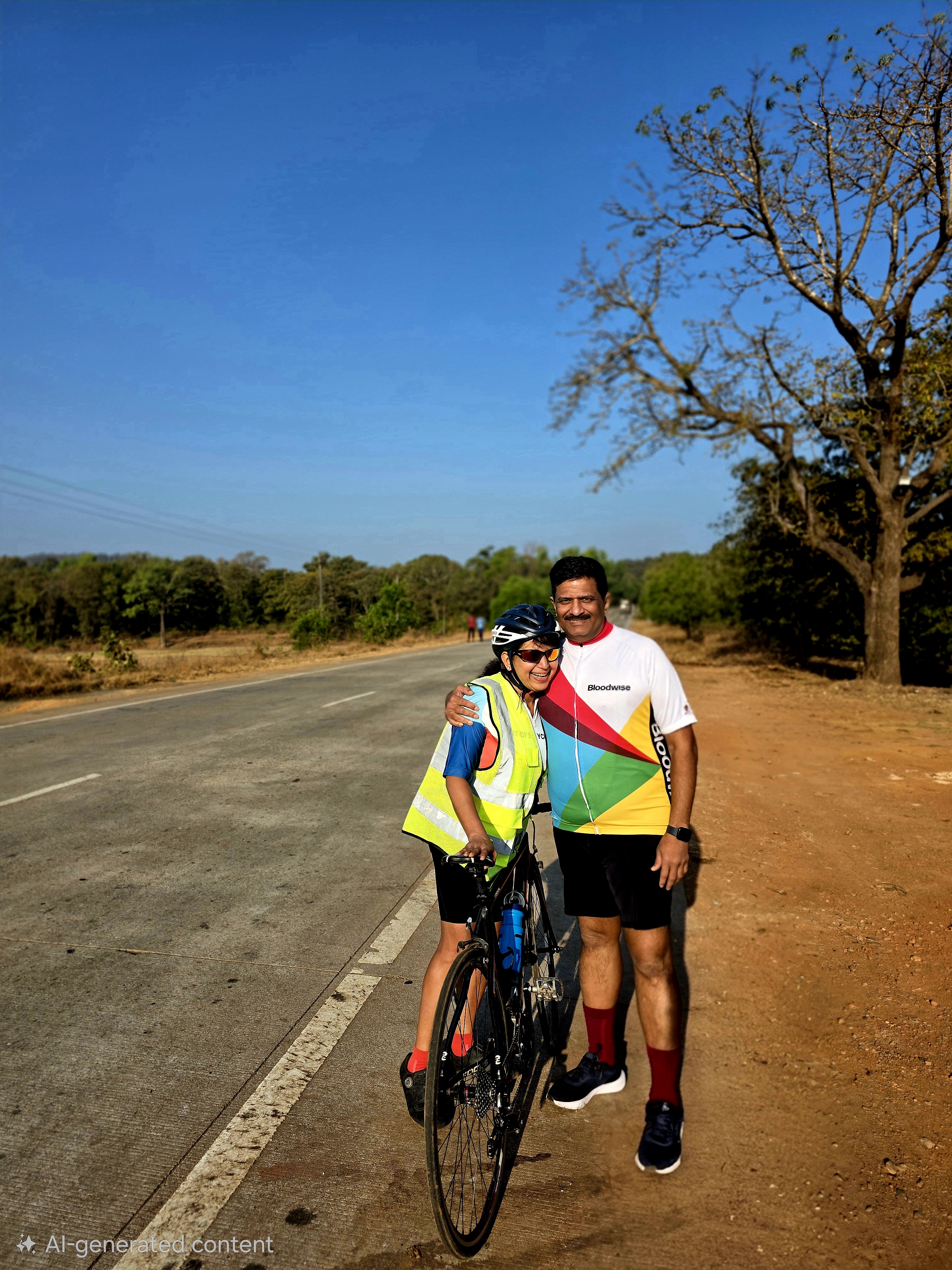
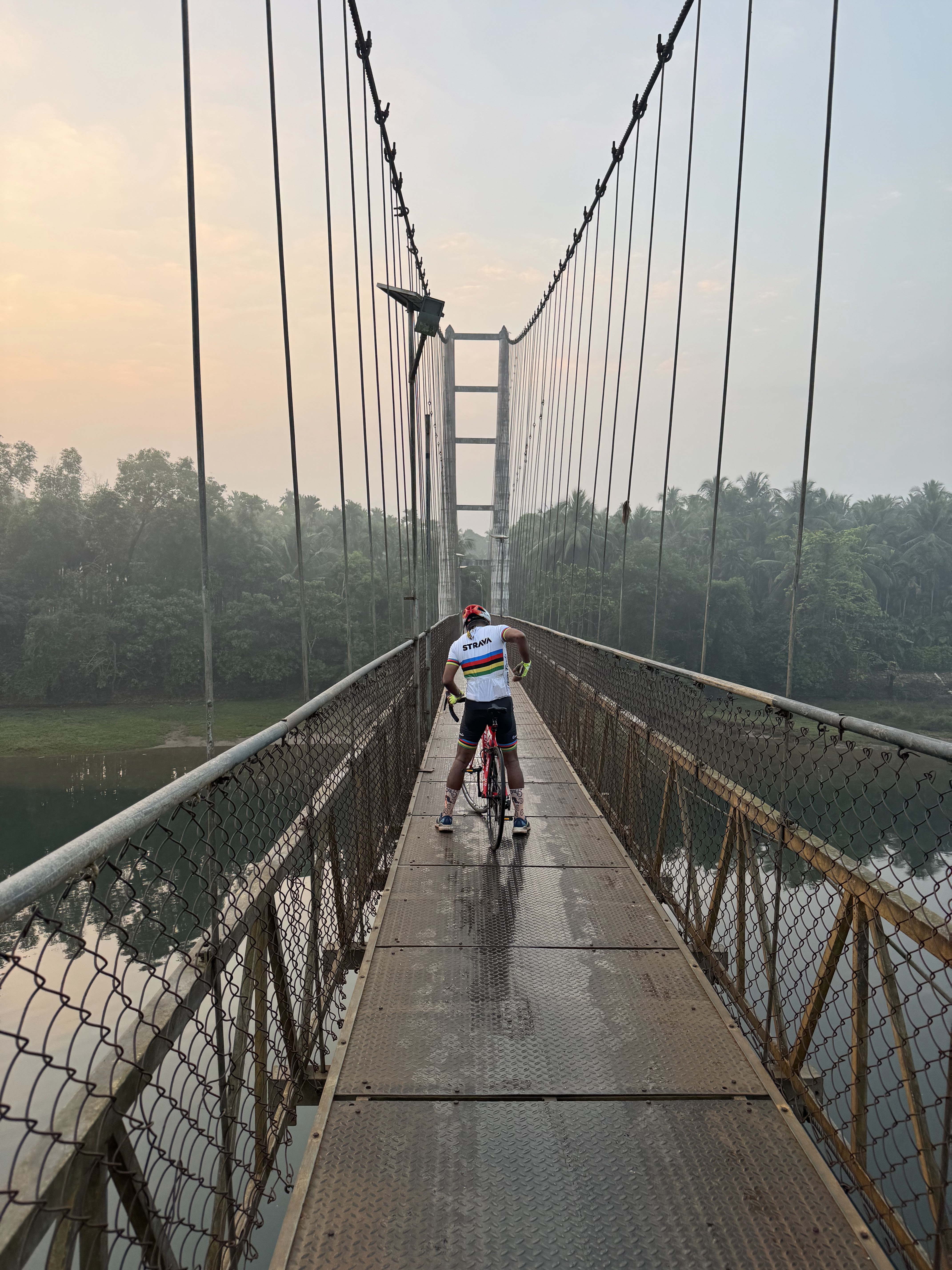
The ride was also solitary.
Long stretches with no conversation. No phone.
Just pedal.
In that reflective space, the brain rewired differently.
Thoughts settled. Problems softened.
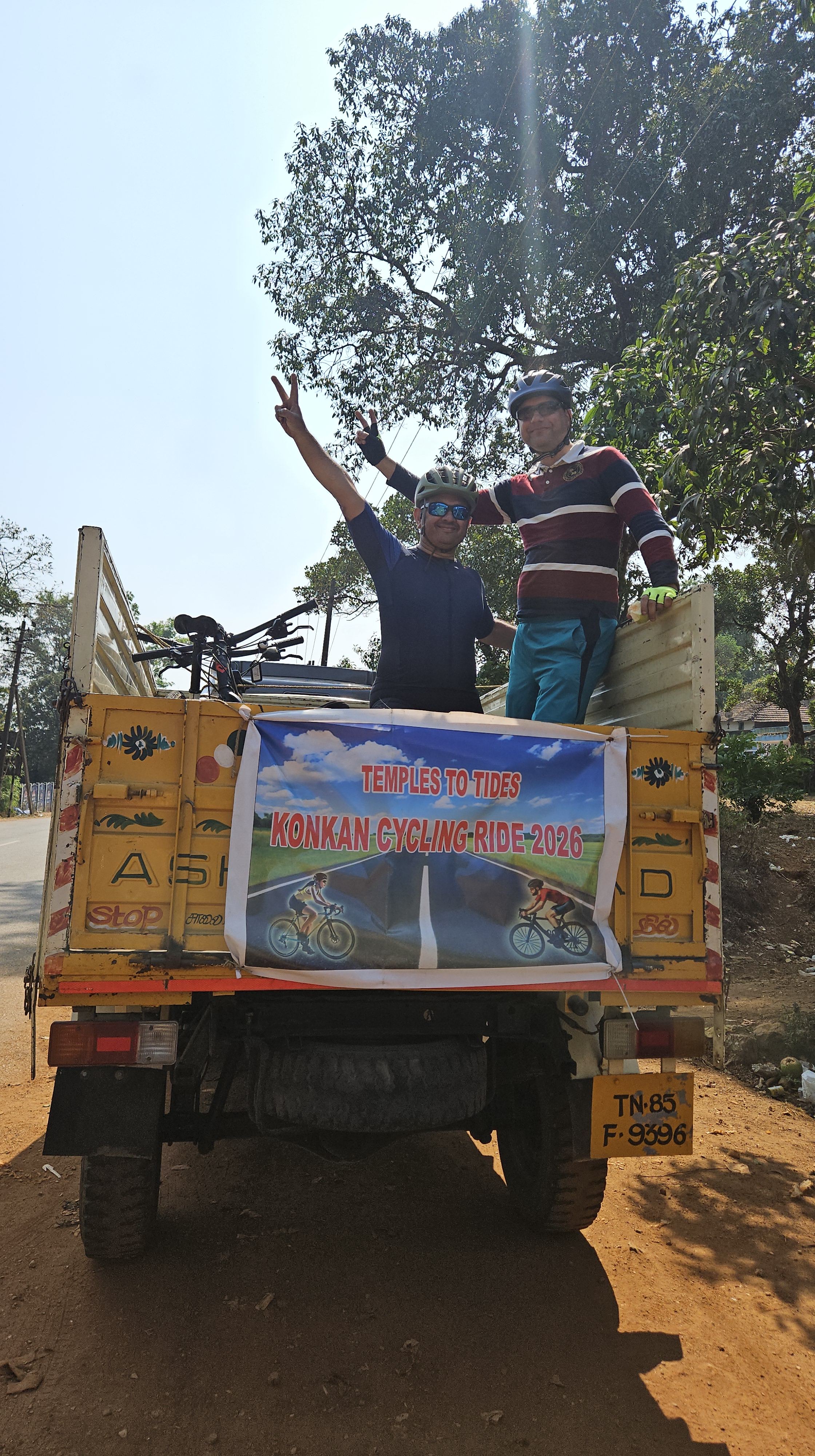
This ride, from Temples to Tides offered both.
And here I am, yet again—rewired and ready for the next journey.
Discover more from kalpa'sblog
Subscribe to get the latest posts sent to your email.

amazingly recounted with detail, perspective and precision. Ram and Madhu for creating the canvas and for Kalpa to paint it so beautifully with experience and joy.
LikeLike
The riders make it actually happen. Thak you
LikeLike
Kalpa, thank you so much for the extraordinary blog on our Temples to Tides ride. Your beautiful storytelling and exquisite writing, along with the wonderful photos from everyone, brought our journey back to life so vividly. You captured every real moment, flavour, and bit of masala from the ride so beautifully. We always look forward to your blogs after each ride — and of course, to the next ride together
🙏💐
LikeLike
Arent we blessed!
LikeLike
A mesmerising read @Kalpa Sundar Your blog had the ability to awakening all the five senses, flooding them with the wonderful memories of times spent together. 👏🏼
LikeLike
Atul and Sheetal. A 5 min recount of a life time of experience -you and some wonderful new friends made it stronger!
LikeLike
love your blogs always and used to have FOMO of the trips. This time it’s like reliving the ride and all the places and little fun bits in between. Thank you for such an amazing capture. And thanks to Ram and Madhu for organising such an amazing trip. Preeti
LikeLike
Very well written as always, loved reading it. ________________________________
LikeLike
Thank you..prefer “loved riding it” before ”
reading it!
LikeLike
Lovely and inspiring read. Kavita x
LikeLike
Seeing Goa in a different light .. glad you liked it.
LikeLike