


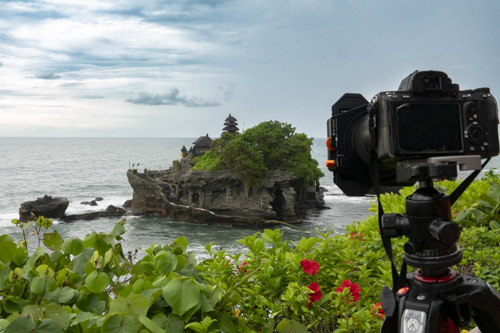
After the last ultra cycling journey in summer 2024 , there was a semi-intentional pause to travel. Personally, I just needed to refocus and pivot to the centre of life. And for Ram, on the other hand, it was an itch to work on his own focal point but in his camera lens. So, six months later, in December 2024, the two of us narrowed our focus to the equator straddled islands of Indonesia. We then zoomed into Bali and took a wide angle shot into Beyond Bali.
Bali is for almost all. The other islands of Java, Sumatra, Sumba, Lombok, and Raja Ampat are for the lesser few.
Bali… There are the birkenstock and sarong-clad semi-yogic hippie-type travelers—with a tattoo or two—wandering on foot, actually on scooters, immersing themselves in Balinese highlights of Ubud and Seminyak. And then, there are the Instagram Bali holidaymakers “swinging” (literally) into action and posing at heaven’s doorway mirages at the Candi Bentars of Lempuyang. They sport an unmistakable frangipani clasp and bring out plunge-line monokinis amidst the sunrise vibes. Oh, not to forget a handmade cocktail to pose with! Finally, there are the more curious travelers, who go beyond Bali to fiery Java, Sumatra, untouched Sumba, and the rugged landscapes of Lombok that offer a chance to soak up the serenity of timelessness on these small islands.
Just add the muscle-melting Balinese massages, along with the rich local food, culture, and meeting up with warm-hearted people. I actually think I belong to this category.
Om Swastiastu
Wayan Sentana (our Balinese guide) greeted us at Denpasar airport with an “Om Swastiastu,” and I instantly smiled in unspoken comfort. He was tall, wore a batik sarong, a white shirt, and a headgear (Udeng) with a crossbody bag. Within a few minutes, he introduced us to the names in Bali. Just four to be precise! Balinese names are like a built-in family prank. The firstborn is Wayan, Putu, or Gede. The second? Made or Kadek. Third in line? Nyoman or Komang. And the fourth? Ketut. But here’s the kicker—if there’s a fifth kid, the cycle resets, and suddenly you’ve got another Wayan, aka Wayan Balik, which literally means ‘Wayan again’! Imagine the chaos at roll call… or the sheer nightmare of password security. We headed east to the islands next.
Beyond Bali
Soulful Sumba
Here is the truth.
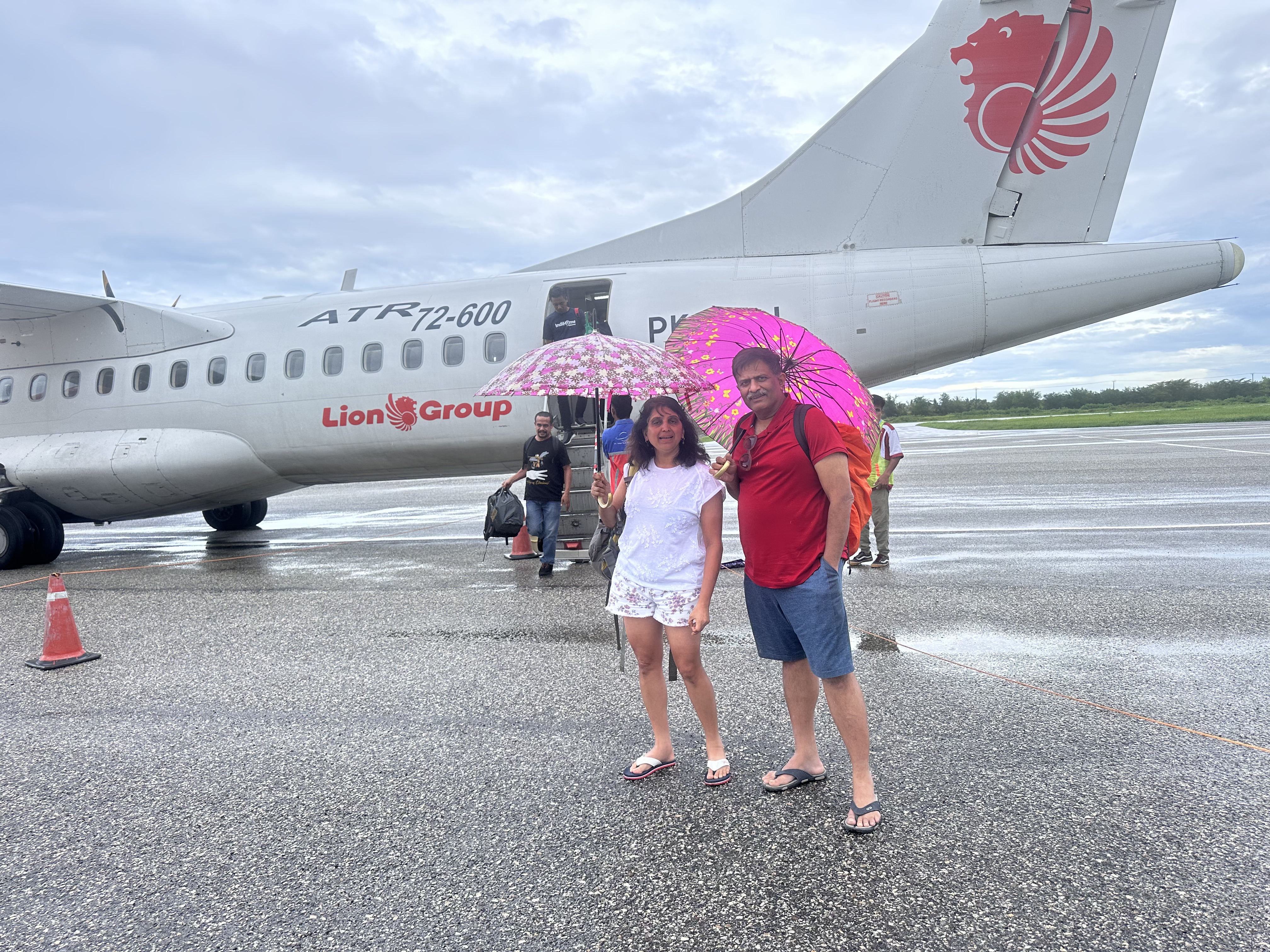
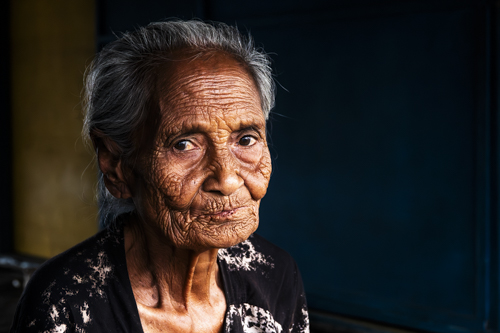
We went here looking for some “stunning dancing trees” to get our best pictures. Yes, you read that right. And we found so much more. Sumba is a strip of land between Flores/Timor and Australia. As we touched down in remote Tambolaka airport, a warm rain began to fall. The ground staff stood waiting for us with colorful umbrellas, a simple yet heartfelt welcome. Clearly, modernism had not suffocated Waingapu’s spirit in Sumba. I watched an old woman with weathered skin and red, calcium-stained teeth grin, dappled in the mid-afternoon light.
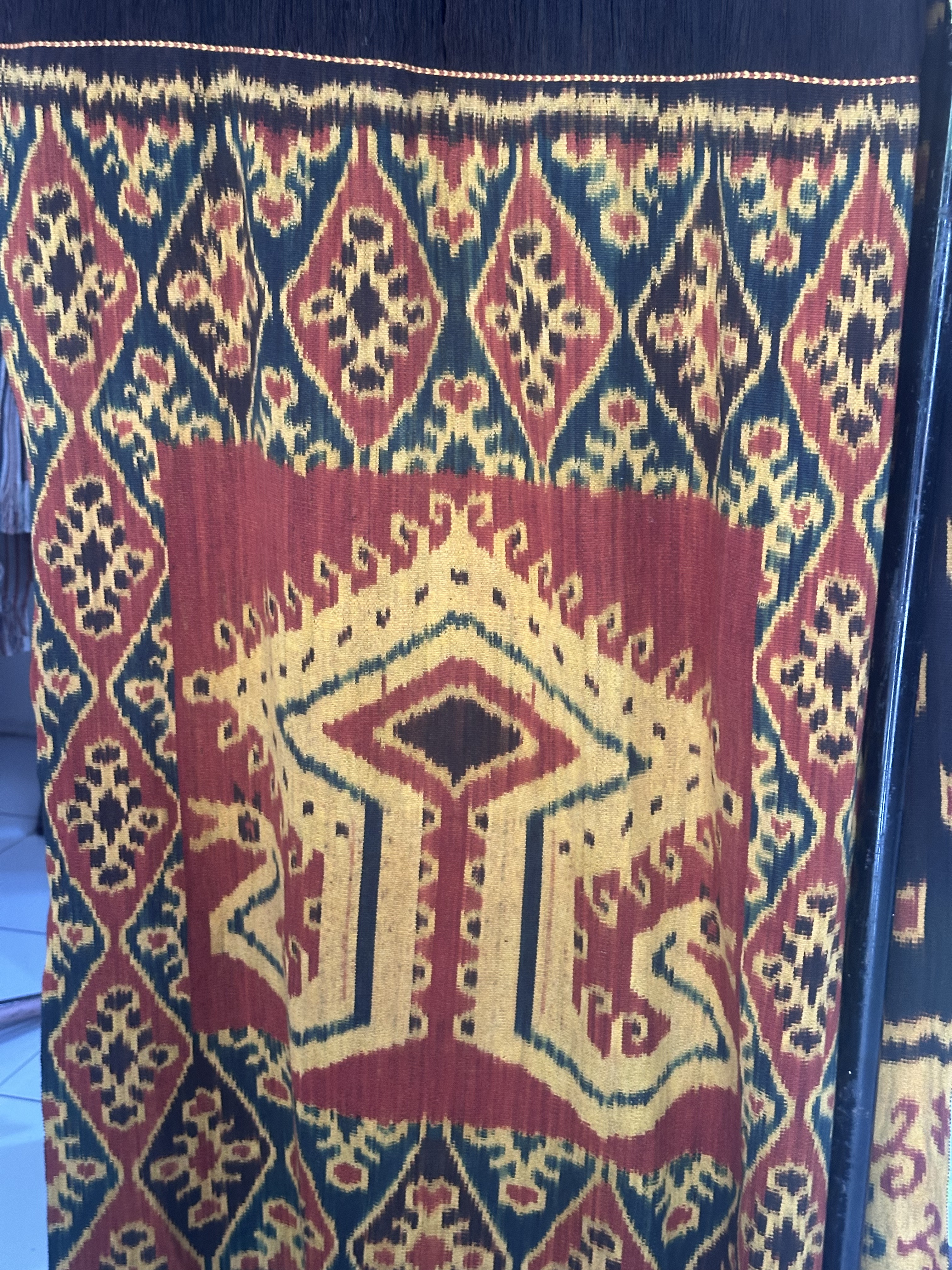
Time had paused. The houses were distinctive—conical huts around megalith tombs. The ground level was for humans, and the top for granary stores. Those who know Sumba would have heard of Nihi Sumba—the world-renowned legendary resort of ultimate luxury with sandalwood ponies that swim in the sea! It offers unsurpassed wellness with massage oils mixed with ginger, galangal, coriander, and turmeric (sounds like a biryani masala).
East Sumba boasts pockets of arid savannah grasslands which reminded me of Teletubbies land. Rolling hills and wild horses. So far, did not spot any tourists.
Time for some unusual pictures.

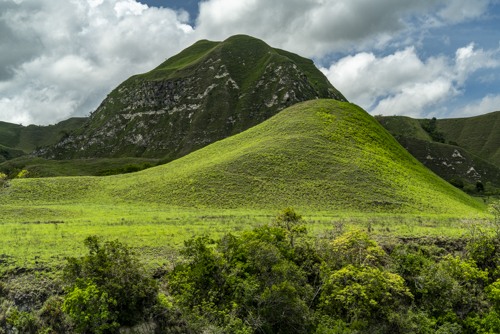
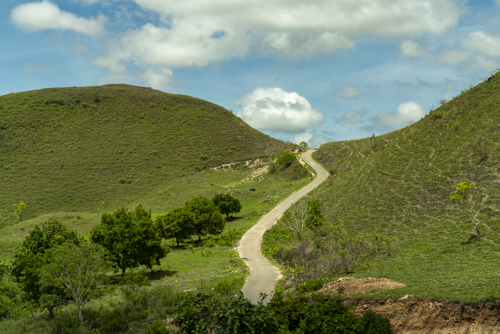
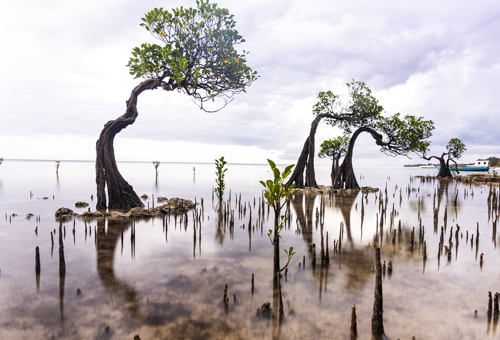
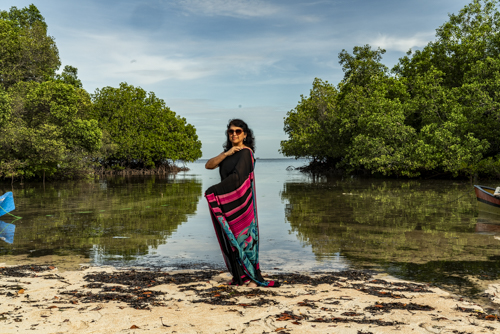
In reality, the dancing trees in the mangroves of Waingapu beach are short with stumpy aerial roots that are visible when the tide recedes. The tree is unique (but has a touch of anticlimax vibes )in that it is only found in this part of the world. Madhu’s eyes lit up as he composed in black and white. Ram focused on iconic captures, getting his gear, clothes, and even passport wet to get them! Yes, an after dinner story that many of you will hear soon! A true once-in-a-lifetime experience in photo travel.

Back to Bali
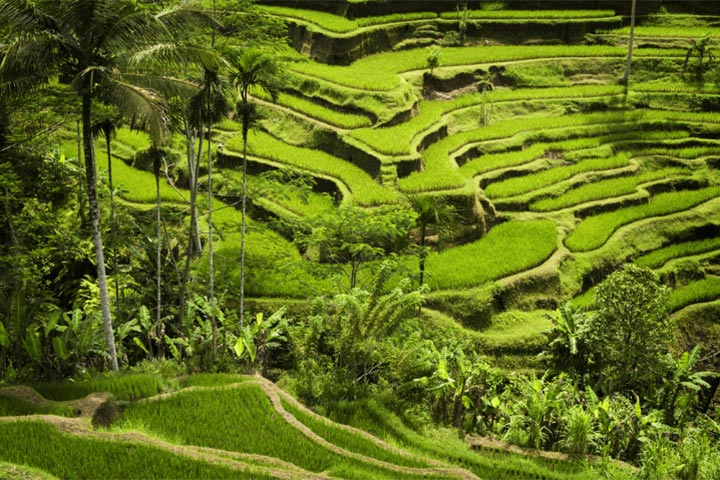
December in Bali is off-season. Humid and wet. But lush. As we drove downhill into the hidden entrance of Natya—our resort east of Ubud—it felt like we parted the thread curtain of the banyan aerial roots to enter center stage of an exotic resort nestled in terraced rice fields. Sounds stunning , right?!
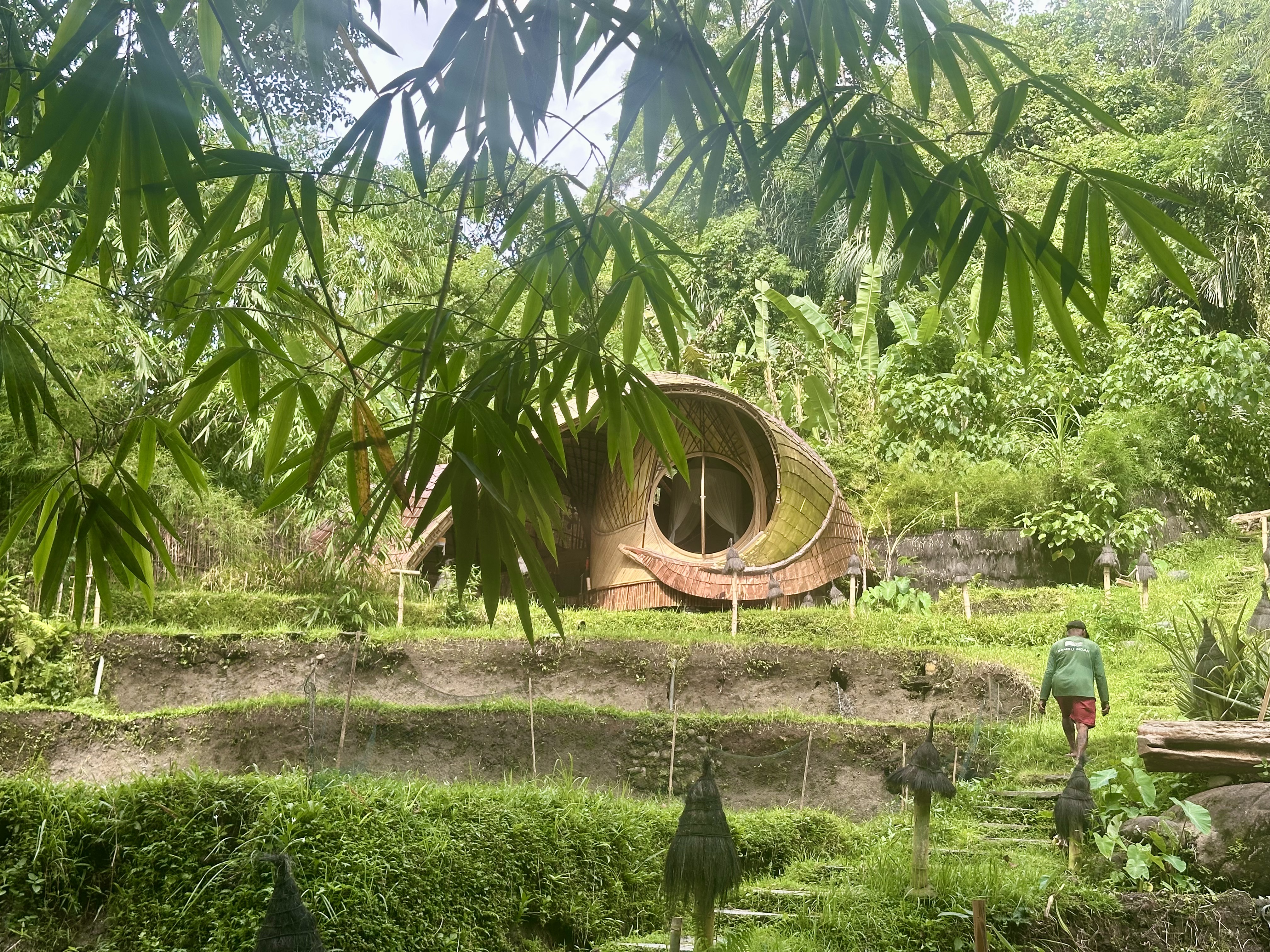
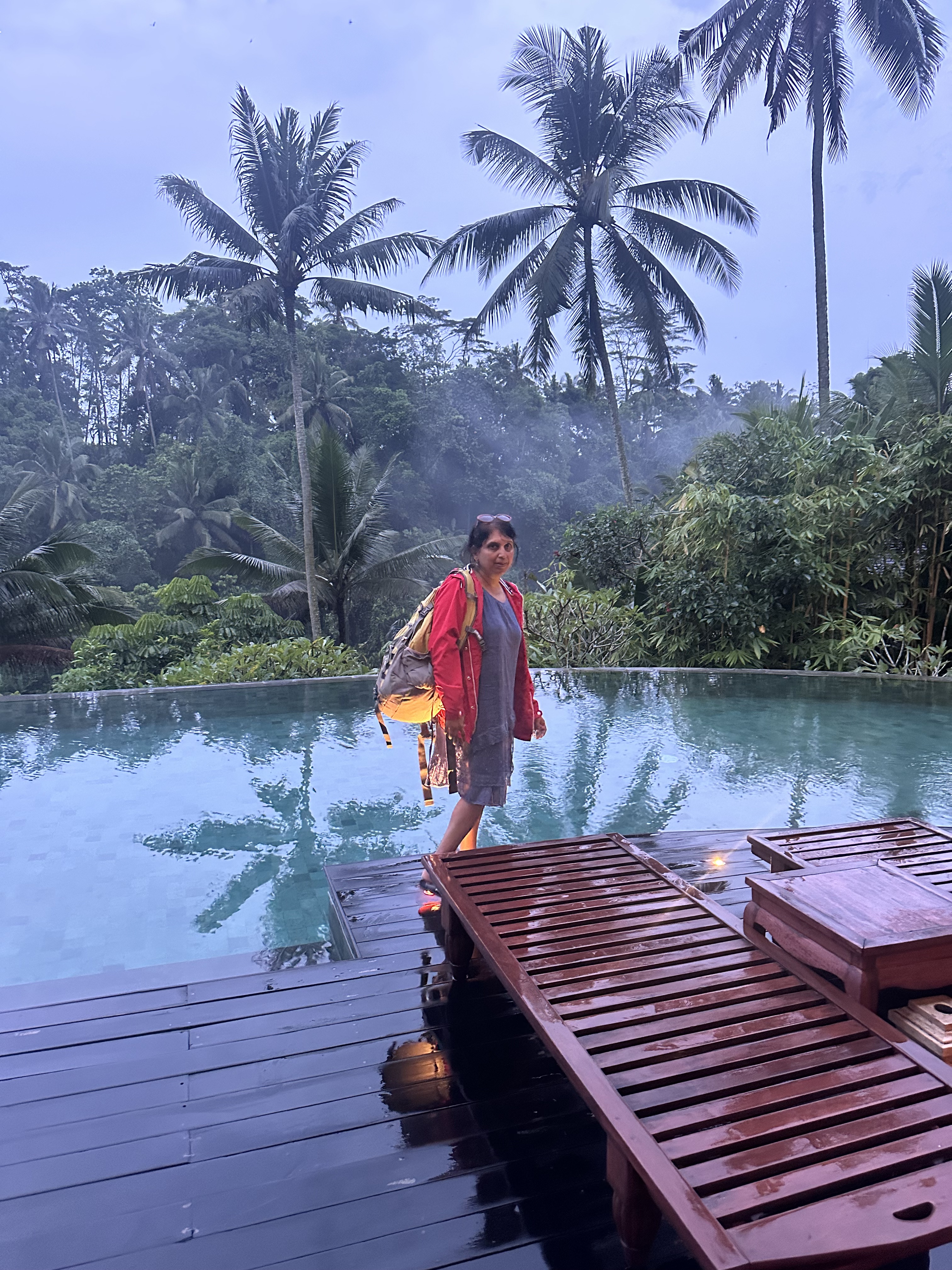
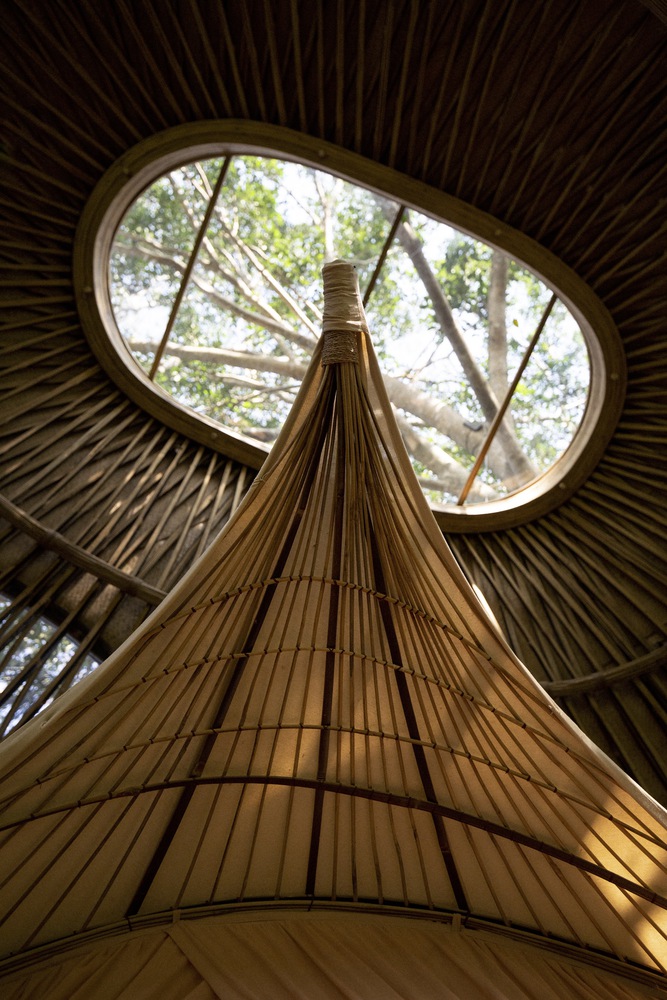
Natya Resort works on the concept of tegalan and subak (a plantation and its irrigation system). And I must mention another fascinating resort: Bambu Indah—one of the world’s first eco-resorts in Ubud—resembles a basket. Its curved walls cocoon guests while still welcoming daylight and a natural breeze through skylights and windows. A connection with nature paired with unlimited luxury—and an unforgettable, limb-melting massage. Superlative luxury in most of the stays, often offering a truly private experience. I simply have to link Eat, Pray, Love in my blog. I’ve decided to use them as paragraph titles but in a different order. Let’s start with PRAY.
PRAY
Hinduism in Bali
The brand of Hinduism varies in Bali, more deeply influenced by nature and spirits. The mighty Agung Mountains, for example, and Agama Tirtha form the foundation of religious life. In fact, they follow Agama Hindu Dharma. Balinese Hindus have one supreme God, Acintya, while being an Indian Hindu often equates to polytheism—a more freestyle approach. The average Balinese seems to be far more committed to daily offerings and rituals than an Indian.
Balinese Hindus place significant emphasis on rituals and ceremonies to appease the spirits of ancestors, a practice more prominent in Bali than in most parts of India.
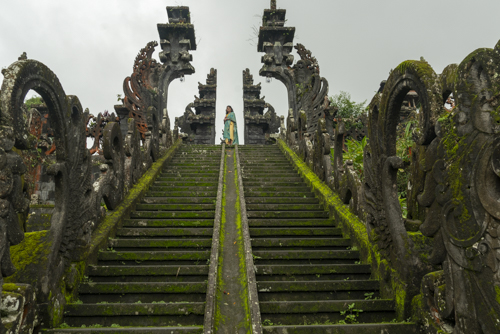
In one of my previous blogs (I know, you cannot obviously recall), “Gopuram” the entry tower of a temple, was in the title. Bali’s Candi Bentar is a split entry citadel with a green misty background, often capturing a mountain peak. This sums up the connection and inclusion of nature into Hinduism!
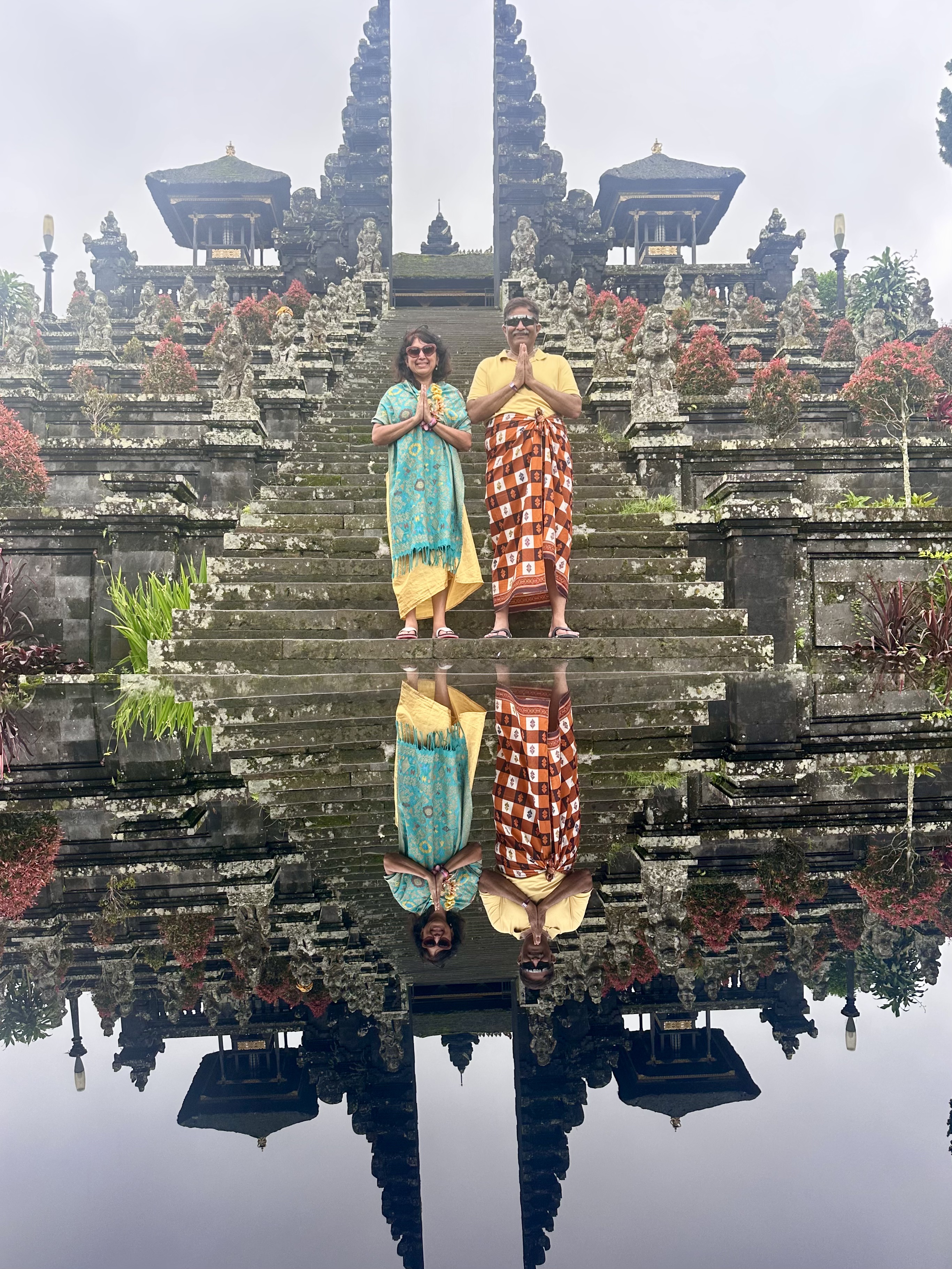
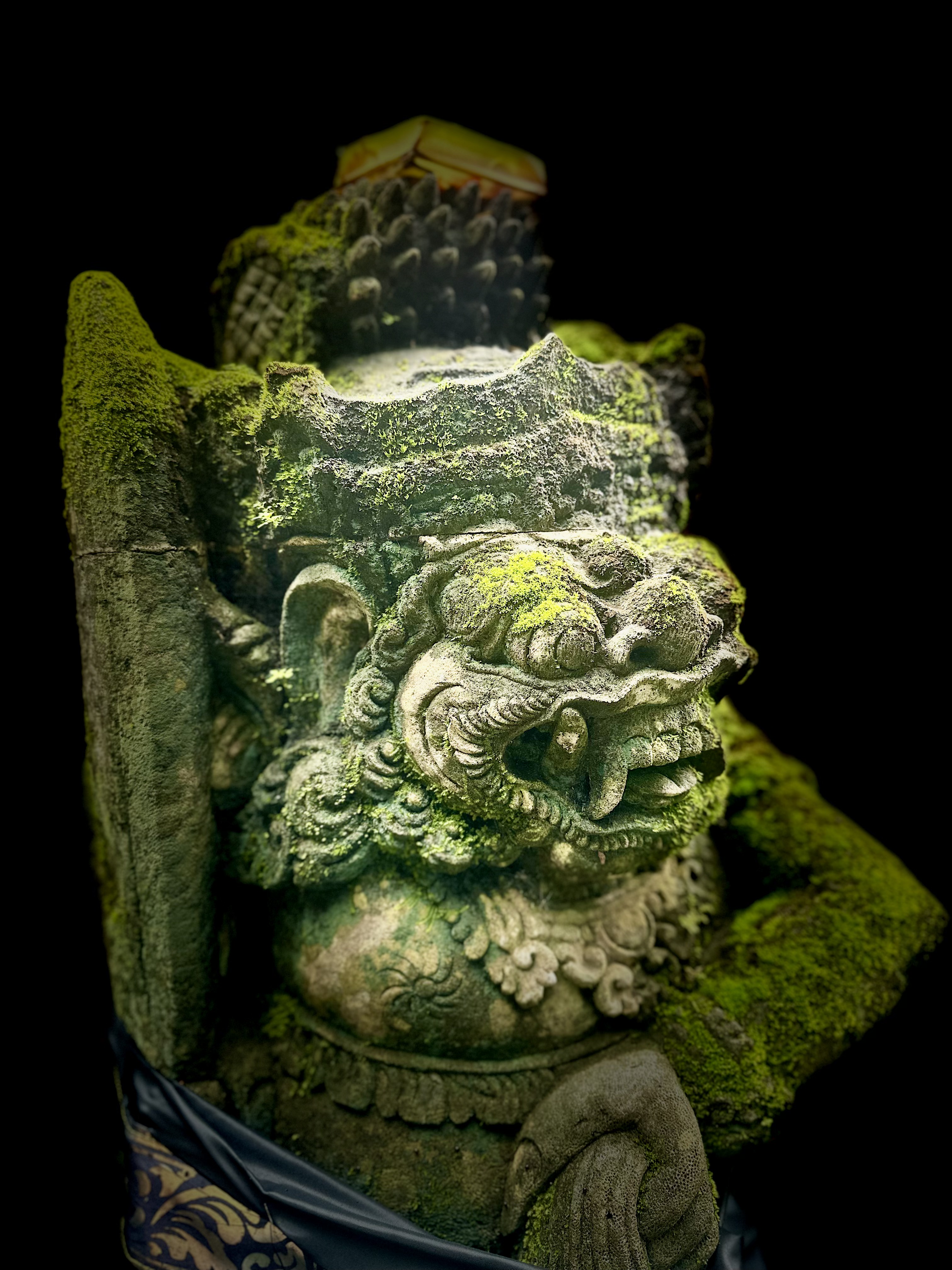
The temple was made of dark volcanic and terracotta bricks. What took them to a “wow level” was the aging moss plastered over—adding depth and dimension. The checked gingham cloth, “kain poleng“, seemed to be the fabric of balance. Every sizable stone and vast tree had this checkered cloth as an apron.
Now, let me take you on a virtual temple trip in Bali. Imagine a mid-morning fragrance from the “dhoop” or the incense sticks. Adorn yourself with a long sarong and maybe a long-sleeve lace top, ladies. Next, add a “bija” on your forehead. This is a pinch of holy rice grains washed in water and stuck in the middle of your forehead. You are now sprouting divine essence. Step 3: Take the famous canang sari.
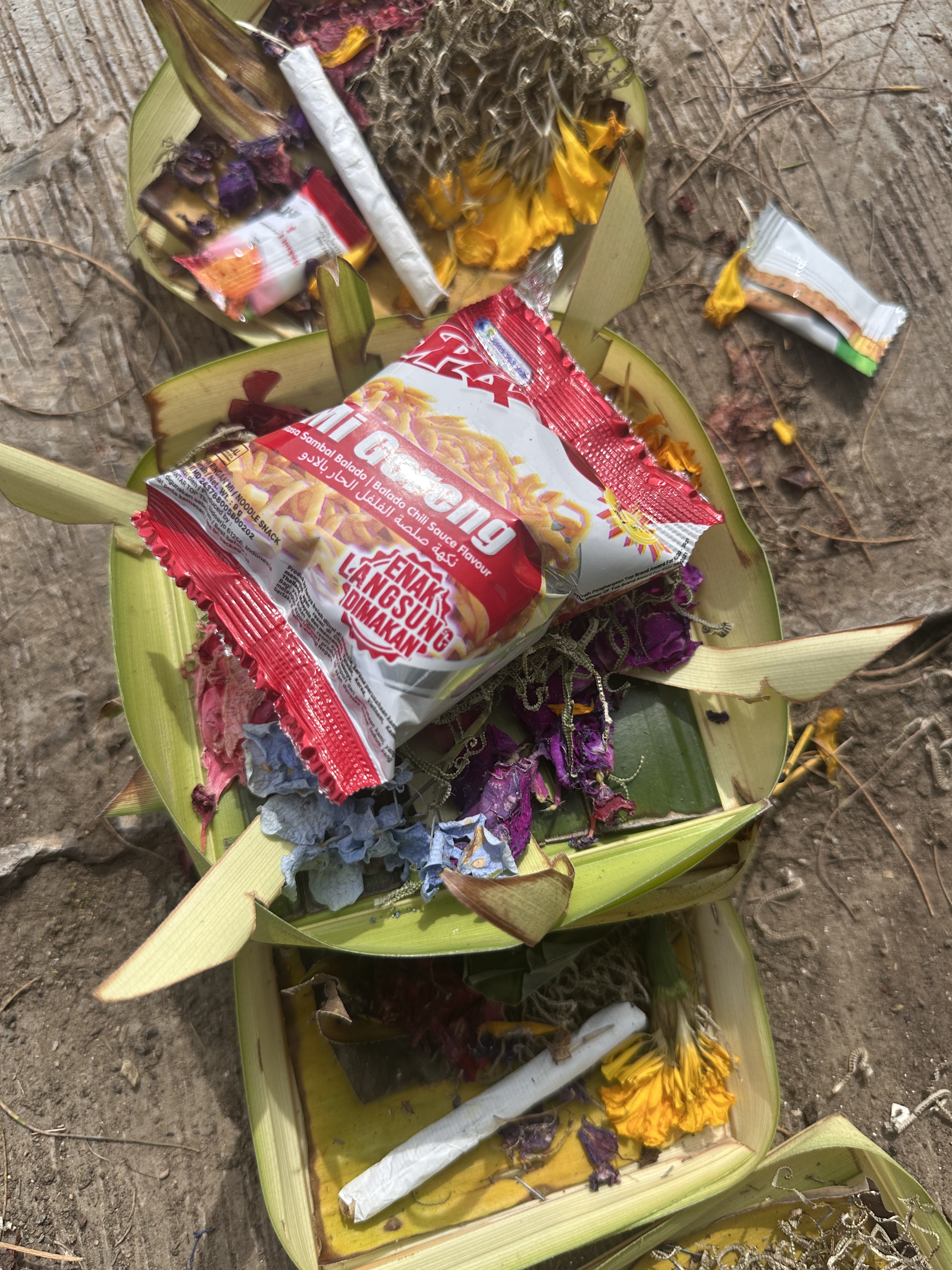
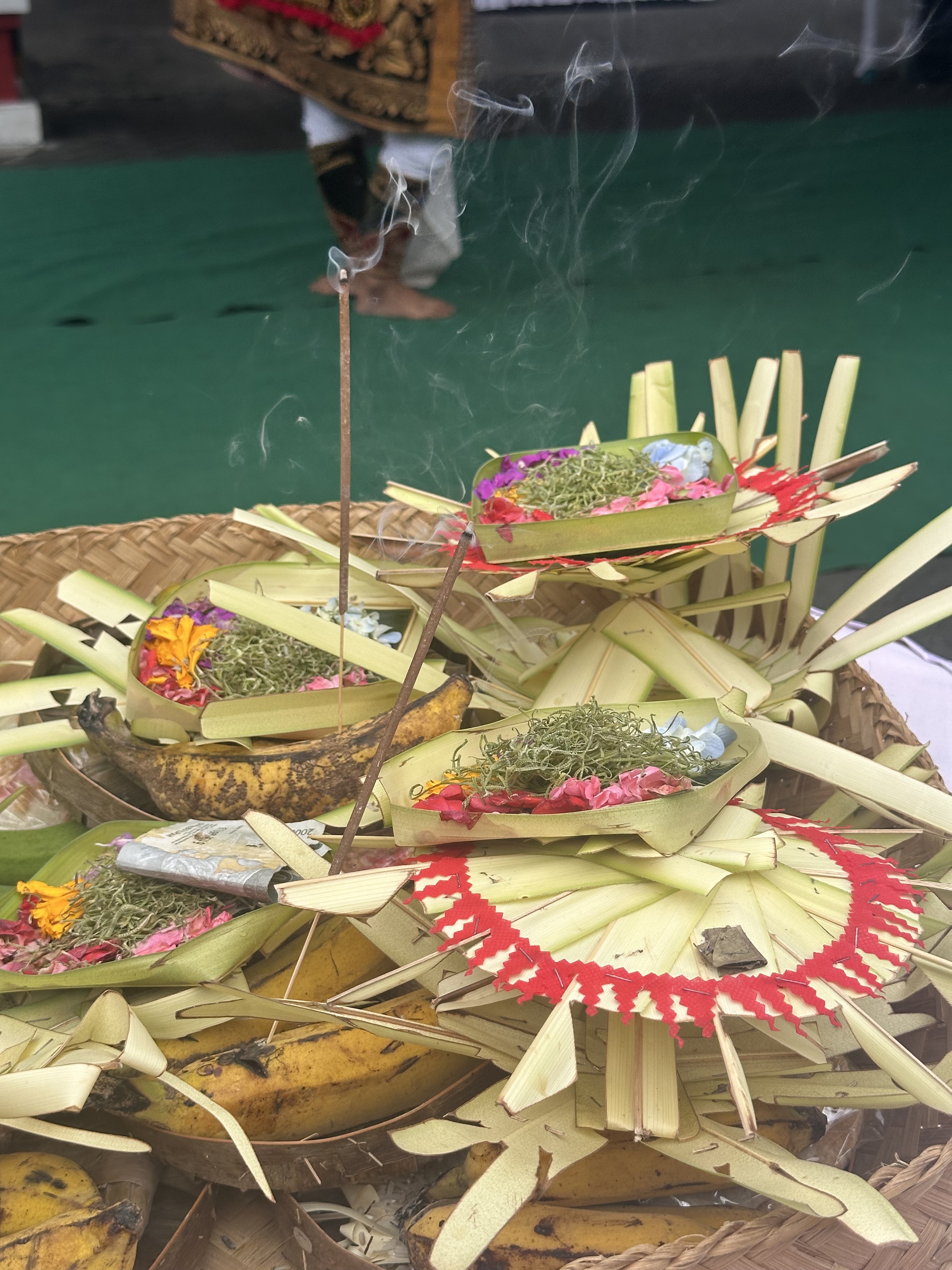
The daily offering, “canang sari” (translates to “a beautiful purpose“), was third to Wi-Fi and oxygen! Ubiquitous. This square tray made of banana or palm leaves has porosan—a mixture of colored flowers, leaves, fruit, or snacks (some even had cigarettes!) as a daily offering. As said in the Bhagavad Gita, any offering that is done with genuine purity of heart is accepted by God.
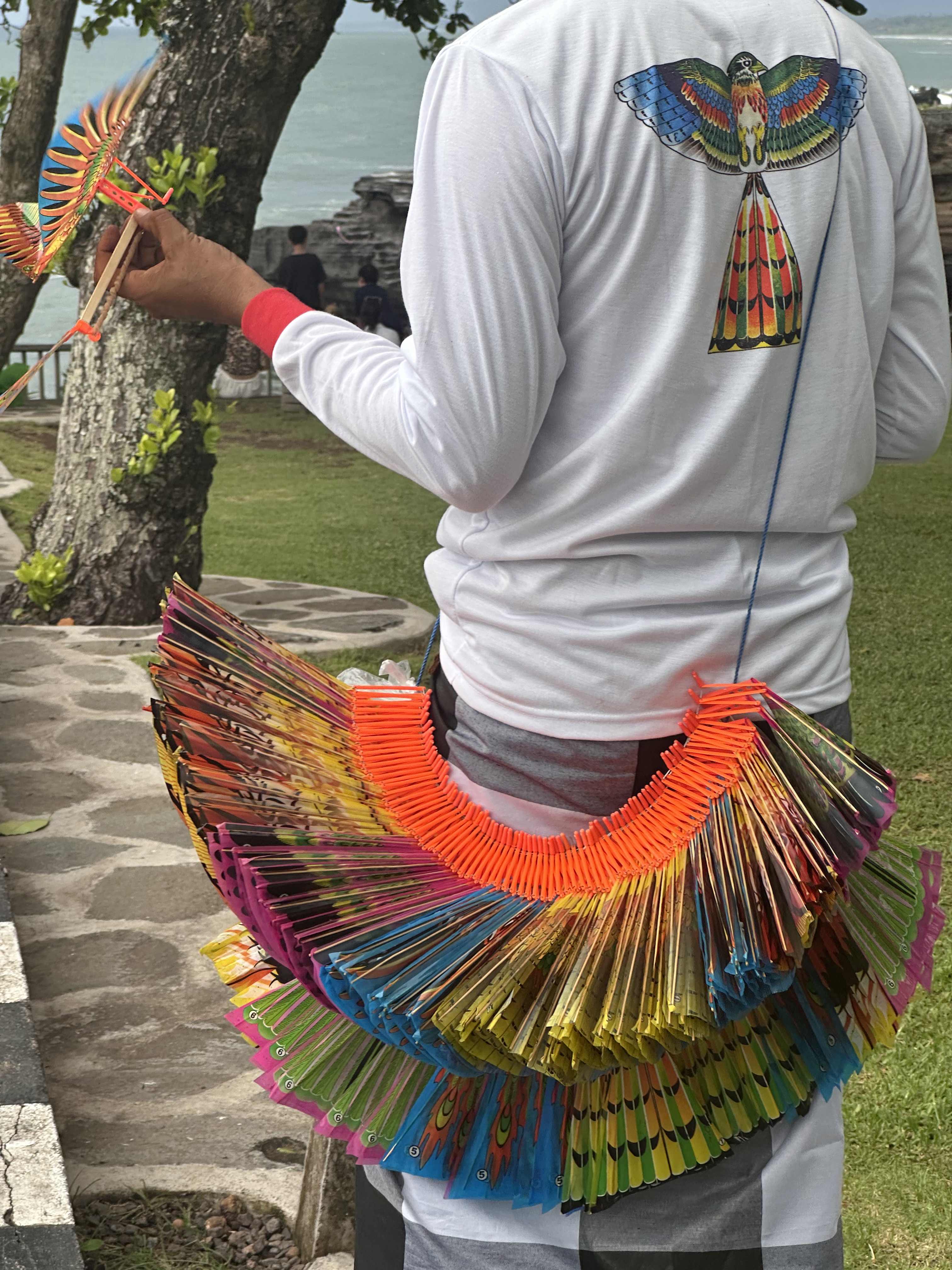
As you walk through the split towering candi bentar, imagine penjor—tall ornamental bamboo poles covered in palm leaf decorations and holy drawings that flutter in the breeze. I remember it as janur art. To me, they were large question marks in the sky! A tad different from the billion-watt glitter billboards of Times Square, but no less riveting.
Before you step into the inner shrine, pause.
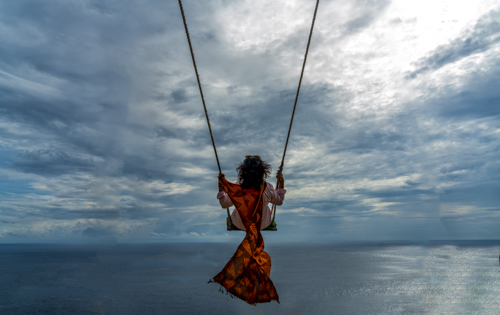
Do spend a pound or less for a commercial cheat picture that the local guide will expertly take with a secret mirror and your iPhone (my photography buddies Ram and Madhu tried emptying bottles of water for long minutes to achieve this effect with a DSLR). Instagram soul pleased, now let’s proceed to pleasing the true soul.
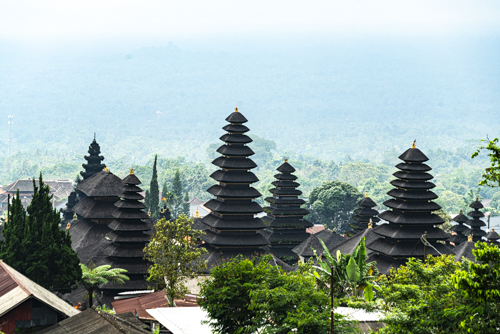
Climb several more steps as if we are getting a bit closer to heaven within the shrines and ascend the Merus. They have dark thatch pagoda towers that enshrine deities.
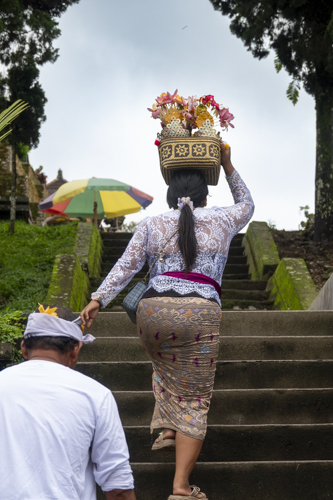
Young boys carrying colorful silk parasols and women dressed in white lace blouses and colorful sarongs carefully balance gebogan on their heads. Traditionally made from freshly harvested fruit and flowers, gebogan is a big conical arrangement that is carried on the head.
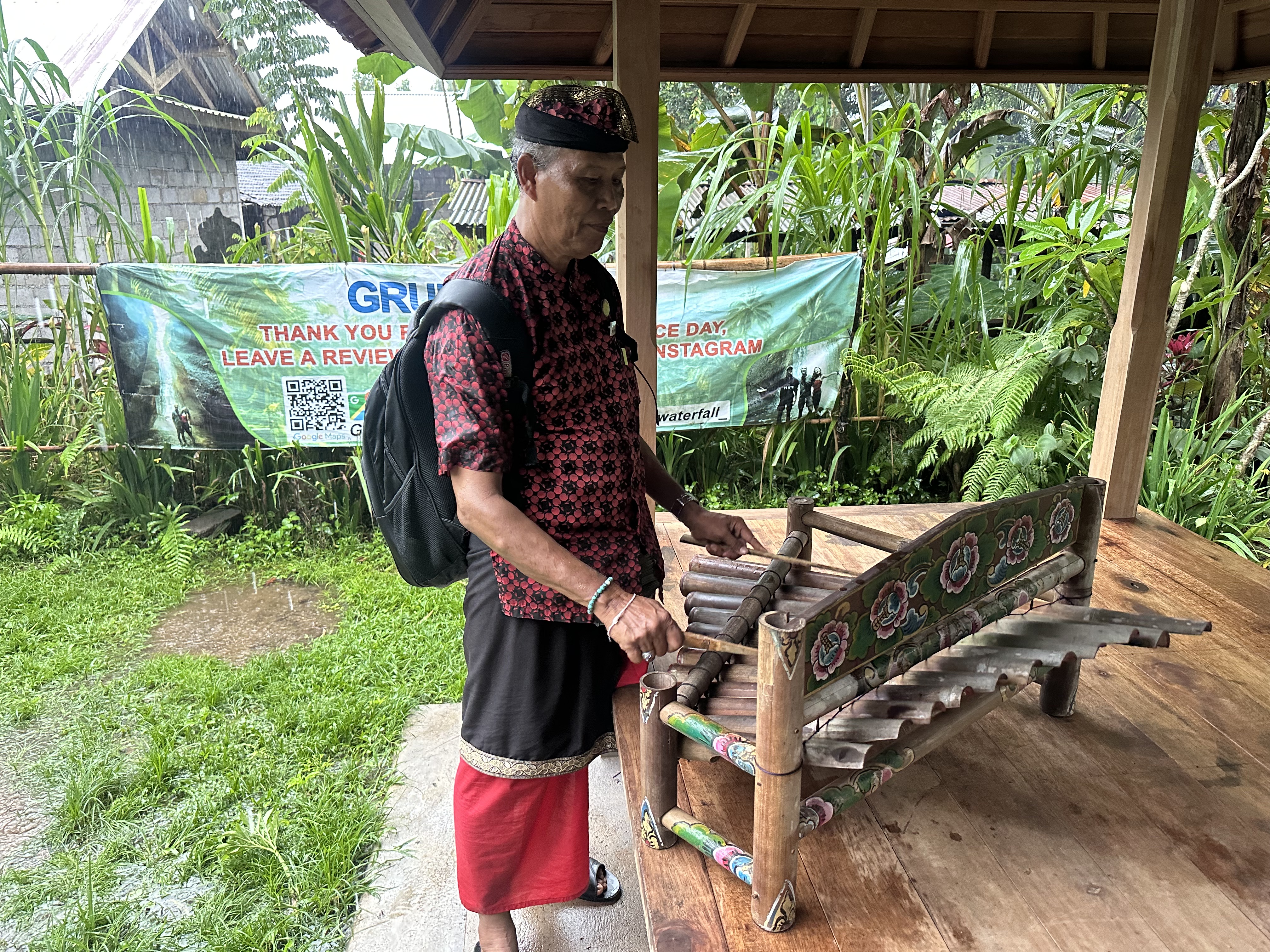
And finally, listen to some gamelan music or a rindik (a bamboo xylophone)in the distance.
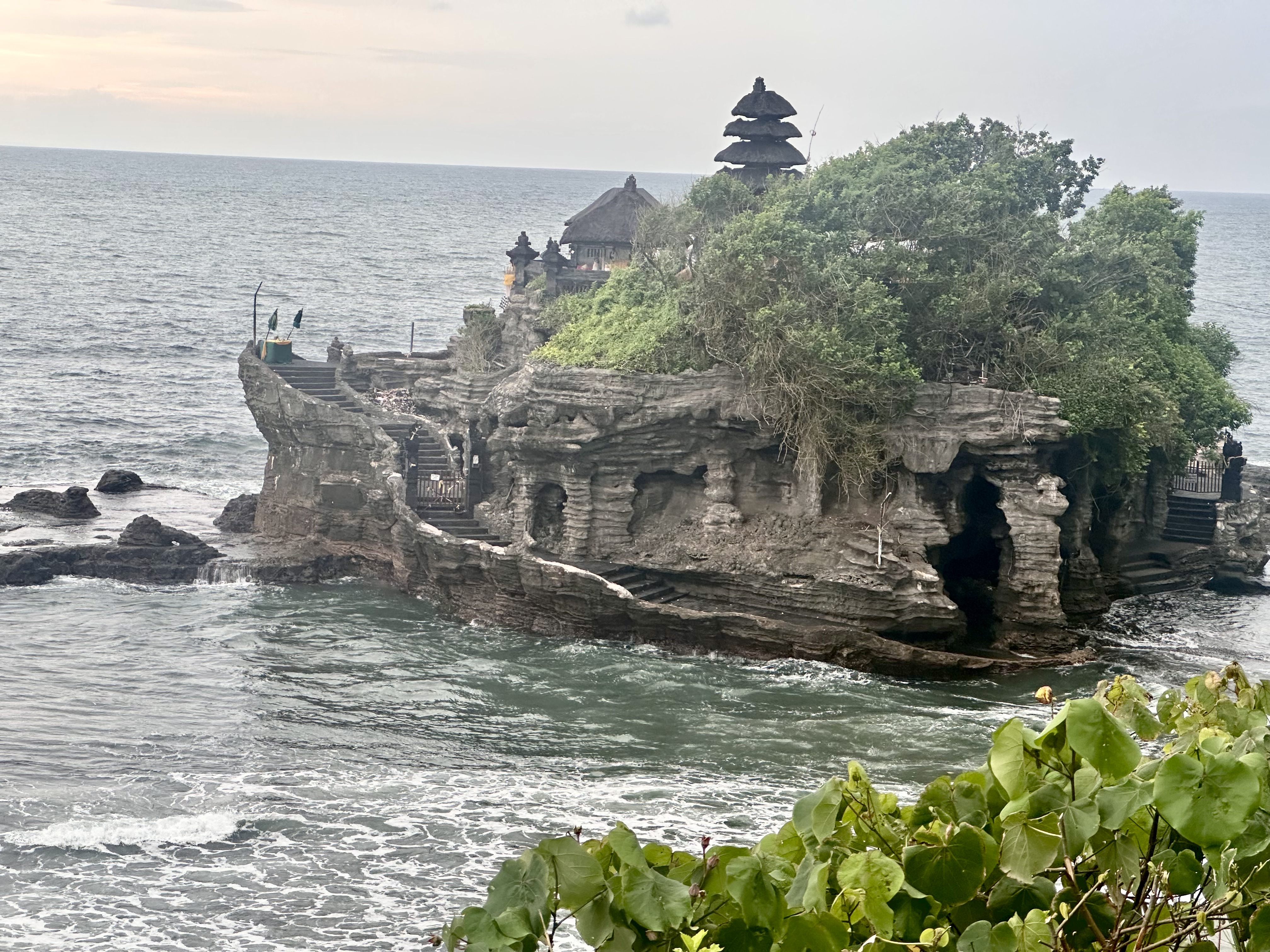
The temple could be by the sea—Pura Tanah Lot—or at the base of Agung—Pura Besakih, anywhere..everywhere! The small shops in the large grounds had bamboo scrolls, local effigies on arts (pratima and pralinga), masks, and so much more. I took a piece of the Bali as a souvenir for my wall back home.
LOVE
Bali without Ubud is like Rome without pizza. My first attraction in Ubud was my introduction to Gamelan music. While Ram took night shots of Ubud Palace, blurring the traffic into sizzling lines, I sneaked a peek into the Legong dance performance across the street. I was drawn by the deep resonance of the gong chimes. On closer look, there seemed to be several people hammering the same long xylophone-like instrument, generating a sound that reminded me of Ram dropping pots and pans in a busy kitchen. Fascinating.
Strangely, it felt like the musicians were having an animated conversation with God! It struck a deeper chord than even the dancers.
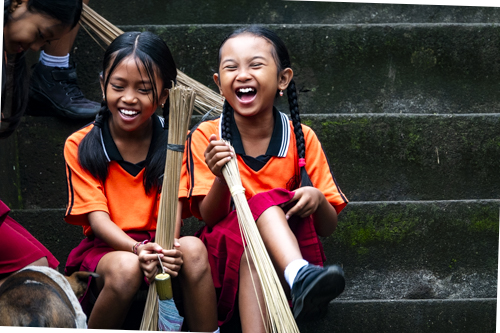
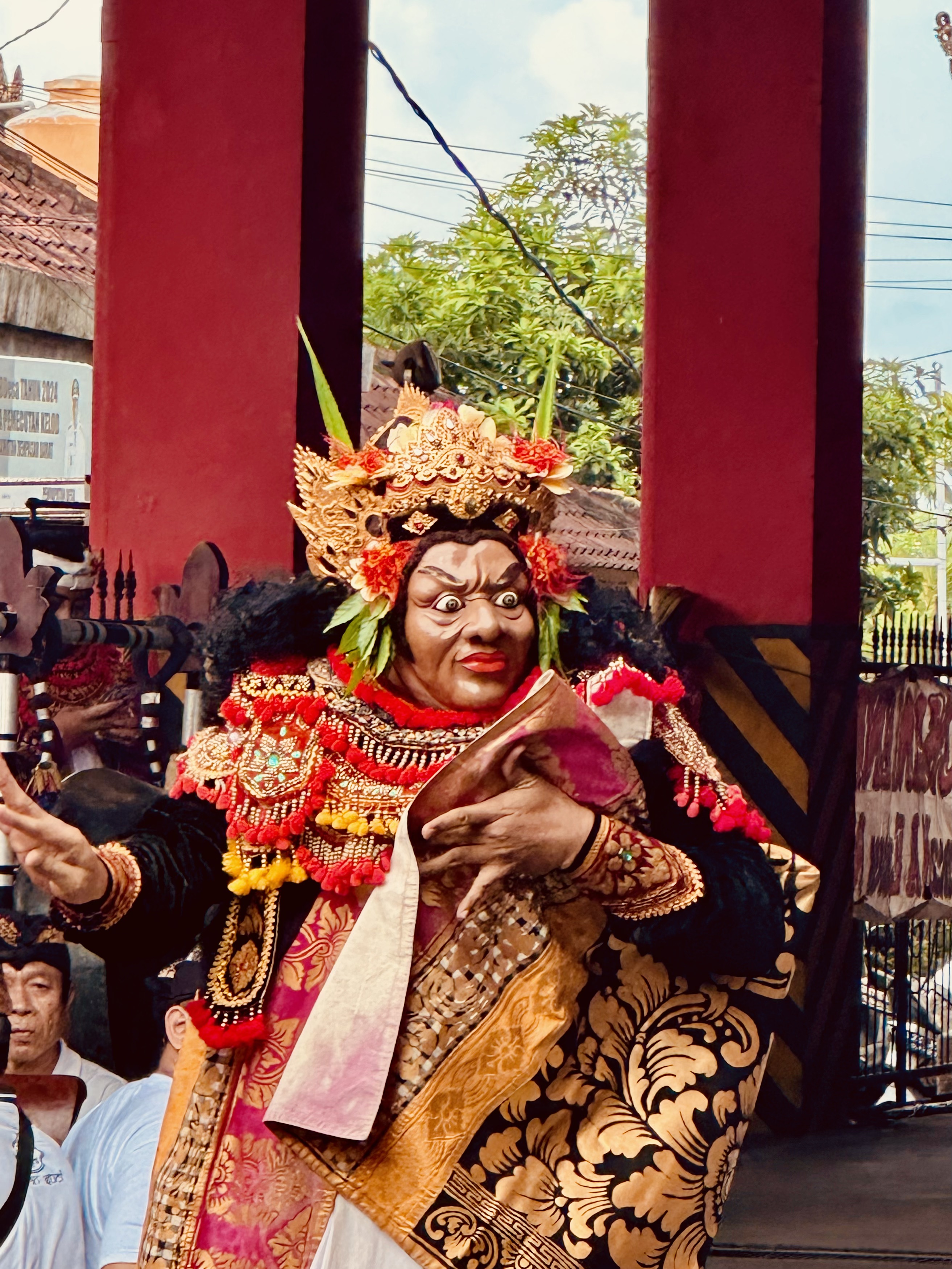
Ubud in the rainy season—is greener than green. Caught on camera: school kids sweeping the school, scooters weaving through hectic traffic, colorful fruits, tourists trying super hard to blend in with frangipani flowers on top of their ears, batik art, some odd but striking masks, the canang sari at every nook and corner… the list is endless. Love all of that. Ubud seems to have it all. Did not have time to venture into the famous street market.
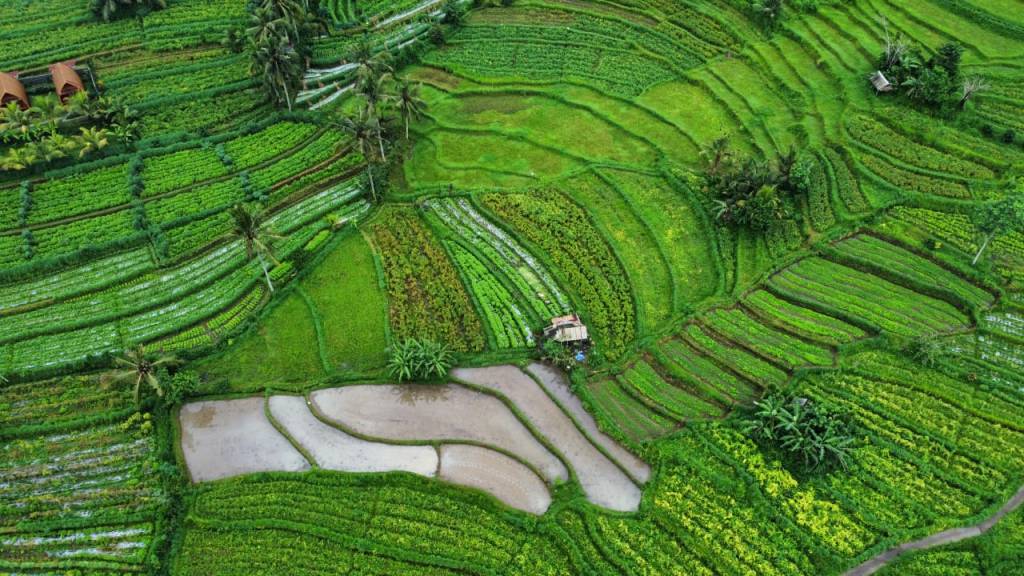
After Sapa fields in North Vietnam, I had decided that the rice terraces in Bali would be overrated here. I was happily proven wrong. Rainy season + a drone + the backdrop of Mt. Agung set the rice fields bar a notch higher. It was a “field” day for photography! Loved it.
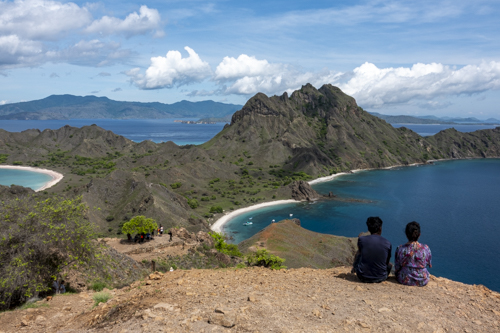
A peek into Komodo. Back beyond Bali again.
I have decided to call it Roja-Pink.
A gem in the archipelago of the Lesser Sunda Islands (wish Sundars had ownership of land here!). The name is synonymous with the Komodo dragon—a giant lizard only found here in Komodo National Park. Another Instagram mecca, particularly the Padar Islands.
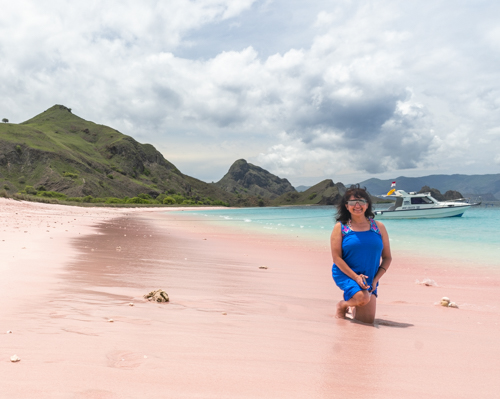
The dragon, to me, was large, ugly, and worth no more than a couple of quick pics! But turn your head to the pristine pink beach—it is simply unreal! Just impossible to disappoint. Salmon pink and absolutely clear turquoise sea, a match made between earth and heaven. Add to this, snorkeling above manta rays was my idea of paradise (I often revisit this concept in every travel). The pink (unfiltered) of the sand is caused by microscopic coral insects—foraminifera. The reddish-pink shells are created when calcium carbonate covers them. Never a strong swimmer, I watched toruists like me roll off the boats with dive cylinders. I attempted a humble snorkel version. Boy, am I glad that I did! Once in the warm water, at the corner of my eye, I saw the first gigantic marble manta ray fish way below me and then.., saw 4 more! What made this spectacular was the clear aqua sea bed. Hands down, this was my trip highlight!
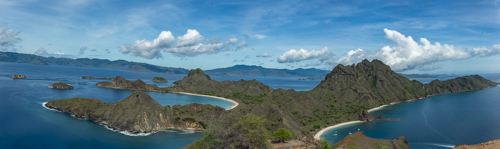
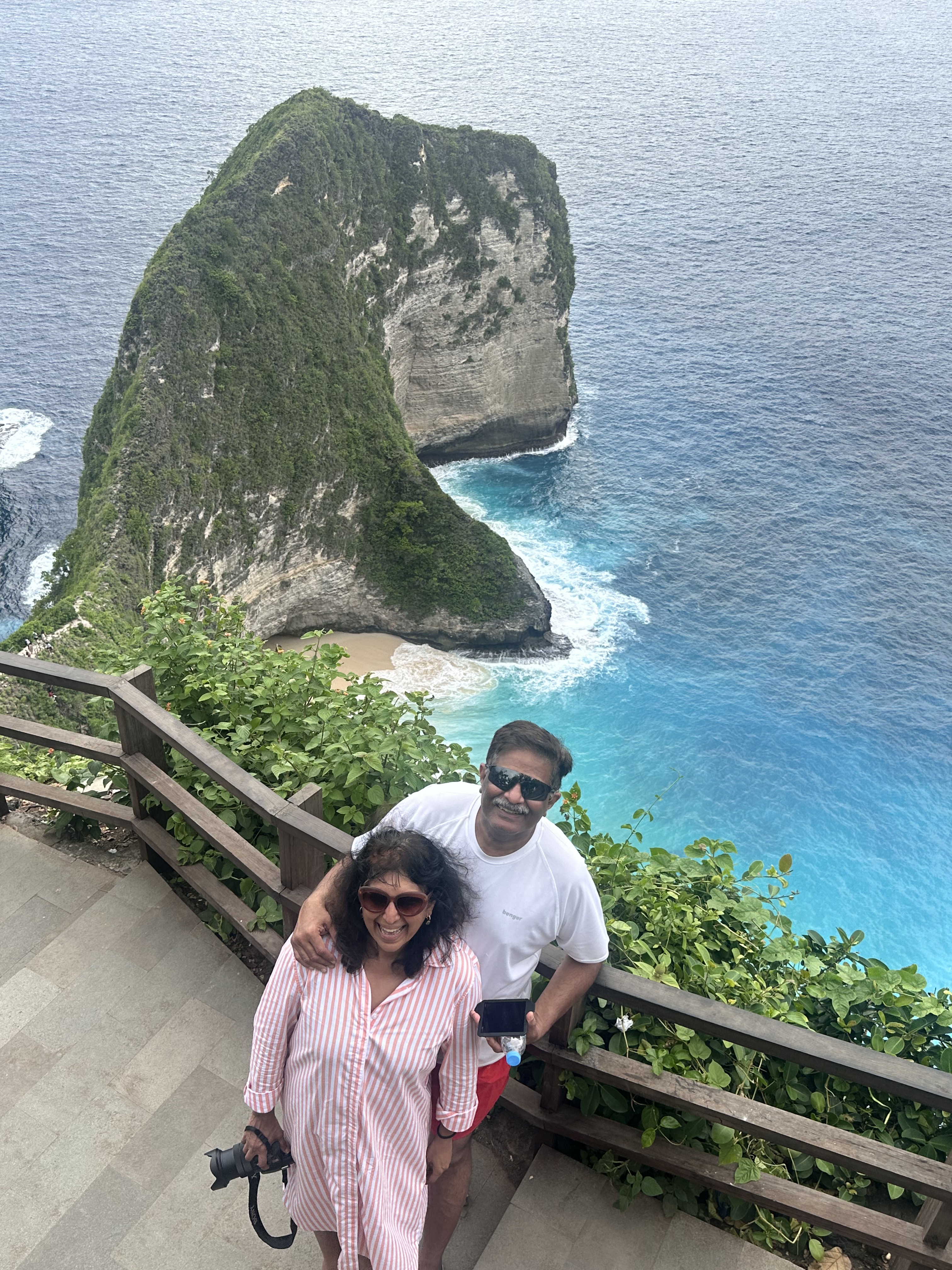
And a touch of Nusa Penida to share. An island that is shrouded by ancient beliefs of magic and spirits. Once only reserved for outcasts and criminals, this tiny island off the coast of Bali the Nusa monster story deserves a mention! Jero Gede Mecaling-is the menacing looking cleanising monster. Ask the locals..he exists!! They have spotted him on the beach at sunrise, some swear. He can be a cleanser of evil but the same time, if you annoy Jero Gede, he can liquify you to death with his fangs.
Did’nt spot him. So, settled for Kelking beach point pictures.
Go-Jek versus Grab war
Traffic in Ubud is dominated by two-wheelers, taxis, and the surge of tourism. Both the company apps have carved out their place in the “super app” ecosystem of the Eastern world, seamlessly integrating with e-wallets. Two-wheelers weave through long queues, carrying takeaways, parcels, passengers, and more. So, Indonesia has their Uber equivalent—Go-Jek. But the rest of the Far East has another taxi app giant—Grab. To top it all, there is the local taxi mafia.
Go-Jek covers it all. Go-Mart (grocery shopping), Go-Clean (housecleaning), Go-Glam (hairstyling and makeovers), and Go-Massage. Imagine—over 10 million downloads!
Chaos—I mean, it’s quite dangerous on those foreigner-filled streets! The spandex- and bra-clad ladies, and the first-timers on scooters, haven’t got a clue what to do on their scooty. The macho workout boys on their big bikes relive their video game personas, revving, cutting, and sliding their way to urgent appointments with the waves or their barbers. They’re usually helmetless, with noise-canceling headphones clamped on their ears, so they can’t hear the swearing and honking from locals.
Ram commented that Balinese drivers seemed relatively tolerant in traffic jams, showing fewer microaggressions. Hmmm… I’m not convinced.
EAT
Taste of Bali
Bumbu Bali falls in line with the sounds of Ubud and the richness of umami. The flavors have simple magic—shallots, onions, cloves, nutmeg, fennel, lemongrass, galangal, and of course, peanuts… and more peanuts. Kecap manis (sweet soy sauce) elevates nasi goreng to national and delectable dish status. The farm-to-palate concept still thrives in many homes and Warungs (local shops) within Balinese culture.
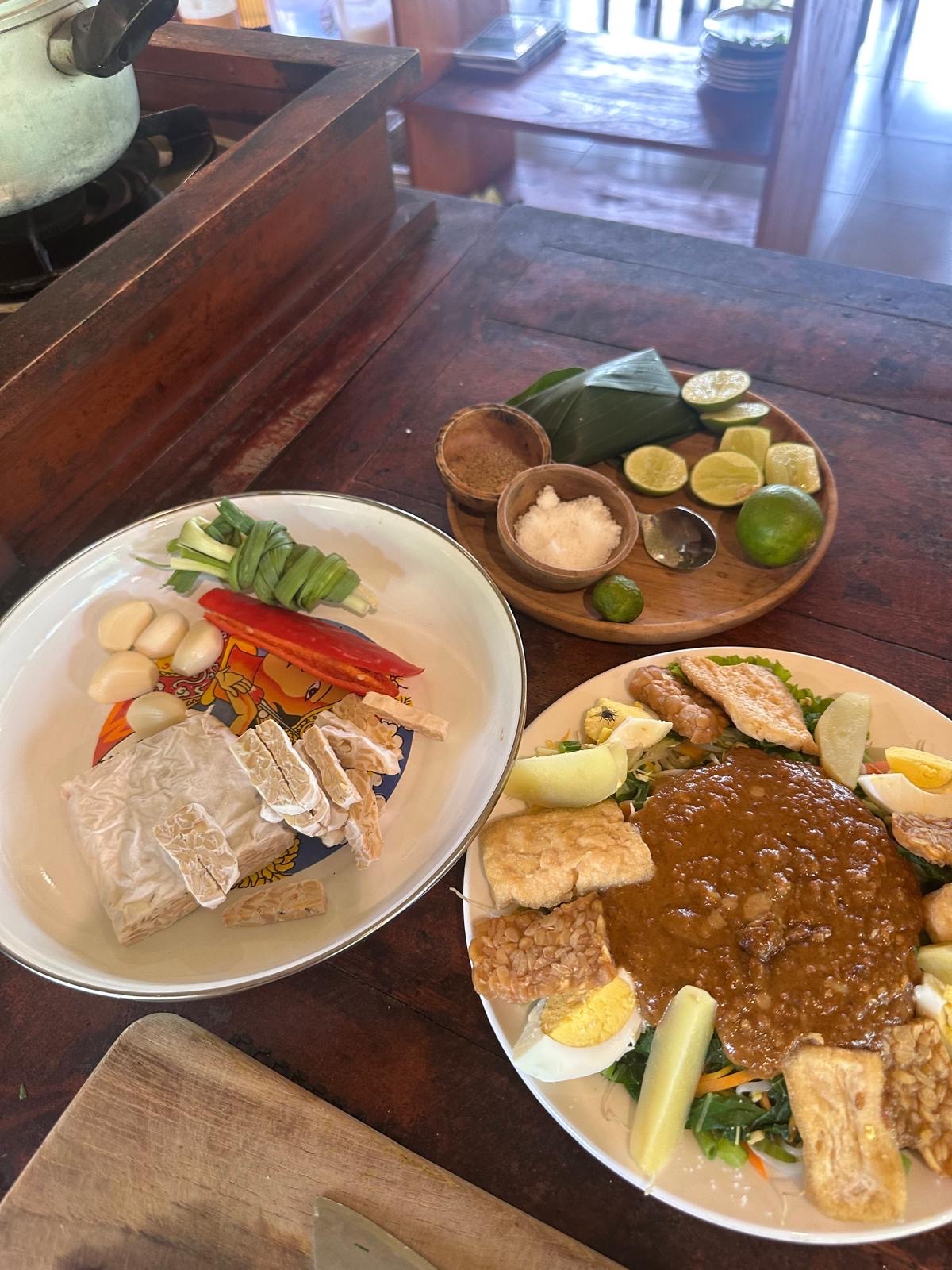
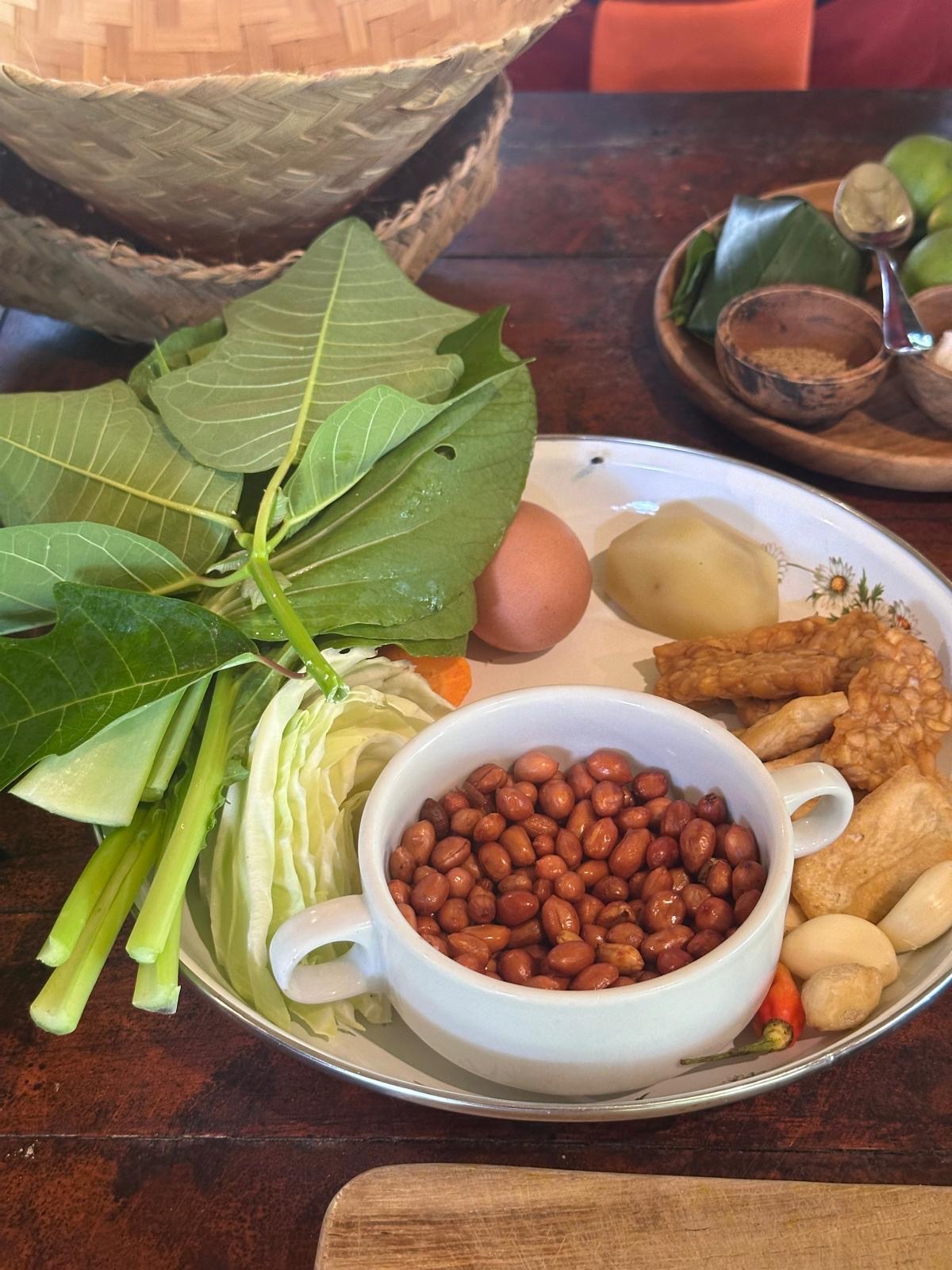
Mei goreng and nasi goreng (fried noodles and rice) remain staple foods. Gado-gado, a salad smothered in peanut dressing, was a dish I was first introduced to when a chef at a resort in Sumba taught me how to make it. Tempeh and lontong rice (rice wrapped in banana leaves) are added to this vibrant salad, and with ginger and lime leaves, it truly gains character.
The highlight for meat-eaters is the suckling pig roast on a rotisserie, called babi guling, which brings a vibrant flavor to the table. Nasi campur reminded me of Indian thali plates. Bintang, the local beer, and Luwak coffee (pu-wak coffee) remained the liquid highlights as I traveled through Bali.
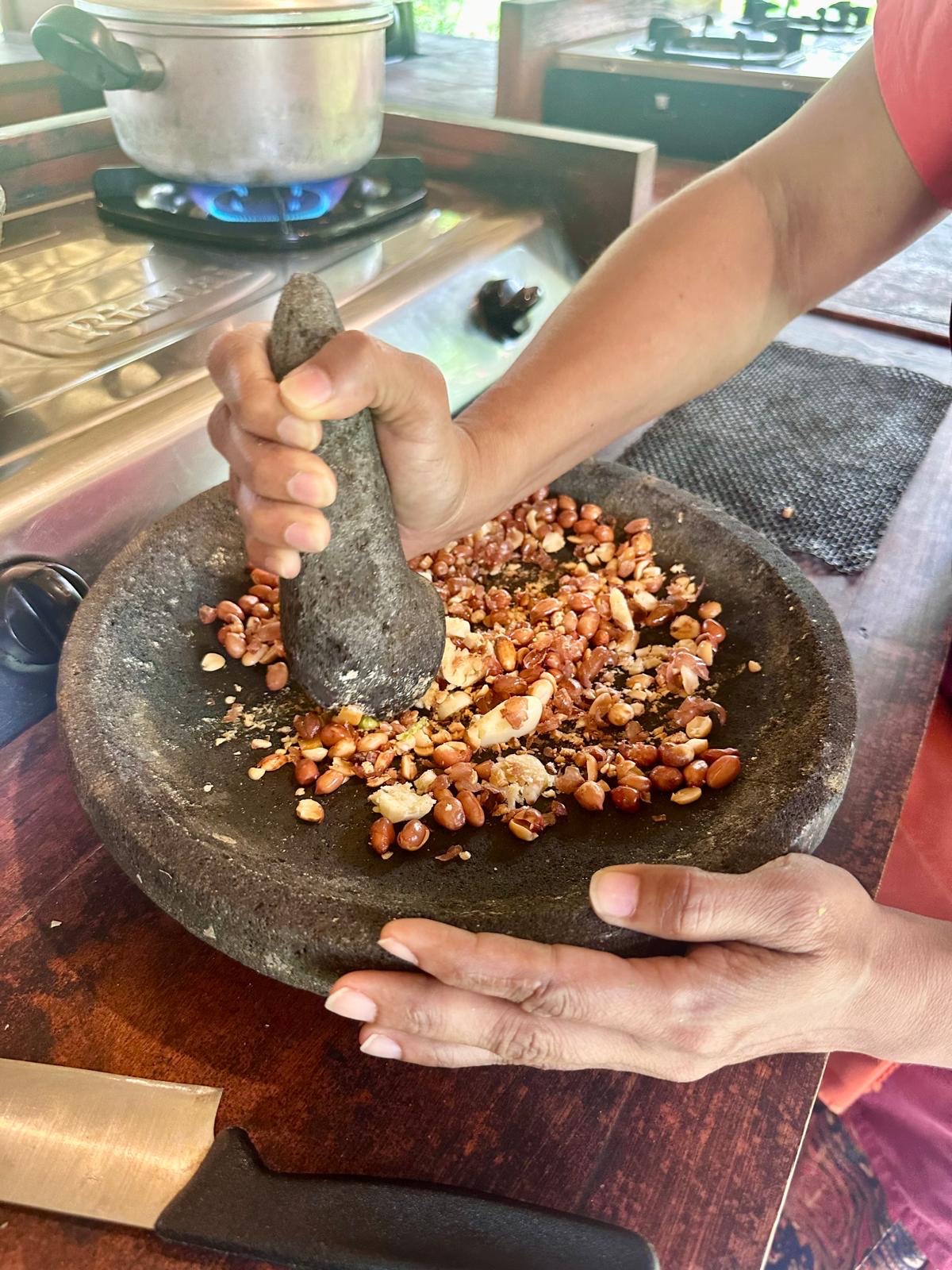
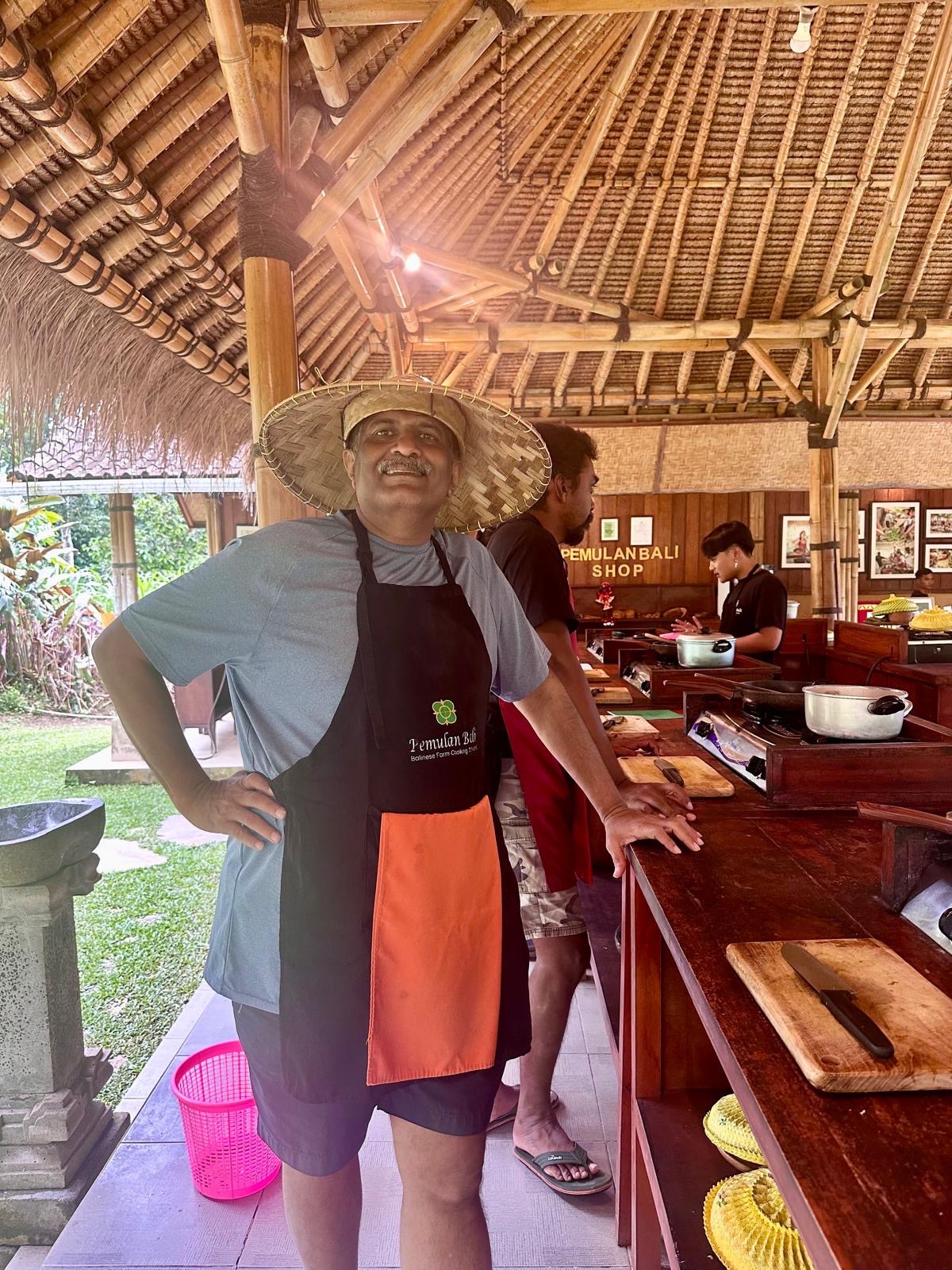
The cooking lesson we took was a gateway to learning how to make some authentic, basic pastes, but more than that, it was time well spent with a solid mortar and pestle, exploring different bamboo utensils.
Personally, I feel Indonesian food photographs like a supermodel—it often looks better than it tastes! And with that, we have Prayed, Loved, and Eaten! Minus Julia Roberts, of course.
Pushing travel remits beyond Bali into the islands of this archipelago added the dimension that made this journey unforgettable. I have had loads of commonly seen but rarely understood images in my mind. As I listen to podcasts and read travelogues, it’s clear that Bali is rethinking its future. I fear the Instagram world may lose sight of the real Bali. But isn’t that true for much of the world too?
Until we meet again, Om Shanti.
Discover more from kalpa'sblog
Subscribe to get the latest posts sent to your email.

excellent
LikeLike
Thoroughly enjoyed reading about Bali and beyond through Kalpa’s eyes and Ram’s lens.
LikeLike
These feedbacks keep occassioanl blogger like me happier!!
LikeLike
wonderful write up Kalpa Awesome pictures Ram
LikeLiked by 1 person
Thank you
LikeLike
Could imagine myself in Bali. A great vivid description penned eloquently. And to remember all those names and words is feat in itself
Ram’s artistic prowess complements the write up fully
Now I will have to come and taste Mei goreng and nasi goreng and Gado-gado and confirm if you paid attention to the cooking lessons
well done
maninder
LikeLiked by 1 person
Always look forward to your comments
LikeLike
The trees, the maps and nature- toxic right ?!
LikeLike
So beautiful and evocative … awesome!
LikeLiked by 1 person
This is a beautiful read Kalpa, quite possibly even better than what I remember about my travels in Bali. 😀
The dancing trees look magnificent and you know my love for trees!🌳
What I appreciate the most is the fact you truly were present and absorbed each experience along your travels.
Looking forward to reading about your next adventure. Kavita
LikeLike
This is a beautiful read Kalpa. Almost as good as or better than what recall about my trip to Bali.
Love,love,love the dancing trees. You know of my love for trees 🌳
What in really enjoyed is the fact you were truly present whilst absorbing all your experiences.
Ram’s photography is breathtaking!
looking forward to reading about your next adventure. Kavita
LikeLike
Rather belated, but thank you Kavita.
LikeLike